
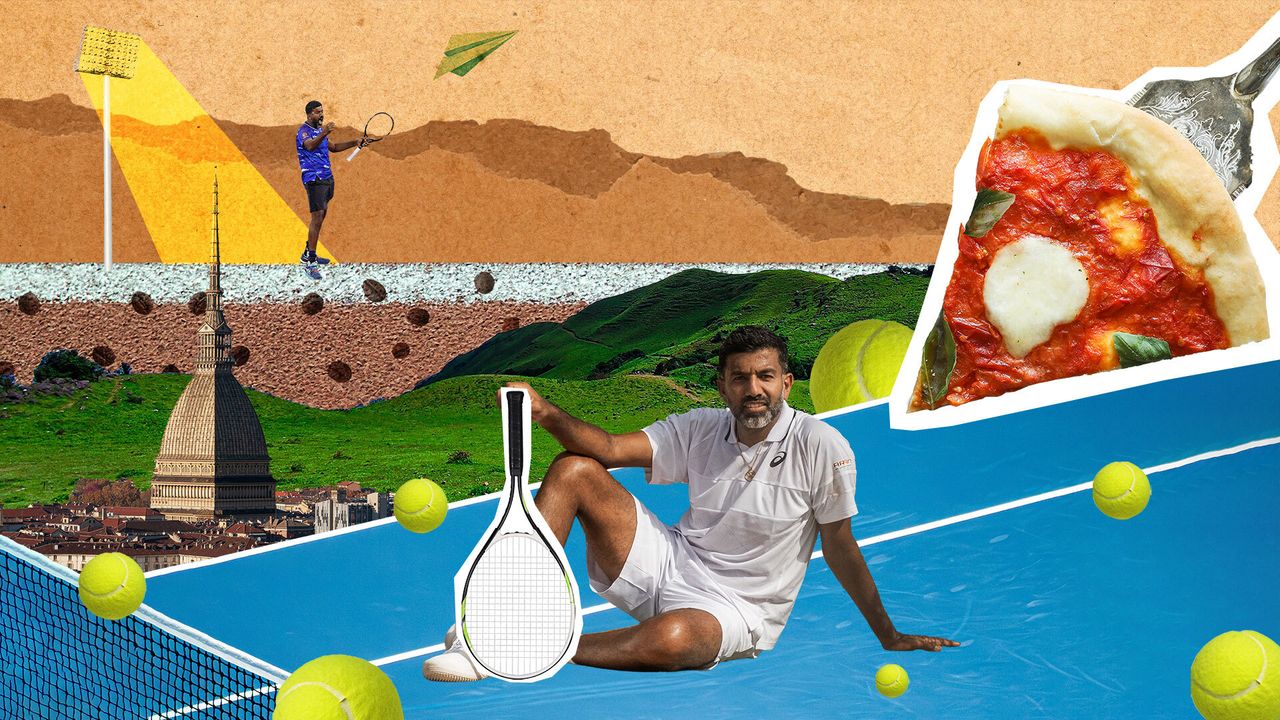
My love for food is as old as I am. It started from when I was a boy on a coffee estate in Coorg and grew with me as I explored the world as a man and an athlete.
Tennis is a lonely sport, especially for the top-seeded players. For years, you are travelling alone with no real semblance of home. On court, it’s even lonelier and brutally psychological. Crowd noise, pressure points, momentum swings, self-doubt—all of it churns inside your head. But amidst all this, if there is one city that never felt lonely, it was Melbourne. January would come, and with it the Australian summer; dry heat, long practice blocks at Melbourne Park and that quiet understanding among the players that the season truly begins here.
By my fourth or fifth year on the Australian circuit, I stopped being a visitor. In Melbourne, food wasn’t indulgence. It was stability. I had my lanes. There was a small café tucked into one of the laneways near Southbank, the kind of place where the barista doesn’t ask your name after year three—they just nod. The roast was darker than what we grew up drinking in Coorg, but it had that burnt caramel edge that somehow felt grounding before a long practice.
My palate will always remember Melbourne for its seafood, done the way only a city close to the ocean can—a plate of fresh Tasmanian oysters after a long match, clean, cold, briny. You’d walk into these places and half the locker room would already be there. A few Spaniards in the corner, the Americans holding court near the bar, someone icing their knee while waiting for a flat white. In 2019, I walked into a random restaurant suggested by a few locals and lo and behold, there was the entire Indian squad sitting right there at different tables and before we knew it, the scene turned into one big party.
On these occasions, there’s an unspoken rule: you don’t talk tennis. It was how we remembered who we were outside the draw sheet.
Few people know that tennis players usually have to arrange their own travel and accommodation. Most tournaments do not host you—but that gives you the freedom to book your own stay. You can choose to either cook simple meals or step out and explore the city after practice. At the few competitions where you are hosted, you tend to give up on room service on the second day. Not because the food isn’t great, but because the menu is limited and you often don’t find what you are looking for.
The nutrition obviously is non-negotiable but when your play is all about routine, the food doesn’t have to be. Eating at places where the food has been created with care and skill is where the off-court game lies for me and for a lot of tennis players. For years, your routine is all about hours on court, followed by flights across the ocean—over and over again. Winning, losing, winning. It then becomes important to nourish not just your stomach but also your mind.
Food talk is quite common on the circuit, especially at the ATP tournaments, beyond the Grand Slams. At the ATP finals in Turin, the intensity is unmatched. You’re playing against the best in the world, indoors. The margins are razor thin. But once you step out of the arena, Turin slows you down. It’s all about precision, elegance and late dinners.
Turin has always felt different. There’s a quiet sophistication to the city, much like the way doubles is played at the highest level. No wasted movement. The Italian food spots are near the centre where I’d always order some burrata or pizza to start, not because I was hungry, but because it became a tradition. Then maybe a simple pasta or vitello tonnato. Italian food doesn’t scream. It whispers, which somehow helped before big matches.