
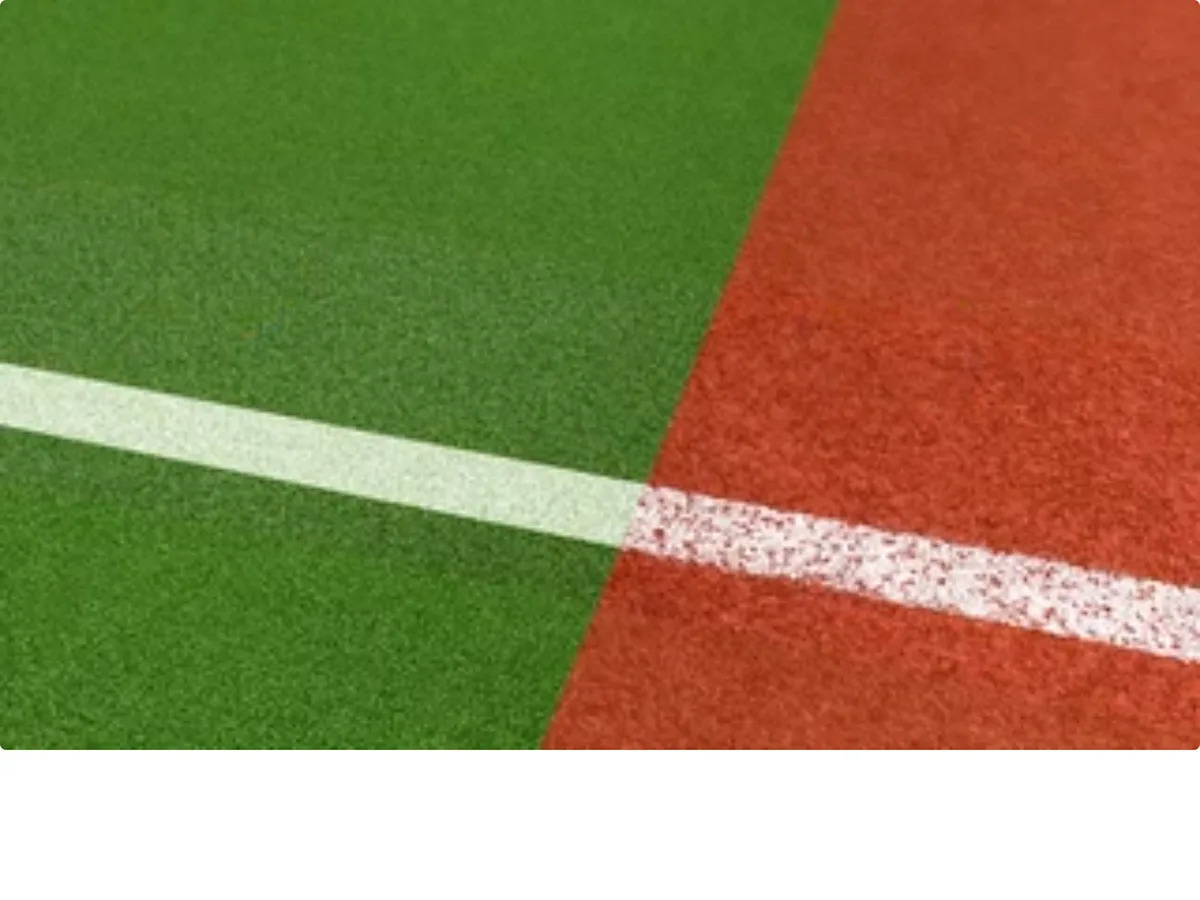
Clay-court tennis is unlike any other surface. Tactically, technically and physically it is a different game. It is “more of a chess match” compared to the power hitting that dominates the hard court season.
British No 4 Francesca Jones is in a unique position when it comes to the red surface. Born in West Yorkshire, she moved to Barcelona before the age of 10 to pursue a tennis career and has grown up cultivating a playing style suited to the clay, unlike most of her compatriots.
Advertisement
In the United Kingdom, real clay courts are few and far between, and the artificial surface offers little in comparison to the fine brick dust of Roland Garros, other than being more protective of tennis club members’ joints.
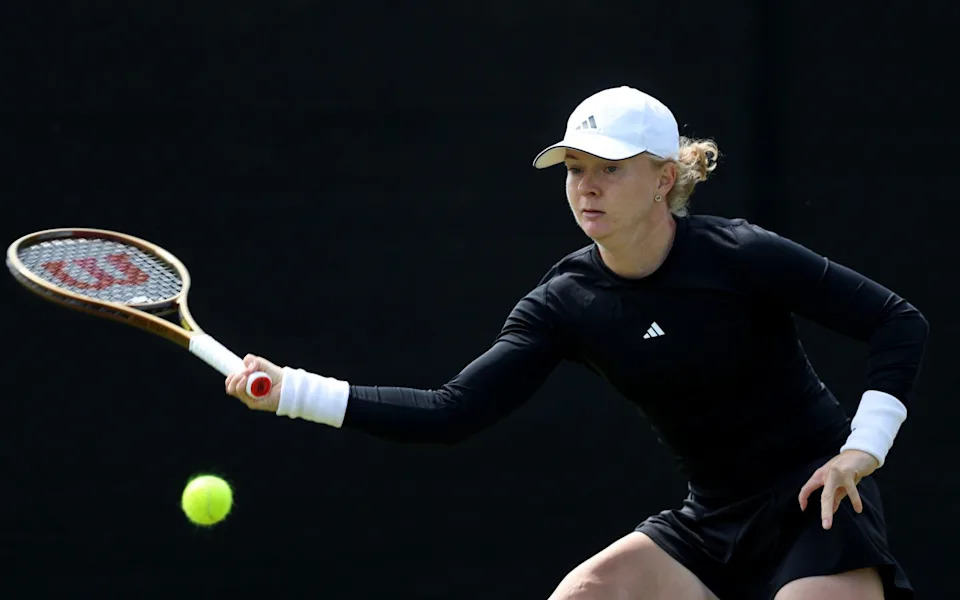
Francesca Jones’ move to Barcelona helped her develop her clay court game – Nathan Stirk/Getty Images
“For me it’s the strategy on a clay court,” Jones tells Telegraph Sport. “Everyone’s weaknesses are accentuated. So it just makes it more of a tactical challenge, which for me is more stimulating and why I enjoy it more.
“Whereas, depending on what hard court you get, it’s just serve-return one ball, and I think it’s a lot more monotonous.”
The clay swing is long enough that specialists develop, although few players have been as synonymous with the surface as Rafael Nadal. After winning his first title before the age of 20, he was invincible for the next two years, winning 81 straight matches on clay.
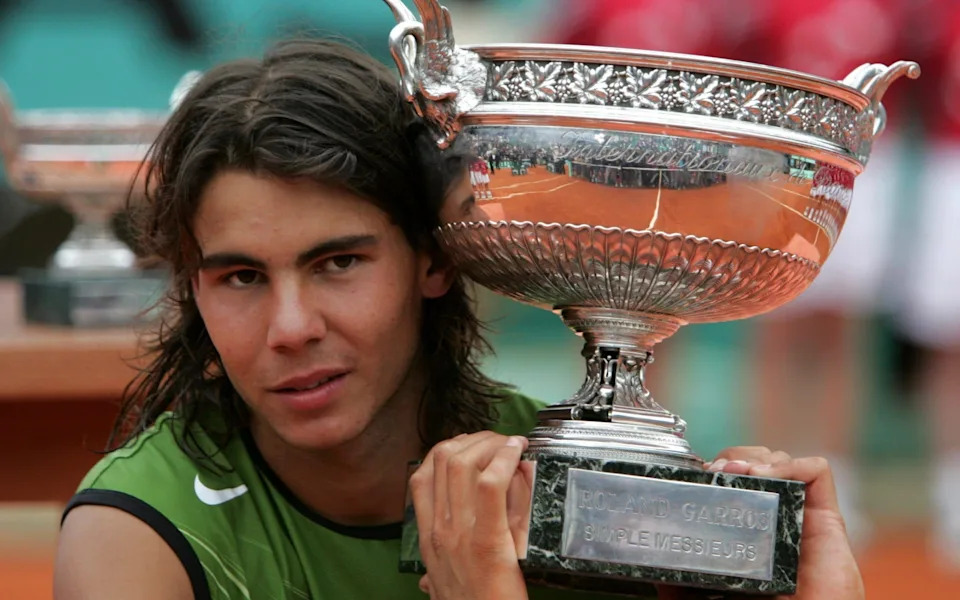
Rafael Nadal was just 19 when he won the French Open for the first time in 2005 – Regis Duvignau/Reuters
Clay-court tactics
On the face of it, clay court tennis does not look substantially different, but there are key distinctions. A top-spin ball will grip the red surface, causing it to “kick” or bounce higher than grass, which typically keeps balls low and skidding through. Likewise, a player’s movement is different on clay because of the loose surface, leading to more slides to reach the ball compared to a hard court.
Advertisement
The kick serve is used more to push players back to allow the server to gain court position, while players often stand further back than they might on other surfaces, with some even so far back they can be out of camera shot to get the ideal return.
“I think the base thing on a clay court is essentially more of a chess match than other surfaces which are more of a roulette,” Jones explains. “For me with clay it’s all about how you build the point; the construction of the point.
“Because it’s slower than the other surfaces, it’s much easier to open up the court.”
The slower nature of it, particularly when there is moisture in the air, allows those with a strong top-spin forehand to run around the ball and hit to all areas of the court, easier than on a hard or grass court.
Advertisement
What makes playing on clay so hard?
British struggles at Roland Garros are nothing new. There has not been a British singles winner since Sue Barker in 1976, while the last British man to hold the trophy was Fred Perry in 1935.
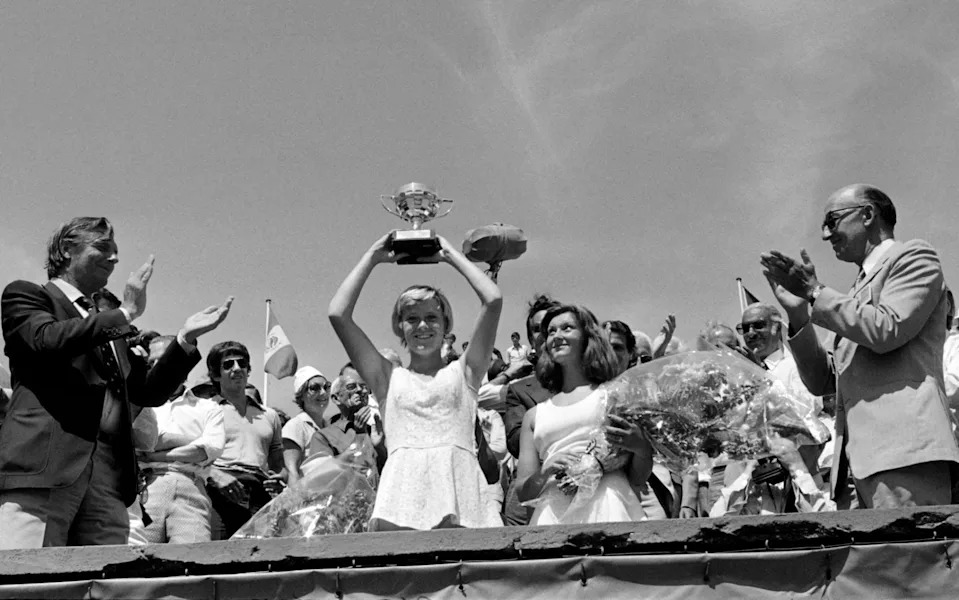
Sue Barker celebrates her victory at Roland Garros in 1976 – Getty Images
But for Jones, it is her preferred surface. When asked what the most difficult thing about clay is, the answer is straightforward: the longer points. “I think it’s an exposing surface, so it can expose your footwork more, it can expose any technical difficulties.”
Jones notes that if a player has a low swing, that can be nullified by a heavy forehand with a kick and that a serve without speed or kick will sit on the court and be easier to return.
Advertisement
“I think for me, it’s probably just the fact that people don’t have the mentality to play on it as well,” she says. “So the patience – you don’t necessarily require patience in that way on a hard court or a grass court. You might win quicker points with a big serve or return, whereas a lot of time that will come back on the clay.”
Shots left in the dust
The surface naturally affects the shots that you play, but some are much less effective. “The big servers, unless they’re playing on clay court at altitude, they can’t rock up and expect to get two-and-a-half to three points a service game, it’s not going to happen,” Martin Weston, national coach at the Lawn Tennis Association, tells Telegraph Sport. But for those who rely on their serve, the percentage is definitely more important.
“Personally on a grass or hard court, I use my slice a lot,” Jones says. “On a clay court it’s more of a rarity to see me slicing unless I think it’s going to be tactically beneficial because it just won’t skid through the court as much.”
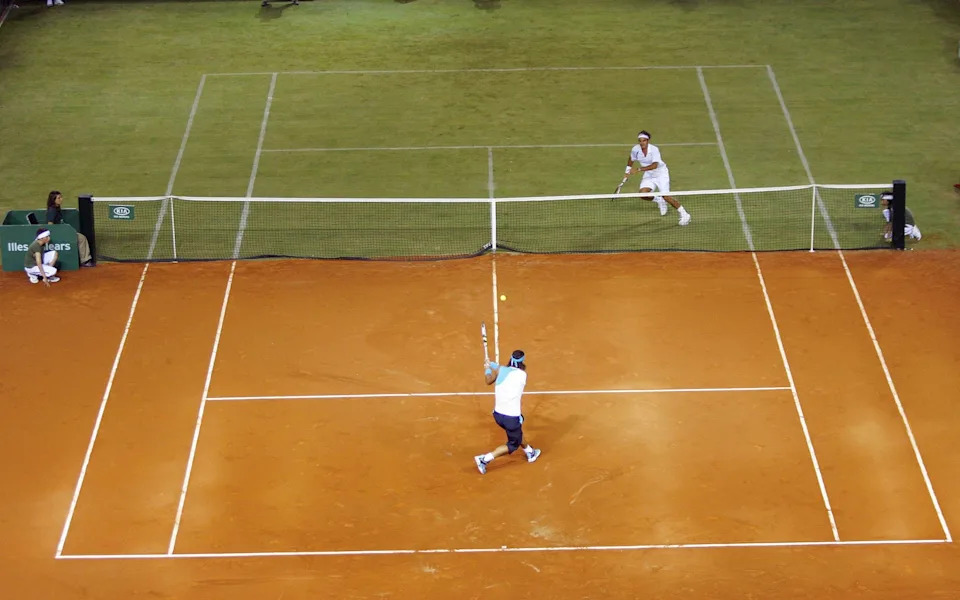
Nadal and Roger Federer put clay and grass to the test in The Battle of the Surfaces in 2007 – Bob Martin/Getty Images
Why are British players so bad on clay?
The answer is straightforward, even if the solution is not, Britain does not have enough real clay courts for players to develop a game suited to the surface. It was only 11 years ago that Heather Watson was showing scars from a fall on a substandard clay court at the National Tennis Centre in Roehampton, describing the court as “like tarmac”.
Advertisement
Since then, money has been poured into it, with a new Red+ court designed to withstand greater wear and tear and weather, whilst being more akin to the real surface. The LTA now has a Red+ court, as well as upgraded real ones, and more Red+ courts are being built across the country. But it will take time for the impact of that to filter through to younger players who continue to spend the majority of the year on indoor hard courts.
“Of course if you’re coming up against players that are playing on it [clay] at least seven or eight months a year and you’re playing on it one to two months of the year, the transition is difficult. At a high level it’s really challenging,” Weston says.
“But our young players, we try to expose them to clay. If you look at our under-14 schedule, they’re travelling in Europe playing on clay. I think it helps them move better, it helps them construct points better. I think it teaches them patience, it teaches them resilience, so I think exposing young kids to clay is definitely beneficial.”