
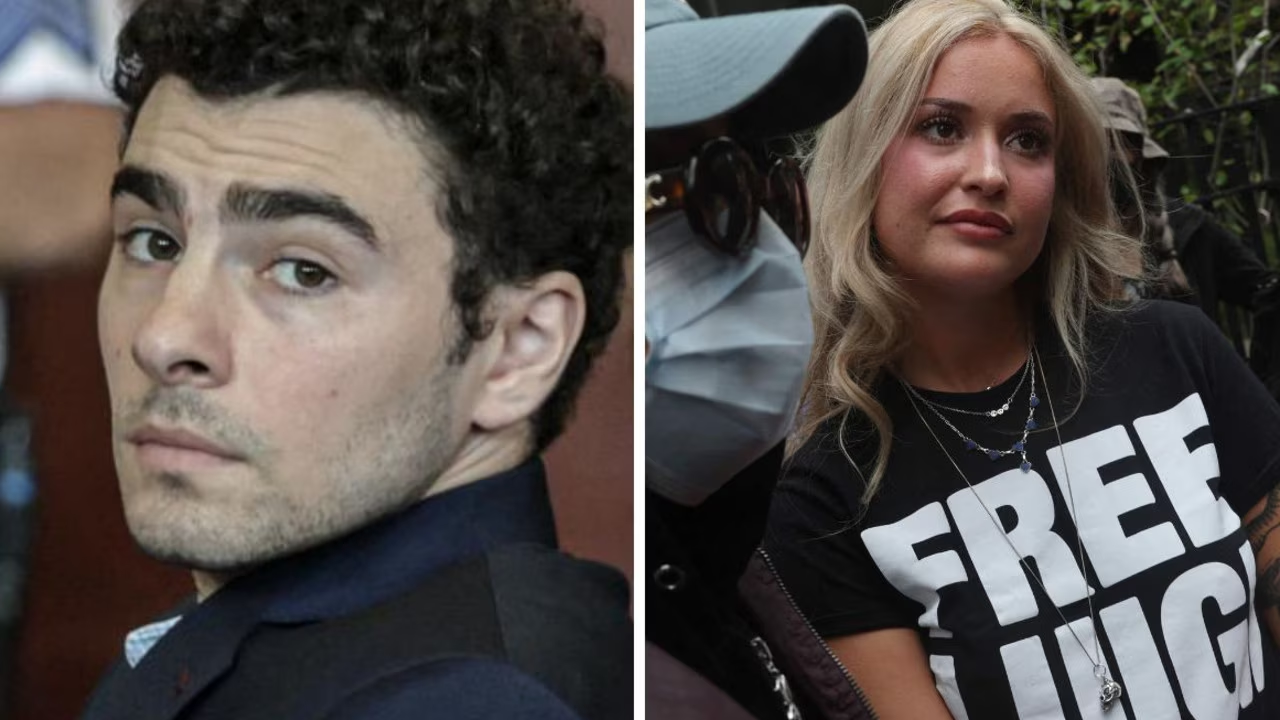
A group of fangirls have been out in full force this week, not for a glimpse at a heart-throb movie star, but to support a man fighting murder charges.
Luigi Mangione is accused of shooting and killing Brian Thompson, the CEO of UnitedHealthcare, in New York City.
The 28-year-old could be looking at a lifetime behind bars if he is found guilty.

To the casual onlooker, seeing women treat a high-profile murder suspect as a pop icon might be baffling, but it’s far from an anomaly.
Experts warn the obsession strongly mimics a phenomenon known as hybristophilia.
It’s a psychological condition where someone is romantically or physically attracted to a person who has committed, or is accused of committing, violent crimes.
It’s also commonly known as Bonnie and Clyde Syndrome, and it’s a path well-travelled in true crime history.
Notorious killers like Ted Bundy, Charles Manson and Jeffrey Dahmer had their own fiercely loyal fandoms from behind bars, despite the atrocities they committed.
Bundy received up to 200 love letters a month during his 1980s trial.
Even after he was found guilty of the murders of 30 women, with criminologists suspecting there could be up to 100 victims, his fandom wasn’t deterred.
Mangione’s fans have dubbed themselves the “Mangionistas”, and while it is impossible to diagnose individuals, experts say there is a psychological motivator behind this kind of fandom.
Supporters have donned “free Luigi” merchandise and cheered praise as he has been led to court.
Most controversially, this week a group of women obtained press passes to enter the courtroom, declaring the victim’s children were “better off without him” in an interview with New York Post.
It’s a statement that sparked criticism, with Australian Sky News host Rita Panahi among those speaking out. Panahi called the women “callous” and “vicious”.
“They were openly endorsing murder. Openly celebrating murder,” she said during a segment on her show earlier this week.
In the comment section of news reports about Mangione’s trial on TikTok, many women leave comments of infatuation.
“Sexiest man alive 2026,” one declares.
Another adds: “he is soooo hot.”
“Such a beautiful person. He deserves so much better than this,” a third adds.
Sydney psychologist Carly Dober, from Enriching Lives Psychology, says the condition goes beyond devouring crime documentaries, crossing into a parasocial obsession with a “bad boy”.
“They will think ‘I can fix him’,” Ms Dober told news.com.au.
She says women will pursue stories about their object of desire and look to their peers for information about them.
“They’ll feel like they could be with him, that they would be his perfect partner, when really, you don’t know him and you’ve never met him before,” she explained.
Ms Dober believes Mangione’s case has an added layer of appeal, because his alleged victim is a white-collar man.
Given the rough economic situation and cost-of-living crisis impacting many young women, Ms Dober thinks it’s all the more intriguing for his supporters.
“I think that’s also kind of attracted a lot of women to his cause and him as a person. It’s a retelling of Robin Hood,” Ms Dober said.
Unfortunately, the obsession isn’t completely harmless.
“People can take time and energy away from their real life when they’re engaging in a parasocial relationship with someone who is on the opposite side of the world. Someone who was probably never going to meet them or be with them,” Ms Dober explained.
“You might be missing out on real love in your day-to-day life because you’re fixated on this person.”
There’s also a devastating impact that the infatuation can have on the loved ones of a victim.
“Victim and survivors often feel like their stories are forgotten,” she said.
“We are hungry for so many details that [the killer] becomes the story.”