
Singapore’s independent wealth management sector has expanded at a remarkable pace, but growth in numbers alone does not guarantee growth in substance. As the ecosystem of External Asset Managers (EAMs) and Multi-Family Offices (MFOs) matures, the questions confronting firms are shifting from market entry to market durability: how to scale without diluting quality, how to integrate advisory capabilities beyond investments, and how to navigate the commercial realities of a high-cost, people-intensive business model.
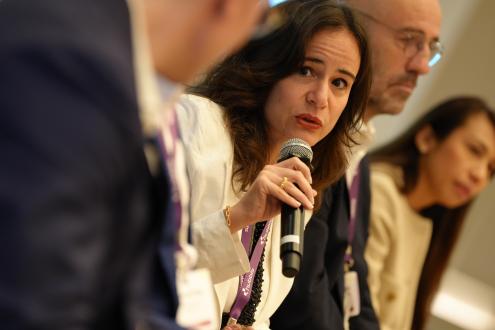
At a recent Hubbis Independent Wealth Management event in Singapore, the opening panel brought together senior practitioners to examine the operational and strategic pressures shaping the independent model in 2026. Among them, Chiara Bartoletti, Managing Partner and Chief Operating Officer at Eightstone, offered a practitioner’s perspective grounded in direct experience of scaling through acquisition, managing margin compression, and rethinking how technology and talent intersect in a relationship-driven industry.
Key Takeaways
Integrated Advice Is Achievable, but Requires the Right Network: Independent firms can deliver holistic advisory services spanning succession, governance, and structuring, provided they have access to trusted external specialists where in-house expertise is not viable.
Consolidation Is the Fastest Path to Scale, but Culture Is the Gatekeeper: Mergers and acquisitions offer the most strategic route to growth, yet alignment on culture, fee structures, and service philosophy makes execution difficult and protracted.
Technology Is a Margin Solution, Not a Relationship Substitute: Operational technology and artificial intelligence are essential tools for managing cost pressure and reallocating human resources toward higher-value advisory work.
Client Sophistication Is Rising, but Not Uniformly: While clients are more informed than ever, greater access to information does not automatically translate into better understanding, creating both opportunities and obligations for advisers.
Survival Depends on Alignment, Not Superiority: The independent model does not inherently produce better outcomes than traditional banking, but its structural alignment with client interests creates a form of accountability that is difficult to replicate within larger institutions.
Integrated Advice: Possible, but Not Inevitable
When asked whether independent firms can truly deliver integrated advice across succession, governance, and structuring, or whether execution remains fragmented, Bartoletti’s response was measured but affirmative. The capability exists, she argued, but it is contingent on how firms organise their access to expertise.
“Everybody can provide integrated advice, provided that they have experts, either in-house, or if they can outsource it with trusted advisors,” she said. “The advantage is that independent firms are not tied to any group, and therefore they have the freedom to source the best possible advice depending on the circumstances.”
It is a view that sits between two positions expressed elsewhere on the panel. Where some participants argued firmly for staying within core competency and outsourcing everything beyond investment management, Bartoletti’s framing was more pragmatic. The question, in her view, is not whether to offer integrated advice, but how to deliver it credibly, whether through internal capability or through a curated network of external partners who can be mobilised as client needs require.
This distinction matters as client expectations evolve. Families increasingly expect their primary adviser to coordinate across disciplines, from tax planning and estate structuring to philanthropy and governance, even if the adviser is not the direct provider of each service. The ability to orchestrate that coordination, rather than simply refer clients elsewhere, is becoming a meaningful differentiator.
The Reality of Consolidation
On the question of scaling, Bartoletti spoke from direct experience. Eightstone has been through the merger process, and her assessment of consolidation as a growth strategy was both positive in principle and sobering in practice.
“It is the way forward,” she said. “It is actually the only way, because you can grow organically, but this isn’t a business where you add units and the numbers follow. Growth here means acquiring people, teams, or whole firms, and that is the fastest and most strategic route.”
But the execution, she cautioned, is where ambition meets friction. The independent wealth management business is fundamentally people-centric, and that creates a set of obstacles that financial logic alone cannot overcome.
“You need to find similar culture, DNA, alignment of how you charge clients, the certain type of services you provide,” Bartoletti explained. ” This is a people business first, and personalities matter as much as numbers. That is what makes a good merger so hard to find.”
She also highlighted the problem of timeline. The period between initial conversations and deal completion is often so extended that the opportunity itself can change shape. “From the time you start talking to someone and the time the deal actually happens and you have opened your books and everything, perhaps it is not the same company anymore,” she observed. “That is also why it is not so easy to see more consolidation happening.”
It is a candid acknowledgement that the industry’s fragmentation is not simply a result of insufficient ambition, but of genuine structural barriers. For consolidation to accelerate, firms will need to develop more efficient processes for evaluating cultural fit and commercial alignment, and accept that not every promising conversation will result in a viable transaction.
Technology as a Reallocation Engine
Bartoletti’s comments on technology were among the most nuanced offered during the session. Rather than framing technology as either a threat or a panacea, she positioned it as a tool for structural reallocation, one that enables firms to shift human capital away from repetitive tasks and toward the advisory interactions that clients genuinely value.
“Technology is part of the equation that will solve the pressure on the margin,” she said. “It will help us to manage the pressure on the costs, but also to dedicate resources differently, to provide more human value by removing everything that is repetitive and does not really add much to the relationship.”
She also identified a less discussed benefit of technology: its role in institutional resilience. By capturing knowledge in systems rather than in the heads of individual advisers, firms become better equipped to manage transitions when key personnel leave. “It breaks barriers to knowledge,” she noted. “Data is not sitting in someone’s head. It is out there. And therefore, as a company, you are more equipped to manage when someone leaves.”
On the specific question of artificial intelligence and its impact on client conversations, Bartoletti offered a balanced view. Clients are undoubtedly more informed, she acknowledged, but information and understanding are not the same thing.
“People are more informed, but they also perhaps pay less attention to things,” she said. “They have shorter attention spans. The way you communicate or explain things needs to change because of this ease of access to information.”
She was also direct about the limits of AI as a source of financial insight. “People think that if they ask ChatGPT, it must be true,” she observed. “But AI is only as good as the question you ask it. It reflects your own thinking back to you.””
It is a reminder that while technology may level the information playing field, the advisory relationship still depends on interpretation, context, and judgement, qualities that remain distinctly human.
Alignment as Accountability
Bartoletti’s most memorable contribution came in the closing moments of the discussion, when she offered what she described as “a little intellectual message” on the fundamental nature of the independent model.
“No one does a better job than anyone,” she said. “But the difference is that it is in our direct self-interest to do so. The idea is that you make the best product possible, because otherwise it is really easy for the customer to go somewhere else. If we do not do a good job, then we do not have a job at all.”
The reference, drawn from the logic of competitive markets articulated by Adam Smith, reframed the entire debate. The independent model’s advantage is not that it produces inherently superior outcomes, but that it operates under a form of market discipline that large institutions, insulated by brand, scale, and captive distribution, do not face to the same degree.
It is a distinction with real consequences. In a sector where the number of firms has multiplied sevenfold in fifteen years, clients have more choice than ever. Firms that fail to deliver will lose mandates, and unlike a private bank with a diversified revenue base, an independent firm that loses its clients loses its reason to exist.
For Bartoletti, this is not a vulnerability but a virtue. It is the mechanism that keeps independent firms honest, and the reason why alignment, rather than outperformance, is the more accurate and more sustainable measure of the model’s value. As Singapore’s independent wealth management sector enters its next phase of growth, that alignment, backed by disciplined execution, strategic scaling, and intelligent use of technology, will determine which firms endure and which are left behind.