
Protein is having a moment, with powders available in a variety of flavors and base ingredients. Common grocery store options include whey, pea, hemp, and soy-based supplements.
April Van Buren
/
Michigan Public
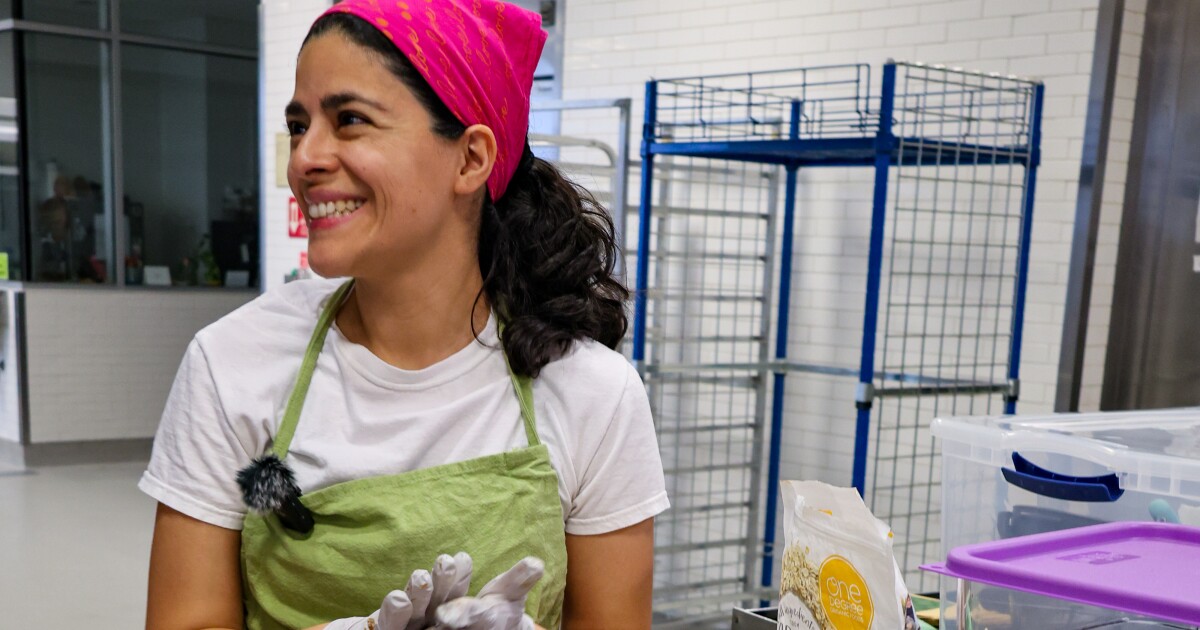
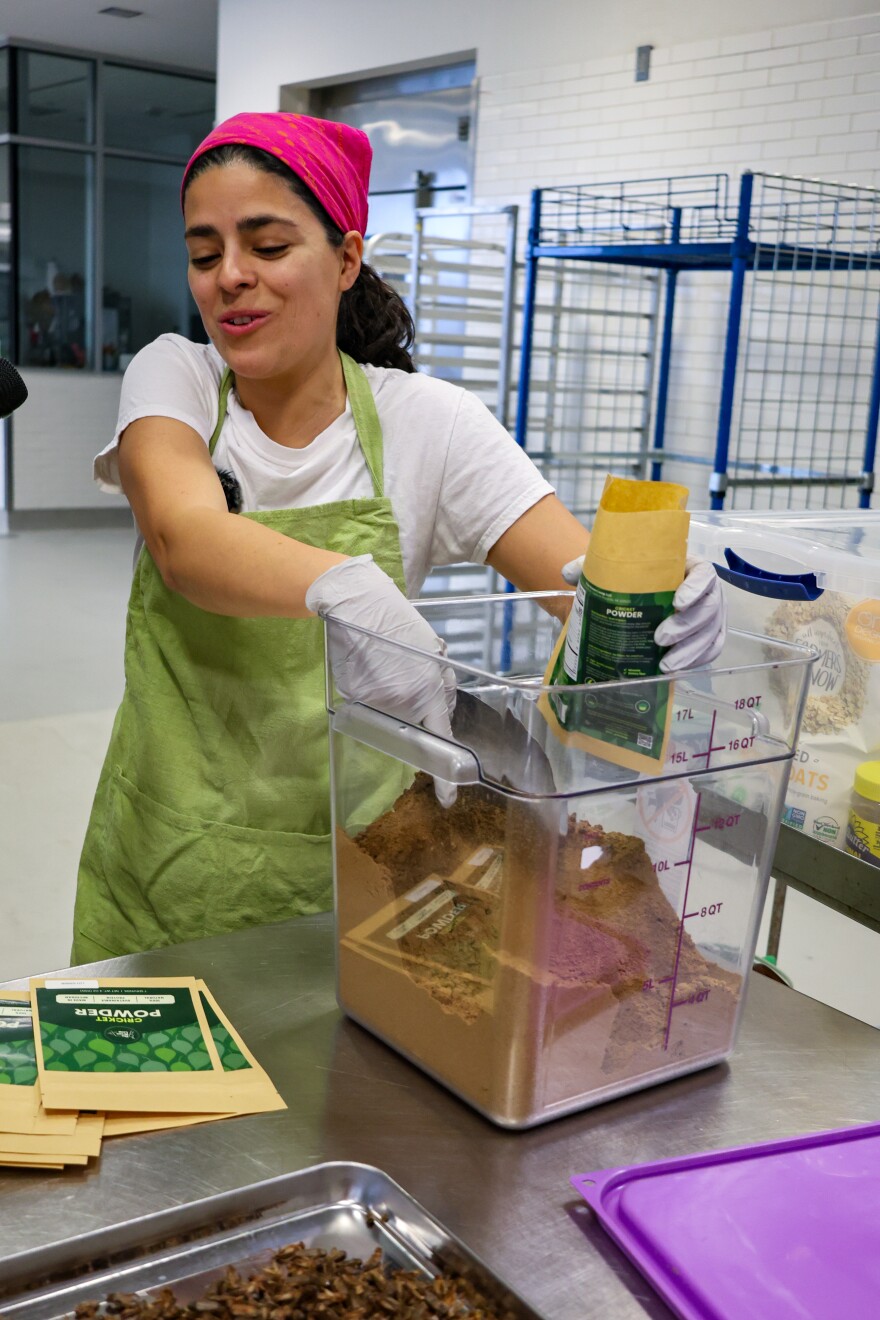
Montse Rosales Osoria assembles a package of “The Green Leap,” a cricket-based protein powder.
The Green Leap, a family-owned business based in Grand Rapids derives its protein powder from a source you probably won’t find at Meijer: crickets.
“This is not something that I came up [with] one day,” said co-owner Montse Rosales Osoria. “No, it’s something that has been consumed for centuries.”
According to The Green Leap’s label, 2 tablespoons of cricket powder carry 10 grams of protein. That’s comparable to other protein powder options. Crickets are also a good source of vitamins, minerals and fiber.
The cricket powder is primarily sold at the Fulton Street Farmer’s Market. The face-to-face interaction allows Rosales Osoria to educate customers about the nutritional and environmental benefits of cricket protein. Plus, the chance to convince them that bug consumption isn’t so scary.
Low-waste, ethical farming
The cricket farm is housed in a small barn in Howard City, where Rosales Osoria and her husband raise tens of thousands of crickets. But the operation started with only 500 in their home basement.
“So we were joking, my husband and I … and we went to bed, and the next day we kept talking about this. And yeah, it was more than a joke,” she said.
While searching online she came across the Food and Agricultural Organization of the United Nations’ page on insect consumption. As she learned more about the nutritional and environmental benefits of insect farming, she thought more seriously about it.
“I’m from Mexico, and there, edible insects are part of our culture. And so when we moved here, around 4 or 5 years ago, we couldn’t find any products … using edible insects,” Rosales Osoria said.
April Van Buren
/
Michigan Public
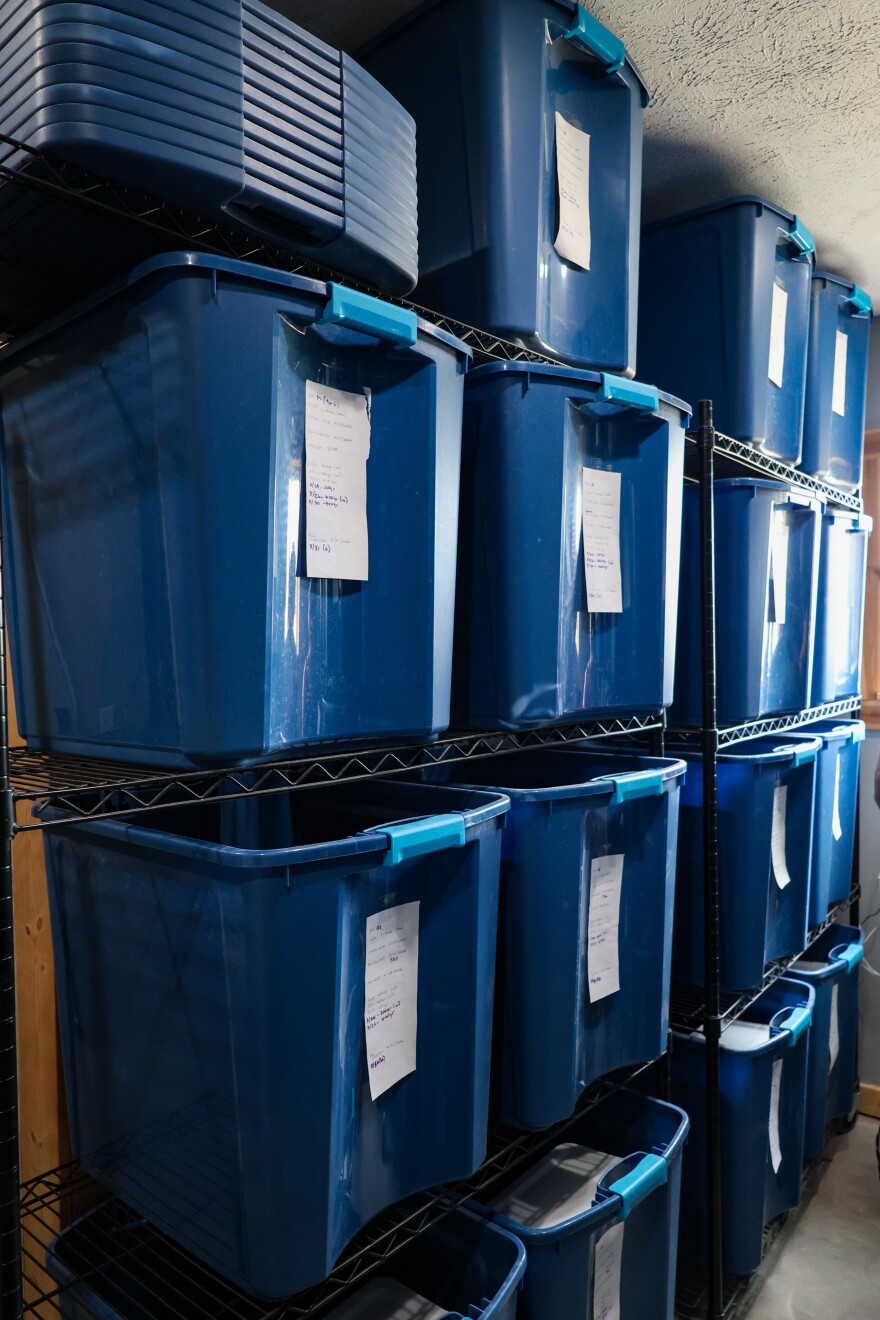
The Green Leap utilizes vertical farming, minimizing the amount of land they take up.
After that they began raising crickets in their home basement, with every life cycle they’ve learned better ways to care for, harvest, and process the crickets.
And they said it takes so few resources to raise crickets that the whole farm only produces about one 13 gallon size trash bag of waste every 50 days or so.
Life at the farm
Inside the barn on the shelves are large blue plastic storage tubs, each one with food, water, and about 9,000 crickets inside. The tubs are fully open, no lid. The crickets don’t jump out.
Rosales Osoria gives them everything they need, like space to move around and a temperature-controlled environment. The crickets live a pretty cushy life, all the way to the end, because, she says, she tries to follow their natural life cycle to determine the best harvest time.
“They go into hibernation mode. It’s called diapause,” she said. The insects go into a kind of hibernation induced by cold temperatures. “So it’s basically how we end their life, it’s very humane. It’s not a disruption or anything for them, and we freeze them.”
The next stage happens inside the Grand Rapids Downtown Market at an incubator kitchen. There, Rosales Osoria roasts and grinds the crickets, and packages them for sale. No other ingredients are added to the powder.
1 of 4
— TheGreenLeap_EDITED_Credit_AprilVanBuren-04.jpg
Crickets hop around inside their enclosure. Several rows of paper egg cartons over them spaces to burrow and rest.
April Van Buren / Michigan Public
2 of 4
— TheGreenLeap_EDITED_Credit_AprilVanBuren-03.jpg
Each blue tub indicates hatch, harvest, and feeding dates. Montse tracks each cycle closely, and can trace each packet of final product back to the exact tub where they were raised.
April Van Buren / Michigan Public
3 of 4
— TheGreenLeap_EDITED_Credit_AprilVanBuren-02.jpg
Dozens of brown, thumbnail-sized crickets crawl across the surface of an egg carton.
April Van Buren / Michigan Public
4 of 4
— TheGreenLeap_EDITED_Credit_AprilVanBuren-06.jpg
Bags of frozen crickets are stored in a freezer at the farm until Montse is ready to transport them to the kitchen in Grand Rapids for roasting and cooking.
April Van Buren / Michigan Public
Convincing the community
The final product smells and tastes nutty and earthy, though not overpoweringly so. The color and consistency is comparable to cocoa powder.
“I ask people all the time and they say that it tastes like sunflower seed. Some others say tahini,” Rosales Osoria said.
When it comes to incorporating cricket powder into her own family’s meals, she described herself as a “fairy,” sprinkling a few teaspoons on anything and everything. But when it comes to introducing farmer’s market shoppers to the product, she likes to hand out no-bake energy bites.
The recipe includes oats, sunflower seed butter, maple syrup, vanilla, chocolate chips, and, of course, cricket powder. Trying it this way helps skeptical customers.
1 of 2
— TheGreenLeap_EDITED_Credit_AprilVanBuren-18.jpg
Montse gathers the ingredients for cricket powder energy bites, including a large plastic container of cricket powder.
April Van Buren / Michigan Public
2 of 2
— TheGreenLeap_EDITED_Credit_AprilVanBuren-19.jpg
Montse hands out these energy bites at farmer’s markets. They can be chilled in the fridge before serving, and don’t require any baking.
April Van Buren / Michigan Public
“I can see parents really trying to encourage their kids, and the kids really are feeling nervous, but they do it,” Rosales Osoria said. “And then these parents are like, ‘I’m glad you like it!’ and then move on.”
“I think it’s more difficult because of our upbringing, and everything that we think about insects that are not related to food,” she said. “So it’s kind of hard for adults … but once I talk with them and explain facts — nutritious benefits, environmental benefits — that’s when people [are] willing to pass that barrier and give it a try.”