

The Northern Territory’s biggest bull sale has recorded one of its strongest results, with a 100 per cent clearance rate and an average price just shy of $5,000 a head.
The auction in Katherine saw 145 Brahman bulls go under the hammer, including 69 from the host Ponderosa Brahman stud, 36 each from two visiting Queensland studs, and — for the first time — four bulls for sale from Charles Darwin University’s rural campus.
Ponderosa’s Paul Herrod said the results had exceeded expectations.
“It went exceptionally good, better than we all thought,” Mr Herrod said.

Paul Herrod says he was pleased with this year’s sales figures. (ABC News: James Elton)
“We all thought the big wet, and the lateness for people getting going, was going to make it tough to sell that number of bulls. And the fuel price, as we all know, has made it tough for people.
“To get the money we got today was exceptional.”
Overall the sale grossed $723,750.
While that figure was less than the total at the 2017 auction, which cracked the $1 million mark, there were fewer bulls for sale this year, meaning the average price was higher.

The sales from the 2026 Katherine bull sale exceeded $720,000. (ABC News: James Elton)
Most of the bulls were sold to Top End cattle stations, but Australian Cattle Enterprises managing director Patrick Underwood noted some buyers had come from further afield.
“It’s interesting. A number are going to the Kimberly, across in Western Australia, and there’s some Alice Springs buyers as well,” Mr Underwood said.
“Some repeat buyers, who come here every year, and a few new ones as well.”
Indonesian buyer bags 12 bulls
Among those new buyers was one of Mr Underwood’s customers from Indonesia.
Yasser Arafat Suaidy, from West Java, is a major importer of Australian cattle, buying about 45,000 head to his feedlot each year, as well as 5,000 buffalo.
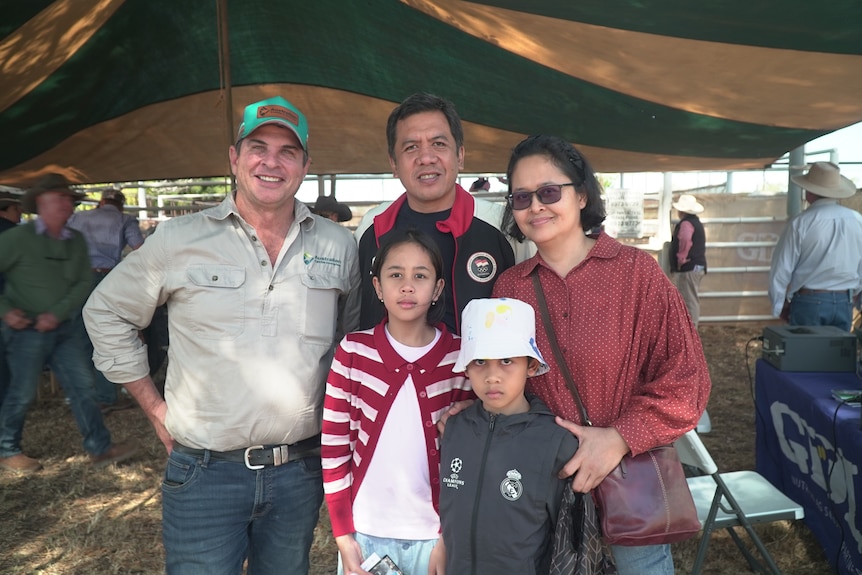
Patrick Underwood (left) with his client Yasser Arafat Suaidy and his family, who travelled to Katherine from West Java. (ABC News: James Elton)
Mr Suaidy purchased 12 bulls at the auction, which will be exported in a few weeks’ time to join his breeding herd back home.
He said he was “happy” with his purchases, praising the “long frames” and “small bones” of the Brahmans on offer.
Mr Underwood said the move to buy bulls directly was a reflection of Indonesian government policy to encourage more self-sufficiency.
The Indonesian herd has been devastated in recent years by lumpy skin disease and foot-and-mouth disease.
“They’ll go back to his productive heifer herd in Indonesia and provide some very important genetics into Indonesia,” Mr Underwood said.
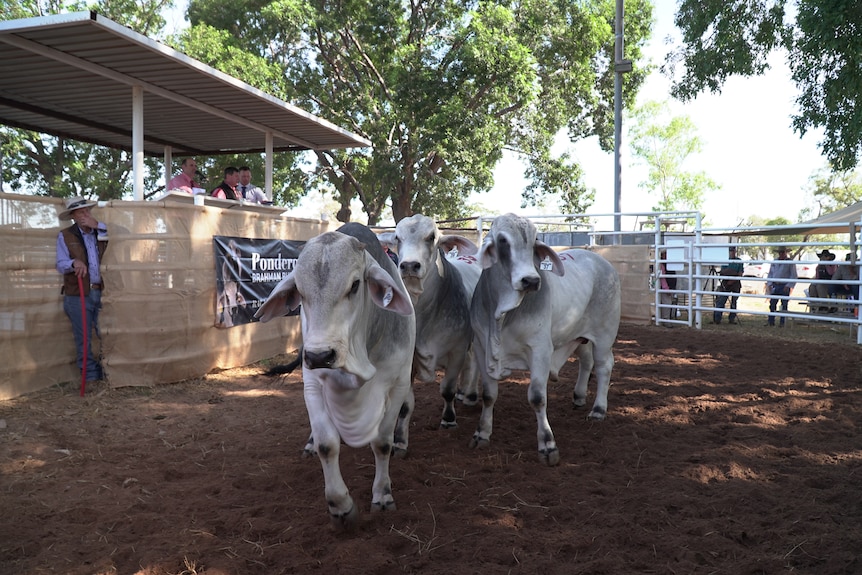
Yasser Arafat Suaidy purchased 12 Brahman bulls at this year’s bull sale. (ABC News: James Elton)
The Top End’s cattle industry is largely built around the live export trade to Indonesia.
Mr Herrod said there was nothing for Australian cattle producers to fear from Indonesian operators increasing their breeding activities.
“I think it’s a good thing. I hope they keep coming back to buy bulls to take over there,” Mr Herrod said.
“I don’t think they’ll ever become self-sufficient with the amount of people [they have to feed], but I do believe it’s not a bad thing for us to take some heifers over to them and for them to breed some cattle there.
“We don’t know what’s around the corner and nor do they, so I think it’s a good thing if they can breed some numbers there.”