
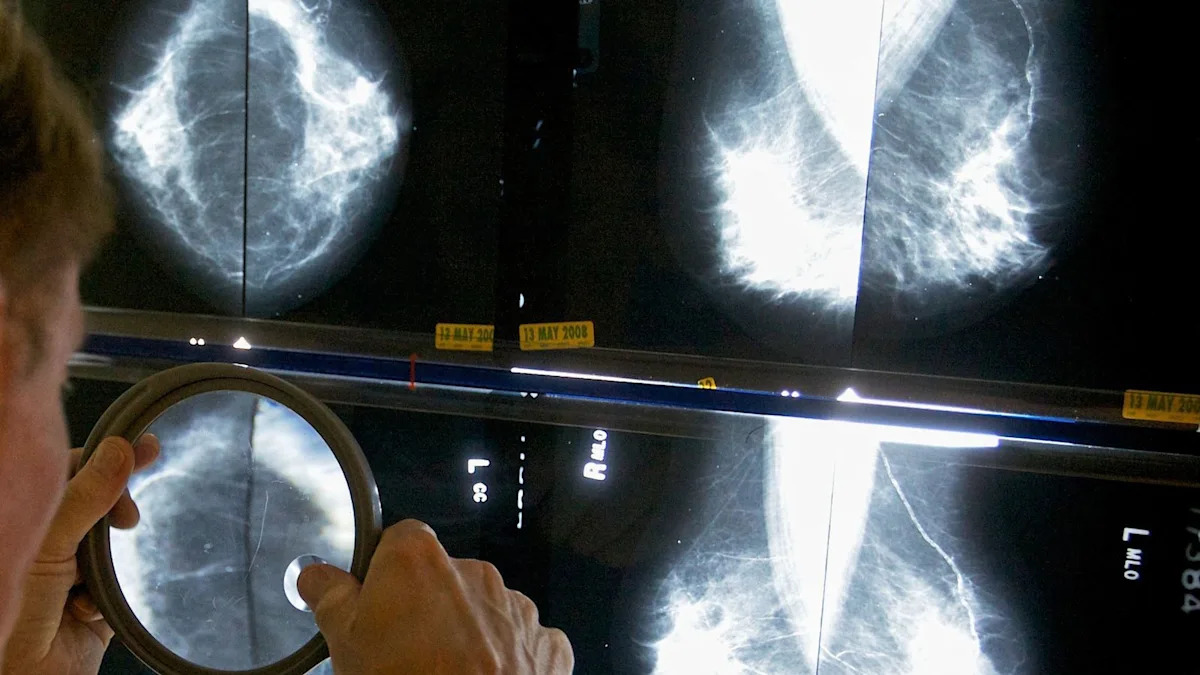
A woman who took part in a study which found some people with breast cancer can safely avoid chemotherapy said receiving the news she did not need the treatment felt “like Christmas”.
Mother-of-two Karen Bonham, from Cardiff, took part in an international clinical trial led by University College London (UCL), designed to identify patients who could be spared the “physical and emotional burden of chemotherapy”.
The study followed more than 4,400 patients aged 40 and over across the UK, Norway, Sweden, Australia, New Zealand and Thailand.
It used a gene test called Prosigna to measure the activity of genes involved in breast cancer growth.
Results suggest those aged 40 and over whose tumours had a low Prosigna test score – more than two-thirds of those who took part in the study – can be safely treated with hormone therapy alone.
The trial was designed to find out whether this method would lead to a “meaningful increase” in the number of patients whose cancer returned or died within five years.
It found chemotherapy had “little or no additional benefit”, as outcomes were similar regardless of whether the treatment was used.
Regularly offered to people with early-stage breast cancer that has spread to the nearby lymph nodes, chemotherapy lowers the risk of it returning.
But it comes with significant side effects and clinicians are concerned it offers little benefit to those with the most common, hormone-sensitive type of breast cancer, UCL said.
The university said researchers estimate more than 5,000 NHS patients a year could avoid chemotherapy thanks to the trial.
Kylie Minogue says second cancer diagnosis left her a ‘shell of a person’
Nurse helps to shape future breast cancer care for other patients
After being diagnosed with breast cancer following a routine screening in June 2017, Ms Bonham was “dreading” the prospect of chemotherapy.
Ms Bonham, who worked as a speech and language therapist for four decades, agreed to take part in the trial in the hope that she could avoid chemotherapy.The 64-year-old had already cut her hair short when she got the news she would not require the treatment, while walking on a beach.Ms Bonham said: “How to describe the initial feeling? Immense relief? Like Christmas? Certainly a mixture of the two.”
Subscribe for free to our weekly newsletter for exclusive and original coverage from ITV News. Direct to your inbox every Friday morning.
Instead of chemotherapy, she received radiotherapy and hormone therapy, and completed eight years of active treatment.
Almost nine years on from her diagnosis, Ms Bonham said she does not feel defined by cancer, has returned to normal family life, and enjoys keeping active, walking and yoga.The trial’s chief investigator, and professor of breast oncology at the UCL Cancer Institute, Professor Rob Stein, said: “These results mark an important and significant step toward more personalised treatment.“The trial has successfully used tumour biology to guide decisions rather than relying solely on traditional clinical features.“For patients, this means many may be spared the physical and emotional burden of chemotherapy and its potential long-term side effects.“For health systems, it represents a more efficient and evidence-based use of resources.”It is not known whether the findings apply to people under the age of 40, UCL said.It is hoped that more information about the use of the gene test for pre-menopausal women will emerge in the next phase of the trial, but a result is “still several years away”, the university added.
Reporting History sees journalists join News At Ten anchor Tom Bradby to revisit their remarkable on-the-day reports of the defining events of the modern age. Listen to the episodes below…