
Under the early summer sun at Crom, the calm beauty of the lakeside landscape is being matched by the quiet hum of one of the BBC’s biggest live productions broadcasting nightly from the heart of Fermanagh.
Production lorries line the grounds, those inside are in darkness working on computers viewing live wildlife feeds as they flicker across monitors, as Springwatch aims to bring the sights and sounds of Upper Lough Erne to viewers across the UK each night.
Behind the scenes at BBC Springwatch (Image: NQ)
Cameras are hidden among trees, woodland and stone walls, capturing everything from nesting house martins swopping in the courtyard of Crom to a buzzard feeding her chicks deep in the forest.
Near the water’s edge, two modest caravans have become temporary bases for the presenters, who gather between broadcasts to revise scripts and notes before going live to millions.
Despite the scale of the operation, the atmosphere at Crom remains remarkably peaceful.
For presenter, Michaela Strachan, she has described Crom as a place where “stress comes off your shoulders”.
The presenter had fallen in love with the scenery and wildlife around Upper Lough Erne during the opening days of filming, even taking early morning swims in the lough before the cameras started rolling.
“I’m always excited when we go somewhere new because it means we’re exploring somewhere new,” she said. “I’ve been to Northern Ireland many times, but never this area before. To come here and see how beautiful it is has been amazing.
Meanwhile, Executive Producer Rosemary Edwards said bringing Springwatch to Crom had been more than 18 months in the making, with producers needing to carefully assess the wildlife before committing to the location.
“To choose a location, we normally have to start over a year in advance,” she explained. “We need to come and check the wildlife in spring before we commit to filming here.
Rosemary Edwards, Executive Producer of BBC Springwatch. (Image: NQ)
Rosemary said the programme’s arrival in Fermanagh marks the first time the full-scale Springwatch outside broadcast production has been based in Northern Ireland.
“This is three weeks of live broadcasting, so it’s a huge operation,” she said. “It’s the first time we’ve done the full outside broadcast production from Northern Ireland.”
The executive producer said around 95 people are involved in the production once filming gets underway, including wildlife experts, camera crews, security, caterers and presenters.
Both Michaela and Rosemary said the abundance of wildlife around Crom had already produced memorable moments, particularly in the courtyard area where swallows, swifts and house martins nest in large numbers.
Michaela said her connection with nature had become increasingly important over time, particularly amid the pressures of modern life.
Michaela Strachan relaxing at Crom (Image: NQ)
“I turned 60 a month ago and life can be exhausting, particularly these days,” she said. “It’s so important to go somewhere where you can declutter your mind, and in a place like this you can do exactly that.
“As soon as you come here, you just feel lighter.
“We have such chaotic and busy lives and we’re bombarded with so much information all the time. Life is exhausting. You need to take time out and just take a break from everything.”
Rosemary believes the programme’s enduring popularity comes from helping viewers better understand the wildlife they encounter every day.
“Everyone knows what a house martin is and everyone recognises a swift,” she said. “But not everyone knows that swifts can sleep on the wing, or that they spend almost their entire lives in the air until they come in to nest and lay eggs.
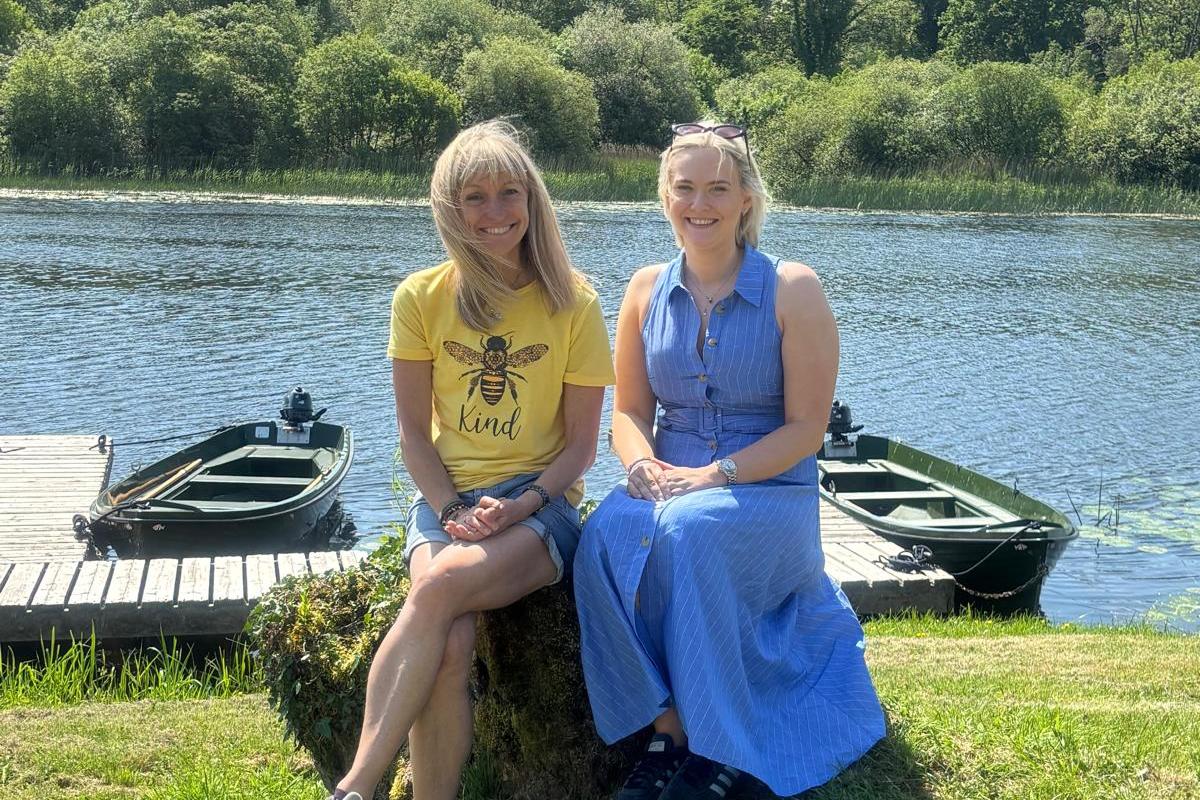
BBC Springwatch Presenter Michaela Strachan and Victoria Johnston (Image: NQ)
“It’s about sharing those amazing facts that people might not know, because that creates interest, then love, and ultimately a desire to protect wildlife.”
She added that Springwatch differs from many natural history programmes because it focuses on wildlife people can see close to home.
“A lot of natural history programmes are filmed overseas in places like Africa or India, and they’re amazing,” she said. “But Springwatch is about the wildlife on your doorstep.
“People can watch the programme and then go outside and see those birds, those foxes, or those animals for themselves. It’s accessible wildlife, and it’s about encouraging people to love what’s around them at home as well.”
Click here for more:
Julie Johnston, Visitor Operations and Experience Manager for the National Trust in Fermanagh, welcomed the visit of the BBC to Crom: “It’s not often that Fermanagh is shown on the TV and we do have a hidden gem here, we have the water, we are a destination.
People should be coming and staying in Fermanagh and just taking it slower and enjoying their time here. I’m hoping that this is what Fermanagh gets from this.
One might begin to think some of the wildlife were being paid as they help put on a show that will broadcast all of Fermanagh’s natural beauty far beyond these shores over the next few weeks.
Leaving behind the production hub, a large set of brown ears dart into my vision as a hare scampers across the path. Pausing in front of the car, it turns toward the windscreen as if to say, ‘are you here to film me too?’