
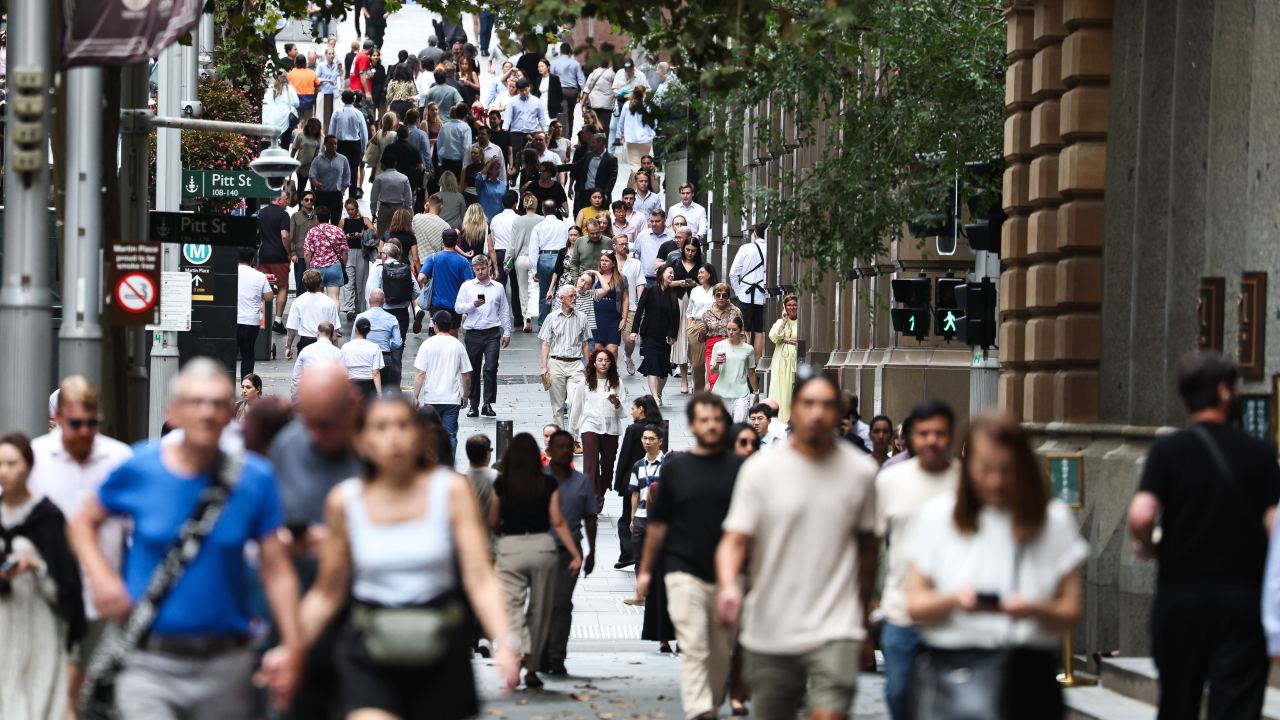
Almost half of the nation says cost of living is the most important issue they face as high inflation and interest rates eat into household budgets.
The new Sky News Pulse / YouGov poll shows price pressures that devalue Australians’ buying power are suffocating the nation.
About 45 per cent of respondents said cost of living was the most important issue on the 12-option list of problems facing Australia.
This is four per cent higher than when Australians were asked the same question on February 26 and greatly exceeds the second-place priority of immigration – at just 10 per cent.
The poll, which surveyed 1,471 voters between May 26 and June 2, also revealed that 70 per cent of Australians expect energy prices to surge over the coming year.
This is a blow to Labor’s green energy policy and the party’s repeated promise that renewable energy will provide Australians with the cheapest energy.
Families are bearing the brunt of the energy crunch as at least 75 per cent of Generation X predict higher power prices will jump over the coming 12 months.
Parents were more likely than non-parents to predict energy prices will lift while 80 per cent of One Nation voters forecast a hike.
Meanwhile, economic concerns outside cost of living dominated the list of worries for Australians.
About nine per cent of respondents said that managing the economy and government debt were the most important issue and another eight per cent selected housing affordability.
However, these were only the third and fourth most selected options respectively and each trailed cost of living by more than 35 per cent.
Millennials were the most likely to pick cost of living as the leading issue facing Australians, with 54 per cent of the generation selecting the option.
At least 50 per cent of Australians with a mortgage picked cost of living alongside 51 per cent of renters.
Outside economic struggles plaguing households, the latest Sky News Pulse also reveals One Nation has topped Labor on primary vote.
One Nation lifted four per cent to a high of 29 per cent, while Labor slipped two points to 26 per cent.
Labor’s fall follows its unpopular May budget where it went back on pre-election promises not to change capital gains tax or negative gearing.
The CGT proposal, which scraps the discount and replaces it with a tax on real gains, sparked outcry from business leaders and entrepreneurs who warned founders will move overseas.
The Coalition has not gained Labor’s disgruntled voters, despite vowing to repeal the changes, as the Opposition slipped three points to sit at 20 per cent.
Labor’s decline also comes as the Reserve Bank of Australia has hiked interest rates three times since the beginning of the year.
This has added $272 per month in mortgage repayments for a household owing $600,000 on its 25-year loan.
The central bank’s rate bumps come as inflation in the year to April was 4.2 per cent – well outside the RBA’s 2-3 per cent target band.
Trimmed mean inflation – the middle 70 per cent of price changes – lifted to 3.4 per cent as housing costs remained elevated.
Government spending was partly blamed for the May hike, in contradiction to boasting from Treasurer Jim Chalmers after the decision was handed down.
“The Reserve Bank statement does not point to public spending as a factor in their decision to increase interest rates today,” Mr Chalmers told reporters in early May.
“To those people that are pretending that the government’s budget is the sole driver of prices in our economy or interest rate decisions – they weren’t saying that when interest rates were cut three times.”
RBA governor Michele Bullock acknowledged that government spending had made the central bank’s inflation fight more challenging.
“We have a situation in Australia prior to the war, where we had demand above supply,” Ms Bullock told reporters after handing down the hike.
“The ability of the economy to supply the goods and services that were being demanded in total – including by government and by the private sector – was outstripping the ability of the economy to supply it.”
She continued: “The extent to which government make up the shortfalls for households by giving them more money – it makes it harder to dampen demand.”
The RBA will hand down its next cash rate decision on June 16.
It is widely expected to hold the cash rate at 4.35 per cent as unemployment unexpectedly climbed in April.