
Photo: Wendigoon
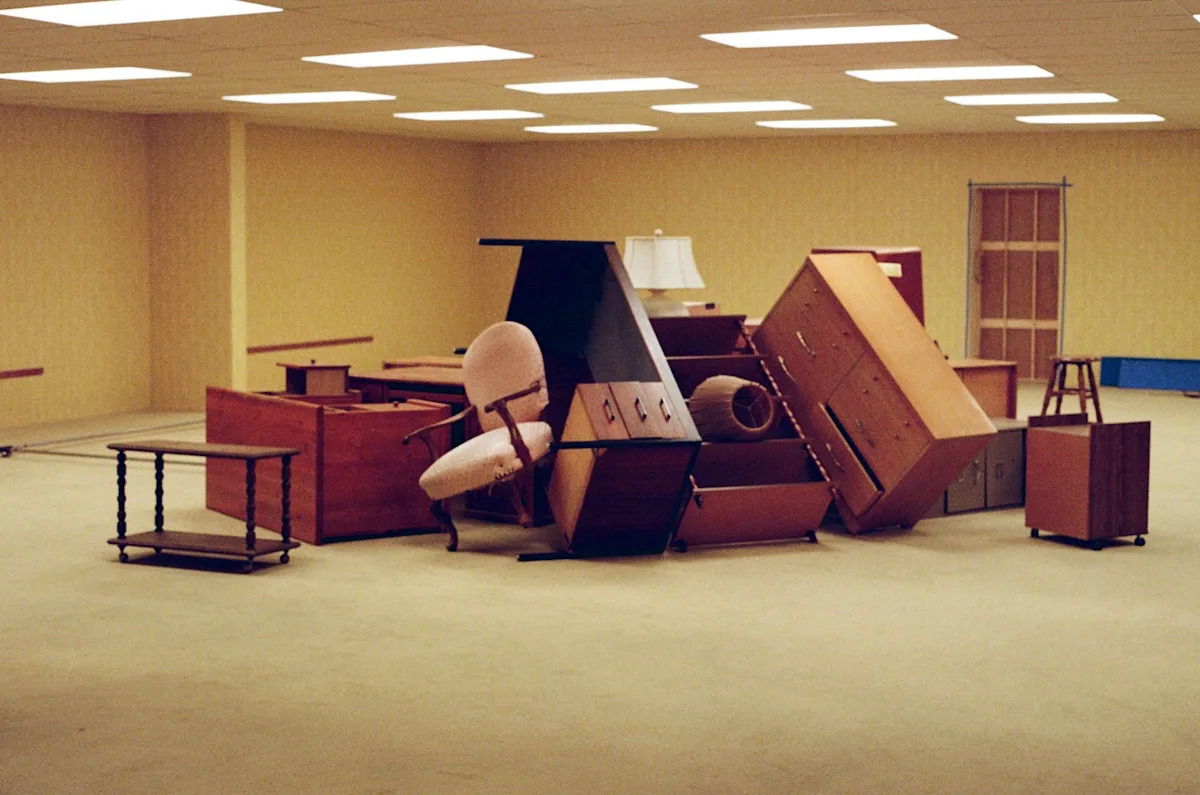
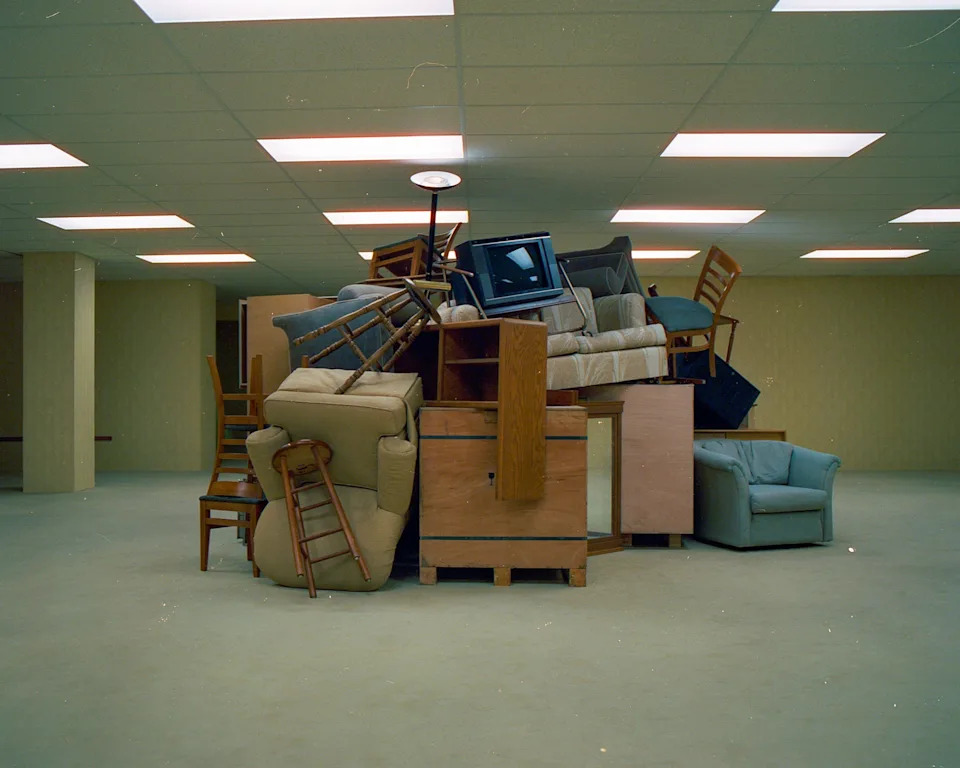
Picture a labyrinth of empty carpeted spaces washed in bile-colored wallpaper. Overhead lights flicker, and the only way to distinguish one room from the next is through different pieces of bargain furniture. This isn’t the worst estate sale you’ve ever been to—these are the backrooms, a horror concept born on the internet that’s now the premise of a A24 film of the same name. Over the weekend, the movie earned $81 million at the box office, a record for the production company.
Behind the scenes in one of the backrooms
Photo: Asterios Moutsokapas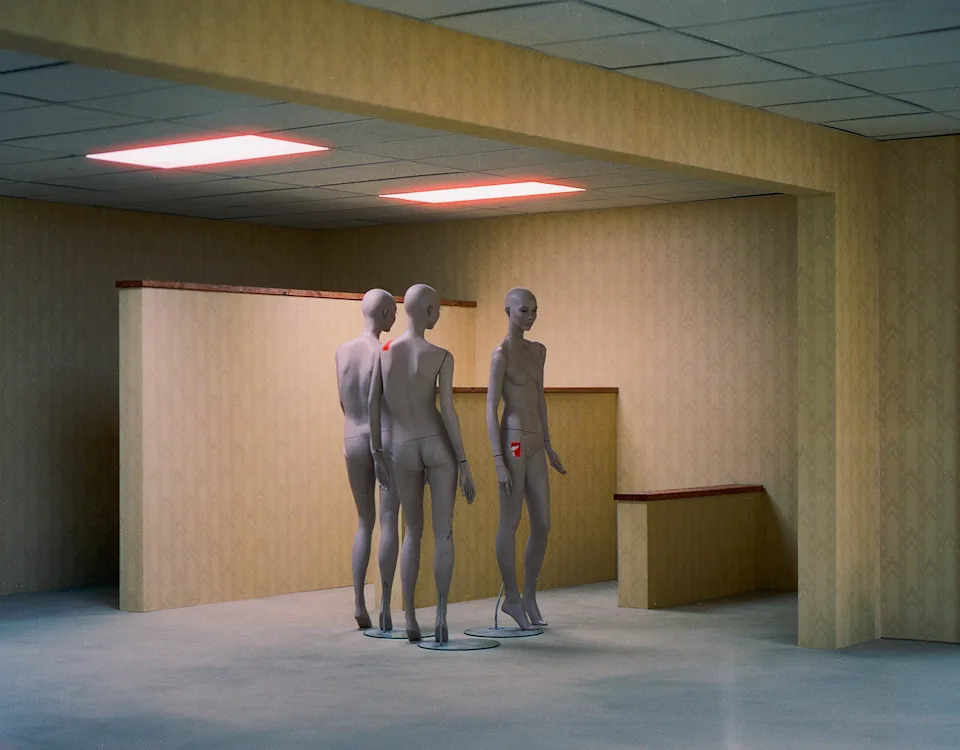
The concept describes a series of infinite rooms, populated by pale yellow wallpaper, carpeted floors, and random pieces of furniture.
Photo: Asterios Moutsokapas
Backrooms is based on an expansive cyber-horror story that took shape via a 2019 4chan post that developed the intricate online lore. On the forum, one user posted an image of what is now the Platonic ideal of a backroom, and another commented with a succinct narrative for the concept: Defined by “the stink of old moist carpet, the madness of mono-yellow, the endless background noise of fluorescent lights at maximum hum-buzz,” backrooms span millions of square feet across multiple levels—and, spoiler alert, they harbor evil entities. On subreddits and other internet corners, users added their own fictional accounts of exiting reality and finding themselves lost in the backrooms.
Over time, the concept grew into different forums. Kane Parsons brought his version of the story to life online when he began creating short YouTube films based on the concept in 2022. His videos caught A24’s eye, and the studio offered him an opportunity to turn the story into a feature film—at 20, he’s the youngest director the production company has ever worked with.
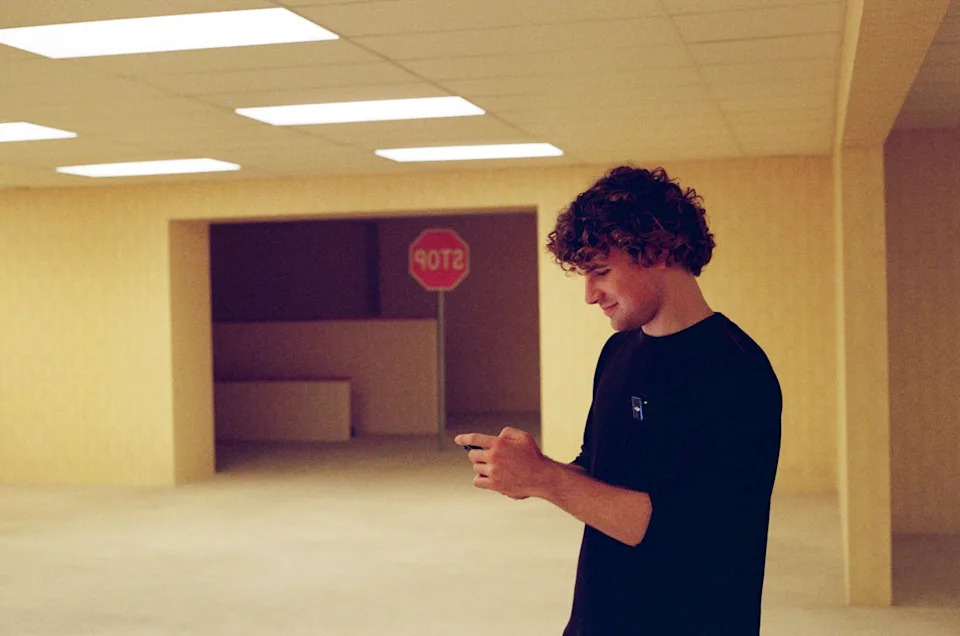
Kane Parsons on the set of Backrooms
Photo: Wendigoon
Parsons worked mostly using the 3D computer rendering software Blender, but taking his concept to the big screen required something more concrete. Production designer Danny Vermette was tasked with erecting the backrooms on a soundstage in Vancouver.
Though the film emerged from a collective concept, “it’s [Parsons’s] universe, and he’s put a lot of thought and energy into it,” Vermette tells AD. To start, Vermette asked Parsons to render the film set of his dreams in Blender. “When he sent the file over, it crashed my computer,” he says. “It was something like 100,000 square feet.”
Budget and spatial constraints meant that they wouldn’t be able to build the entire labyrinth world, but the pair determined what could be built practically and where they’d have to supplement with SFX. Vermette’s team ended up building 30,000 square feet of half walls, “weird little corners,” and dead ends across four soundstages. The team used 1,520-foot-tall scaffolding to create multiple levels within the set, resulting in awkward spaces for the actors to interact with. Cavernous channels and steep floors made the space feel like a living breathing thing trying to trap intruders. “We wanted to sell the idea that there isn’t a person behind the building of this,” Vermette says.
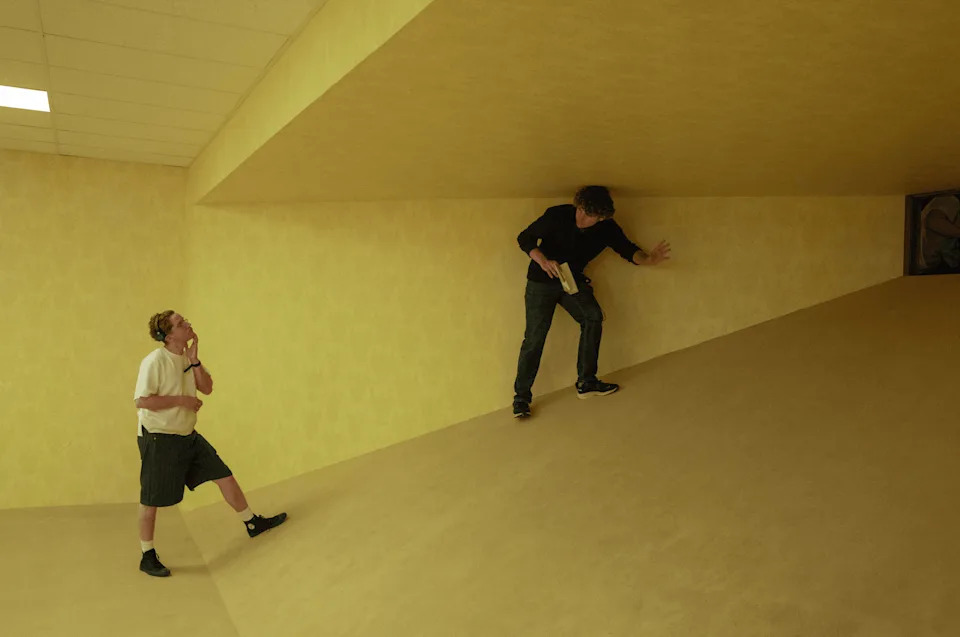
The yellow wallpaper may be the most important visual motif in the backrooms—Vermette found a local producer to create 40 product tests, with the end goal being an identical match to Parsons’s (right) YouTube videos. “The real test was to put your iPhone camera up and take a photo,” Vermette says. “If it felt like the Blender file, we know we won.”
Photo: Asterios Moutsokapas
The film stars Chiwetel Ejiofor as Clark, an alcoholic architect turned furniture salesman who stumbles upon the backrooms in the basement of Captain Clark’s, his kitschy pirate-themed warehouse. The actor spends much of the film inside the never-ending maze—during a Q&A after a screening of the film, the actor even admitted to getting lost while looking for catering on set—but the film features spaces from the “real world” as well. For Captain Clark’s and a therapist’s office, Vermette channeled the floral chintz, wood panelling, and dated technology of the ’90s, when the film is set. Boxy TVs are always playing infomercials, and the graphic design evokes bargain retail clichés. “EVERYTHING MUST GO!” one sign in Captain Clark’s screams. “NO CREDIT NEEDED!” says another. Vermette “wanted to continue the theme of awkwardness and the level of discomfort,” and the store design definitely communicates Clark’s bleak and angry worldview. Effectively homeless, he sleeps in his floor model bed, surrounding it with multiple display lamps to create a sad cocoon. It’s a bit pathetic but it’s also “tongue-in-cheek,” in Vermette’s words. Just as the backrooms set design added to the movie’s jump-scare effect, the real world’s design added an unanticipated comedic one.
Schizophrenic hallucination, memory palace, haunted house, Reddit thread come to life—there’s tons of ways to interpret the symbolism of the backrooms. At a preview of the film at the Times Square AMC last Thursday, Parsons noted that he sees them as “parallel to the physical mechanics of human memory.” Maybe the infinite interpretations are why people are so engaged in the concept online. Before filming, Ejiofor perused forums to get an understanding of the backrooms concept and liminal spaces in general. “I ended up falling down this bizarre rabbit hole and feeling completely lost but also like an itch was being scratched that I didn’t even know that I had,” he said.
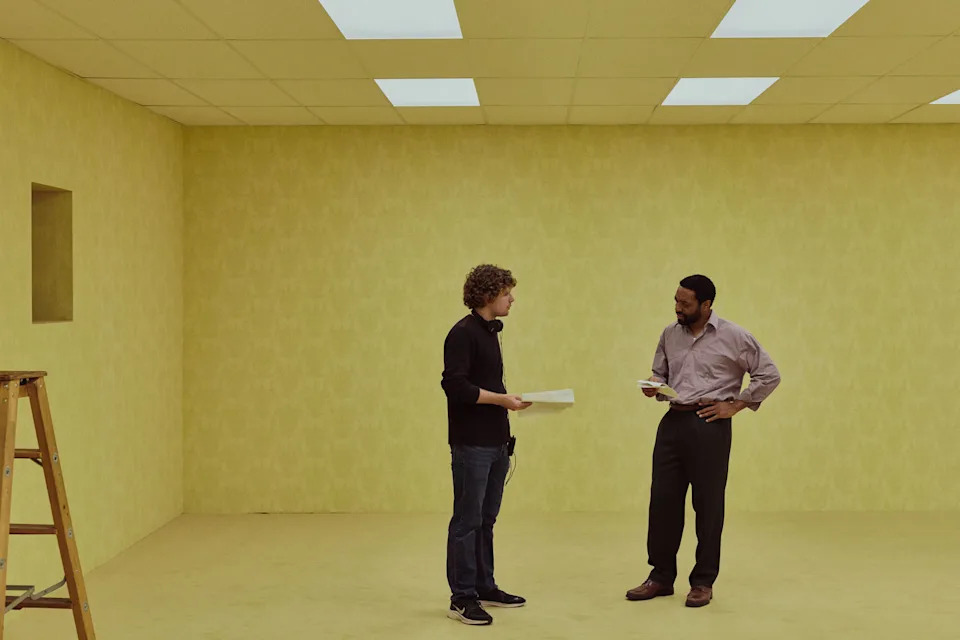
Parsons and Ejiofor on the set of Backrooms
Photo: Asterios Moutsokapas
“I feel like every building is alive in a way,” said Parsons at the same screening. The Times Square AMC happens to be one of the more uncanny spaces in midtown New York. If this was intentional, the Backrooms marketing team deserves a round of applause. If not, they still do for launching this peel-and-stick wallpaper inspired by the film.
Originally Appeared on Architectural Digest
More Great Stories From AD