
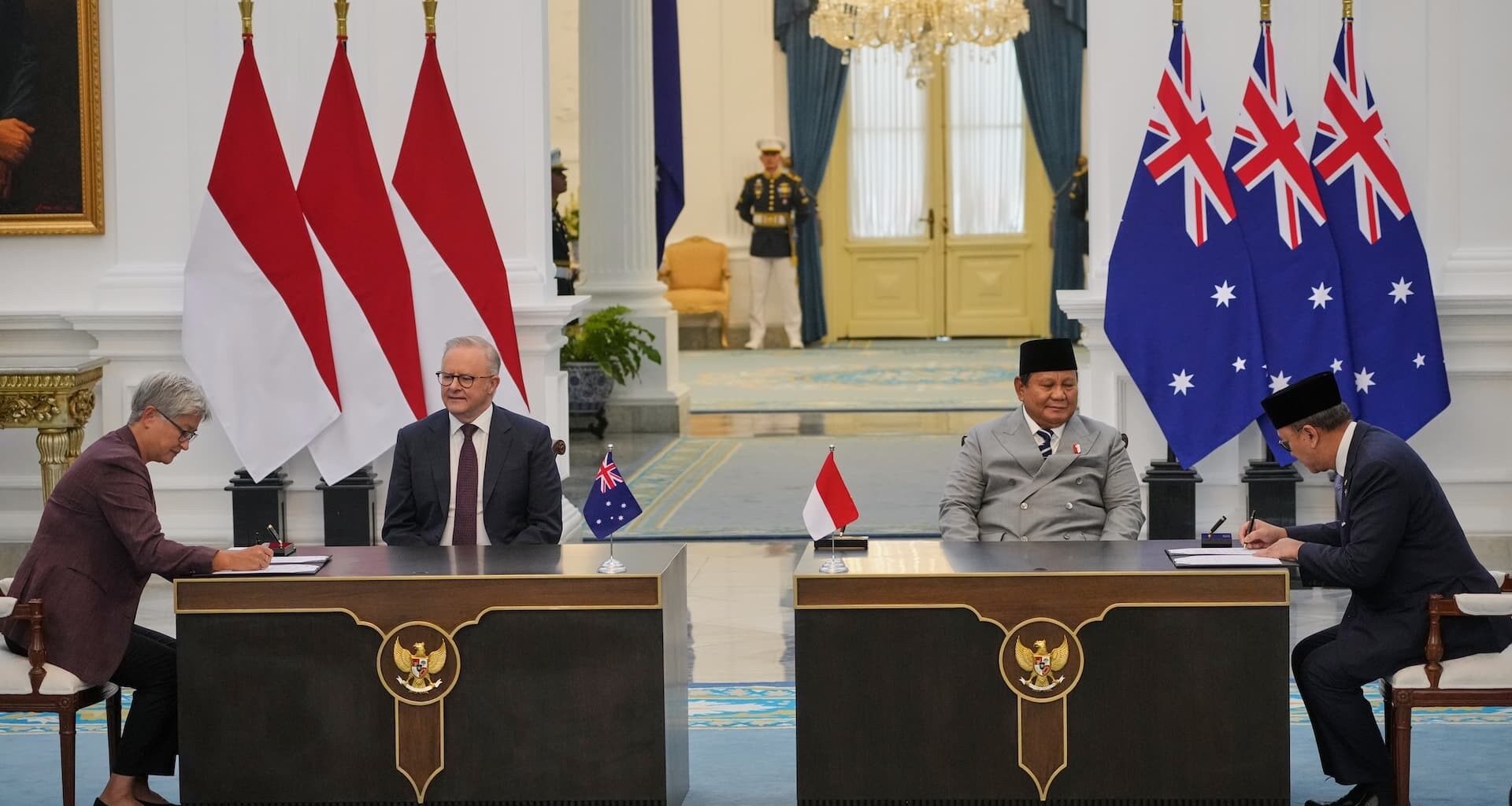
In April, Australia published its latest National Defense Strategy. Building on a similar document that was released two years go, the NDS details budget plans and acquisition priorities and lays out Prime Minister Anthony Albanese’s strategic vision for Australia’s regional relations. It comes amid tensions driven by U.S.-China competition and uncertainty over Washington’s dependability as Australia’s primary ally.
In this context, the NDS describes Southeast Asia as “central to the Indo-Pacific’s strategic future and to Australia’s national interests,” and asserts that Australia has “broad, deep and long-standing defence partnerships across the region.” The language is confident, but it also reflects a structural bias in Australian strategic planning that has persisted for decades: talking up engagement with Southeast Asia, only to underfund it in practice, a pattern that spans both the defense and foreign policy domains.
Australia’s strategic thinking has long been organized around concentric geographic priorities: the homefront first, then the immediate neighborhood of Papua New Guinea and the Pacific island states, and beyond that, as a residual category, the broader Indo-Pacific region writ large. Southeast Asia falls awkwardly between the second and third rings.