
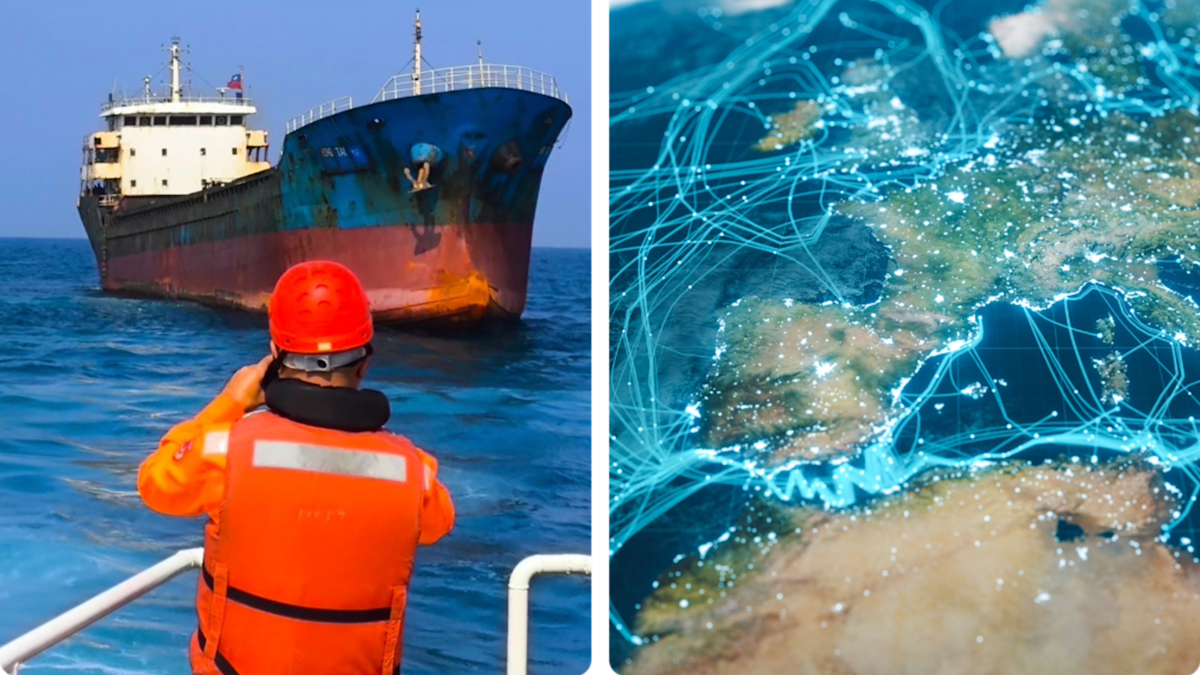
Questions are being raised about the security of the undersea cables that keep Australia connected to the rest of the world.
This month, Australia and its allies in the AUKUS defence agreement warned the undersea cables and the cords inside them – about as thick as a standard garden hose – were at increased risk.
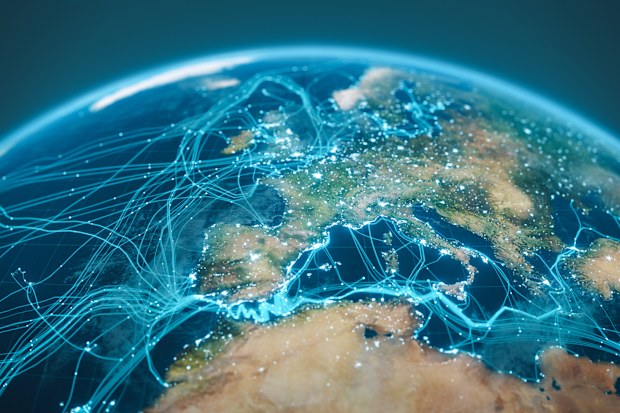
An intricate network of undersea cables helps connect the world. iStock
Severe weather, boating accidents, earthquakes and the occasional shark bite are common risks facing the network around Australia’s coast.
But the governments of Australia, the US and UK are worried about a growing risk of Russian and Chinese sabotage of undersea cables. They are also concerned that Iran may seek to exploit the data networks running through the shallow waters of the Persian Gulf.
Speaking at a summit in Singapore, Defence Minister Richard Marles said the “seabed is a battlefield” as he and his American and British counterparts unveiled steps to protect the vital cabling.
Marles also highlighted how 99 per cent of the country’s internet traffic flowed through 15 seabed pipes, which land on the coast at just a few sites in Sydney and Perth.
Josh Cole, a partner with international law firm Baker Botts and an expert on Asia-Pacific infrastructure, said this made Australia especially vulnerable.
Defence Minister Richard Marles says Australia is especially vulnerable to sabotage of its undersea digital cables. AP Photo/Achmad Ibrahim
He said internet services that rely on international connectivity – including cloud hosting services hosted offshore, artificial intelligence and voice and data – were especially at risk.
Sites that would be impacted by any major damage to Australia’s undersea cable network include defence and technology installations, such as the HMAS Sterling Naval Base in Western Australia and Google’s planned AI data centre on Christmas Island.
Cole said there were existing legal safeguards in place to protect Australia’s submarine cables.
“Australia has a cable protection zone regime which provides a level of protection for subsea cables that does not exist in many countries. Those zones stretch 40 nautical miles offshore into deep water, where it is more difficult to damage subsea cables.
“There are risks in international waters which are beyond the jurisdictional reach of states, but cable operators seek to minimise those risks by avoiding laying cables in shallow waters [where there is a higher risk of damage, whether accidental or deliberate] wherever possible. ”
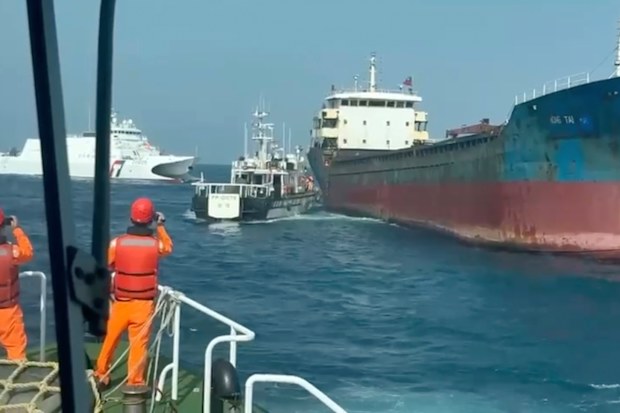
China has been suspected of cutting undersea communications cable in waters off Taiwan. Associated Press
But the AUKUS countries say the growing potential for sabotage means militaries should be involved in protecting them.
Marles said undersea internet cables – “the arteries of modern civilisation” – were being cut at an unprecedented rate.
“Over the past 18 months, we have witnessed a series of attacks against subsea critical infrastructure at a scale and frequency that is historically unprecedented,” he said in Singapore.
The incidents included cables being damaged in the Taiwan Straits and the Baltic Sea, which have been attributed to China and Russia, respectively.
To respond to the threat, the AUKUS allies will develop undersea vehicle (UUV) technology, with a delivery date expected for next year.
But even after that is up and running, civilian authorities and the private sector will be responsible for installing and repairing the subsea infrastructure.
Australia and other Western nations also have to contend with the growing influence of China in laying and maintaining the networks.
The vast South China Sea, which China claims as its territorial waters, is a critical digital chokepoint, with a vast network of cables beneath its waves, linking Asia Pacific nations to the US, Africa and Europe.
Cole said Australia would look at developing subsea cable systems which connect edAustralia directly to the US and to South Asia
“Both Australia-US and Australia-Asia connectivity will be critical for Australia. Operators are increasingly recognising that having a high concentration of subsea systems in the South China Sea creates certain risks.”