
I can already picture the haggling, the leveraging, the bluster. Buyers at the trade deadline huffing and puffing to sellers about the possibility of an owners’ lockout canceling part or all of the 2027 season.
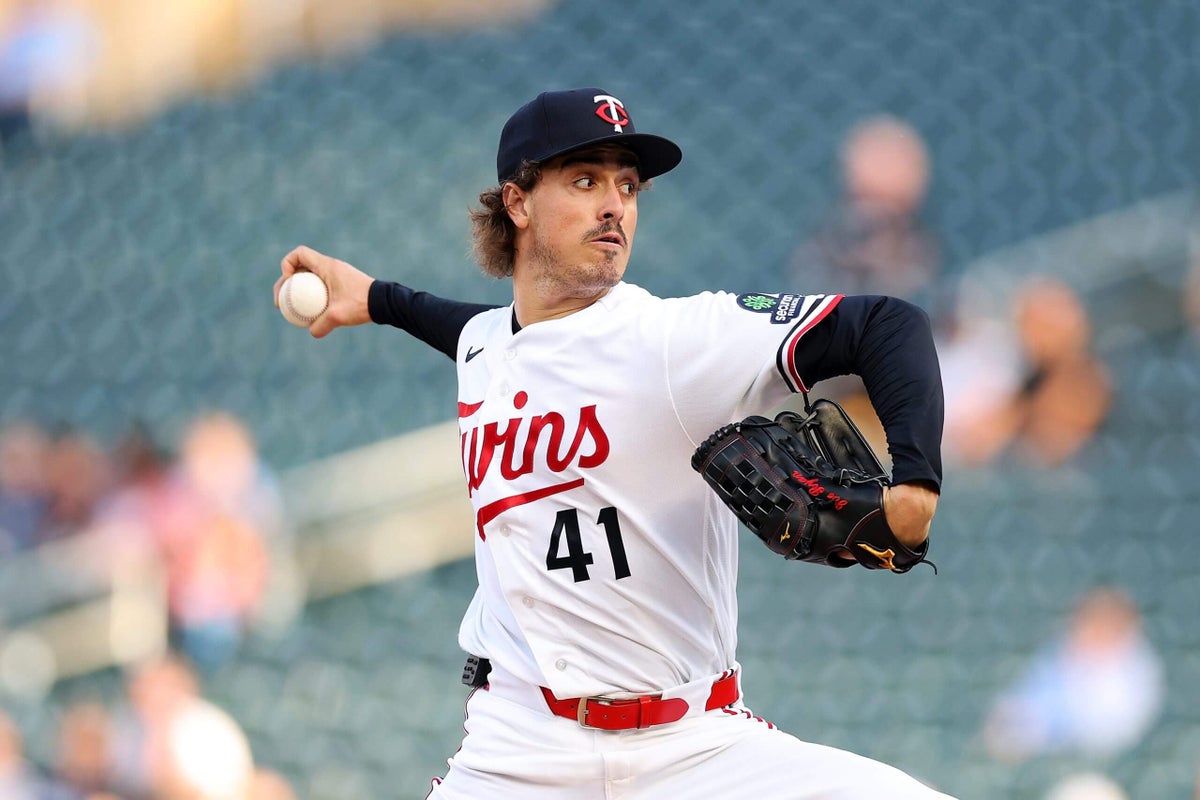
Let’s use Minnesota Twins right-hander Joe Ryan, a top starting pitcher under club control through ’27, as a not-so-imaginary example.
Says an interested executive to Twins general manager Jeremy Zoll: “I love Joe, but in calculating what I’ll offer, I’ve got to price in the risk of losing games to the lockout.”
How I would fire back if I were Zoll: “History suggests we’re not going to lose an entire season. If we play only 60 games, 100, 140, someone will still hoist the World Series trophy at the end. And if you don’t want Joe, go trade for a rental!”
I’ll say it right now: If the 29-35 Twins fall out of contention — and bless their faintly beating hearts, they’re only two games back in the bumbling competition known as the American League wild-card race — they’re going to trade Ryan, and not at a discount.
How do I know?
Because last offseason, two quality players under control through 2027 — utilityman Brendan Donovan and left-hander MacKenzie Gore — yielded significant returns.
Donovan brought the St. Louis Cardinals three prospects in a three-team deal with the Seattle Mariners and Tampa Bay Rays. One of them was pitcher Jurrangelo Cijntje, the 15th pick in the 2024 MLB Draft. The Cardinals also obtained the Nos. 68 and 72 selections in next month’s draft.
Gore brought the Washington Nationals five prospects from the Texas Rangers, including infielder Gavin Fien, whom The Athletic‘s Keith Law ranked No. 76 in his top 100.
The prospect of missing games next season arose during the Donovan and Gore discussions, according to executives briefed on the conversations. But ultimately, the uncertainty about 2027 had little impact on the returns.
All of the executives interviewed for this column spoke on condition of anonymity because the league prohibits them from commenting publicly on labor-related matters.
So much is unknown about how the labor negotiations will play out. In many ways, front offices will be flying blind, and not just about the length of the 2027 season. The question of whether players would receive service time for canceled games is another potential area of dispute between owners and players.
A loss of service time would delay eligibility for players in salary arbitration and free agency. The players who went on strike in 1994 and ’95 had their service time restored by the 1996 collective bargaining agreement, but not without a protracted fight.
If anything, service time is more valuable to players now than it was then. Teams today use aging curves in their valuations and often view older veterans skeptically.
The MLB Players Association “unequivocally” would not agree to a deal to end a lockout if they lost service time, according to a union official who was not authorized to speak publicly. They also would oppose the tolling, or pausing, of contracts, another way for clubs to extend their control over players’ tenures.
Probably the best approach for executives at the deadline is to operate under the assumption that few games will be lost in ’27, if any. With the league enjoying a resurgence of popularity, the powers that be won’t be dumb enough to risk going backward, will they?
Maybe it’s best not to answer that question.
The bottom line is that enough teams want to win, and those teams will ensure that the deadline is as frenzied as ever — yes, even for players who are under club control through 2027 and beyond.
Executives from potential buyers no doubt will raise the possibility of a compromised 2027 season, trying to drive down prices. One went so far as to say he will value players under control through ’27 the same way he would two-month rentals.
The exec, however, described Ryan as a “premium rental” who might be priced similarly to a player who is acquired with a full year of control remaining — the kind of deal, for example, that the New York Mets made last offseason for right-hander Freddy Peralta.
Under the current CBA, if the Mets decline to trade Peralta, they can extend a qualifying offer to him when he reaches free agency. They then would receive draft-pick compensation if he signs with another club.
Thus, Peralta carried greater value than a rental of similar ability at the deadline. The rental, traded in the middle of a season, would not be eligible for a QO. His new team would stand no chance of gaining a pick.
The comparison between what the Milwaukee Brewers got for Peralta and what the Twins might get for Ryan is not apples to apples. But the Twins might be in position to approximate the Brewers’ score — two top 100 prospects, pitcher Brandon Sproat and infielder/outfielder Jett Williams.
Ryan, who turns 30 on Friday, is a pitcher who could not only help his team reach the postseason but also start a playoff game. The demand for that kind of performer at the deadline is intense and almost certainly would override any concerns about 2027.
“The supply and demand is so competitive; somebody is going to plow through that,” one executive said. “Someone will say f— it and pay for ’27 even though they might lose it.”
Said another exec: “Teams will leverage (the threat of missing games), there’s no doubt. But ultimately, there will be enough buyers. Somebody will step up and pay. Somebody will eventually say, ‘This is what we have to do to win. It’s the best player we can access.’”
That was the Rangers’ thinking on Gore, and the Mariners’ thinking on Donovan. Both players were substantial upgrades, justifying their respective acquisition costs even if games are canceled in 2027 and their clubs get less than full value.
The Mariners viewed Donovan as a potential finishing piece in their quest to win their first World Series. The Rangers figured if they fell out of contention, they could flip Gore at the deadline and recoup some prospect capital. And for both clubs, even an entirely lost season in 2027 would not necessarily represent doomsday.
If the current economic system remains in place, teams that lose free agents likely will remain eligible for draft-pick compensation. If a salary cap is adopted, some form of the NBA’s Larry Bird rights, in which teams are allowed to exceed the cap to re-sign their own free agents, might come to baseball.
Players at the service levels of Donovan and Gore obviously weren’t the only ones traded last offseason. Teams also acquired players under control beyond 2027 and likely will do the same at the deadline.
Those players represent a lower risk, seeing as how it’s highly unlikely the sport will shut down for more than one year. The longer runways also create additional options. Players at earlier stages of their careers generally are younger and, in some cases, more open to extensions.
The Baltimore Orioles, for example, acquired right-hander Shane Baz when he was under club control for three more seasons, then signed him to a five-year, $68 million extension. The Chicago Cubs acquired righty Edward Cabrera at the same service level, though they have not extended him.
Washington Nationals shortstop CJ Abrams, a leading trade candidate, is in the same position Baz and Cabrera were in before they were traded: under club control through 2028. The threat of a lockout should have minimal effect on whether Abrams is moved as well.
The deadline, then, will be the deadline, but perhaps with an additional layer of back and forth in negotiations. Clubs in trade talks press every possible advantage, seek every form of leverage imaginable. But the possibility of missing games in ’27 is no greater now than it was during the offseason.
No one in the sport should have been surprised that the initial proposals for the next CBA left the owners and players far apart. The divide has been apparent for some time now. So, if a team with World Series aspirations cries wolf about 2027 and tries to chip away at a seller’s demands, it will only get so far.
No fan will want to hear their GM say, “Sorry, we were unwilling to throw in an additional prospect out of fear we might not play next season.”
If you want to get Joe Ryan, go get Joe Ryan. The deadline is no time to dwell on a gloomy hypothetical, no time for excuses.