
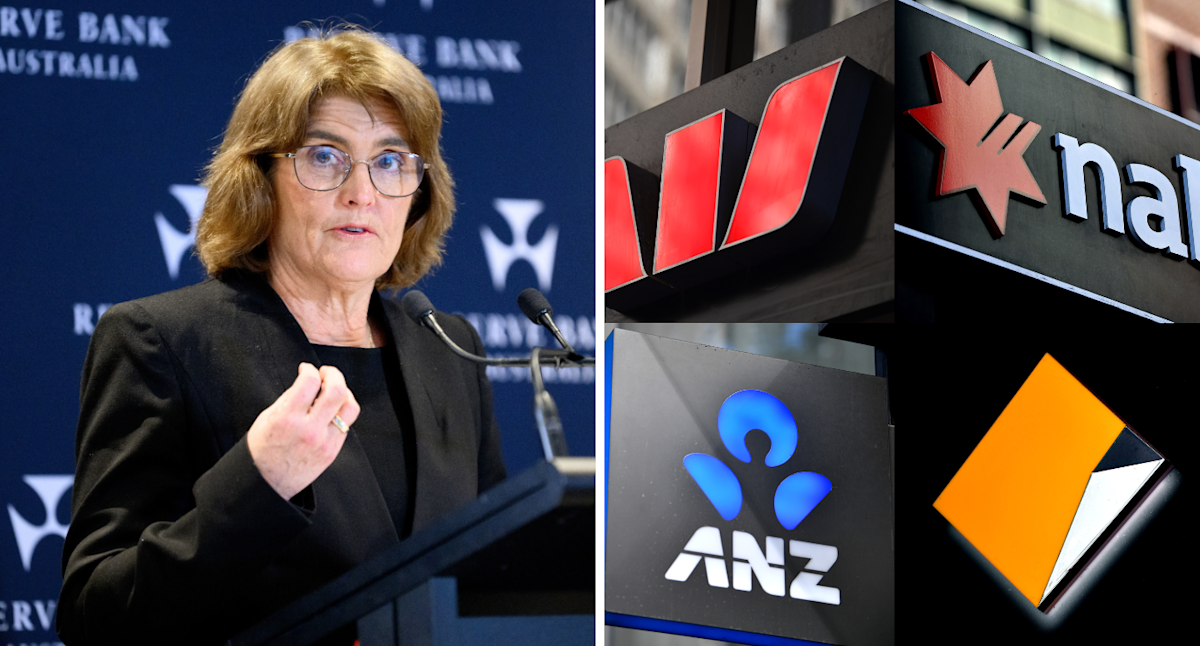
 The RBA is expected to hold interest rates at its June meeting, but the Big Four banks are divided on what it’s next move will be. · Source: AAP
Two of Australia’s biggest banks have given Aussies a glimmer of hope that the rate-hiking cycle could be at its peak. ANZ and Macquarie Bank have today made sweeping cuts to their fixed home loan interest rates, in a clear move against the rate-hiking trend.
ANZ has cut its 2 and 3-year fixed home loan rates by up to 0.10 percentage points, moving in the opposite direction as the other Big Four banks. The cuts bring ANZ’s lowest fixed rate to 6.29 per cent for two years.
Macquarie Bank, the country’s fifth biggest bank, has also taken the clippers to its fixed rates, cutting them by up to 0.45 percentage points. Its lowest rate is now 6.09 per cent for three years.
RELATED
The cuts go against the broader tide, with Westpac yesterday hiking select fixed rates by 0.05 percentage points. NAB, meanwhile, hiked its fixed rates last Friday by 0.15 percentage points.
“ANZ and Macquarie have today shifted gears, cutting fixed home loan rates at a time when the majority of the market is still trending up,” Canstar data insights director Sally Tindall said.
“While these cuts are modest, they are enough to put Macquarie and ANZ in front of their big bank competitors.
“The mixed signals from these fixed rate changes highlights just how uncertain the outlook remains.”
Do you have a story to share? Contact tamika.seeto@yahooinc.com
The majority of economists expect the Reserve Bank will hit pause at its June meeting, but its next move is still being debated.
Westpac is expecting two more cash rate hikes in August and September, while NAB expects one more hike in August.
CBA and ANZ, on the other hand, think the rate hiking cycle is over. CBA is anticipating two rate cuts in May and August next year.
Aussie households face ‘difficult time’
The RBA expects inflation will continue to increase further in the near term, with headline inflation expected to peak at over 4.5 per cent in the June quarter and underlying inflation above the target range until mid-2027.
GDP growth is also expected to slow, with the central bank forecasting it will expand by 1.9 per cent over the year to June. The economy grew at an annual rate of 2.5 per cent in March and just 0.3 per cent on a quarterly basis.
RBA governor Michele Bullock told Senate Estimates this week she knew it was a “difficult time” for many households.
“But it is important that we bring inflation under control. If high inflation persists, it risks becoming embedded in price and wage-setting behaviour, particularly given the prolonged period over which underlying inflation has been above 3 per cent since the pandemic,” she said.
“That would result in more persistent inflation and would require even higher interest rates, and for longer, to return inflation to target.”
Get the latest Yahoo Finance news – follow us on Facebook, LinkedIn and Instagram.