
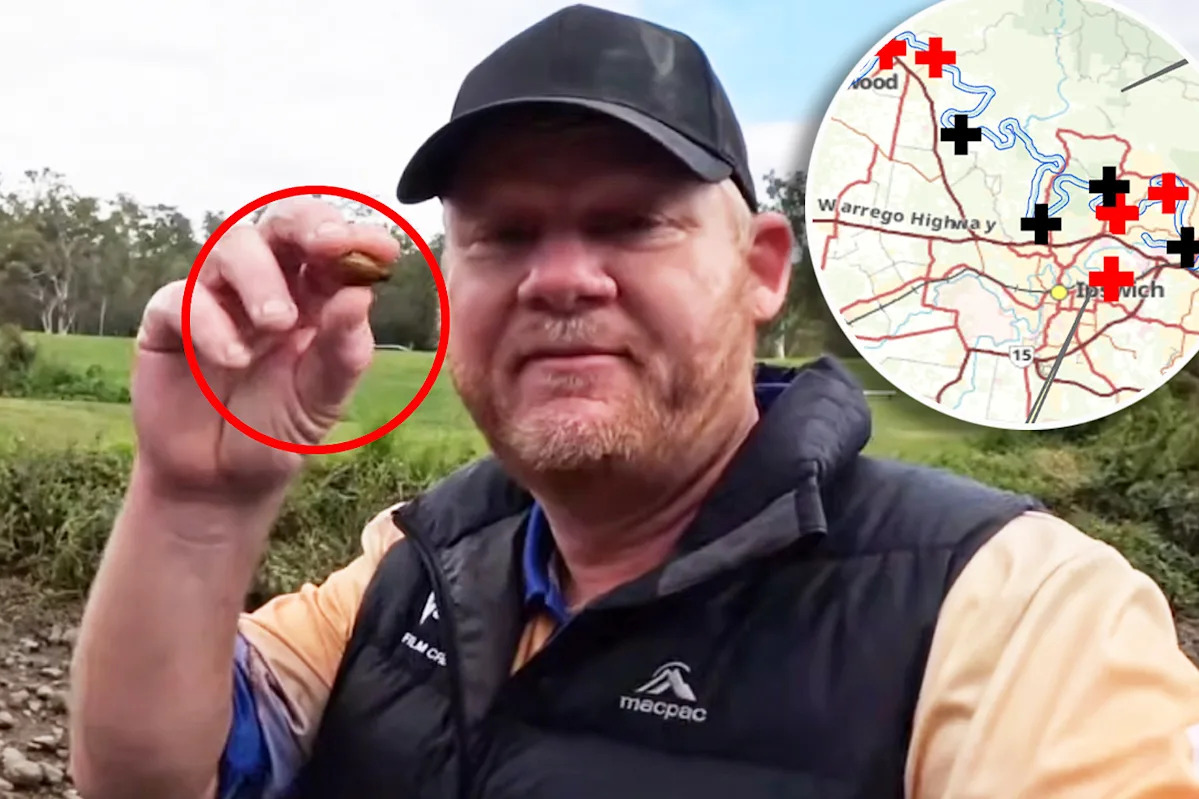
A notorious invasive threat in Australian waterways is getting “rapidly worse”, one dad has warned.
One of the globe’s “worst invaders” was first spotted in Queensland waters just three years ago and is now described as “one of the greatest threats to the native ecosystem of all time”.
Scott Clark, a Queensland father who regularly scours his local waterways for invasive species, told Yahoo News the freshwater gold clam (FWGC) is “spreading like fire” along the Brisbane River.
Originally from Asia, the species was first found in Brisbane in 2023. It has now spread through more than 70 km of the river and, worryingly, cannot be stopped.
Do you have a story about gold clams? Contact newsroomau@yahoonews.com
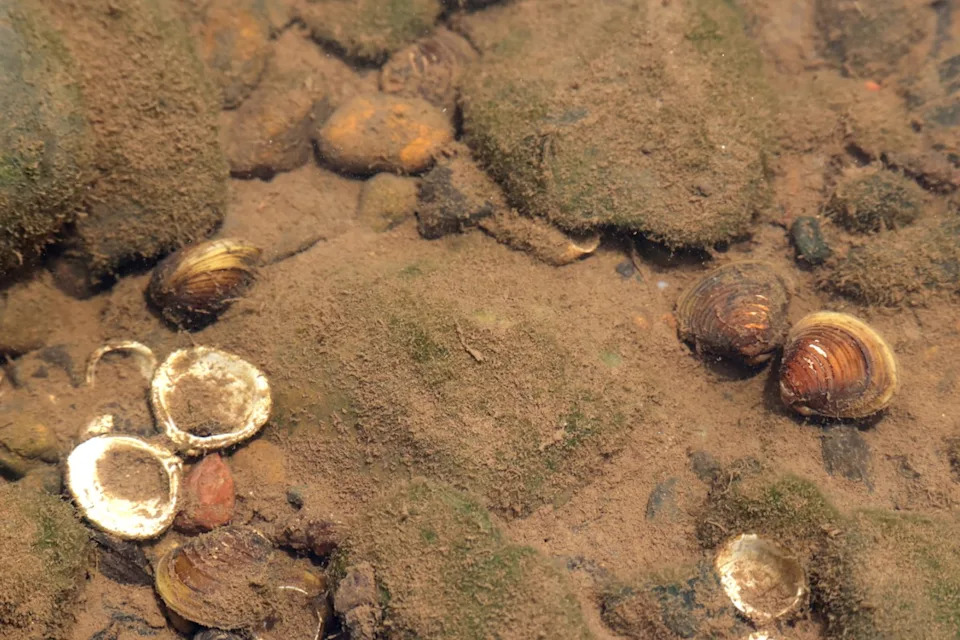
A colony of freshwater gold clam on a murky riverbed.
Multiple sites of gold clam reported on Brisbane River
A spokesperson for the Queensland Department of Primary Industries (DPI) told Yahoo News it has received reports from “multiple sites” on the Brisbane River Catchment and urges Aussies to report new sightings.
They warned the animal is “not able to be eradicated”, however, authorities are working with “relevant stakeholders” to raise awareness about the clam and its impacts, and to encourage adoption of spread minimisation measures.
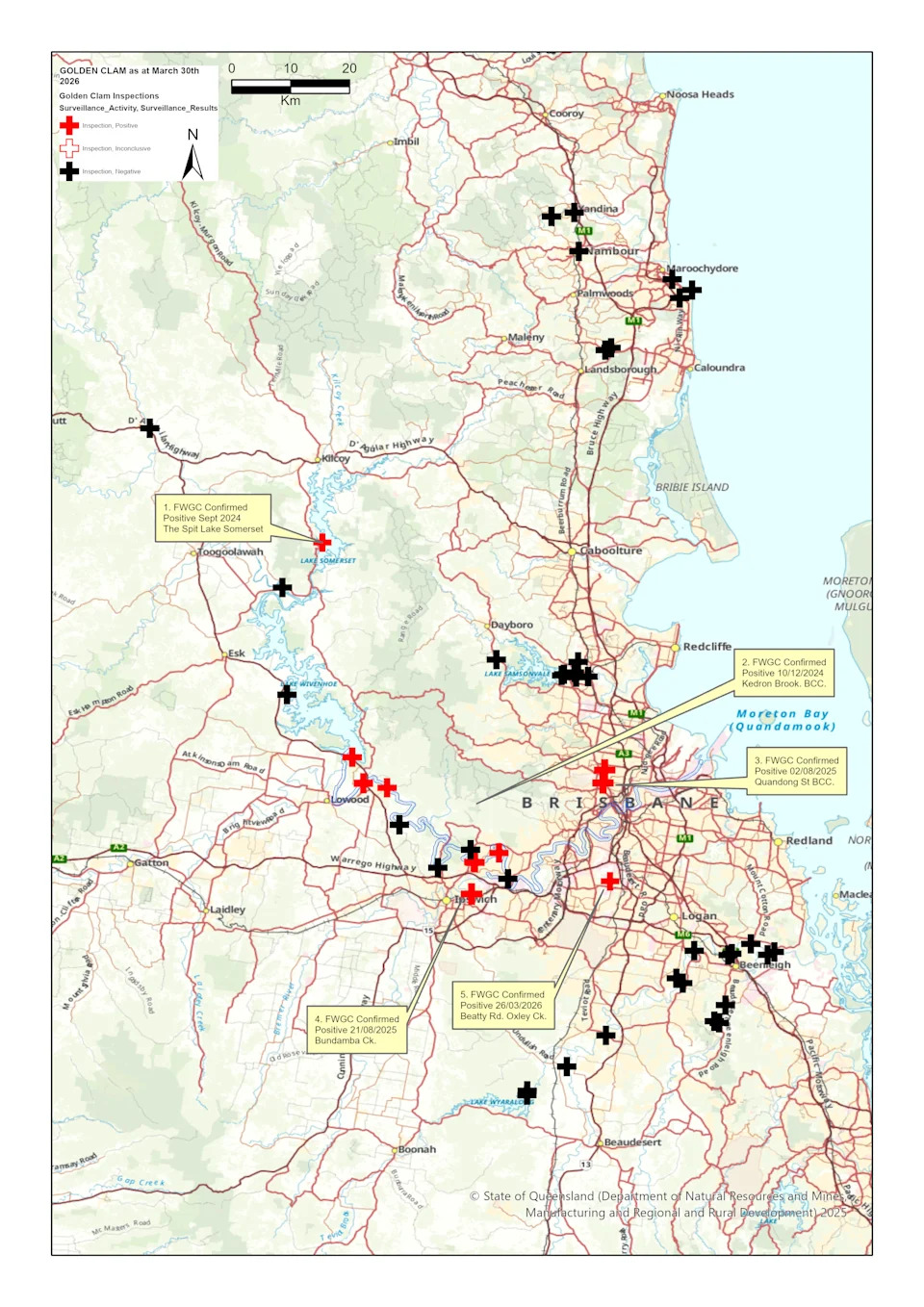
A map of Golden Clam detection sites in southeast Queensland as of March 30, 2026. Red crosses indicate a positive identification of golden clams.
Owners of kayaks, fishing gear and nets are urged to ‘check, clean and dry’ their equipment before moving to a new area.
“Any transfer of water from one site to another could result in FWGC larvae ‘hitchhiking’ to a new catchment,” DPI warned.
RELATED:
Why are freshwater gold clams so dangerous?
The clam reproduces by self-fertilisation and can release thousands of juveniles, allowing it to spread aggressively in rivers, lakes and other freshwater systems.
Worryingly, it can cause serious infrastructure problems by clogging water pipes, irrigation systems, and hydroelectric facilities.
Their ability to form dense colonies can lead to blockages, increasing maintenance costs for water treatment plants and industries that rely on freshwater systems.
In New Zealand, the species is wreaking havoc in Lake Karāpiro, a reservoir lake on the Waikato River.
The species, called a bivalve, is now altering the river’s chemistry in ways that could jeopardise drinking water for up to two million people, disrupt hydroelectric power and undermine decades of ecosystem restoration efforts.
Clark is now spreading awareness to avoid the same thing happening in Australia, although the DPI confirmed there is no risk to Brisbane’s drinking water.
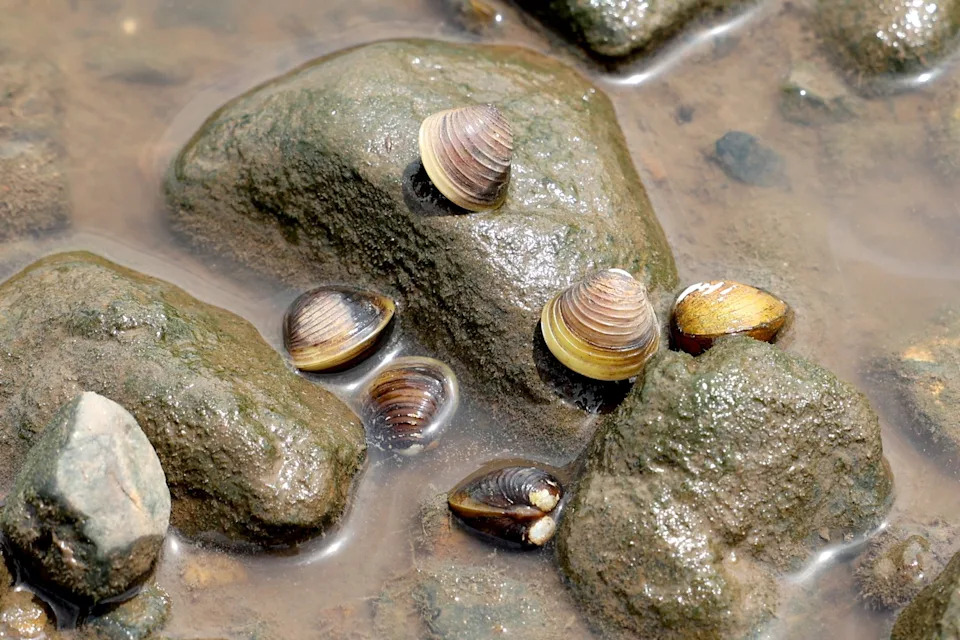
A colony of freshwater gold clam on a murky riverbed.
‘Terrible invader’ costs $12 billion worldwide
The Invasive Species Council’s Dr Carol Booth warned last year that the pest, if left unchecked, can explode in numbers.
“Another potentially terrible invader is now permanently established in Australia with the potential to transform freshwater ecosystems,” Booth told Yahoo News Australia.
“This clam tends to become extremely abundant (sometimes in excess of 10,000 a square metre) and outcompete native mussels. It can alter nutrient cycles, reduce water quality and transform food webs.”
Booth said during extreme weather events, large numbers die and release toxic amounts of ammonia. “It is on Europe’s list of 100 of the worst invaders,” she said.
“Globally, it has cost upwards of $12 billion, with most costs documented in North America.”
Why is freshwater gold clam such a pest in Australia?
Booth urged governments to invest more resources towards the fight against the invasive species.
“This species was recognised by the federal government as a high priority to keep out of the country — a ‘higher risk’ invader on Australia’s National Priority List of Exotic Environmental Pests, Weeds and Diseases Dataset,” Booth said.
According to Booth, the failure to stop the gold freshwater clam from arriving and establishing in Australia is “yet more evidence that environmental biosecurity” across the nation needs “much more investment”.
If you think you have seen a freshwater gold clam, report it immediately to Biosecurity Queensland on 13 25 23.
You can also follow us on Facebook, Instagram, TikTok, X and YouTube.