
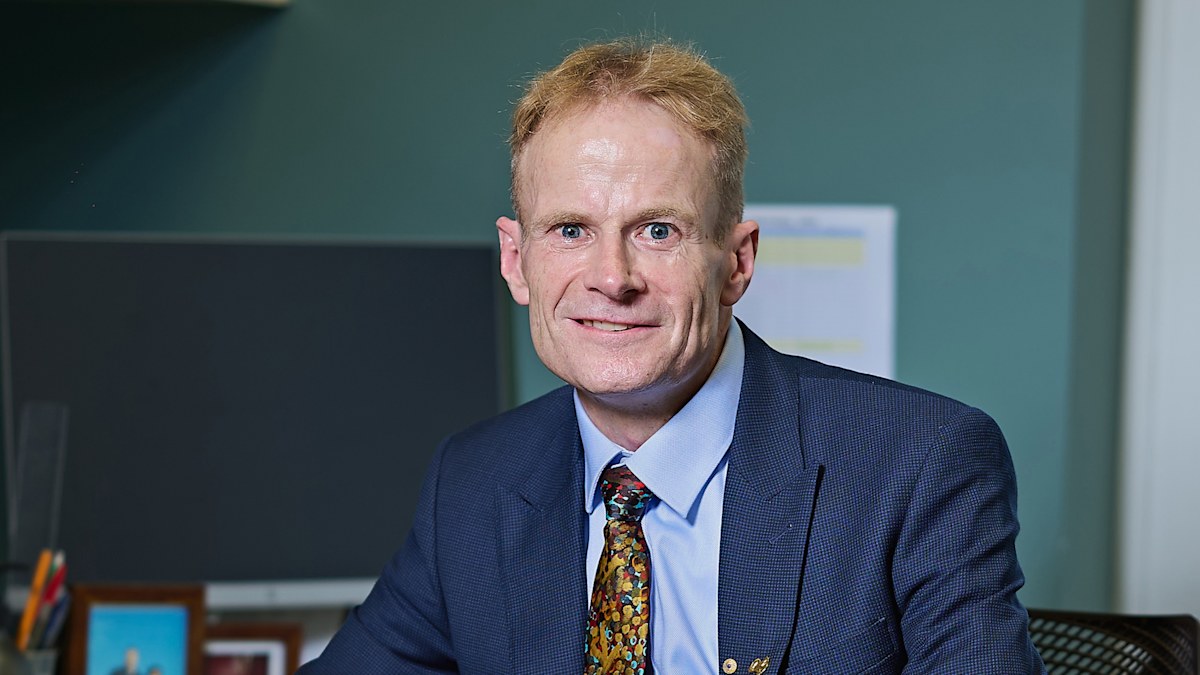
Acclaimed melanoma expert and former Australian of the Year Professor Richard Scolyer has died, aged 59, after years of defying the odds against a terminal brain cancer diagnosis with a treatment he and a colleague designed themselves.
He penned an open letter, which was published at midnight, in which he reflected on his life, family, incredible achievements and revealed he’d like to be remembered as a ‘proud everyday Aussie who ‘gave it a crack’.”
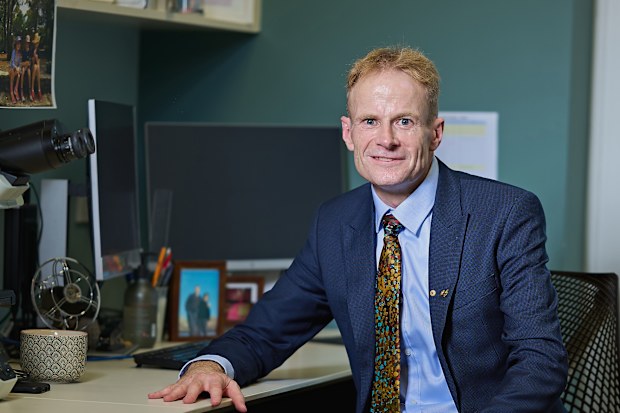
Acclaimed melanoma expert and former Australian of the Year Professor Richard Scolyer has died, aged 59. nna\mikala.theocharous
Scolyer was diagnosed with a grade four glioblastoma in 2023 and was given months to live.
He and Professor Georgina Long pioneered immunotherapy research, transforming the way melanomas are treated, which, in a world-first, was used to treat his brain cancer.
The cancer returned in February last year and last month his wife, Katie, admitted things were “steadily getting harder for Rich”.
Scolyer described his message to Australia as a “final goodbye” following a “life filled with happiness, optimism, opportunity and passion”.
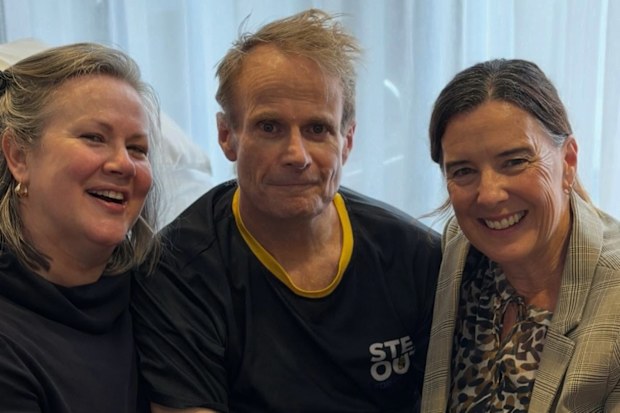
Professor Richard Scolyer’s wife Dr Katie Nicholl shared this photo alongside an update as he continues to battle brain cancer. Instagram/@profrscolyer
“I’ve spent the last three years being open and honest about my journey with glioblastoma (brain cancer), in part to be transparent about what cancer patients and their families go through, and in part to provide hope and inspiration that we can and should continue to push boundaries to propel the cancer field forward,” he wrote.
“Having dedicated my 35-year working life to patient care, cancer research and improving lives, I wanted to keep contributing, even in my darkest hour.
“I am extremely proud of my impact – from my lifelong career as a world-leading melanoma pathologist and cancer researcher, to being the first patient to receive experimental brain cancer treatment based on melanoma science I helped develop, followed by participation in development of a brain cancer clinical trial and advocacy for greater investment in brain cancer research.”
Scolyer said he wanted others to keep building on his research and paid tribute to his “wonderful” family, noting the impacts his cancer fight had on loved ones.
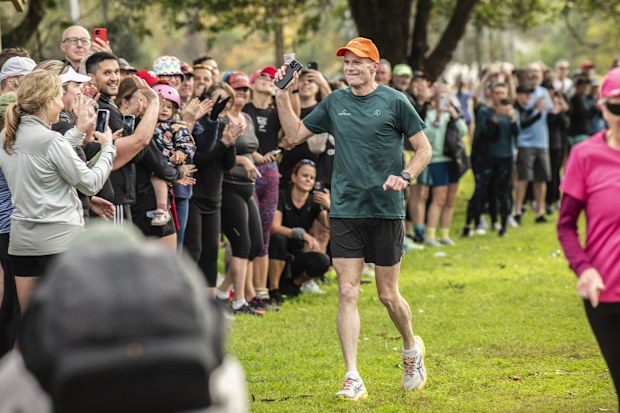
Scolyer reached his 250th Parkrun in June last year Steven Siewert
“I cannot thank my beautiful wife Katie and my adored children Emily, Matthew and Lucy enough for their love, their support, their strength, and their compassion,” Scolyer said.
“They are shining examples of the best of humanity and make me extremely proud.
“Much love also to my elderly Mum and Dad in Tasmania, my brother Mark and many friends for their strength and support, particularly during these recent years.
“My childhood was full of adventures built on ‘how’, not ‘if’, which set me on a path to being inquisitive and truly believing nothing is impossible.”
Scolyer listed his proudest achievements as generating new evidence ultimately leading to life-saving advances in melanoma diagnosis and treatment, helping to start the world’s largest melanoma biobank and becoming the world’s most published melanoma pathologist, among other astounding achievements.
He and Long were named Australians of the Year in 2024 for their breakthrough world-first melanoma cure.
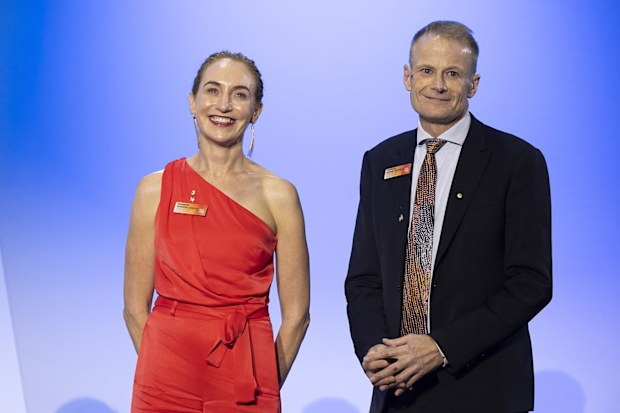
2024 NSW Australians of the Year, Professor Georgina Long and Professor Richard Scolyer, pose for photos ahead of the 2024 Australian of the Year awards ceremony at the National Arboretum in Canberra Alex Ellinghausen
He urged researchers to remain inquisitive and brave, cancer patients to consider enrolling in clinical trials and for governments and the wider community to keep funding science.
“Perhaps the greatest lesson to come from these last three years is that cancer does not define us. It may be the current road we are travelling, but it is not our entire journey,” Scolyer wrote.
“A terminal cancer diagnosis does however provide clarity as to what truly matters. It shines a spotlight on the importance of relationships, on true friendship and on selflessness.”