
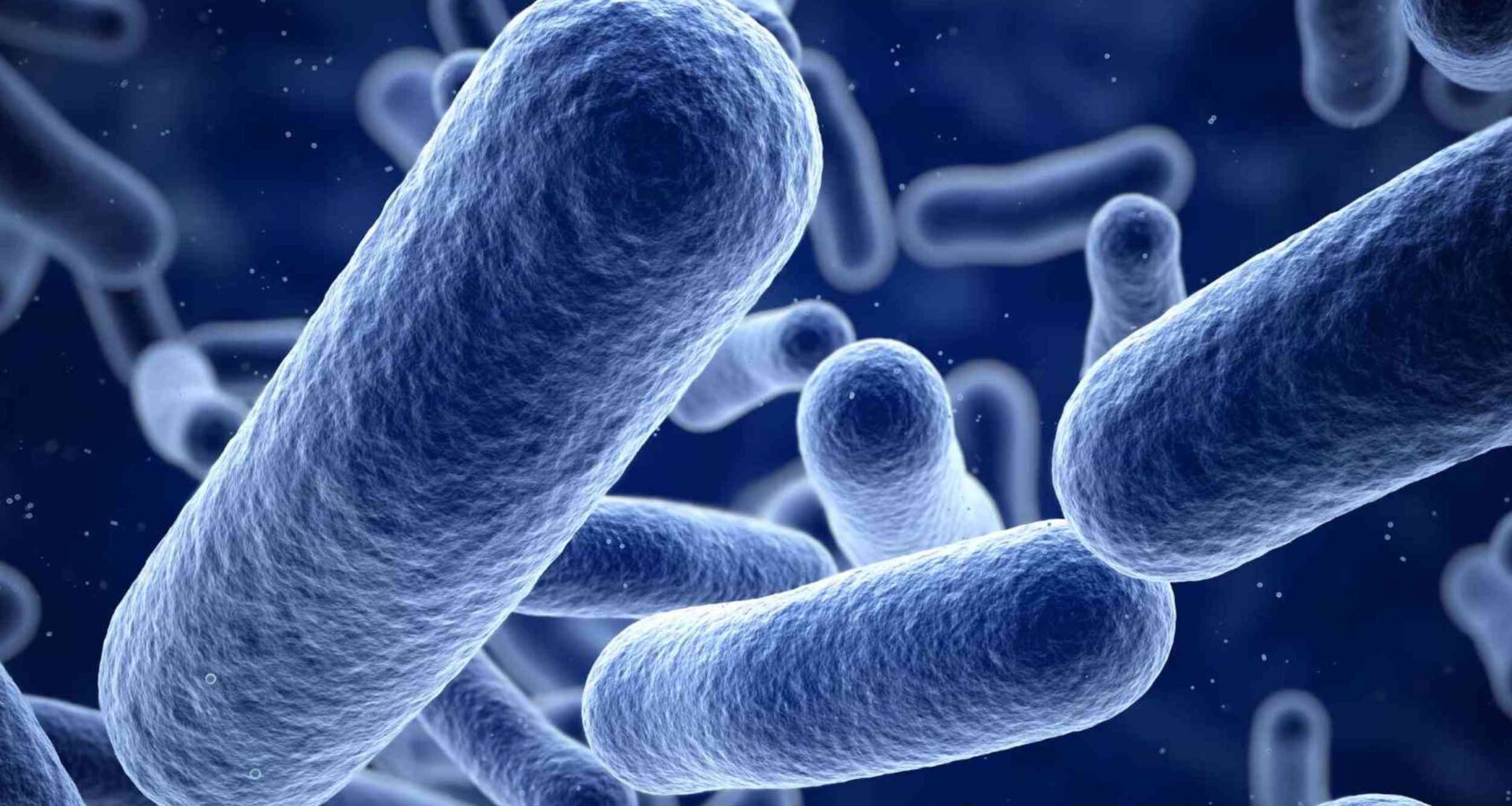
A bacterium that has spent decades in microbiology labs is not supposed to hold many surprises.
Researchers generally assume its genes have been cataloged and its proteins assigned a purpose.

That assumption failed in a common soil bacterium. One enzyme had sat in plain sight through generations of study with no known role.
Only when researchers approached it from a different angle did its function emerge, along with an ability no one had anticipated.
A model microbe
Few organisms have been studied as thoroughly as the soil bacterium Bacillus subtilis, a longtime workhorse of the laboratory.
Its genome was mapped years ago, and its proteins are cataloged in detail. Even so, one of its enzymes stayed a mystery.
This bacterium contains eight members of the cytochrome P450 enzyme family, and seven of them gave up their secrets long ago. The eighth, CYP107J1, refused.
Professor Toshiki Furuya of the Tokyo University of Science (TUS) in Japan worked with collaborators in Australia to understand what was happening.
The partner problem
Rather than chase the enzyme as it was, they decided to rebuild it. Enzymes in the cytochrome P450 family are prized for a reason.
They perform delicate oxygen chemistry at room temperature, the sort of reaction that often requires high heat and toxic chemicals in conventional manufacturing.
There is a catch. A P450 cannot run on its own. It relies on separate partner proteins that hand it electrons, and without them the enzyme barely works.
For CYP107J1, those partners were never pinned down. In most bacteria the genes for an enzyme and its helpers sit close together.
In this case, the genes are scattered across the genome, leaving the enzyme’s job unknown for years.
Two small changes
Instead of hunting for the missing partners, the team rewired the enzyme so it would not need them.
The idea came from earlier work at the University of Adelaide, where researchers had pulled the same trick on a related enzyme.
They swapped just two of the enzyme’s building blocks, a pair of amino acids in its active core. After that edit, the enzyme no longer needed partner proteins.
Tests showed it could draw its energy from hydrogen peroxide instead, the same chemical found in common antiseptic solutions.
These were not random guesses. The team mapped the enzyme’s structure on a computer first, confirming that the two sites occupied positions likely to influence the enzyme’s activity.
Faster and cleaner
The redesign did more than simplify the recipe. Tested on a model substrate, the redesigned enzyme worked about 28 times faster than the original version.
Speed often comes at the cost of accuracy, but not in this case. The enzyme still placed the oxygen atom at the same position on the target .
This selectivity is one of the main reasons researchers value these enzymes. For anyone chasing greener manufacturing, that pairing is the goal.
Reactions that once needed scorching heat and toxic chemicals could instead run on a gentle mix of enzyme and hydrogen peroxide.
This is a step toward green chemistry that one paper links to cleaner production.
An unexpected blue
While testing what else the redesigned enzyme could do, the researchers found it turned a colorless compound called indole into indigo, the deep blue dye.
No elaborate setup was needed. Mixing the enzyme, the starting compound, and a splash of hydrogen peroxide was enough to grow the dye in the tube.
It proved faster than a similar peroxide-driven system reported in an earlier study.
The blue dye was an unexpected byproduct rather than being the original goal.
The same enzyme that solved an old puzzle also revealed a practical product nobody had connected to it before.
The orphan enzymes
The trick may reach beyond one bacterium. Scientists have catalogued many P450 enzymes whose jobs remain blank because their partner proteins were never found.
Researchers call them orphans. The same two-mutation strategy proved effective on an entirely different enzyme. That changes things.
Add the edits, supply hydrogen peroxide, and a dormant enzyme might come to life, no partner hunt required.
The family these enzymes belong to is spread across many bacteria, a long list of candidates to try.
Furuya sees that as the real prize, a growing toolkit of biocatalysts for problems chemists could not touch before.
A way forward
What was a blank entry in the textbook is now a working enzyme with two clear talents. Researchers have now identified two clear functions where previously there were none.
CYP107J1 can carry out precise oxygen chemistry using hydrogen peroxide rather than partner proteins that sidelined it for years.
Chemical makers can now see a cleaner path to medicines and dyes, run at room temperature with a cheap, mild ingredient instead of heat and harsh solvents.
Researchers also gain a reusable strategy for studying the next enzyme whose function remains unknown.
The team is already working to improve the redesigned enzyme’s efficiency and activity.
A whole family of overlooked enzymes is waiting. With a simple way to switch them on, the slow work of matching each one to its missing partners may no longer stand in the way.
The study is published in Microbial Biotechnology.
—–
Like what you read? Subscribe to our newsletter for engaging articles, exclusive content, and the latest updates.
Check us out on EarthSnap, a free app brought to you by Eric Ralls and Earth.com.
—–