
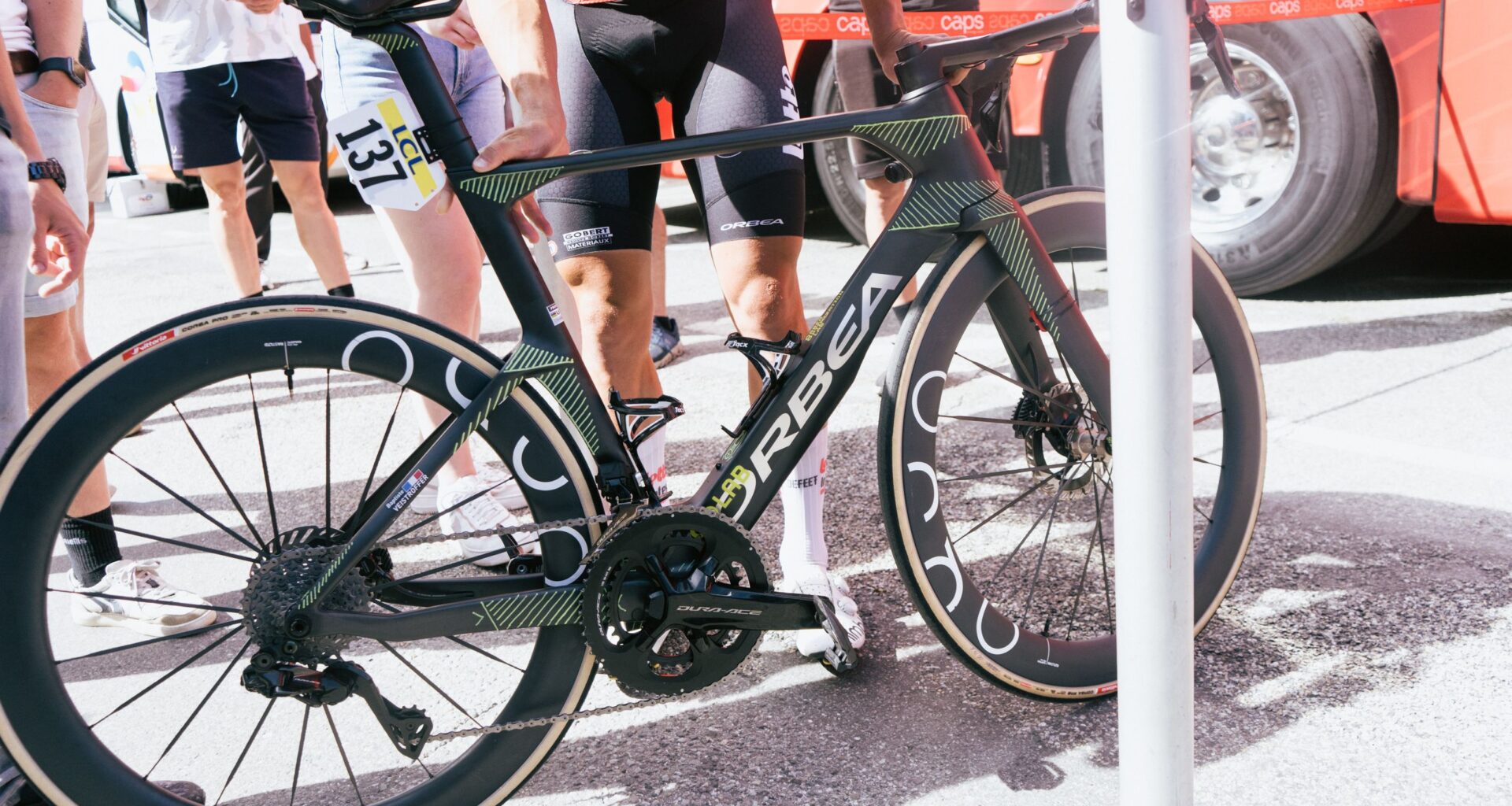
The Tour Auvergne-Rhône-Alpes, formerly the Critérium du Dauphiné (RIP), is always the traditional pre-Tour outing for brand new bikes. As always, ripened in the Grenoble sunshine, I have harvested a bumper crop of new machines to show you from trawling around team hotels before the race, and from the pits of stage one.
The biggest story of the week was of course the brand new Specialized Tarmac SL9, followed swiftly by the will-he-won’t-he saga of whether Remco Evenepoel was going to make a surprise appearance, but we were also treated to new machines from Ridley, Orbea, Cube, and Van Rysel.
(Image credit: Will Jones)
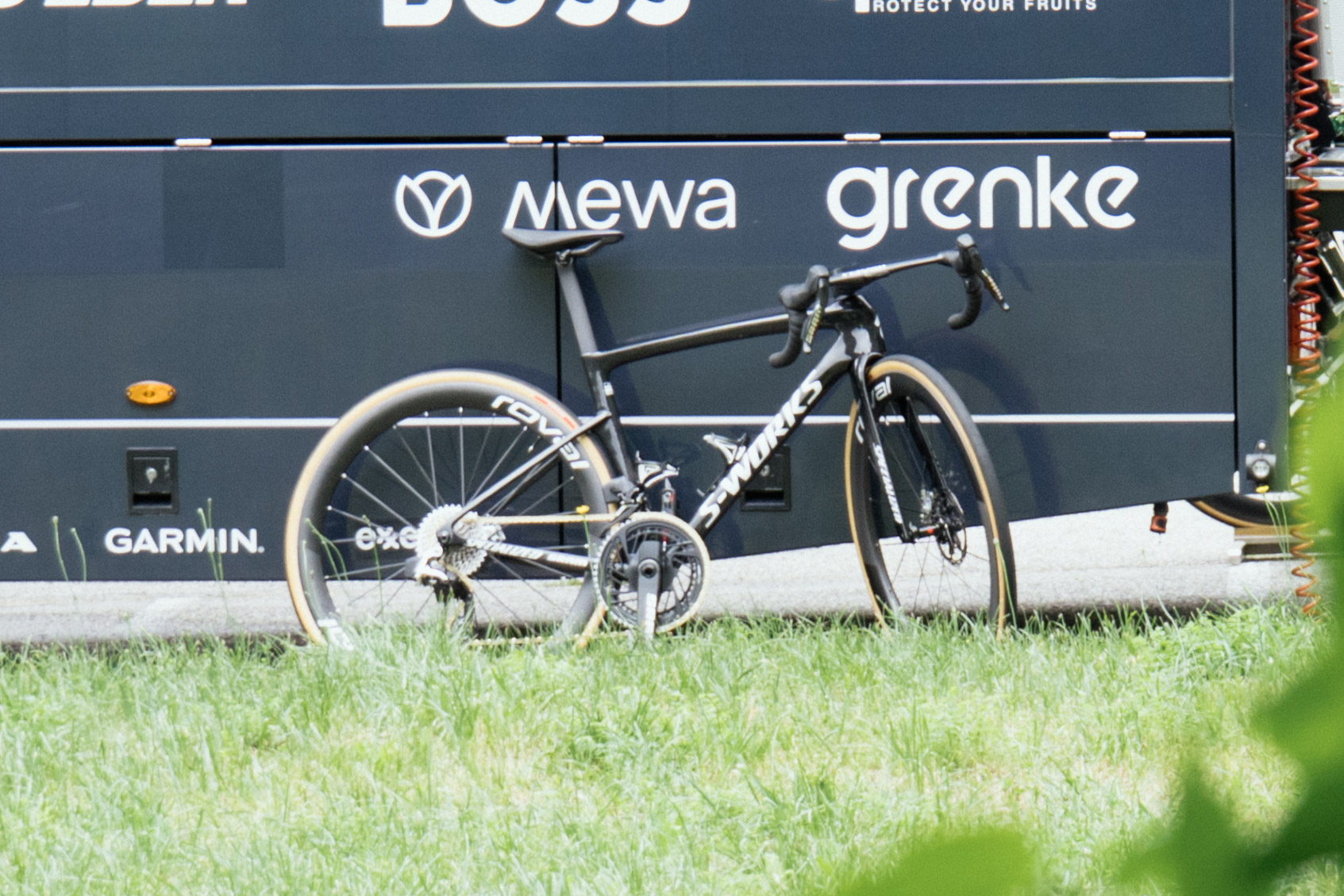
Naturally, the talk of the town was the new Specialized S-Works Tarmac SL9, which was at the race but was not actually being ridden. It turns out it was Remco Evenepoel’s bike, causing much confusion as to whether the Belgian was about to make a surprise appearance.
(Image credit: Will Jones)
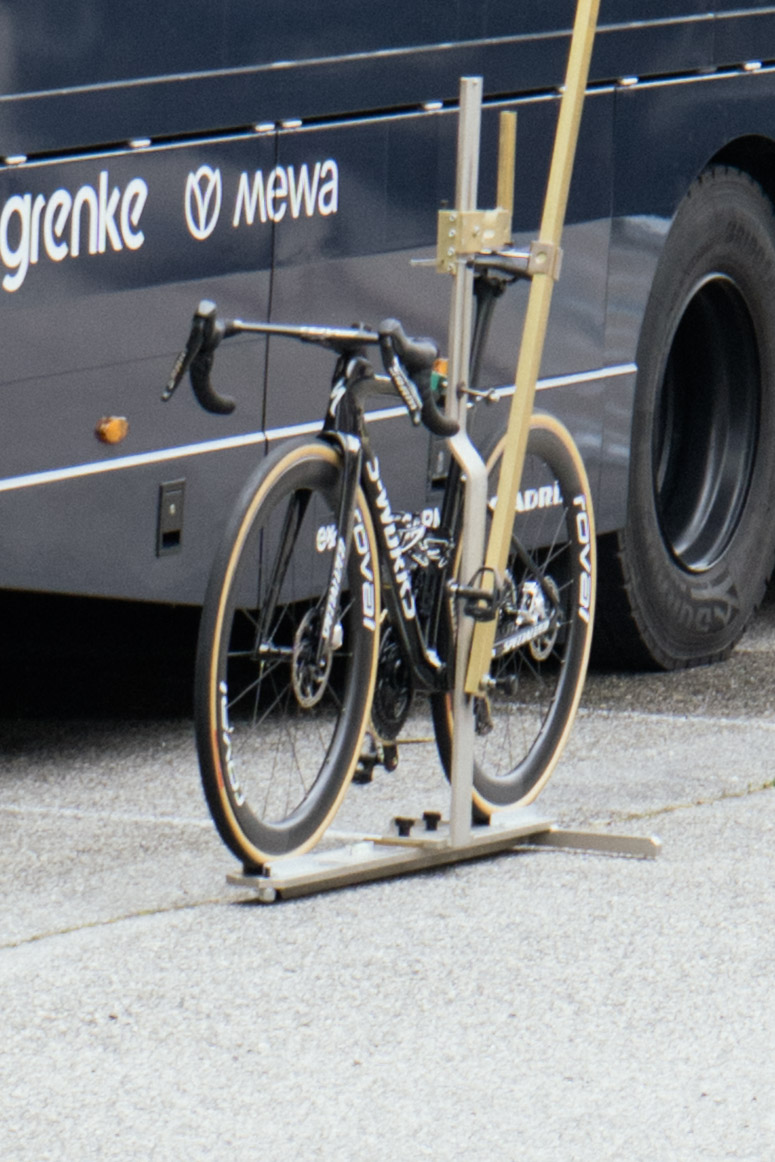
The SL9 is much the same as the SL8, but with deeper, wider fork legs and now a curved seat tube.
(Image credit: Will Jones)
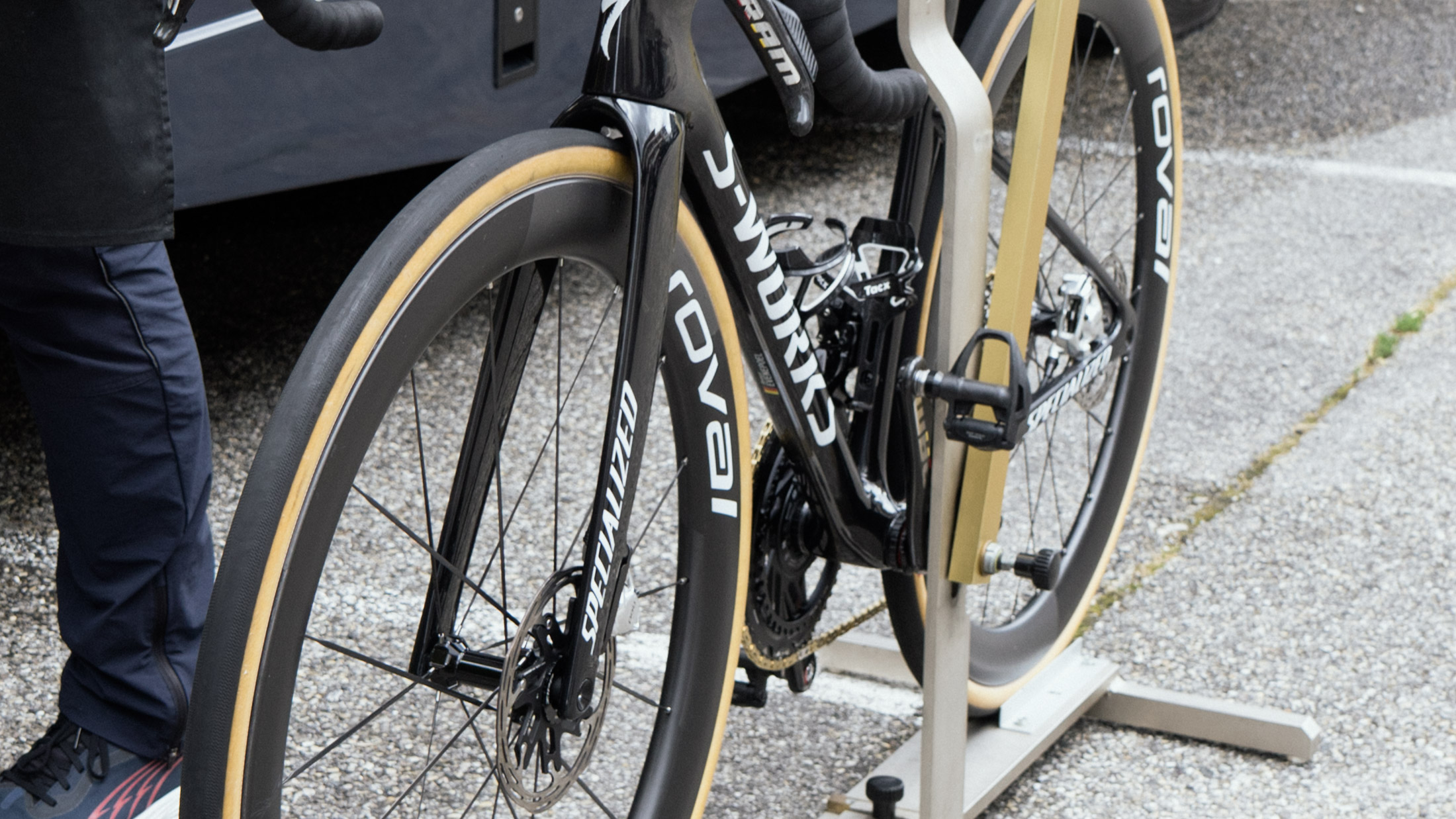
Here you can just make out the ‘Remco Evenepoel’ name sticker under the down tube. Note the gold SRAM chain too, which seems to be reserved for world and Olympic champions.

(Image credit: Will Jones)
Here you can see the deeper fork legs, and the top of the curved seat tube.
(Image credit: Will Jones)
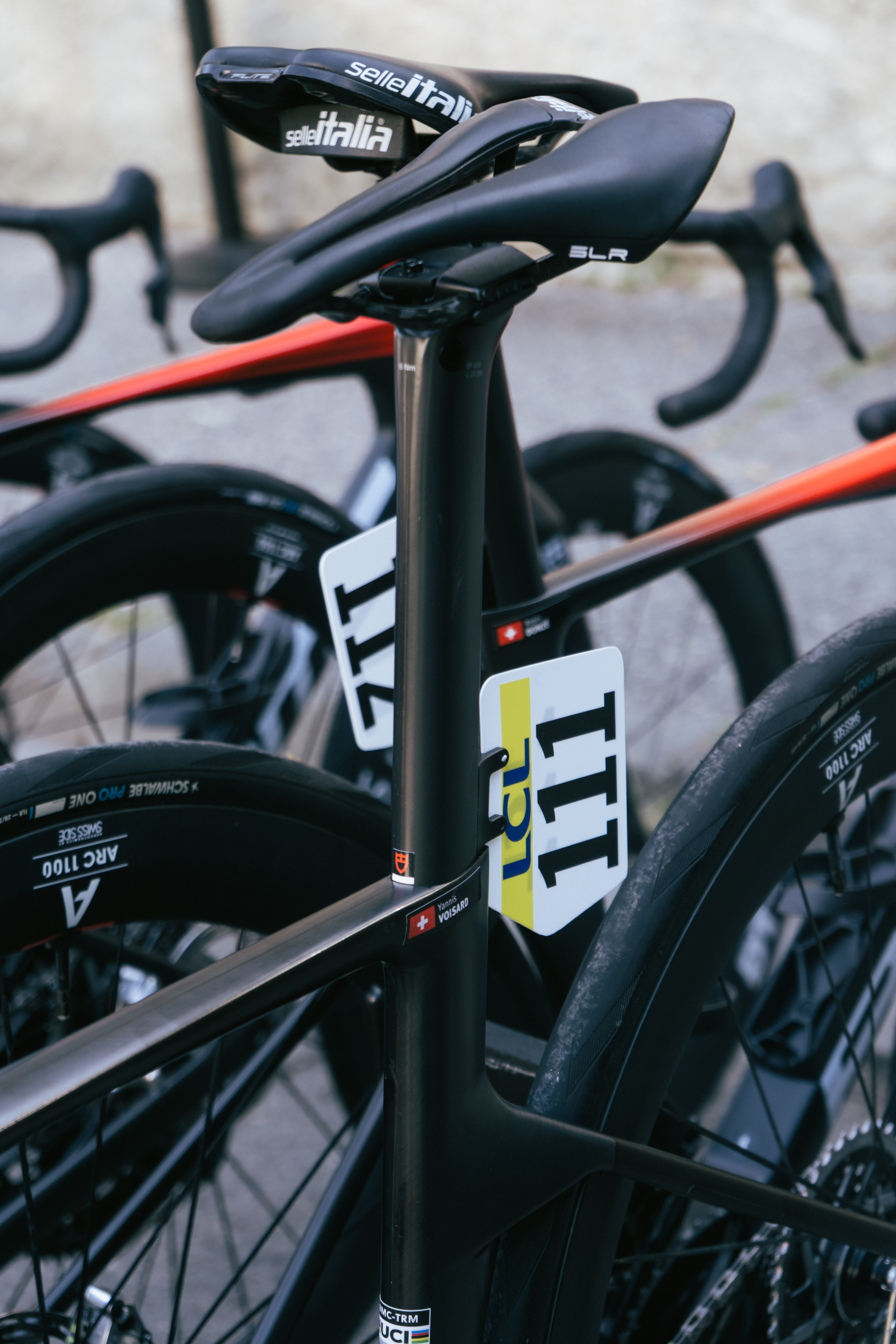
Over at Tudor, I always enjoy seeing these neat saddle height stickers so riders maintain the exact same position every time.
(Image credit: Will Jones)
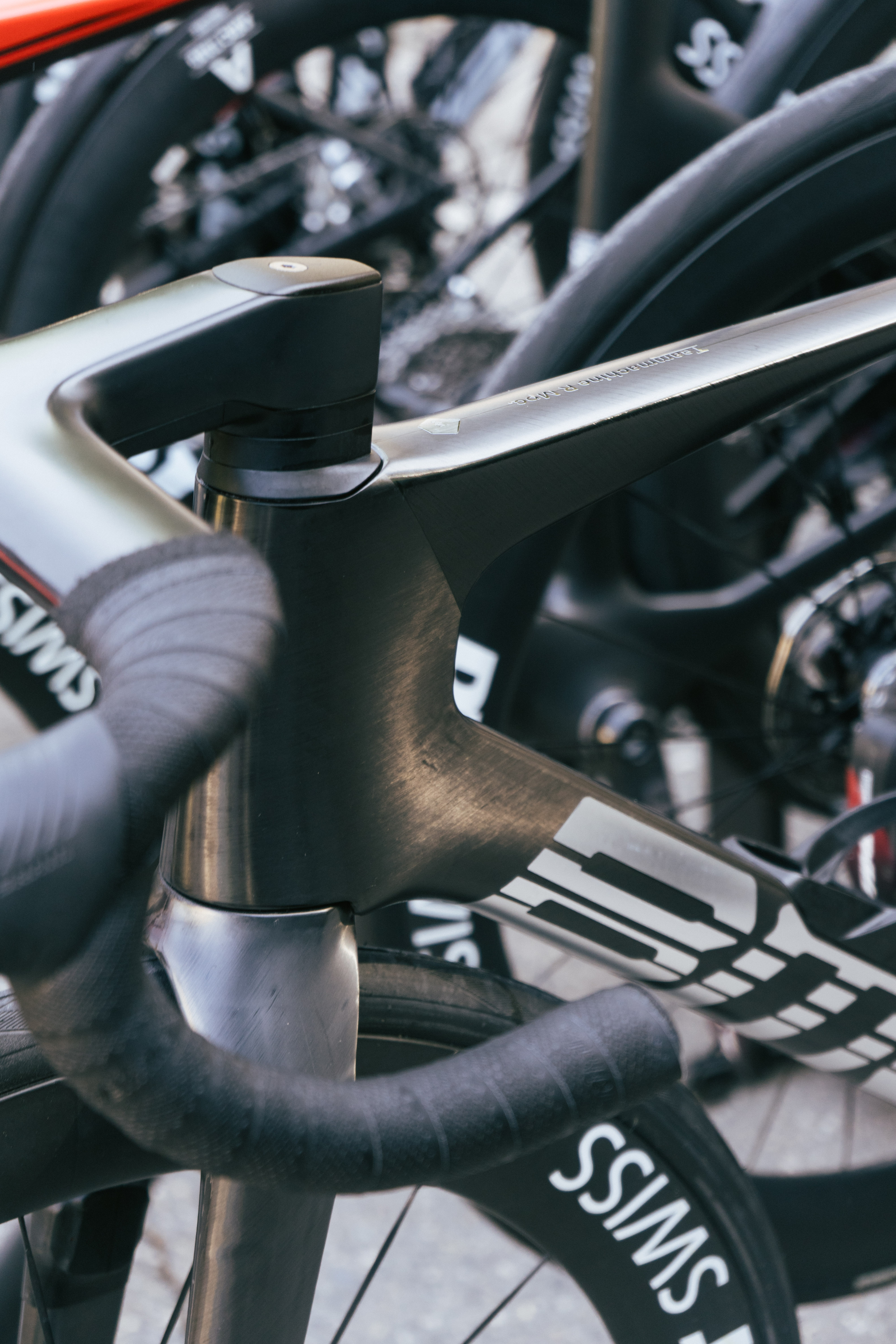
The raw carbon has a lovely sheen through the clearcoat.
(Image credit: Will Jones)
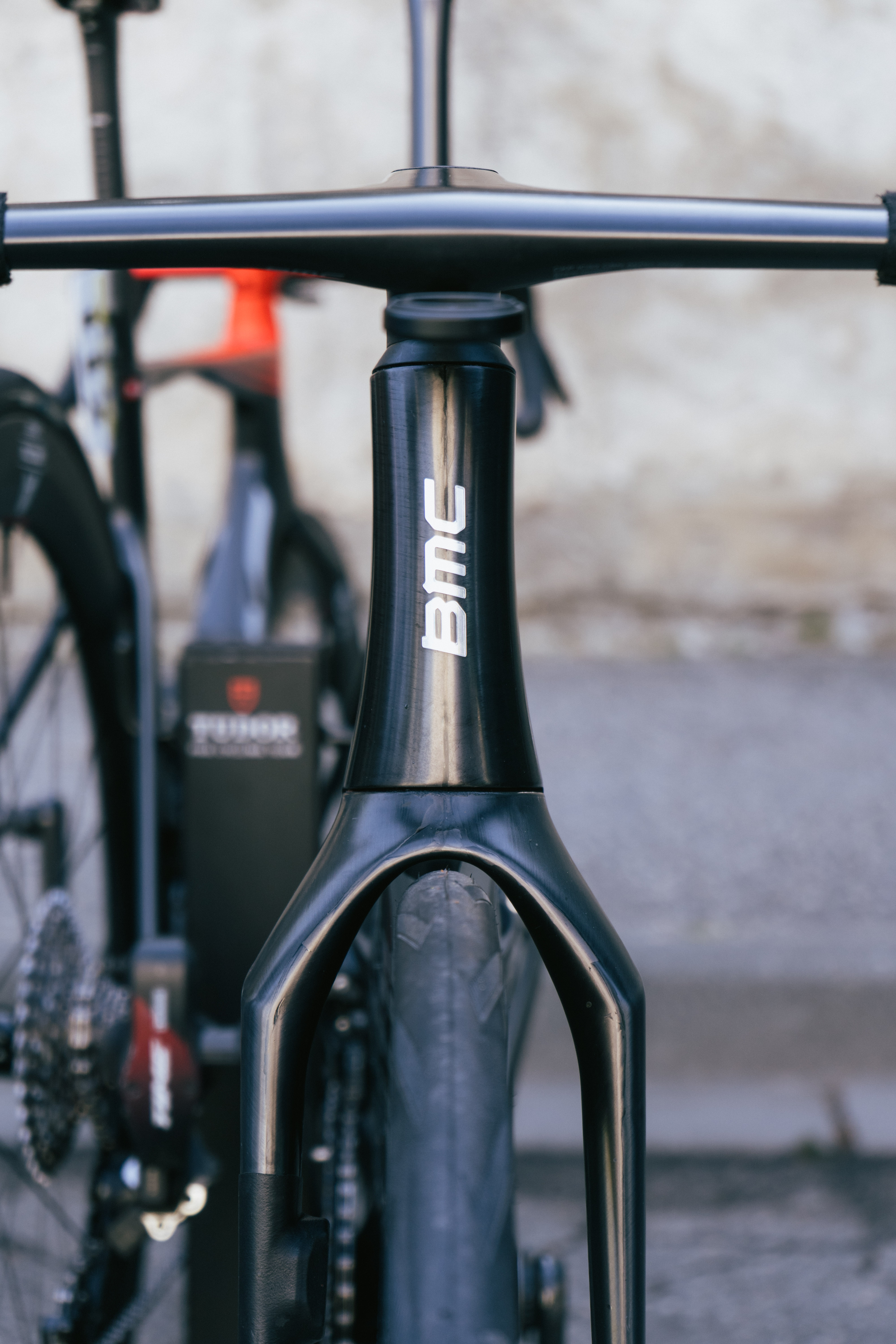
The fork looks very wide, but the tyre clearance is relatively modest.
(Image credit: Will Jones)
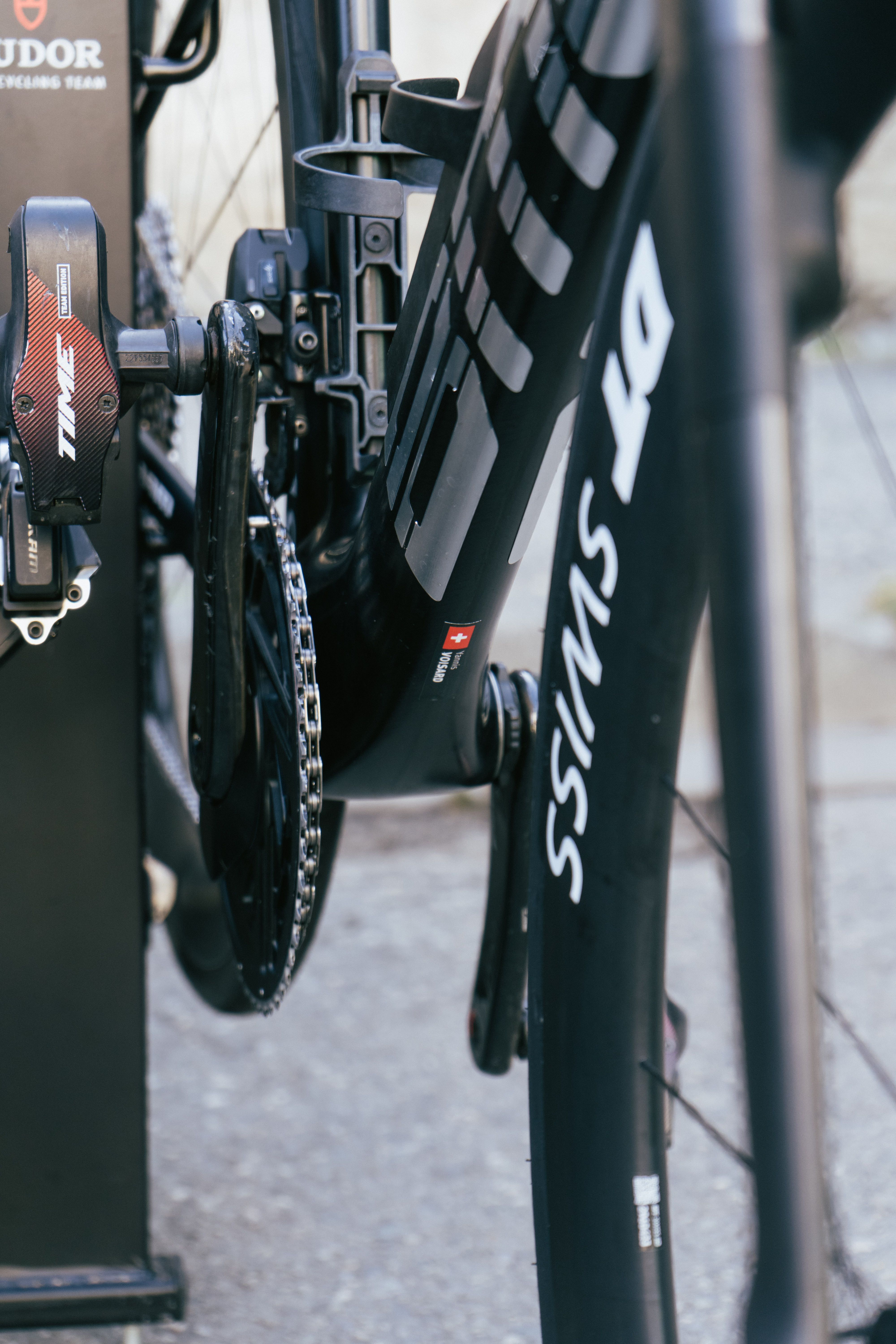
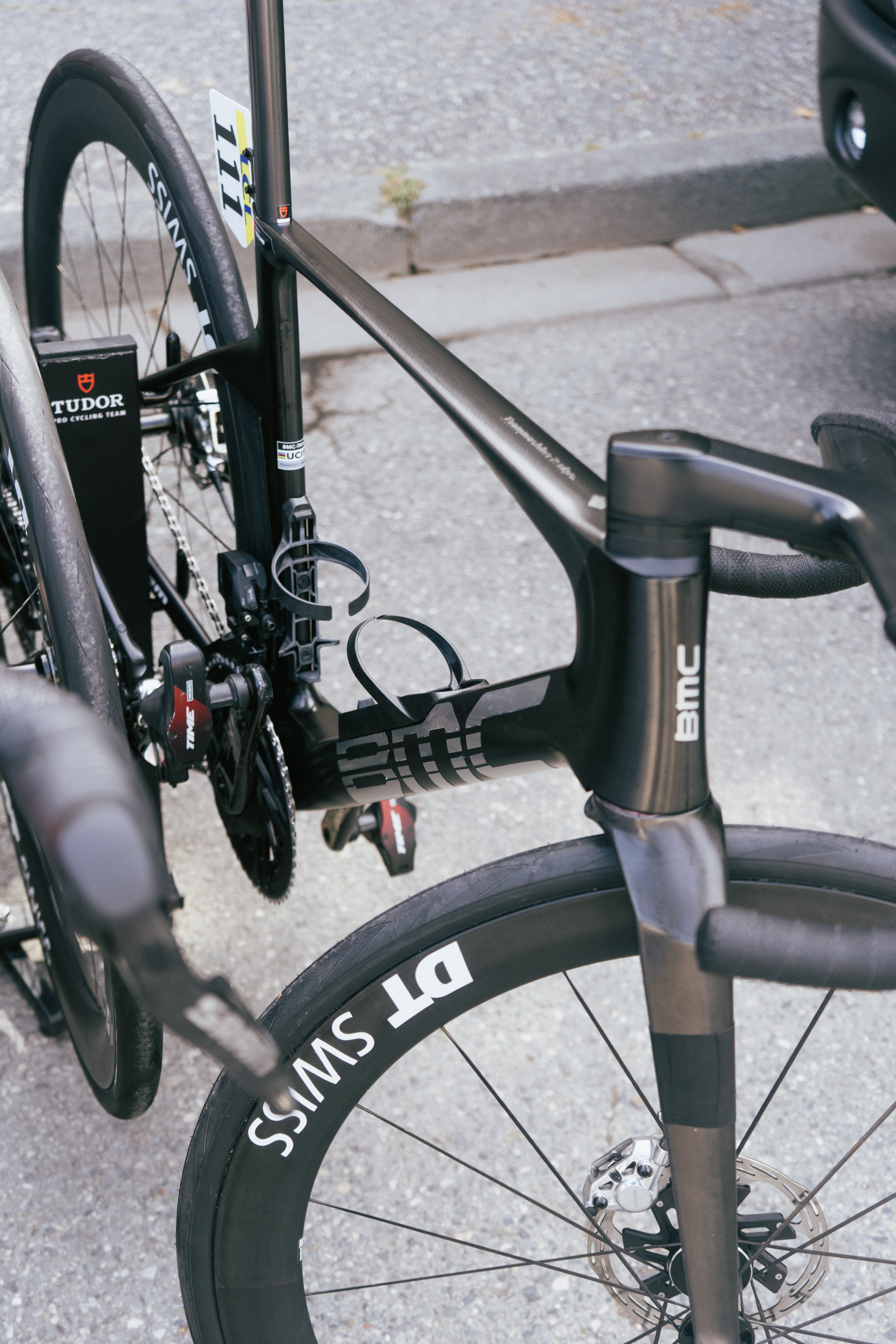
Yannis Voisard was riding a ‘Masterpiece’ edition of the team’s BMC Teammachine R, which has the paint stripped back to save some grams; a theme of many teams.
(Image credit: Will Jones)
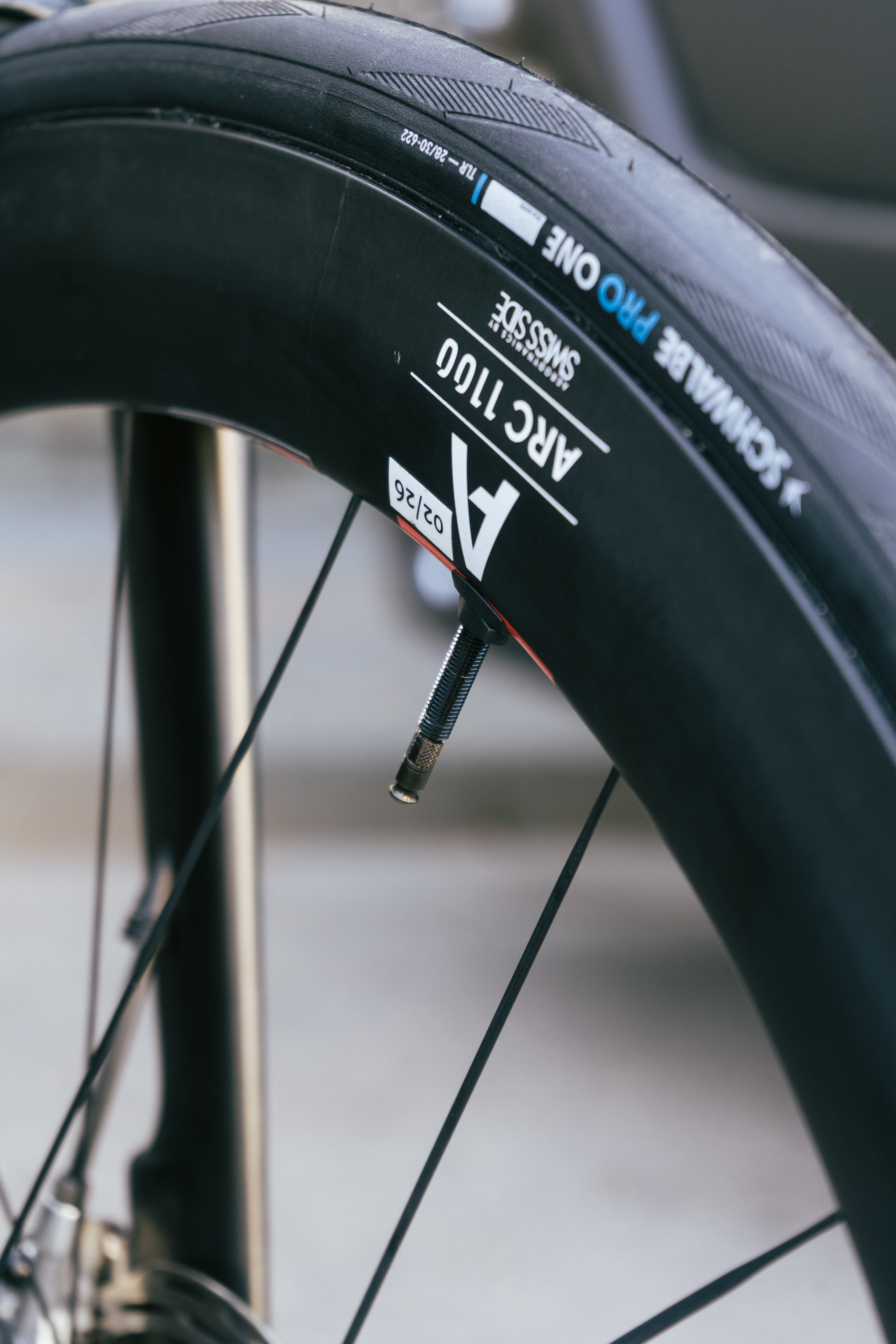
The team also runs Schwalbe tyres and the brand’s Clik valves.
(Image credit: Will Jones)
Unlike the Giant of Luke Plapp, which we will get to later, the BMC still has a sheen from a top coat over the carbon.
(Image credit: Will Jones)
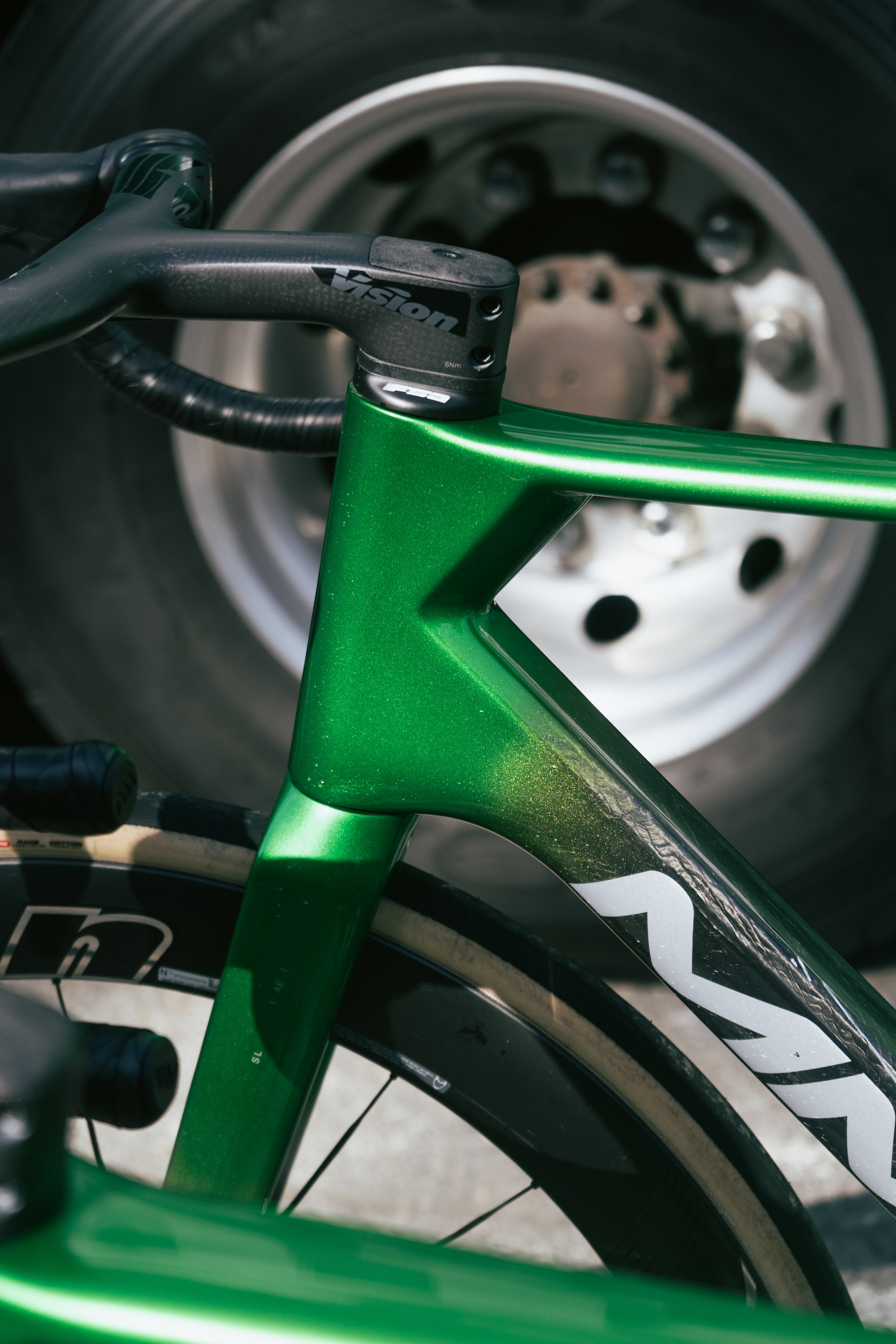
With head tubes looking somewhat similar across many brands now, this MMR does stand out.
(Image credit: Will Jones)
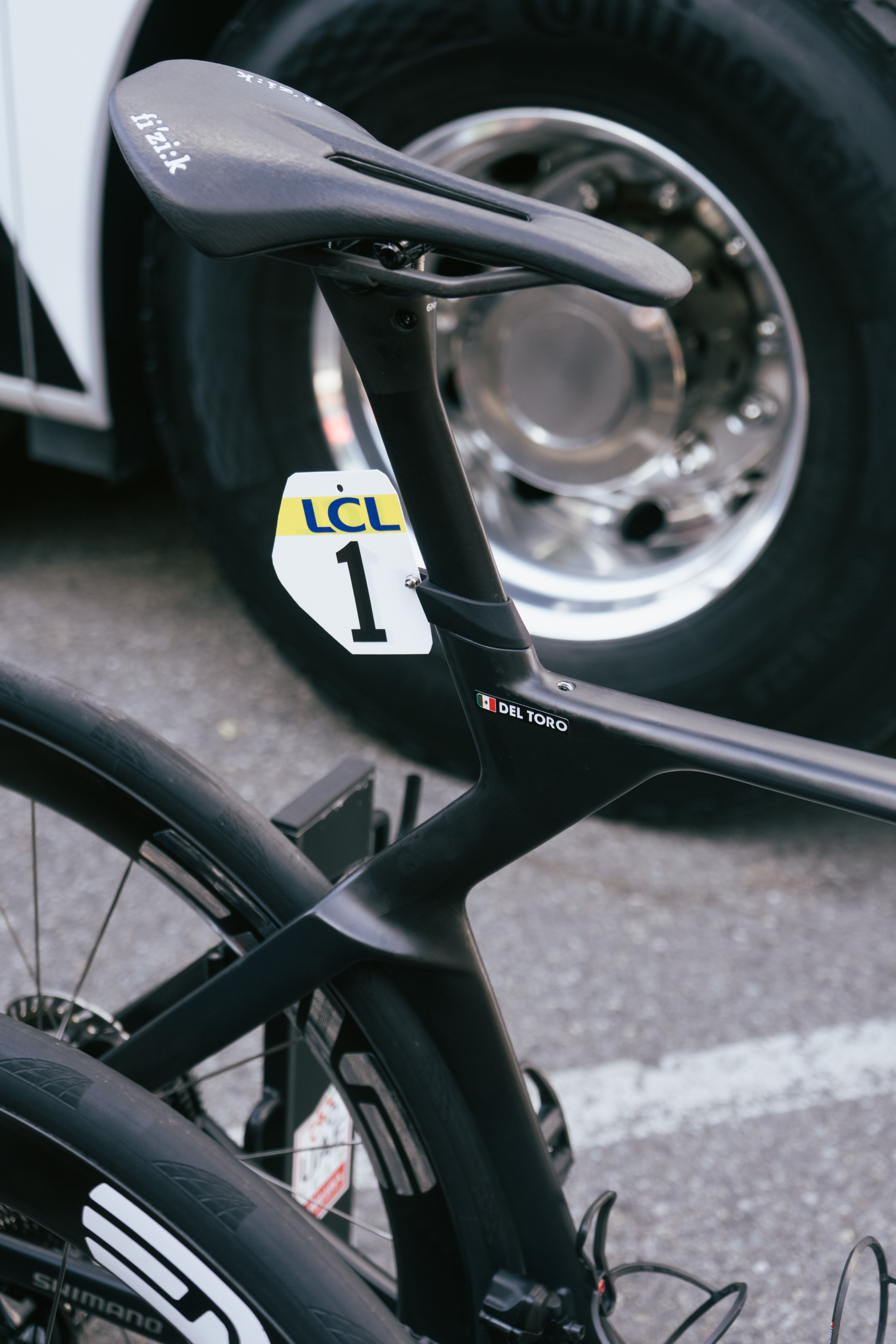
Over at UAE, another raw carbon machine, a Colango Y1Rs, for Isaac del Toro, complete with a 3D-printed computer mount.
(Image credit: Will Jones)
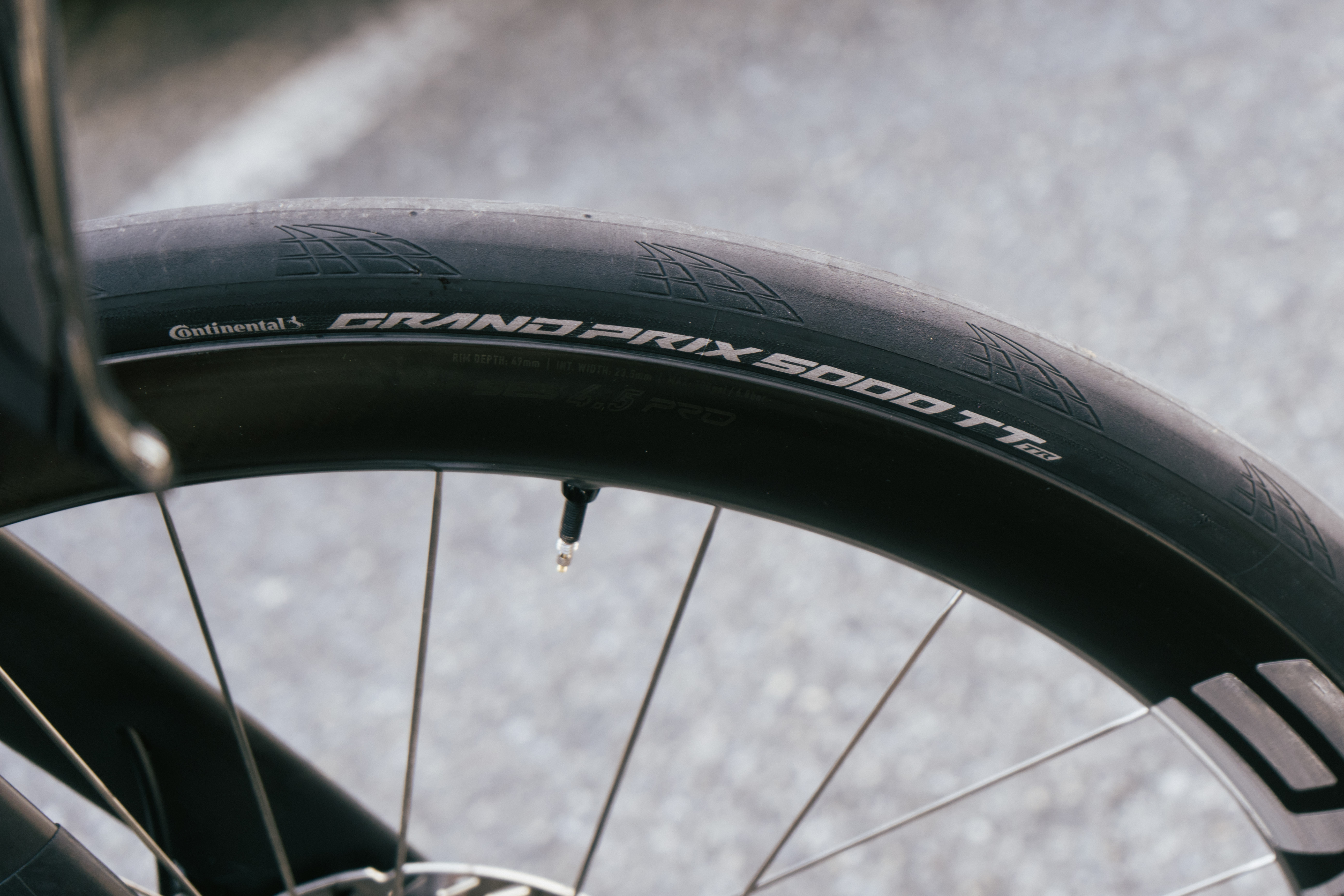
As is becoming almost ubiquitous now for the team, Del Toro was running time-trial tyres.
(Image credit: Will Jones)
While it’s become normal now, it’s easy to forget how mad this seat cluster looked on release.
(Image credit: Will Jones)
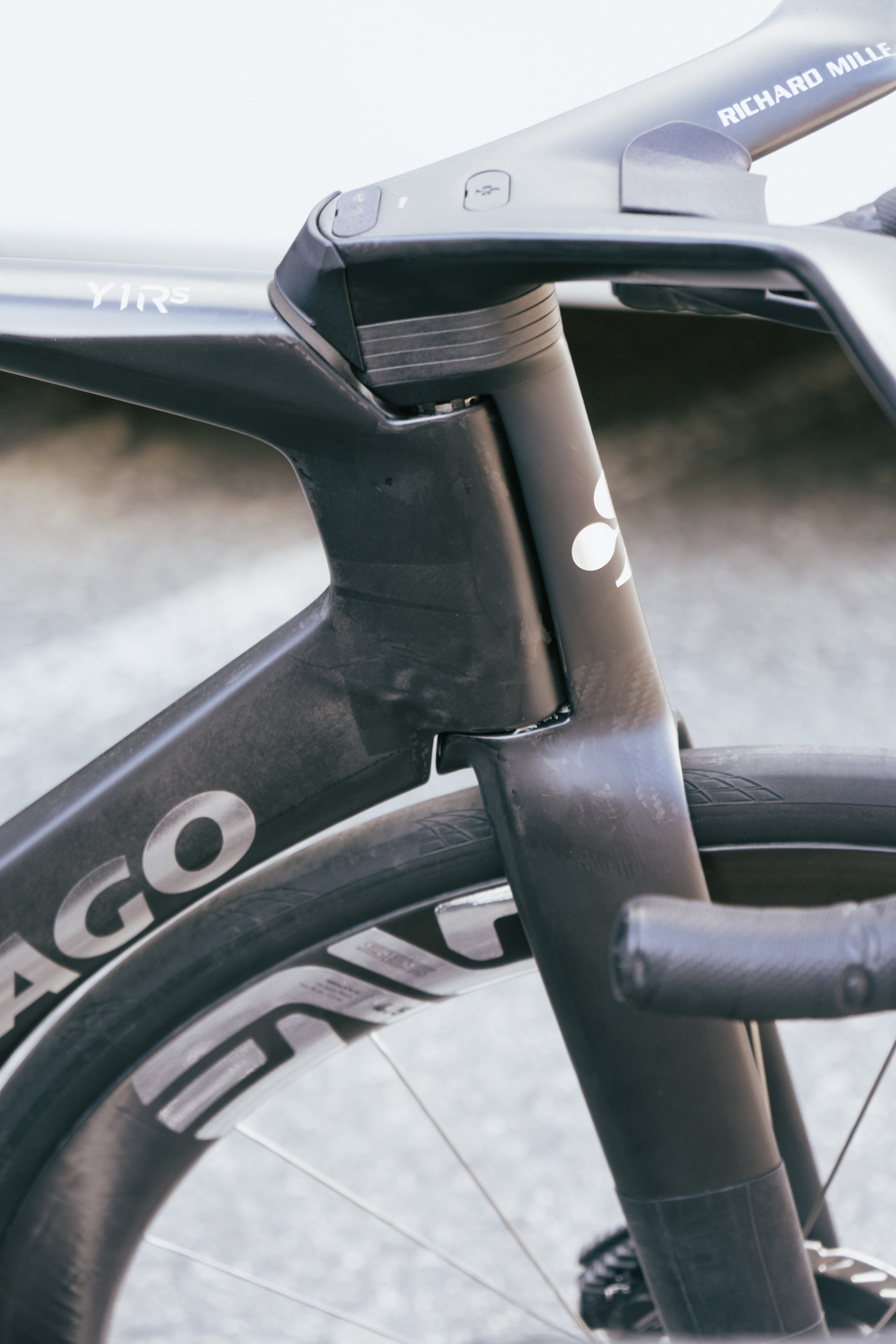
Slammed stems are becoming less common, and his cockpit was jacked up by 20mm of spacers.
(Image credit: Will Jones)
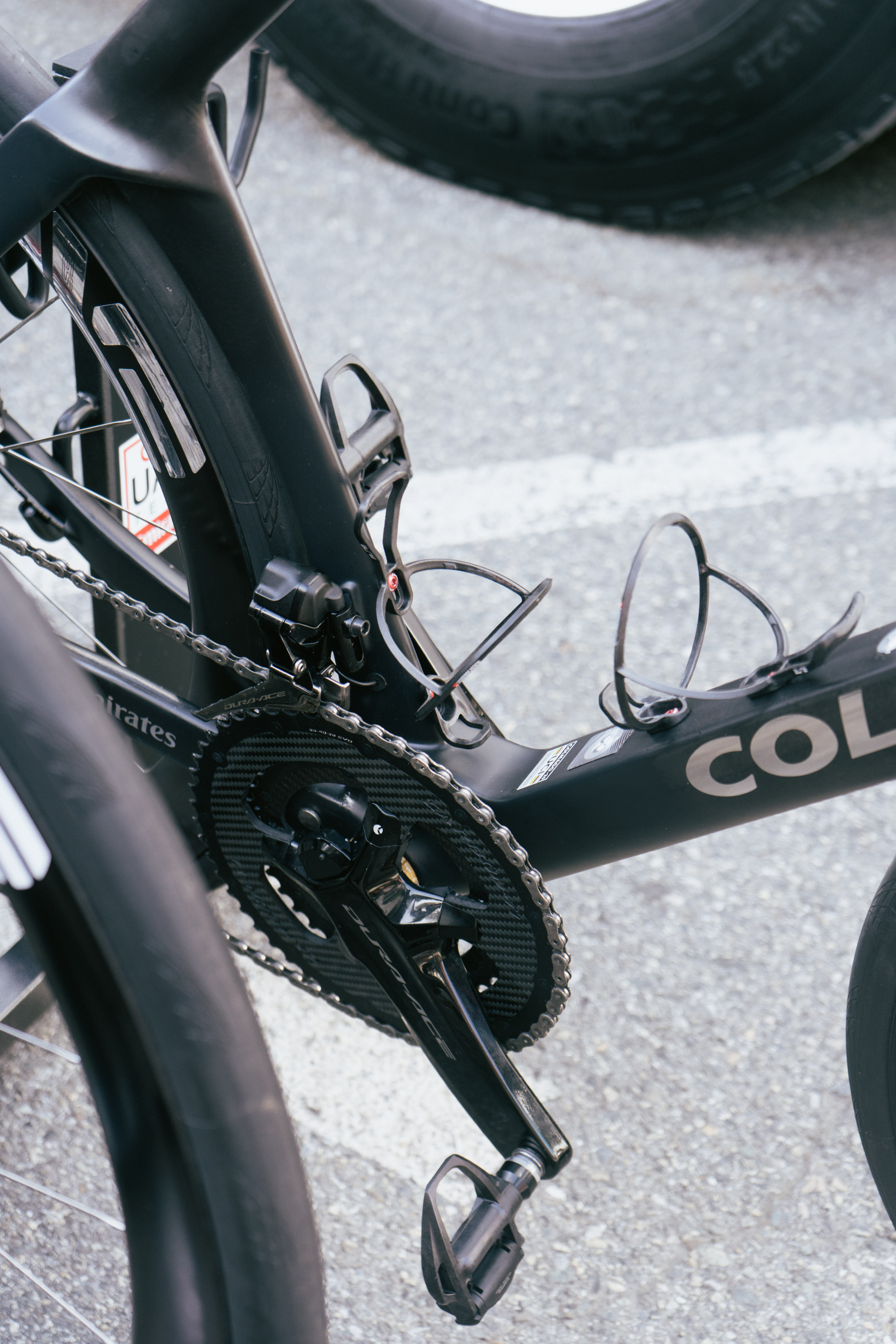
Like Tadej Pogačar, Del Toro uses lighter Elite Legerro Carbon cages rather than the aero-integrated ones that come with the stock Y1Rs.
(Image credit: Will Jones)
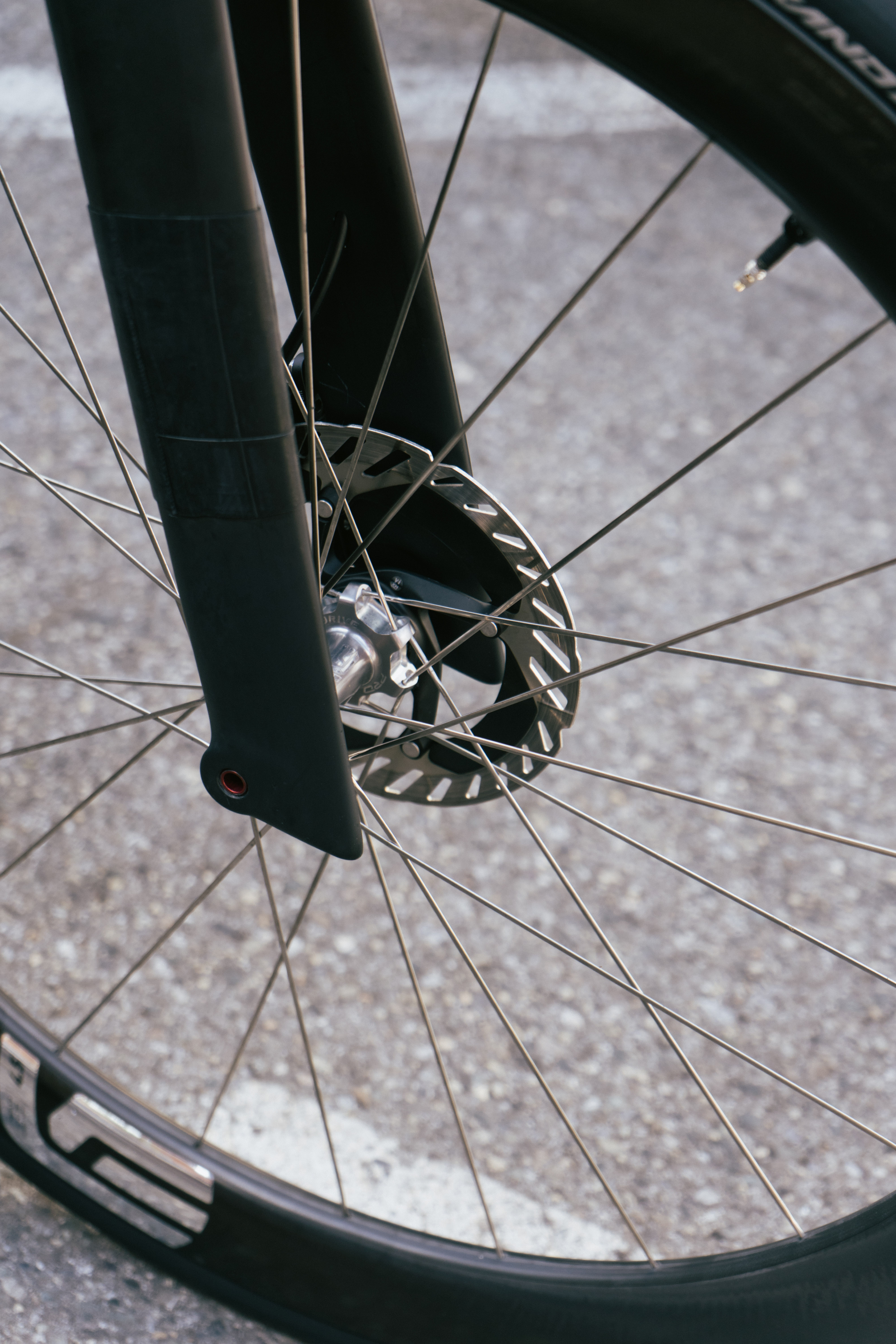
Enve SES 4.5 Pro wheels, easy to spot with silver spokes and hubs, which, it must be said, look absolutely fantastic in contrast to the matte black.
(Image credit: Will Jones)
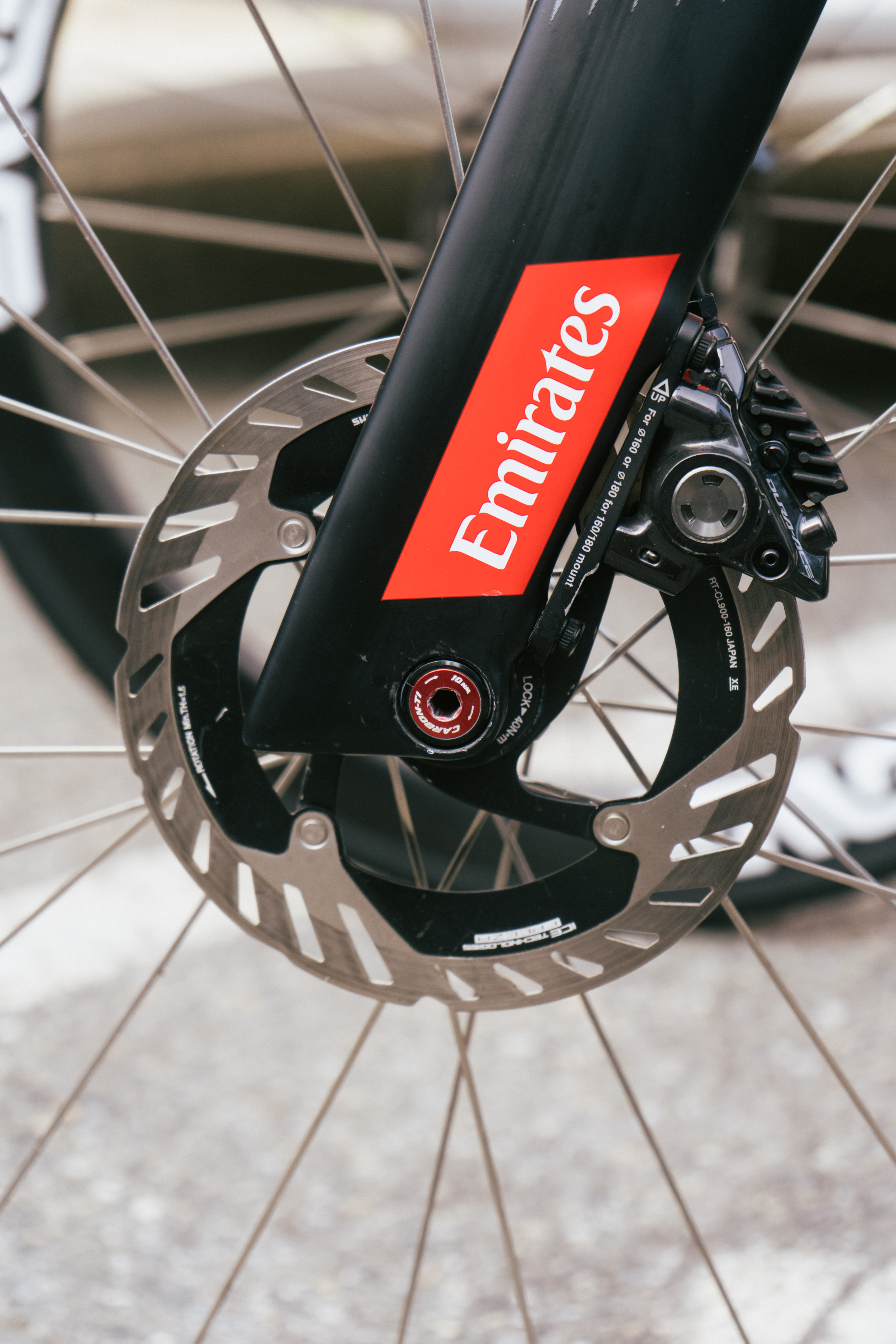
Aftermarket thru-axles from CarbonTi, front and rear.
(Image credit: Will Jones)
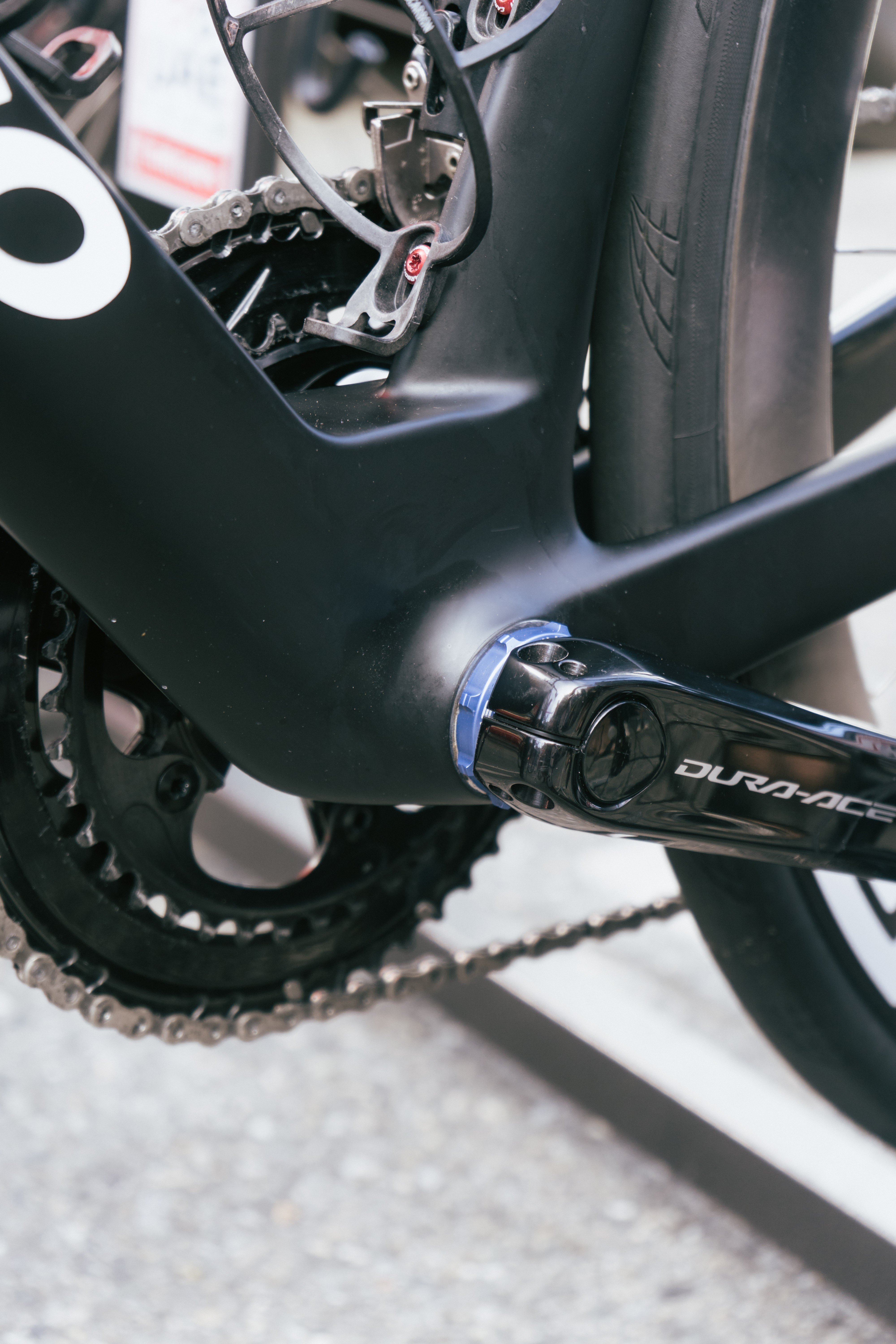
Curiously, the team does have an aero bottom bracket (no, really) available from Bikone, but none of the team was using it.
(Image credit: Will Jones)
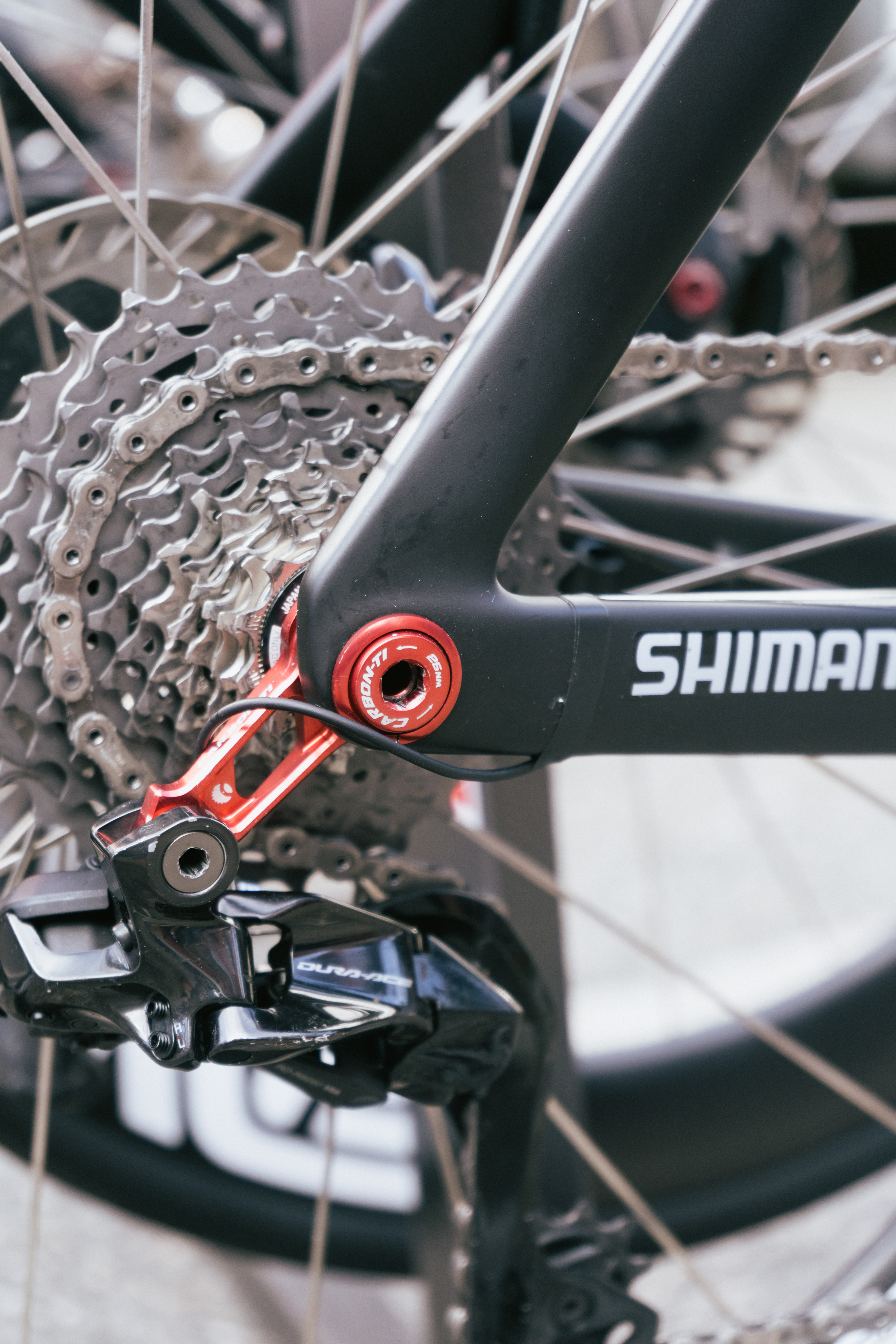
Look past the aftermarket mech hanger for a sec and see the black tape where the Di2 cable comes out… When testing, I found there was no bung to keep the cable from pulling out entirely and had to tape it in place, and it seems UAE have the same issue.
(Image credit: Will Jones)
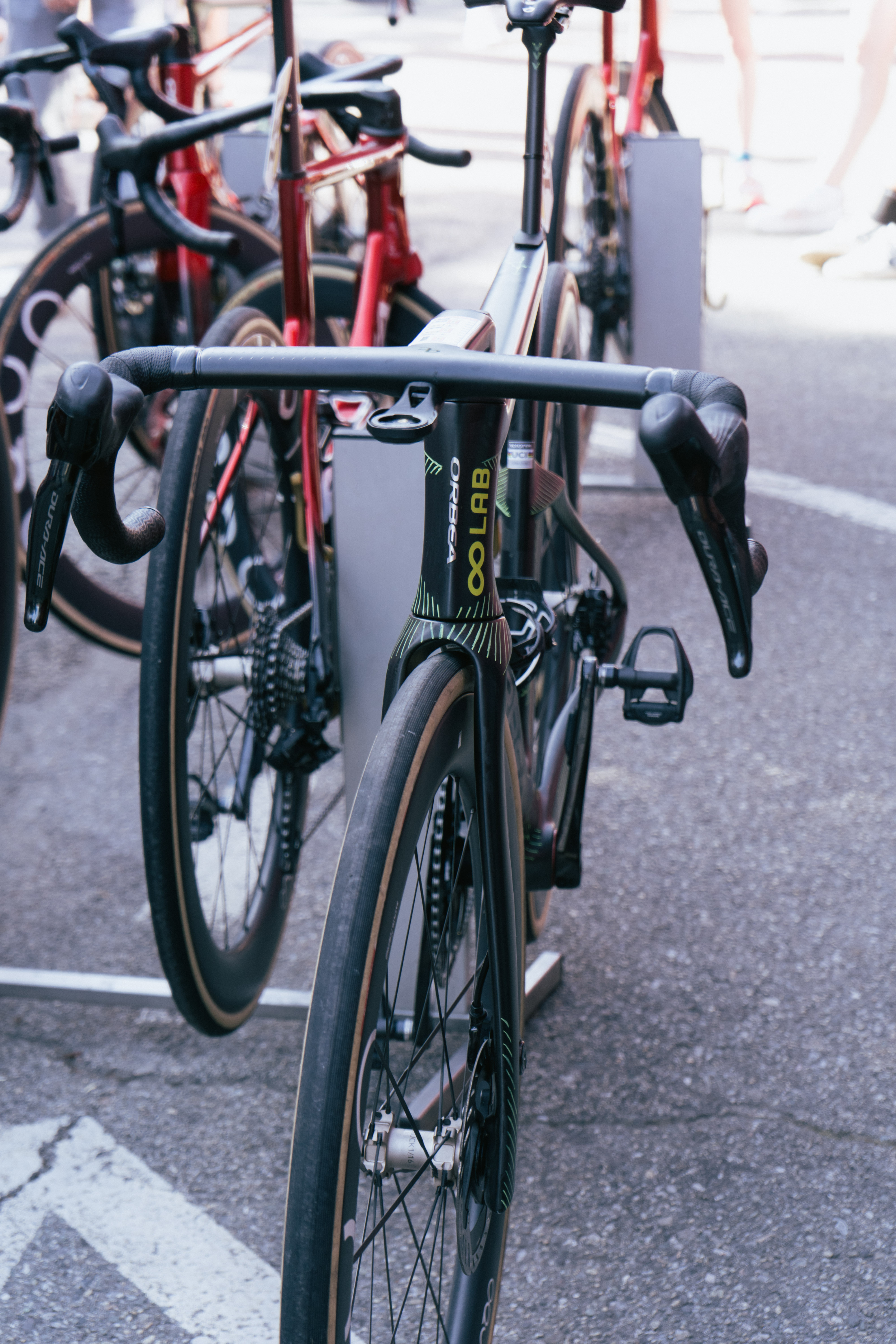
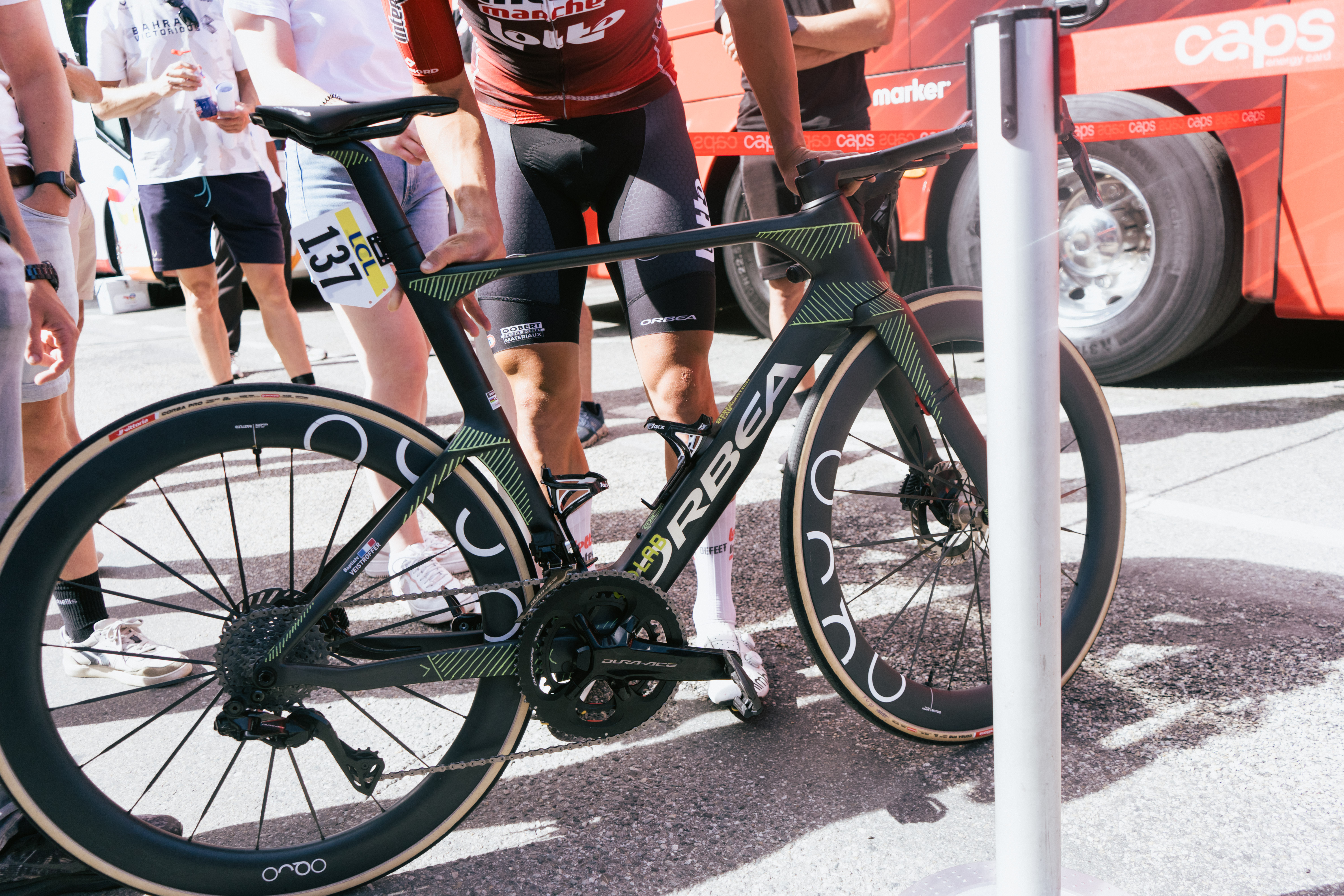
This looks to be a new Orca Aero from Orbea, seen on the Lotto-Intermarché team bus. The current one is quite old, so well due an update.
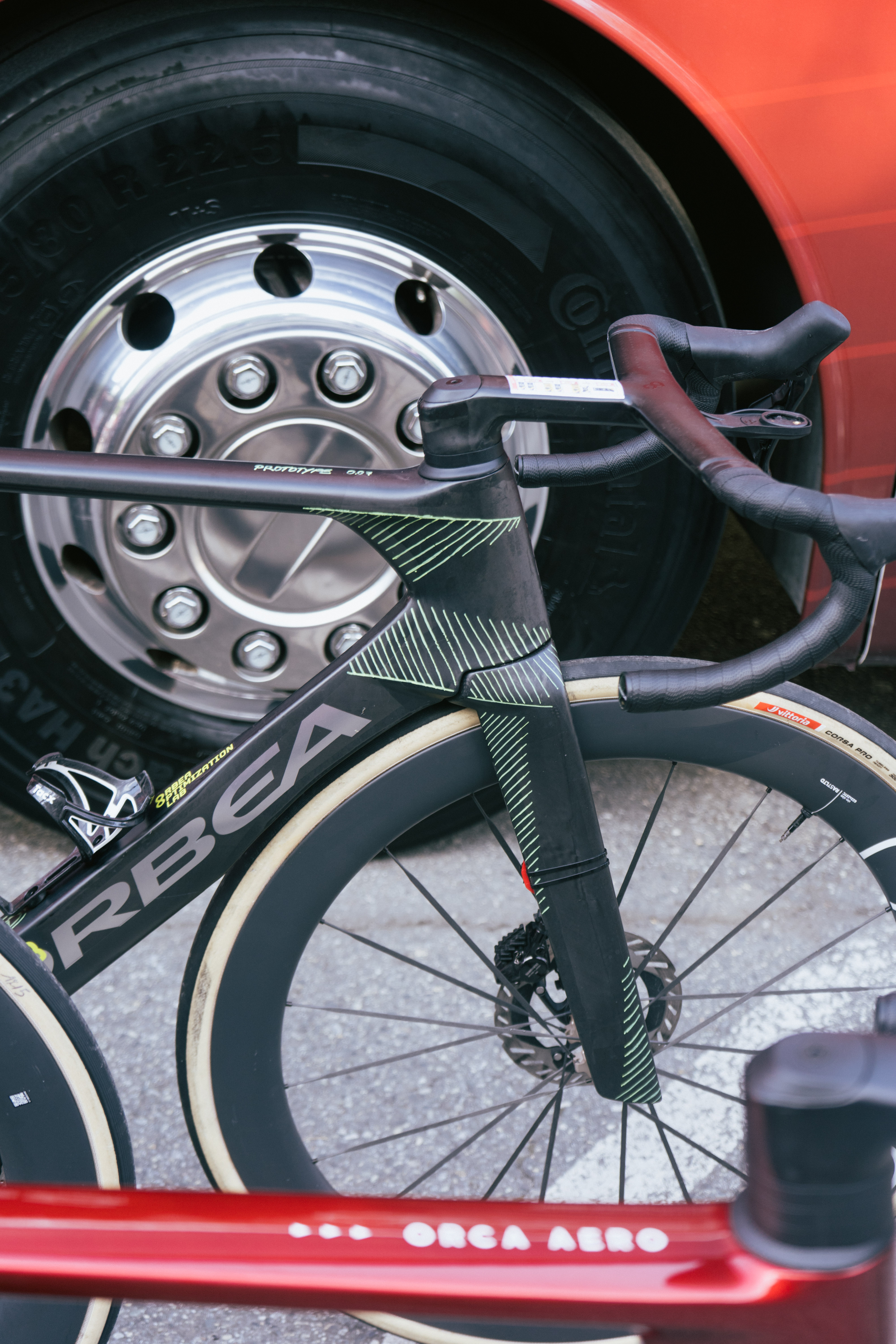
(Image credit: Will Jones)
Handily, presumably to draw attention from the media, paint pens had been used to highlight certain areas. The forks and headtube have been reshaped.
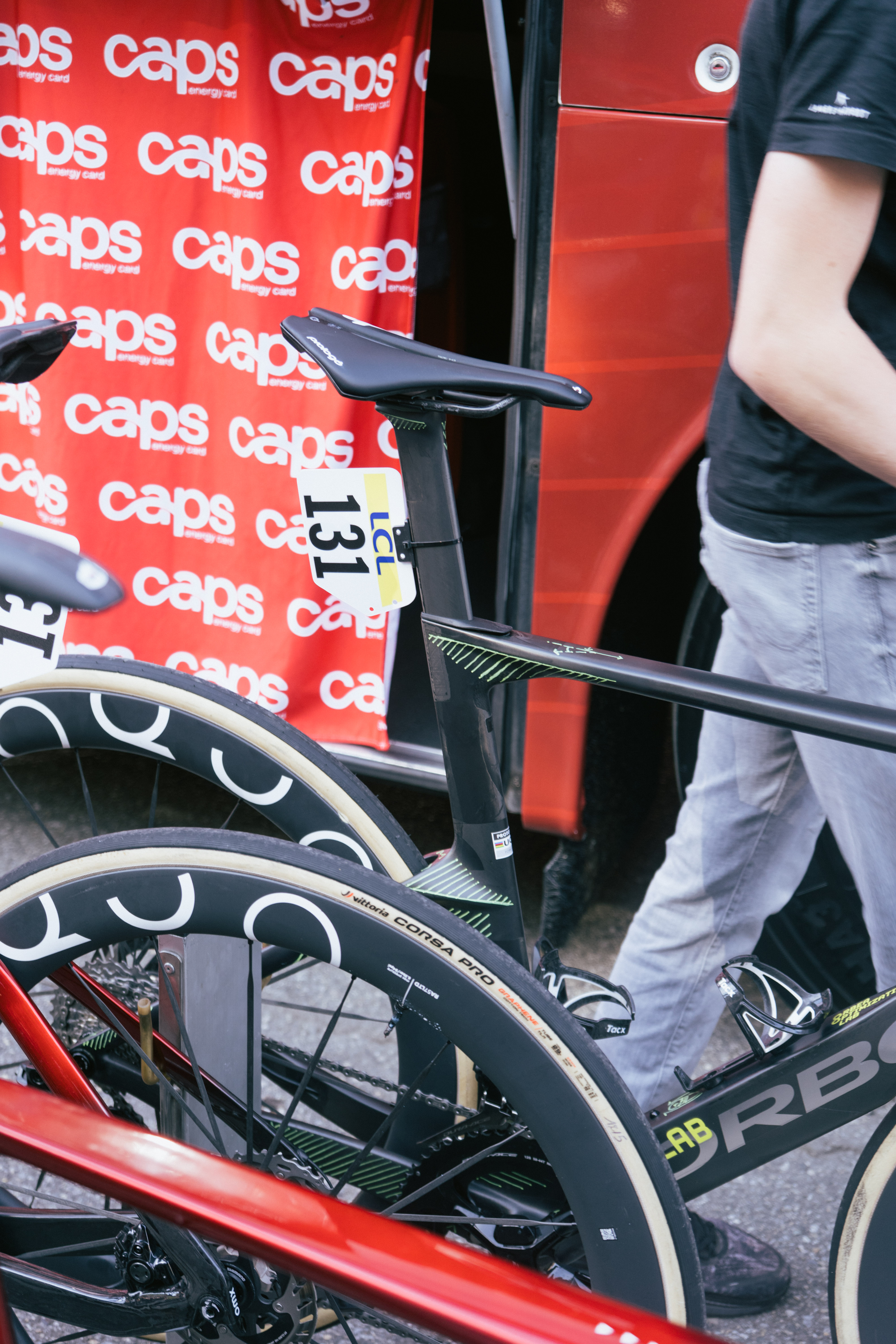
(Image credit: Will Jones)
The seat stays are lower and more heavily sculpted into the seat tube.

(Image credit: Will Jones)
Here’s that deeper head tube again.
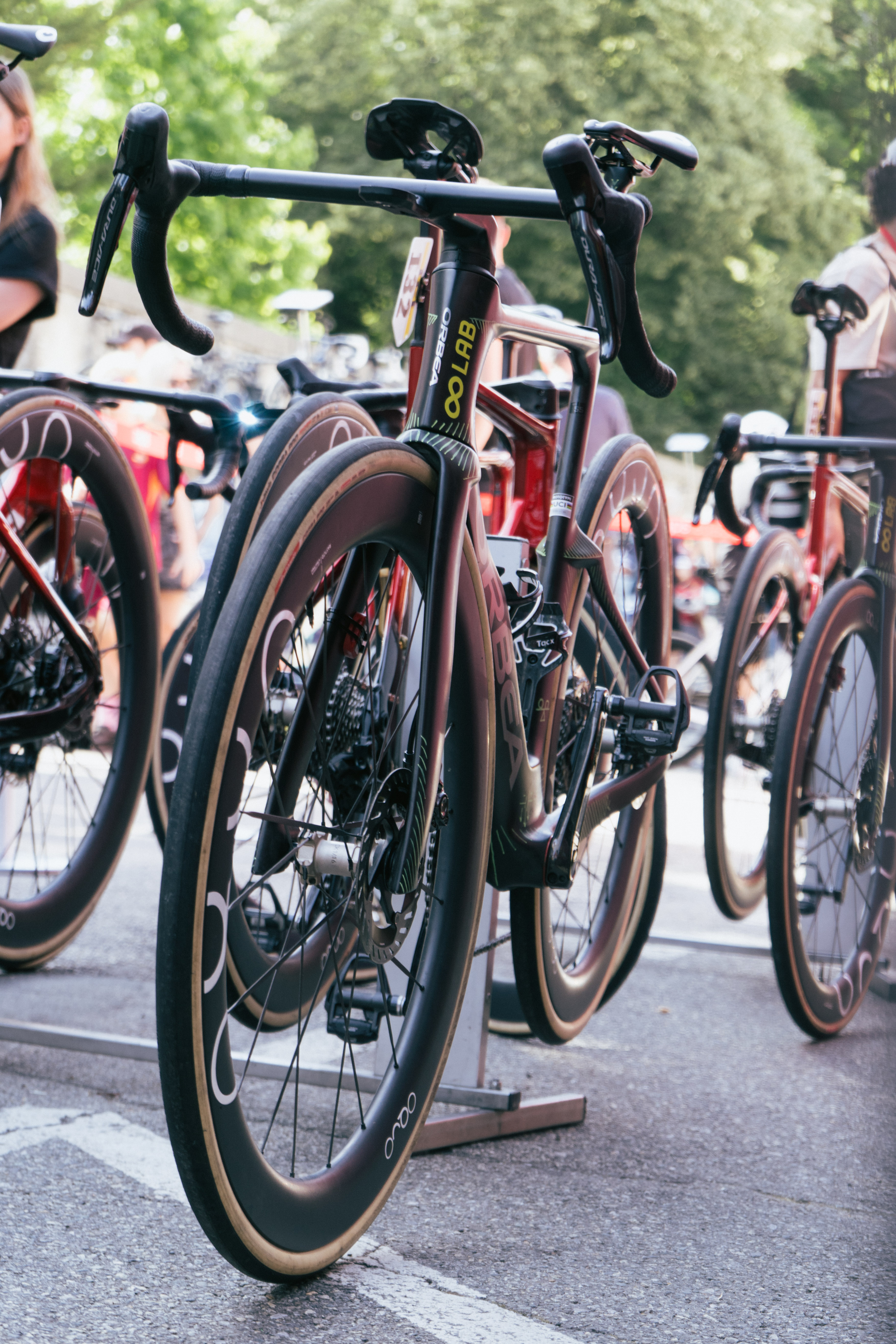
(Image credit: Will Jones)
Tyre clearance looks to be increased from the quite limited 30mm on the current model.
(Image credit: Will Jones)
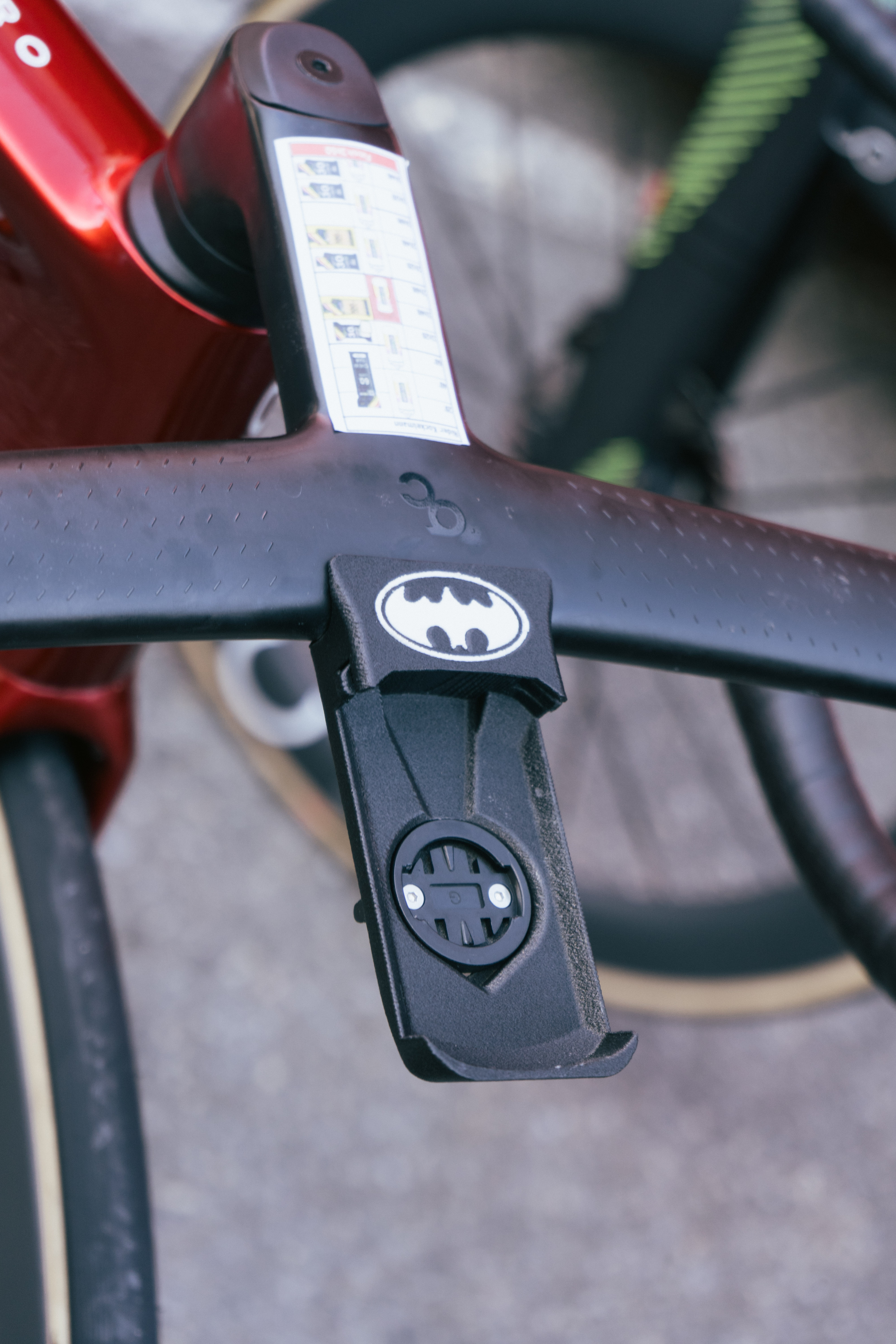
Holy Garmin mount, Batman!
(Image credit: Will Jones)
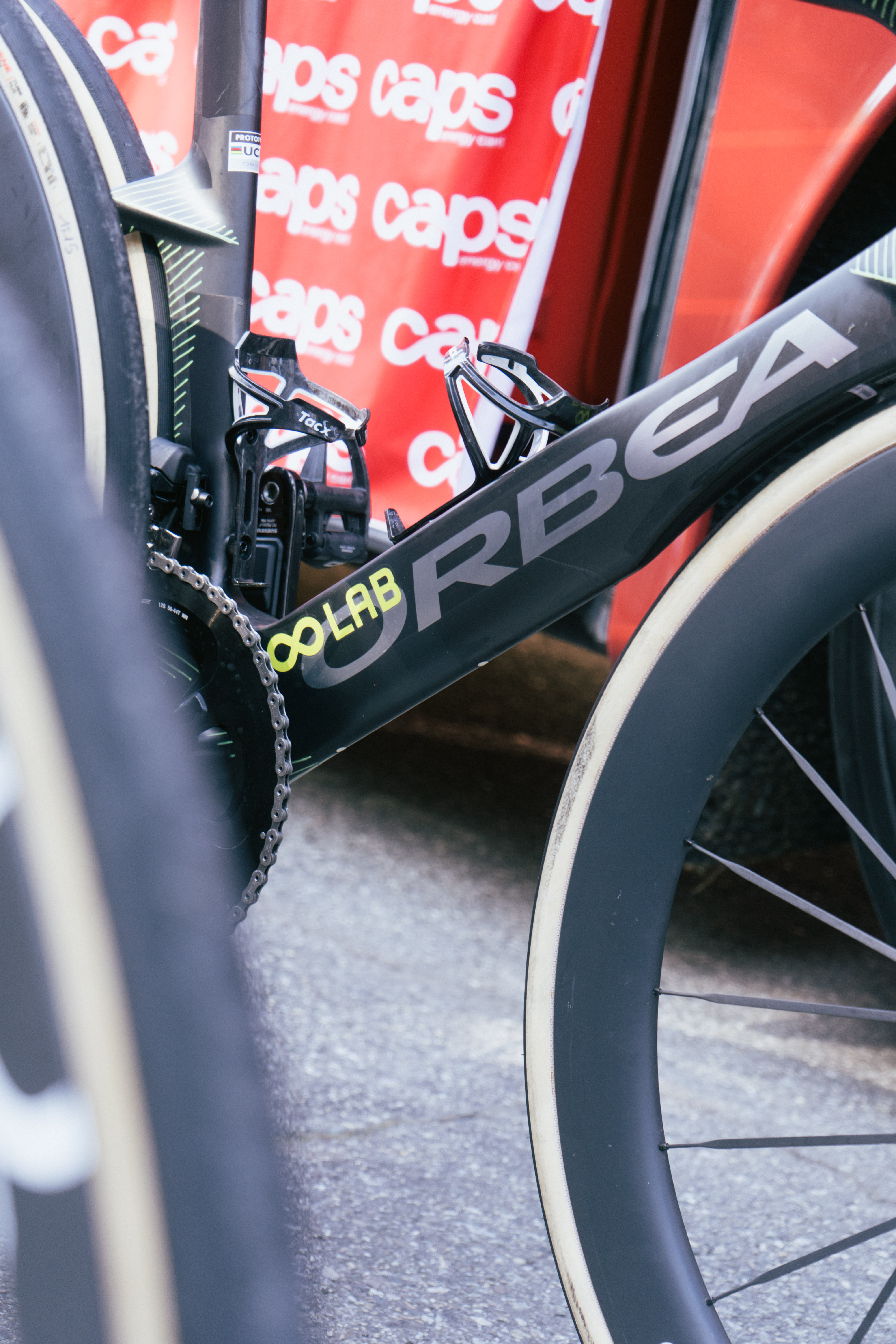
The old Orca had the option of a downtube storage aero canister, and the blanked bosses under here show it’s probably going to remain for this model, although it’s illegal for UCI use.

(Image credit: Will Jones)
Here’s a better look at the rear triangle- the horizontal-ish chainstays with the upward kink to the axle seem to be remaining.
(Image credit: Will Jones)
It certainly looks like a purposeful machine, though curiously it appears to have a setback seatpost, which is against the trend of riders using zero offset ones to get more over the bottom bracket.
(Image credit: Will Jones)
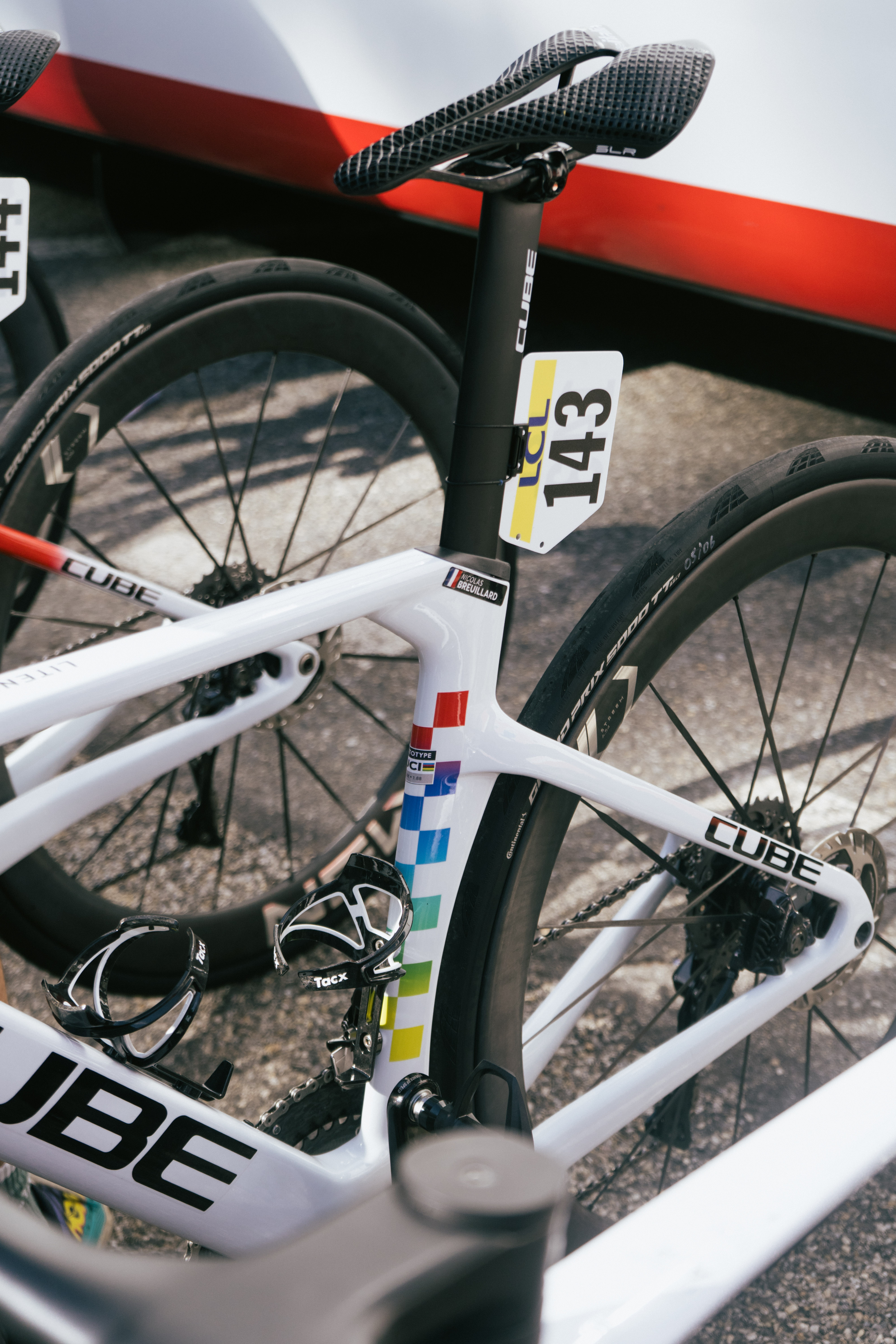
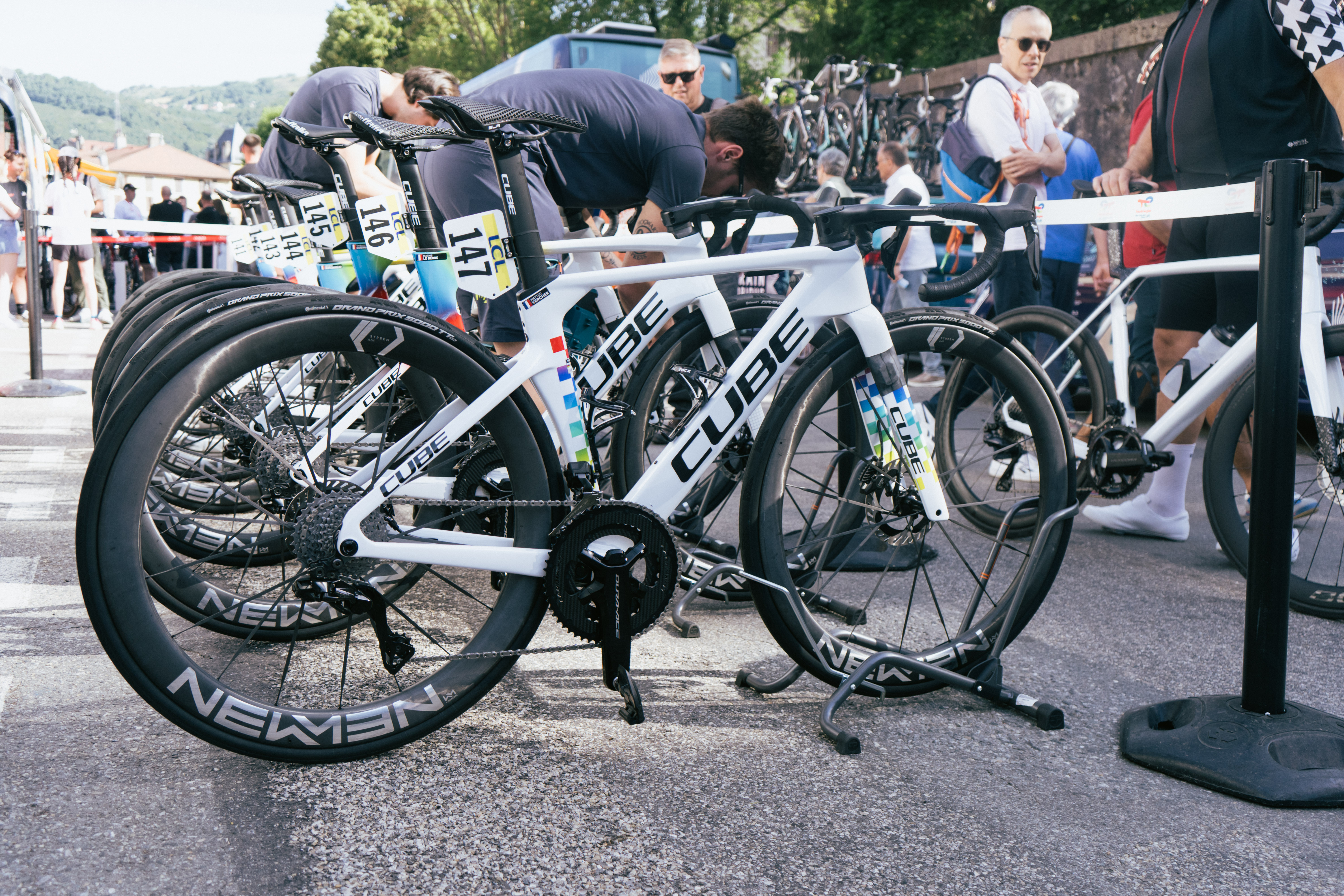
Another prototype, this time from Cube: a new Litening Aero. This is easily differentiated from the current model by the chopped-off seat cluster design.
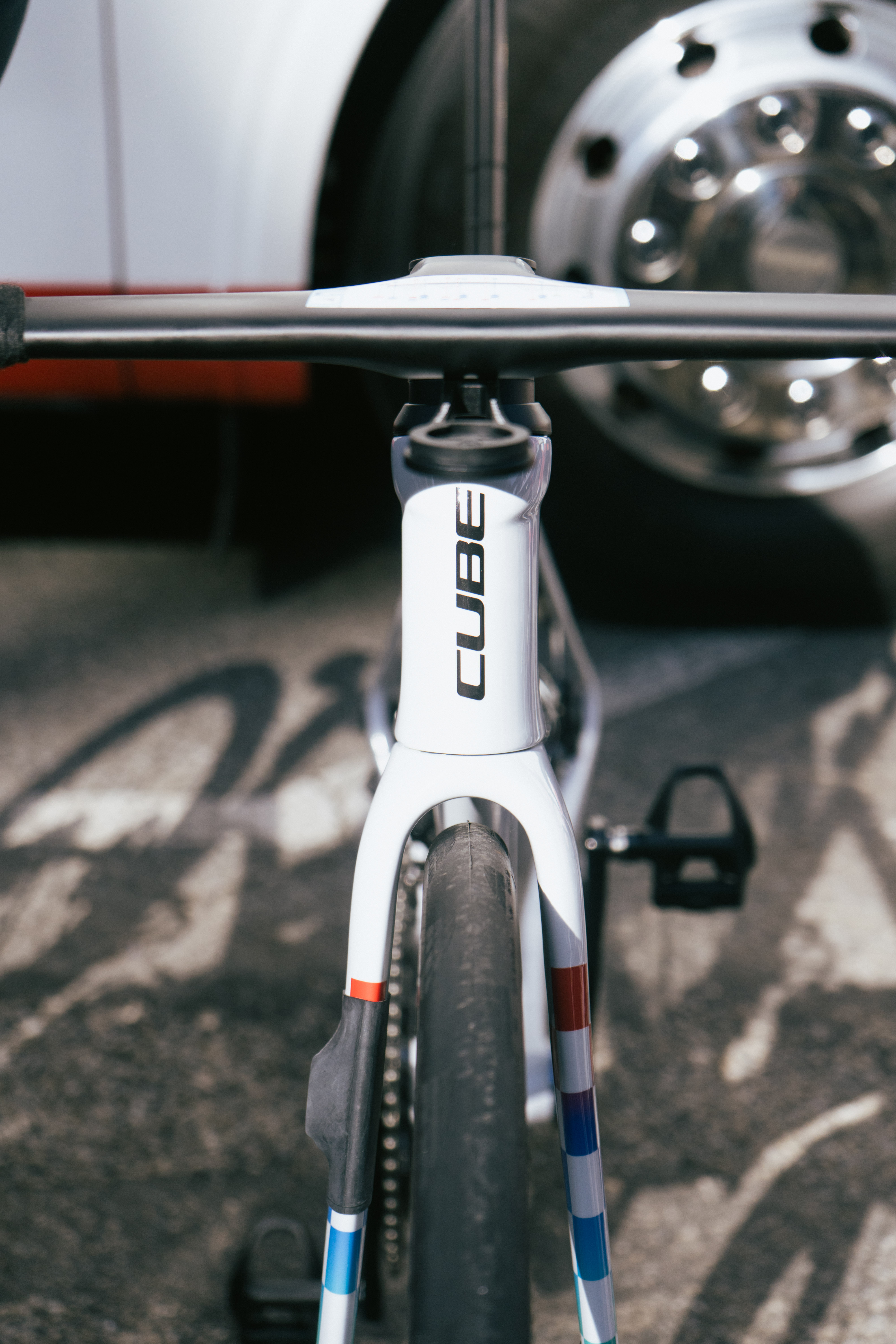
(Image credit: Will Jones)
Room up front for modern road tyre widths, even for the cobbles.
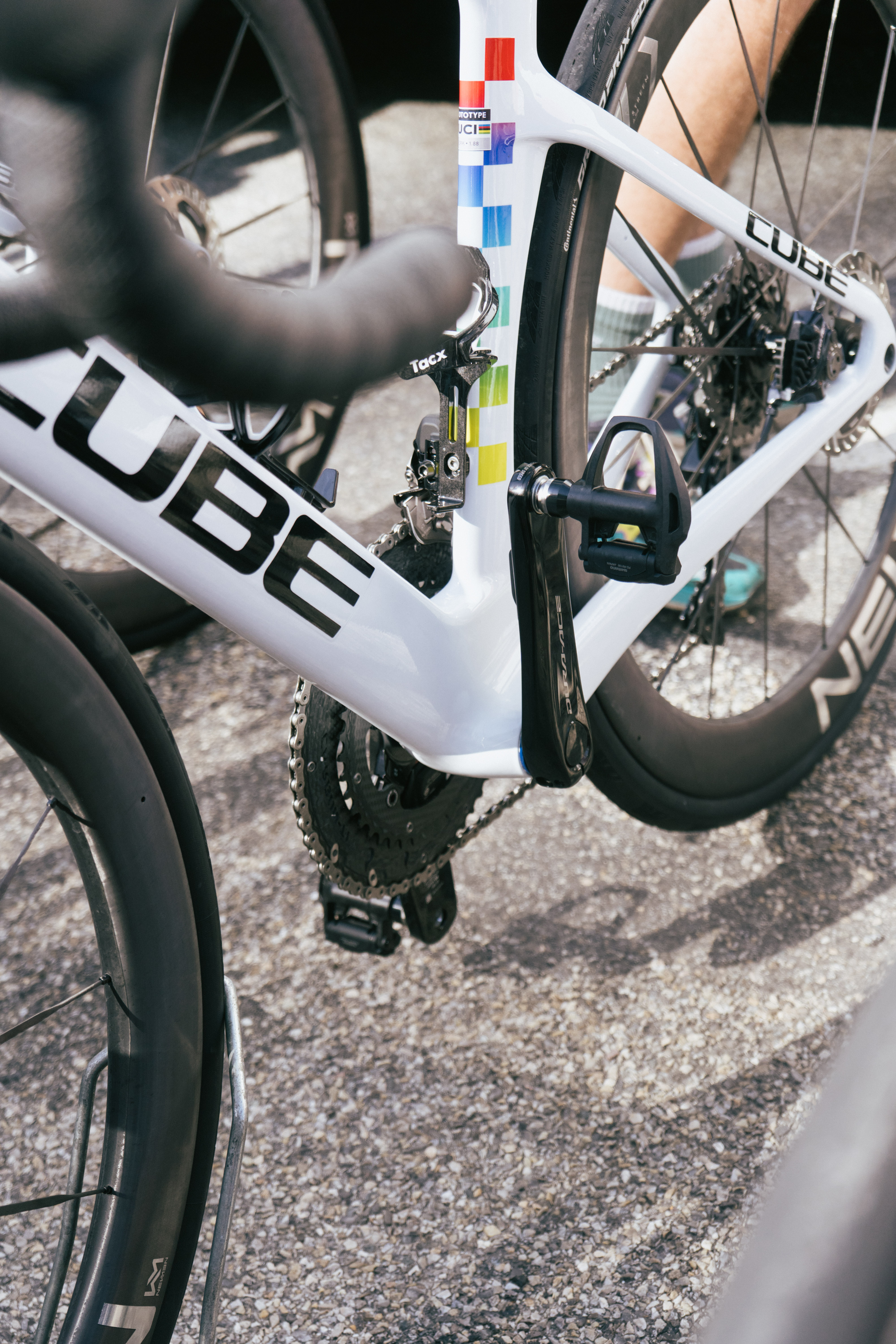
(Image credit: Will Jones)
The bottom bracket is chunky, as expected. The chainstays look to meet it at the sides rather than the rear, though, potentially keeping the shell narrower in the frontal area.
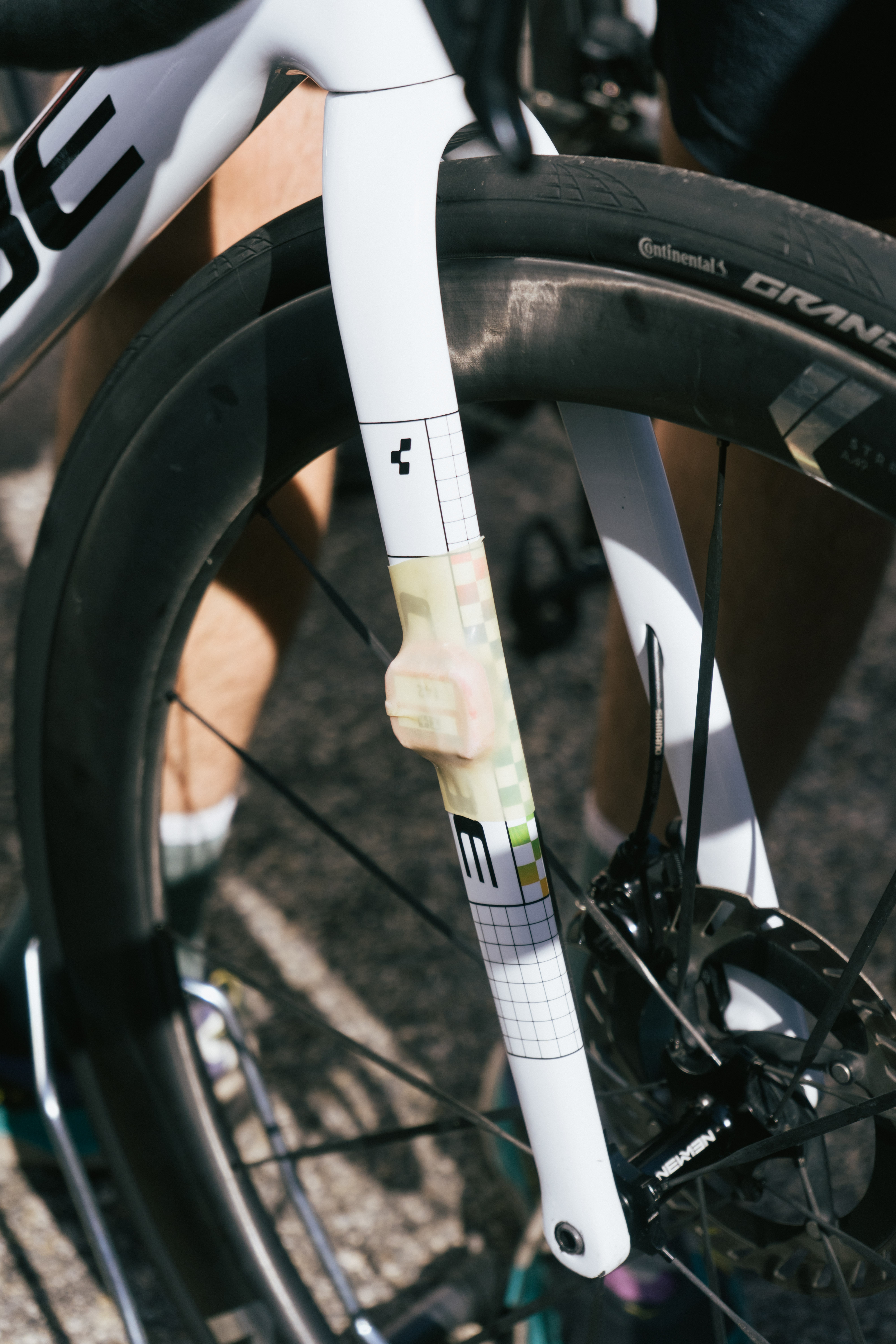
(Image credit: Will Jones)
A different machine, but the latex tube transponder holder in full effect as it is with most teams.
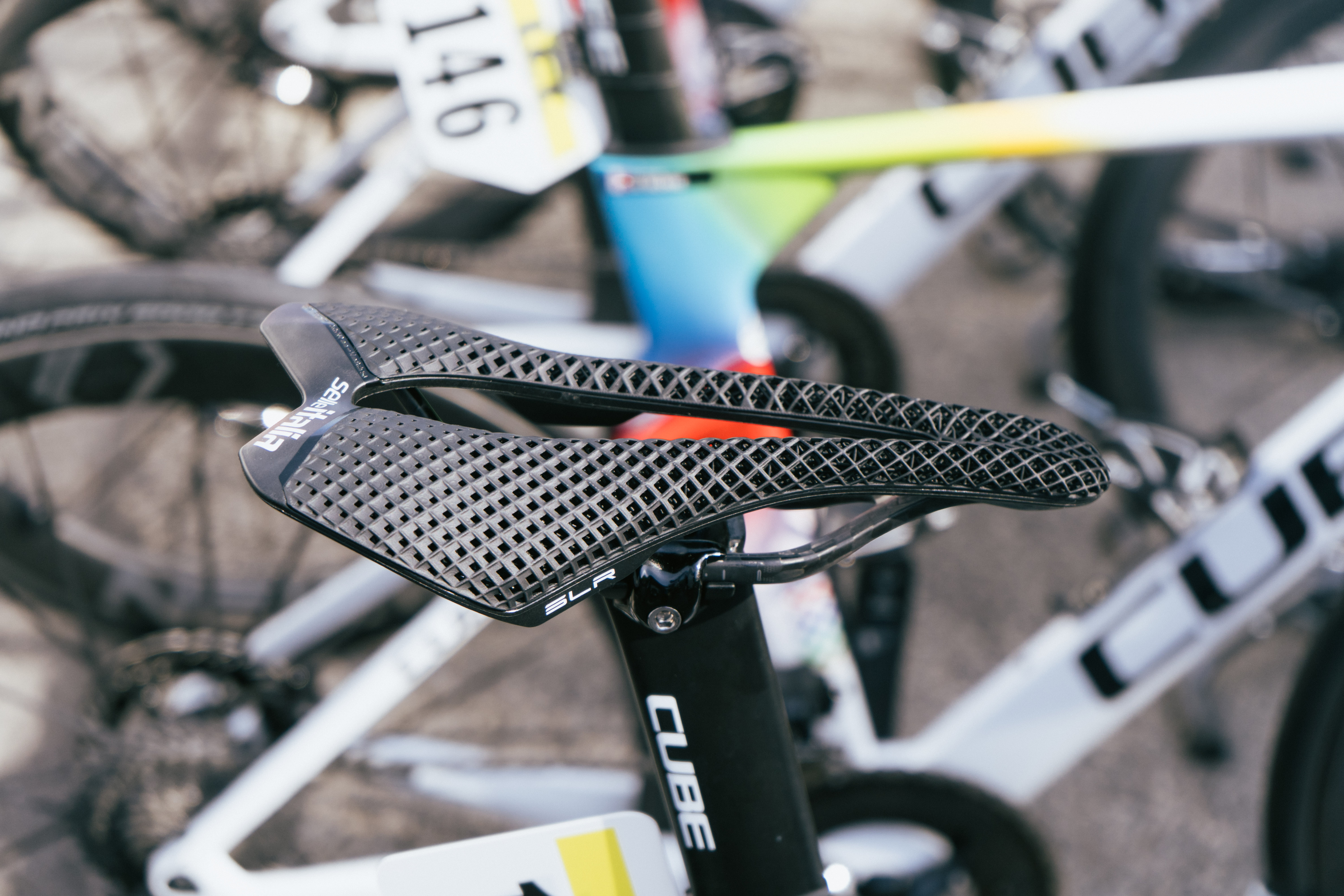
(Image credit: Will Jones)
This is the new-ish 3D-printed version of the new-ish Selle Italia SLR Superflow saddle.
(Image credit: Will Jones)
It’s certainly a more modern looking machine than the brand’s current aero bike. There were two on show, though this race was their very first use I believe.
(Image credit: Will Jones)
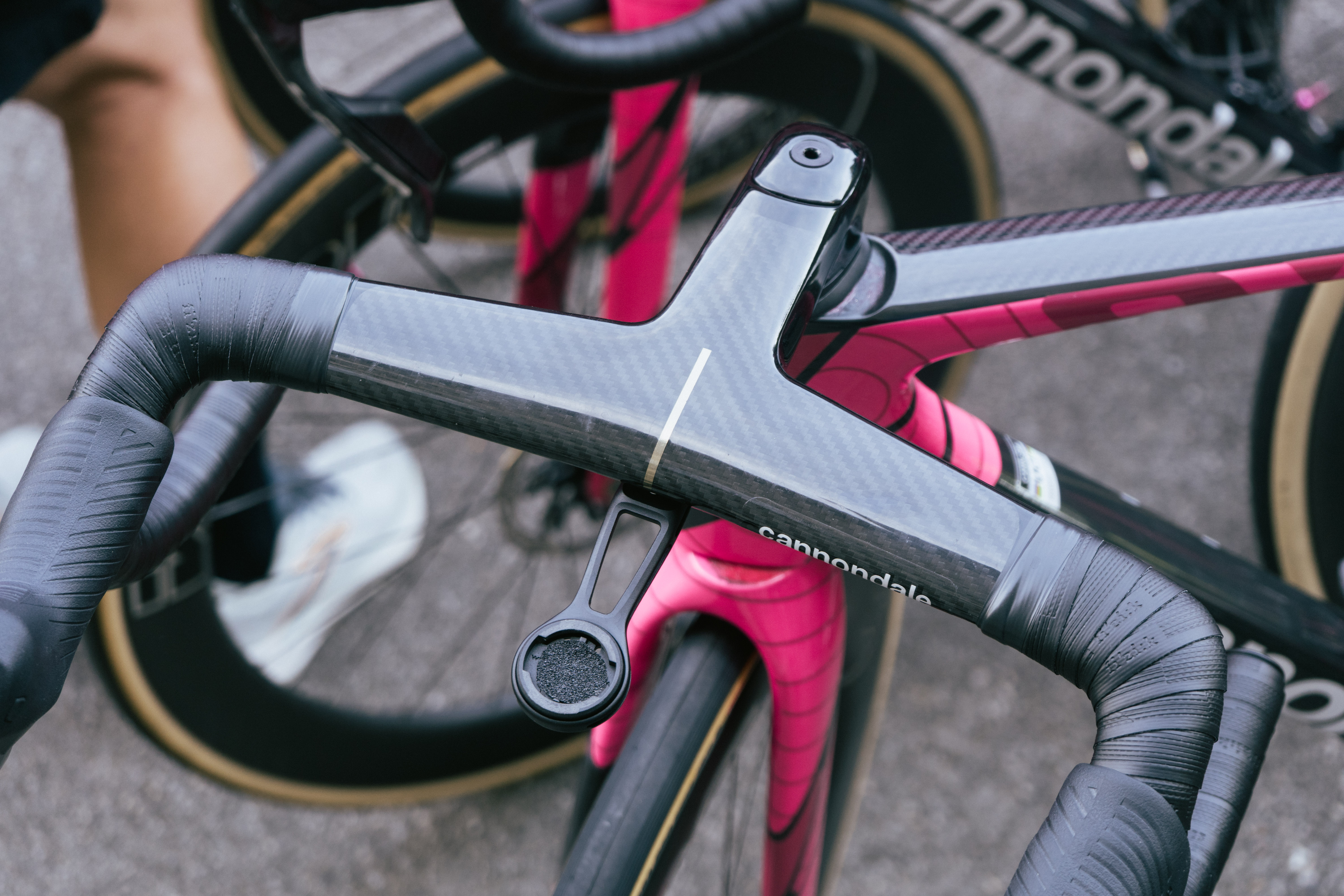
Over at EF there wasn’t anything drastically new, but these bars are really very pretty. Ben Healey also uses the old Velcro-in-the-computer-mount trick year-round it seems.
(Image credit: Will Jones)
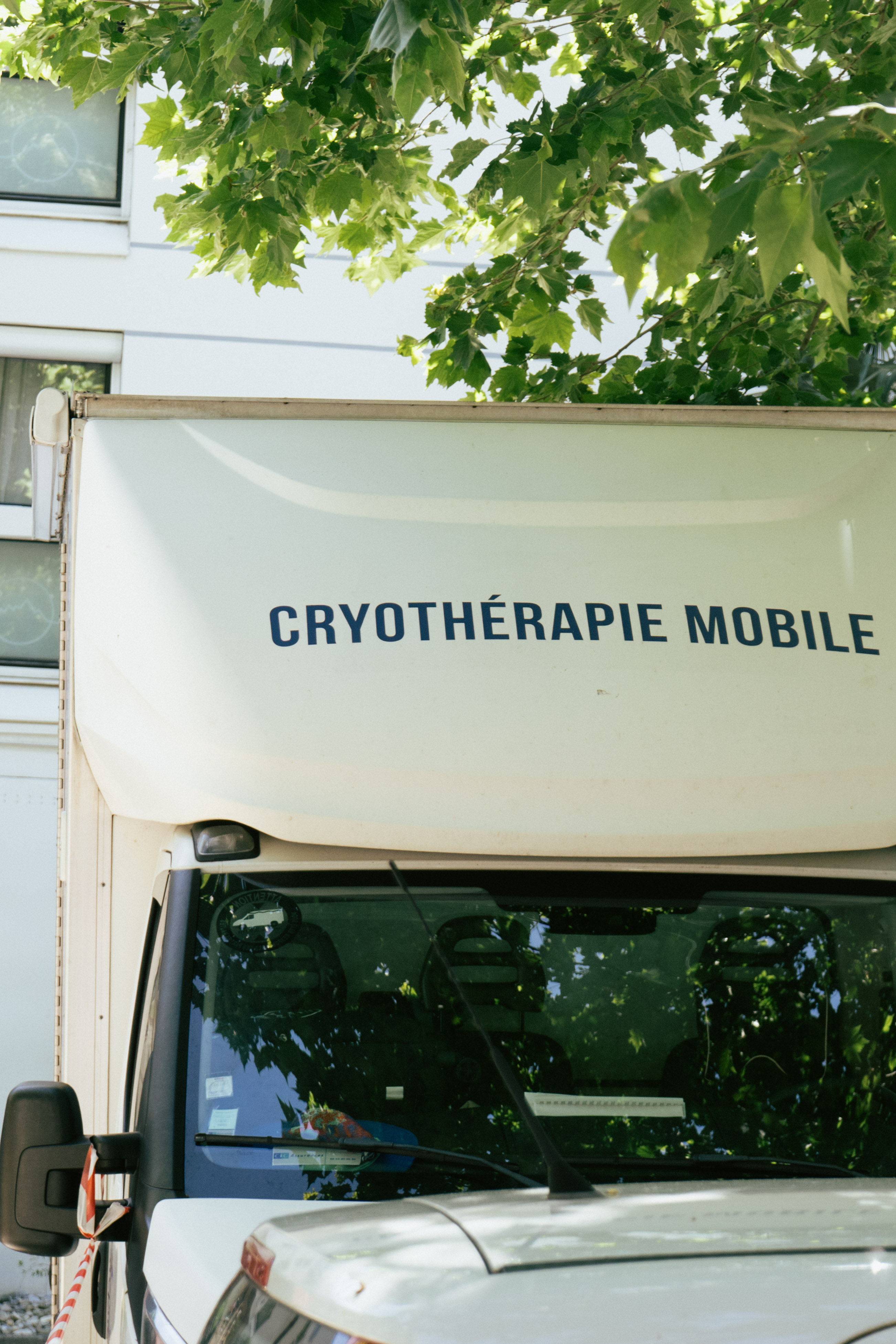
Decathlon CMA CGM had a mobile cryotherapy unit at their team hotel this year.
(Image credit: Will Jones)
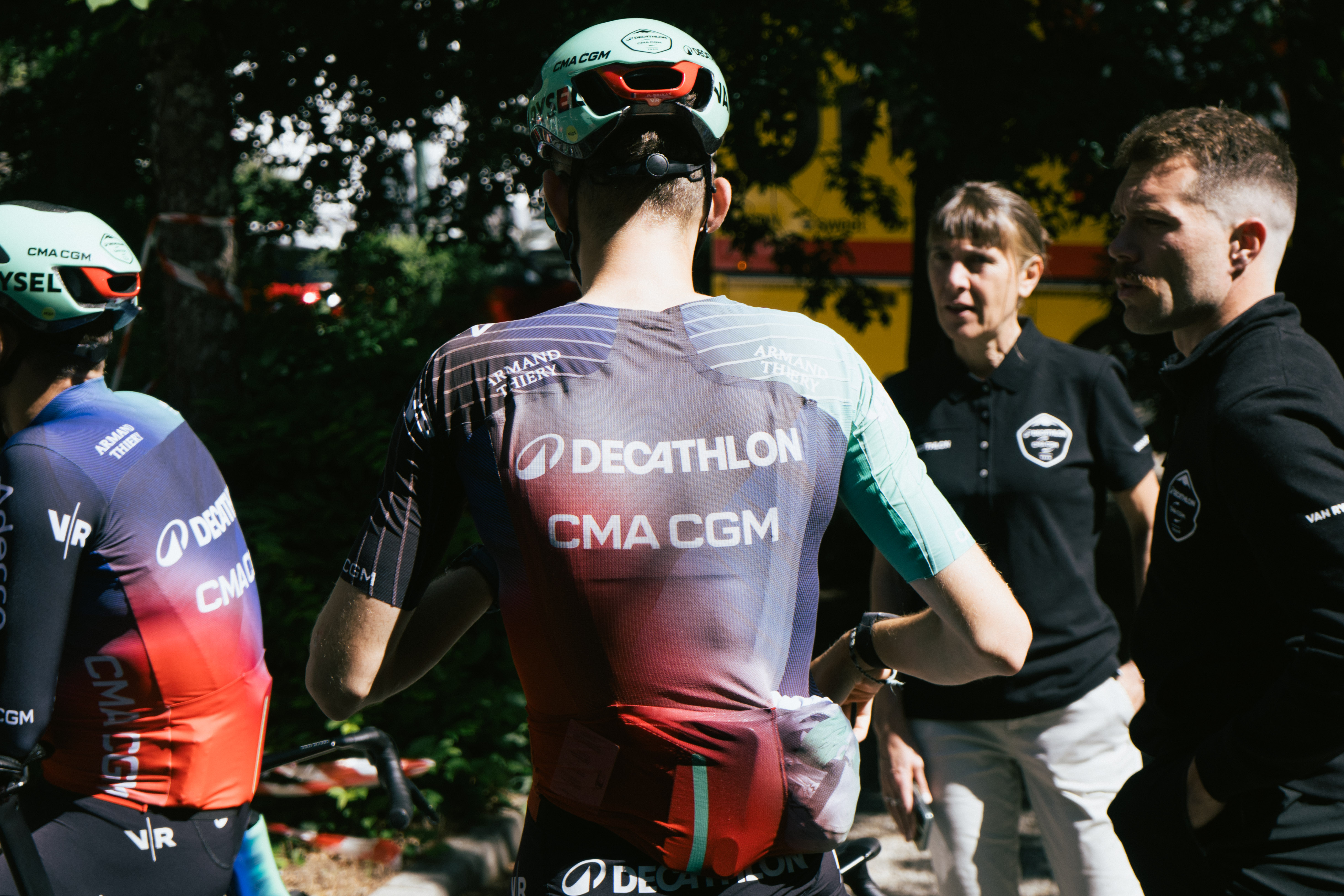
Paul Seixas also had what looks to be a new lightweight aero jersey on his back on a pre-race training ride.
(Image credit: Will Jones)
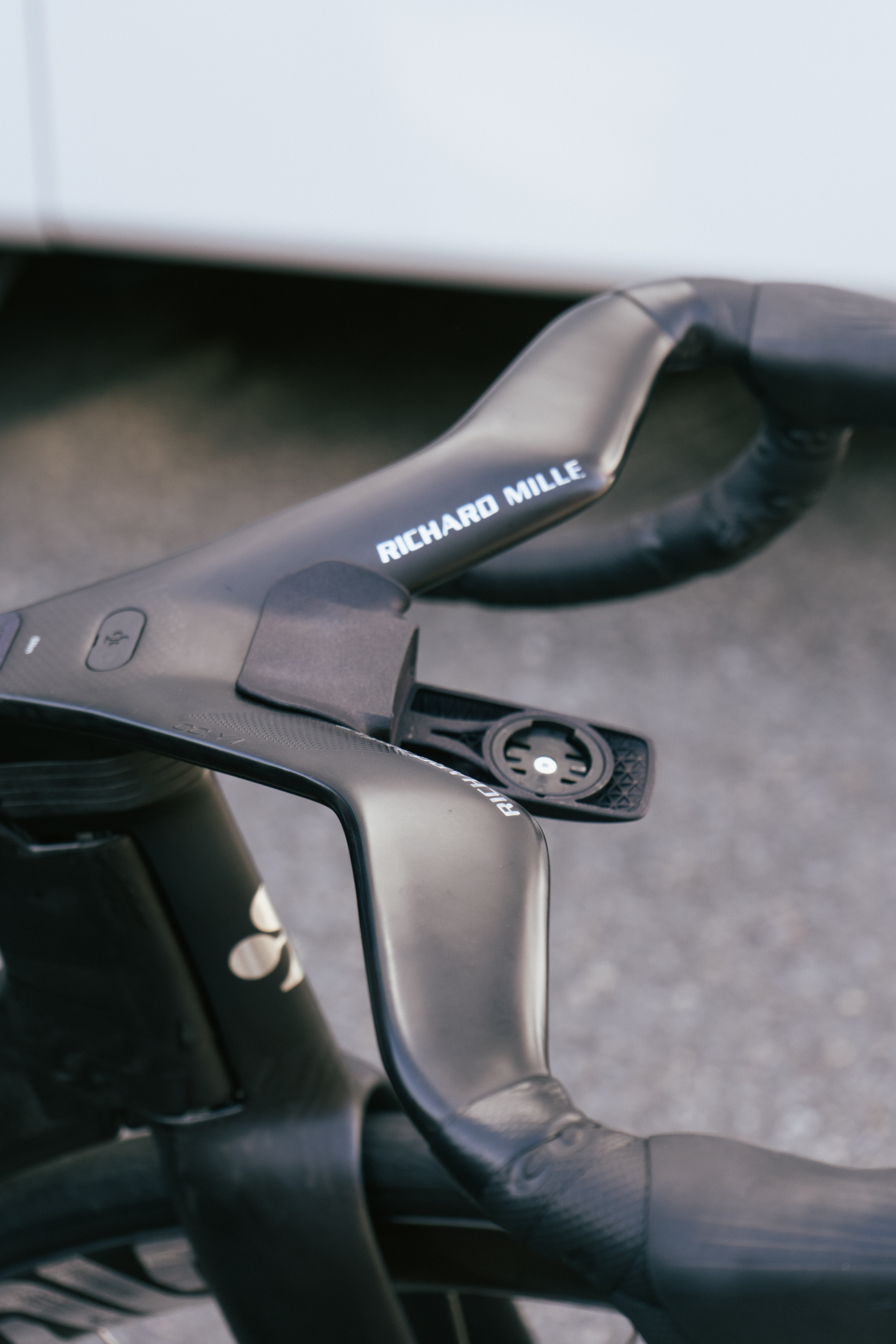
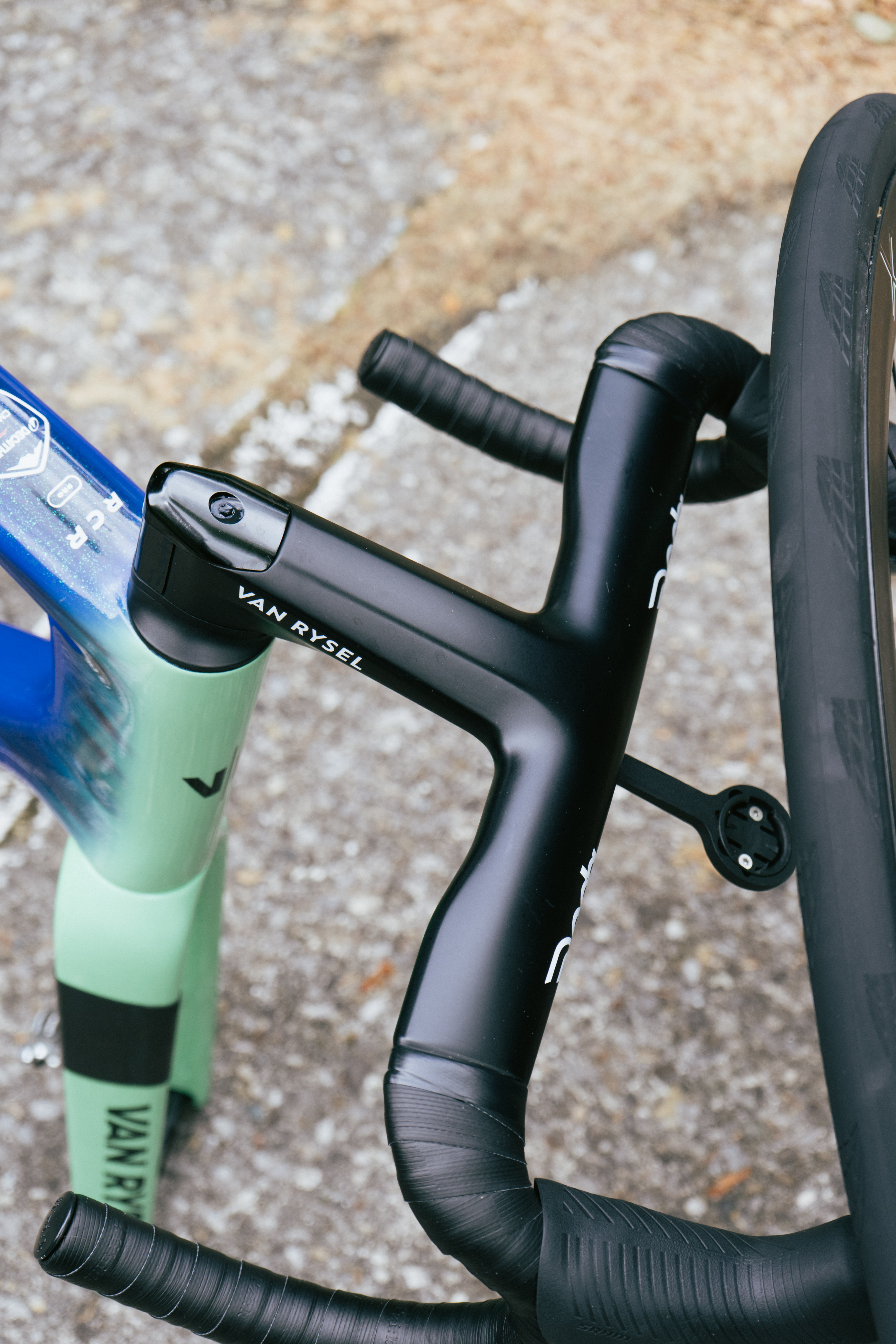
I’m not 100% sure, but I think this might be a new Deda x Van Rysel cockpit.
(Image credit: Will Jones)
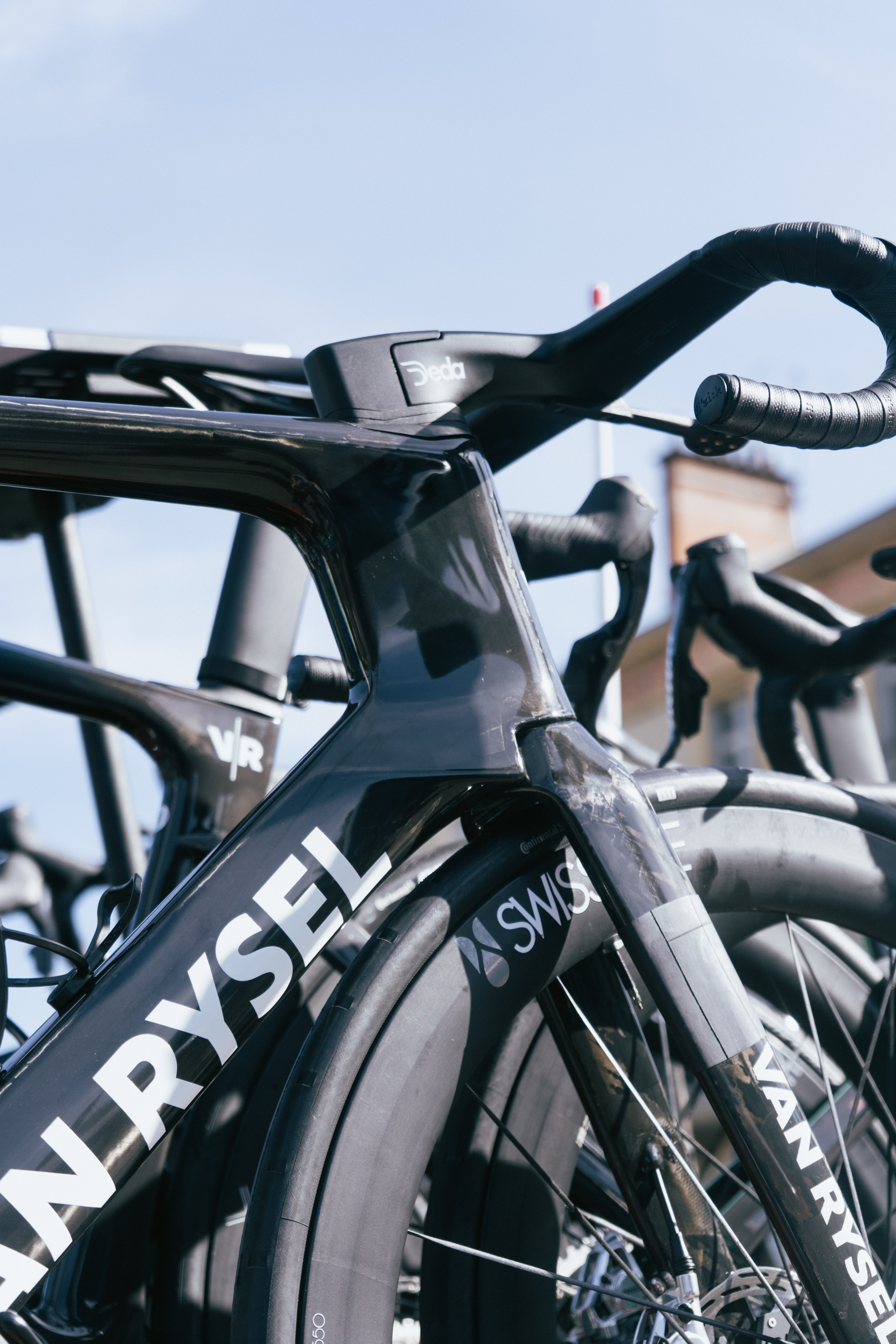
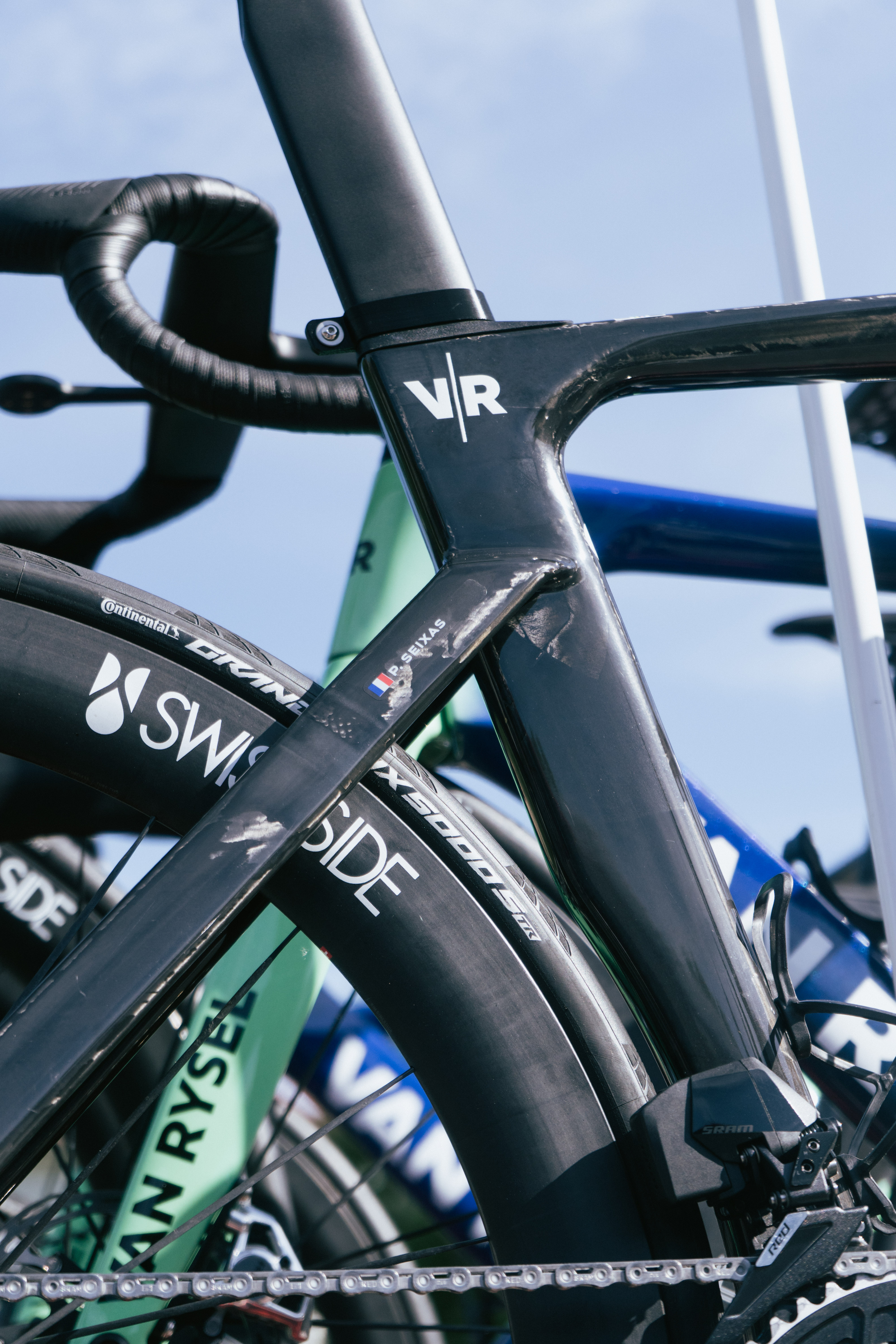
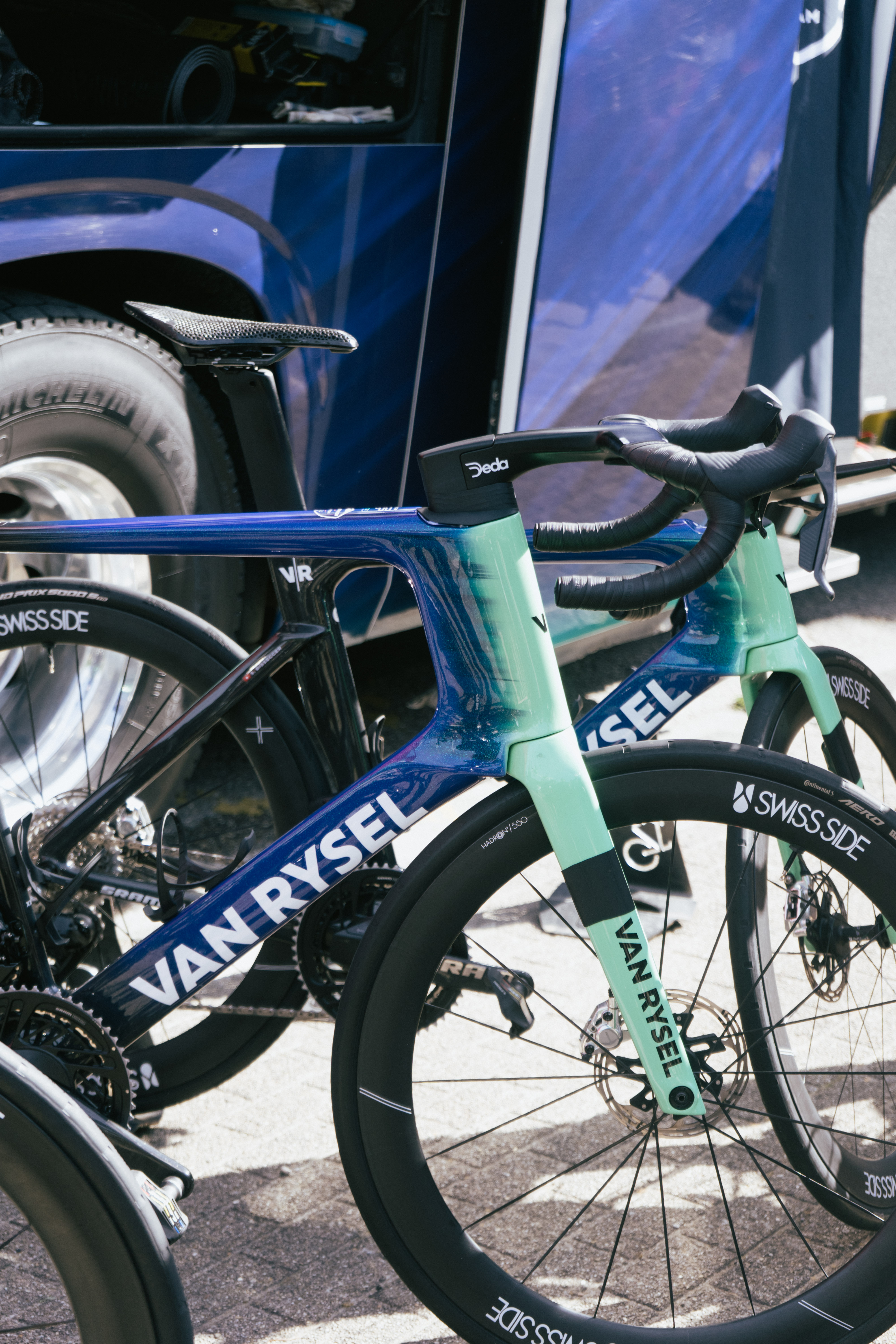
As well as a new prototype machine, Paul Seixas had an aero RCR-F stripped back to raw carbon on the roof of the team car.
(Image credit: Will Jones)
You can see the weave, especially where the seat stays clearly join the main part of the frame.
(Image credit: Will Jones)
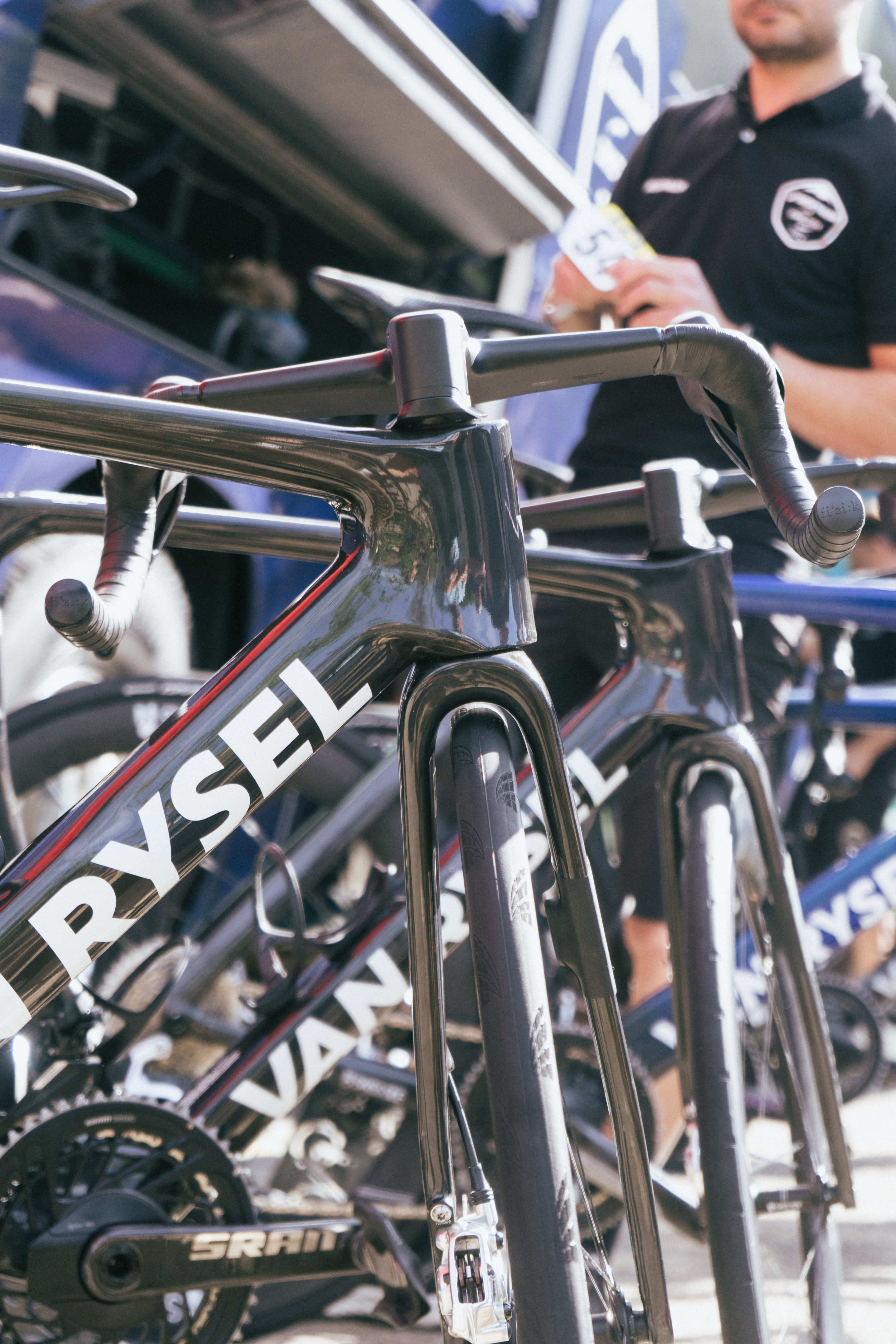
Daan Hoole also had the biggest head tube we’ve seen in a while, along with a monster 150mm cockpit.
(Image credit: Will Jones)
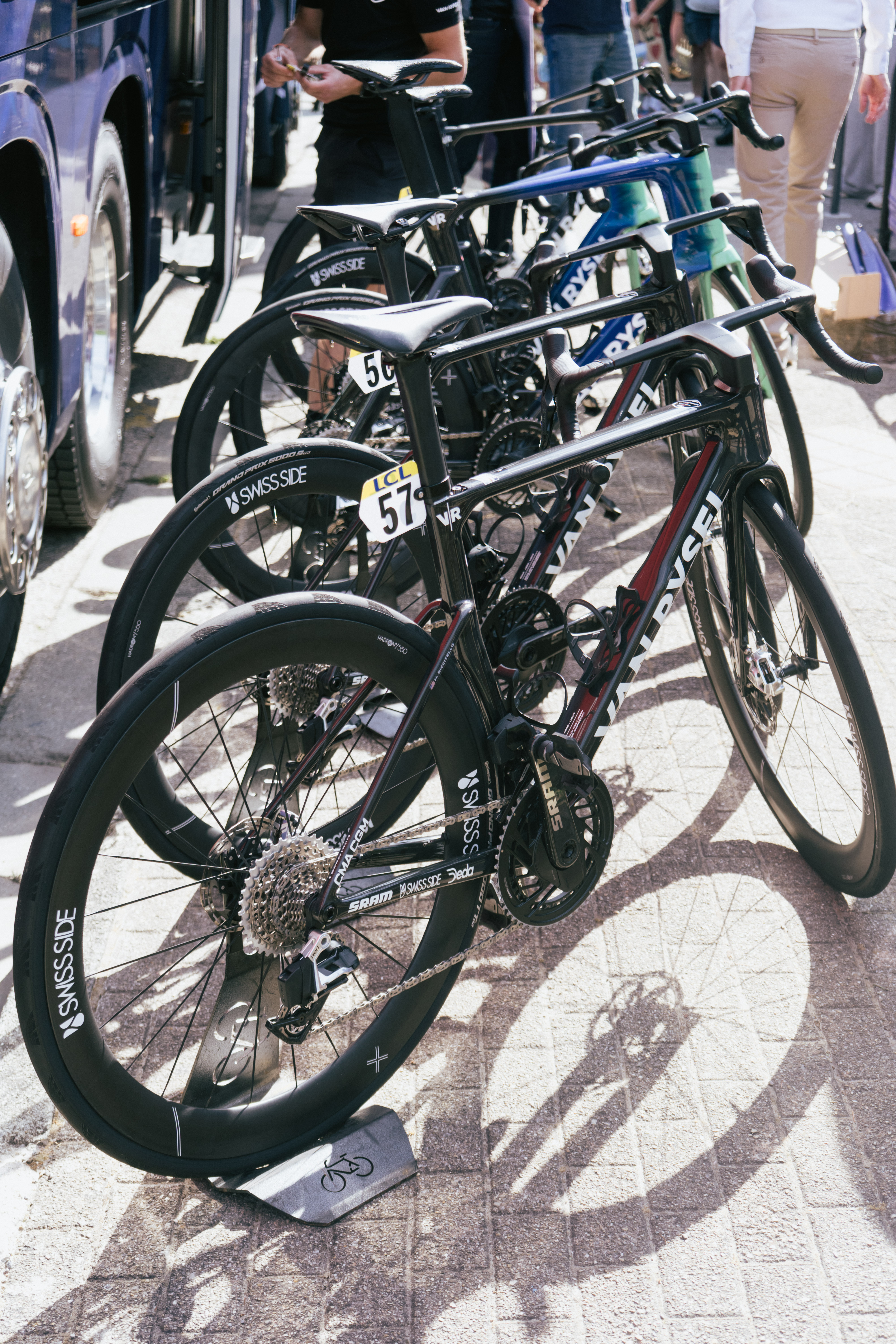
Many of the team, not just Seixas, were rocking the new prototype all-rounder.
(Image credit: Will Jones)
It looks to be deeper up front than the current RCR-Pro, but remains svelte at the rear to keep the weight low.
(Image credit: Will Jones)
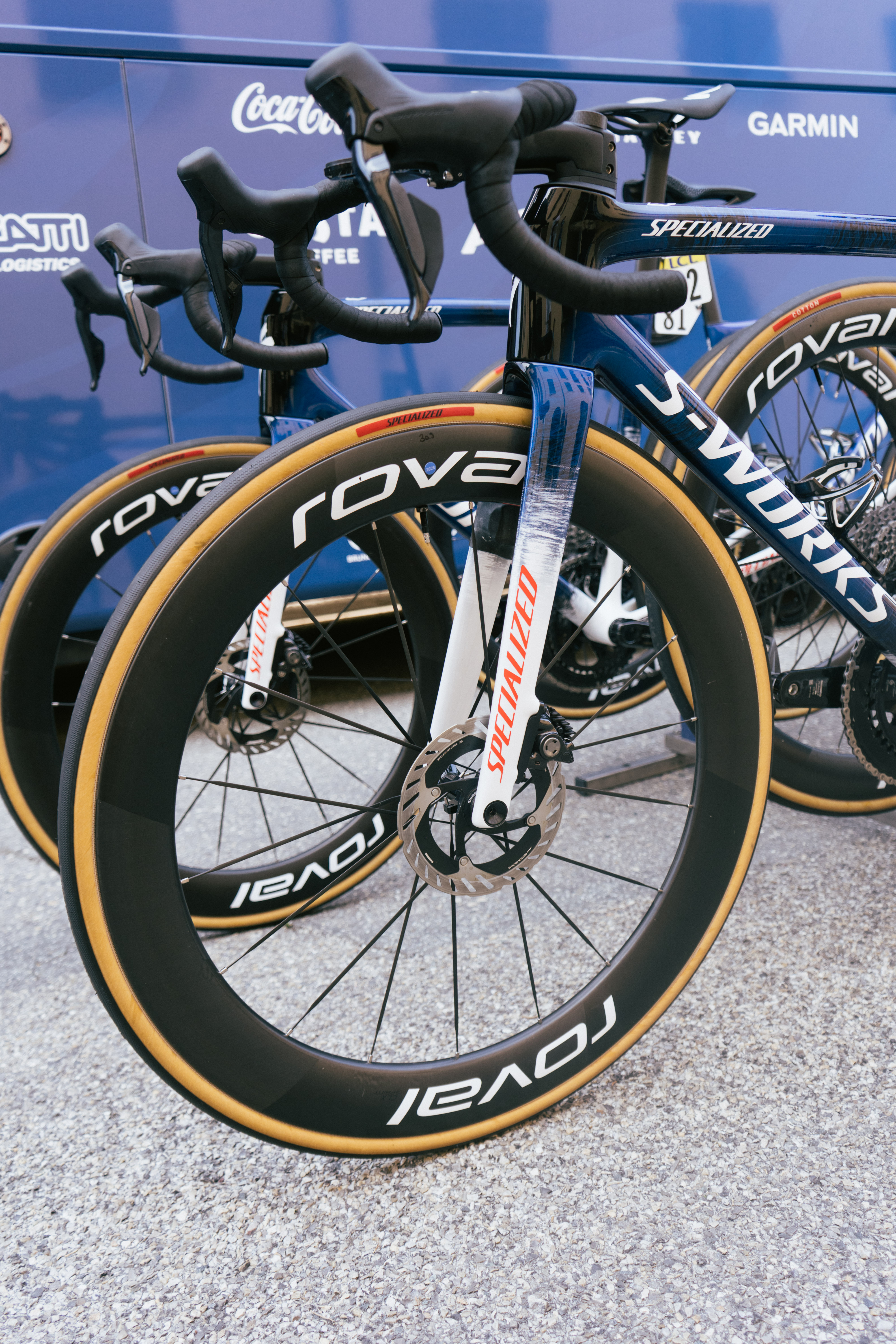
No Tarmac SL9 to be seen at Soudal, but sprint wheels in evidence despite the hilly stage profile on day one.
(Image credit: Will Jones)
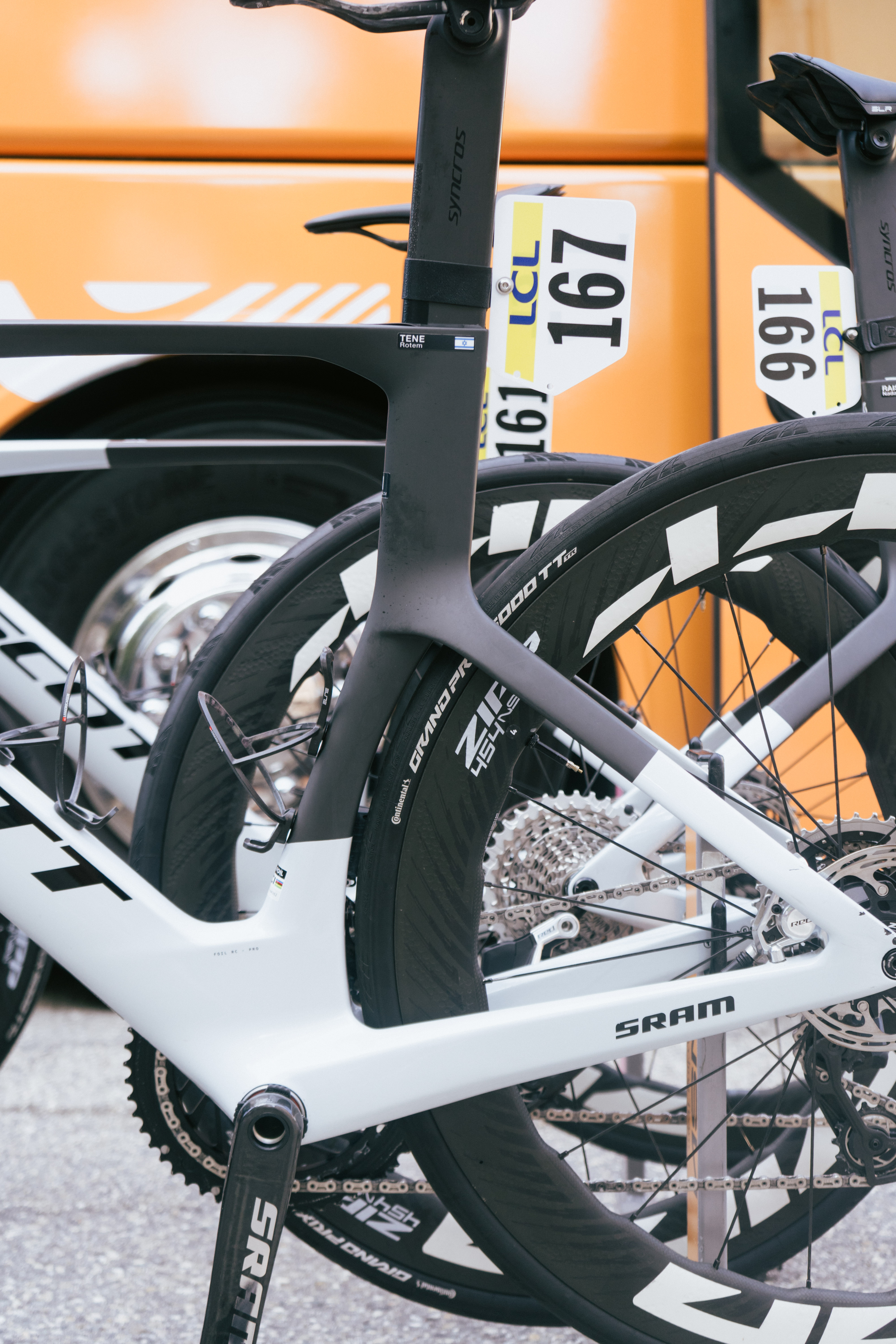
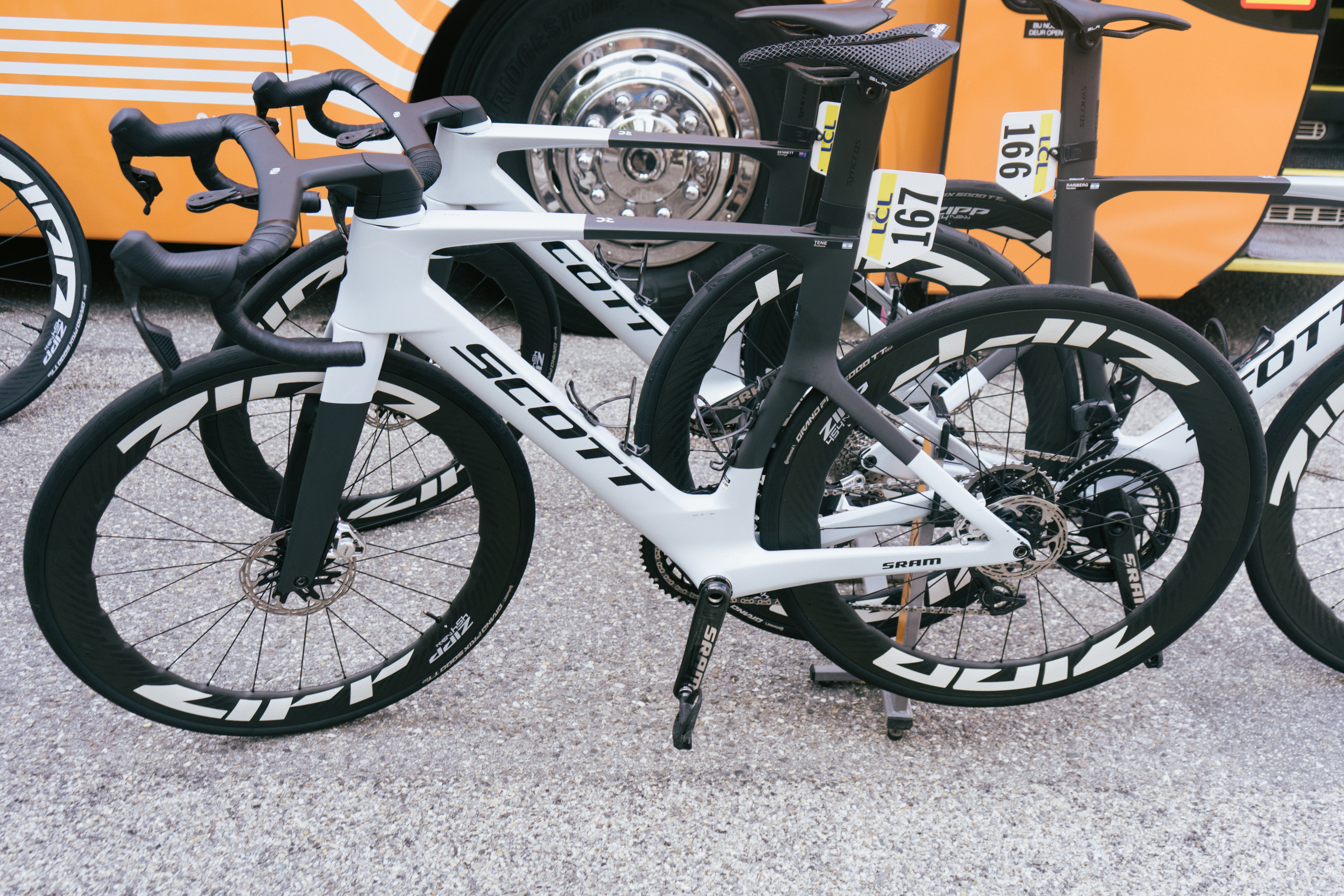
Not a new bike, but it must be said that the Scott Foils of NSN still look incredibly up to date compared to aero bikes of a similar vintage.
(Image credit: Will Jones)
They have many of the modern tropes, and while it’s probably due for a refresh soon, our own testing shows it’s still got the aero chops.

(Image credit: Will Jones)
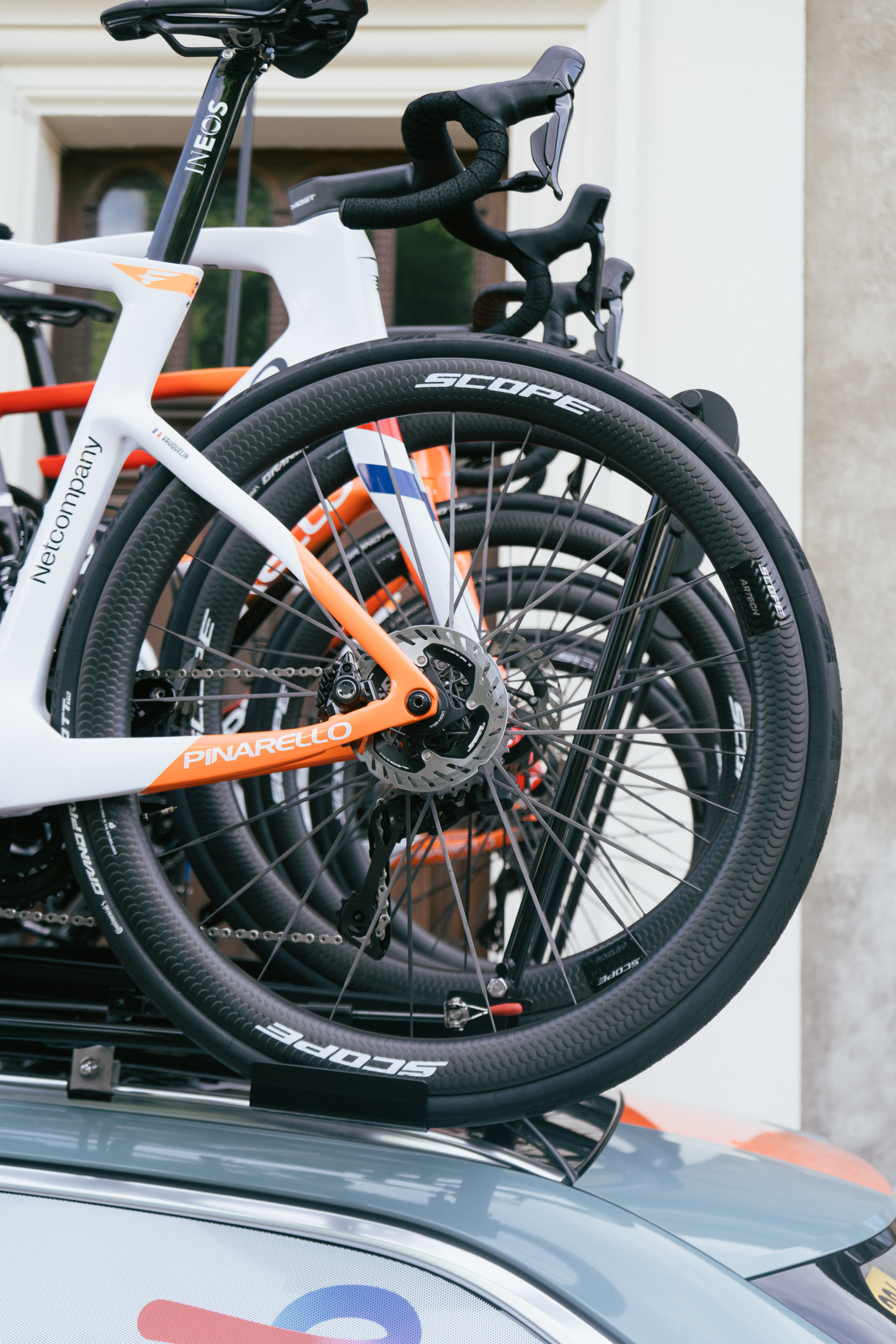
Nope, no SL9 here either.
(Image credit: Will Jones)
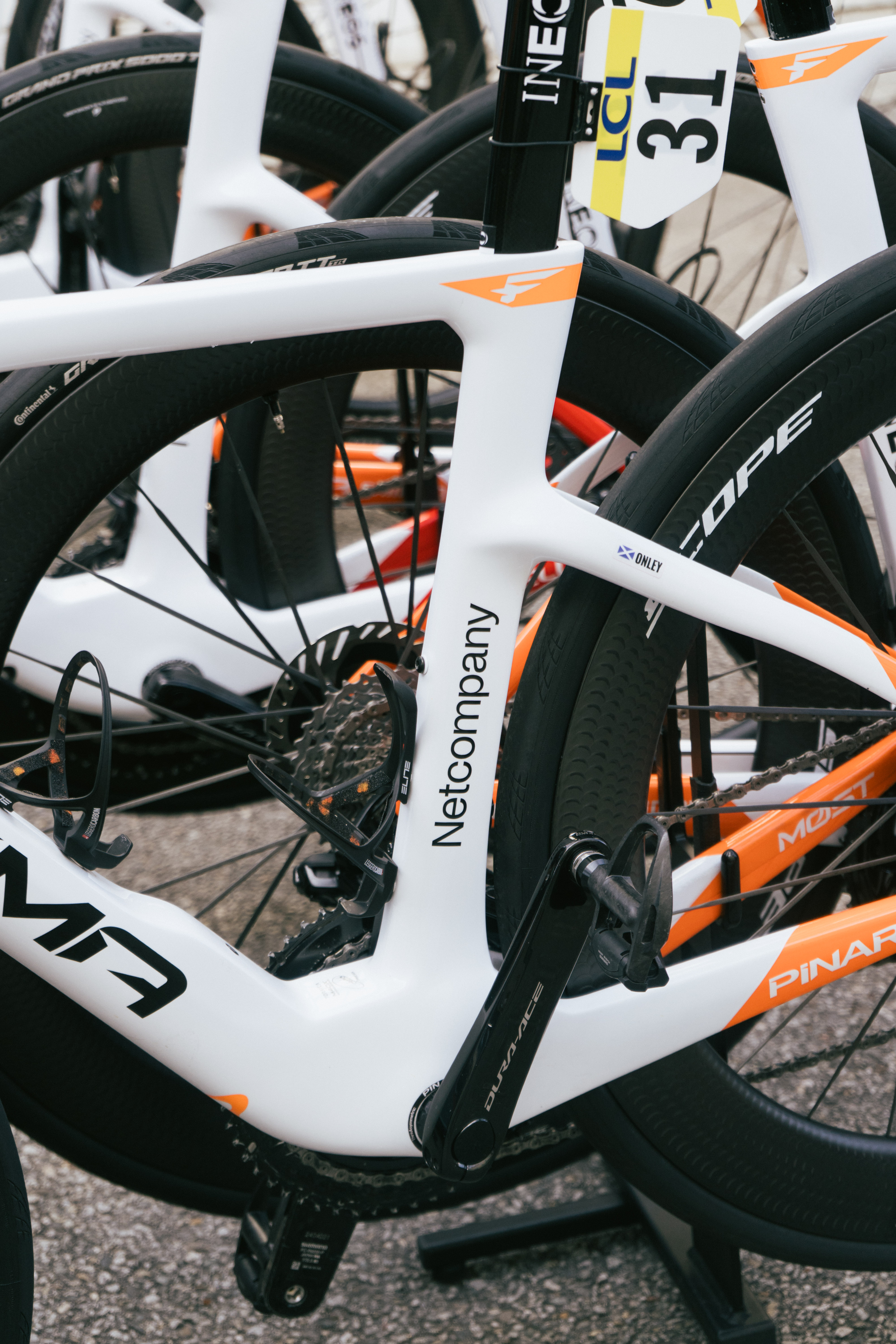
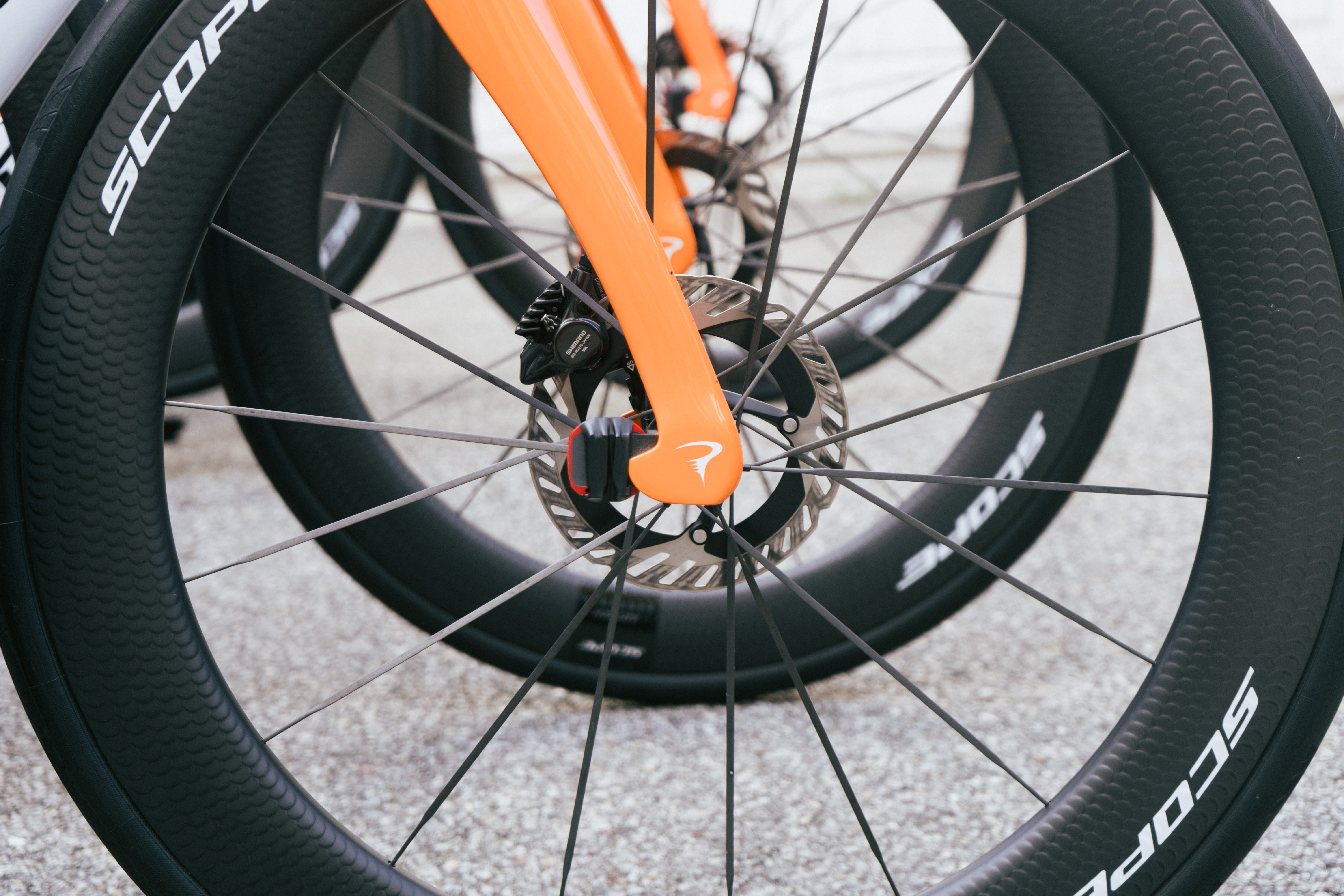
Ineos have been using Scope wheels for a while now, and these Artechs look great.
(Image credit: Will Jones)
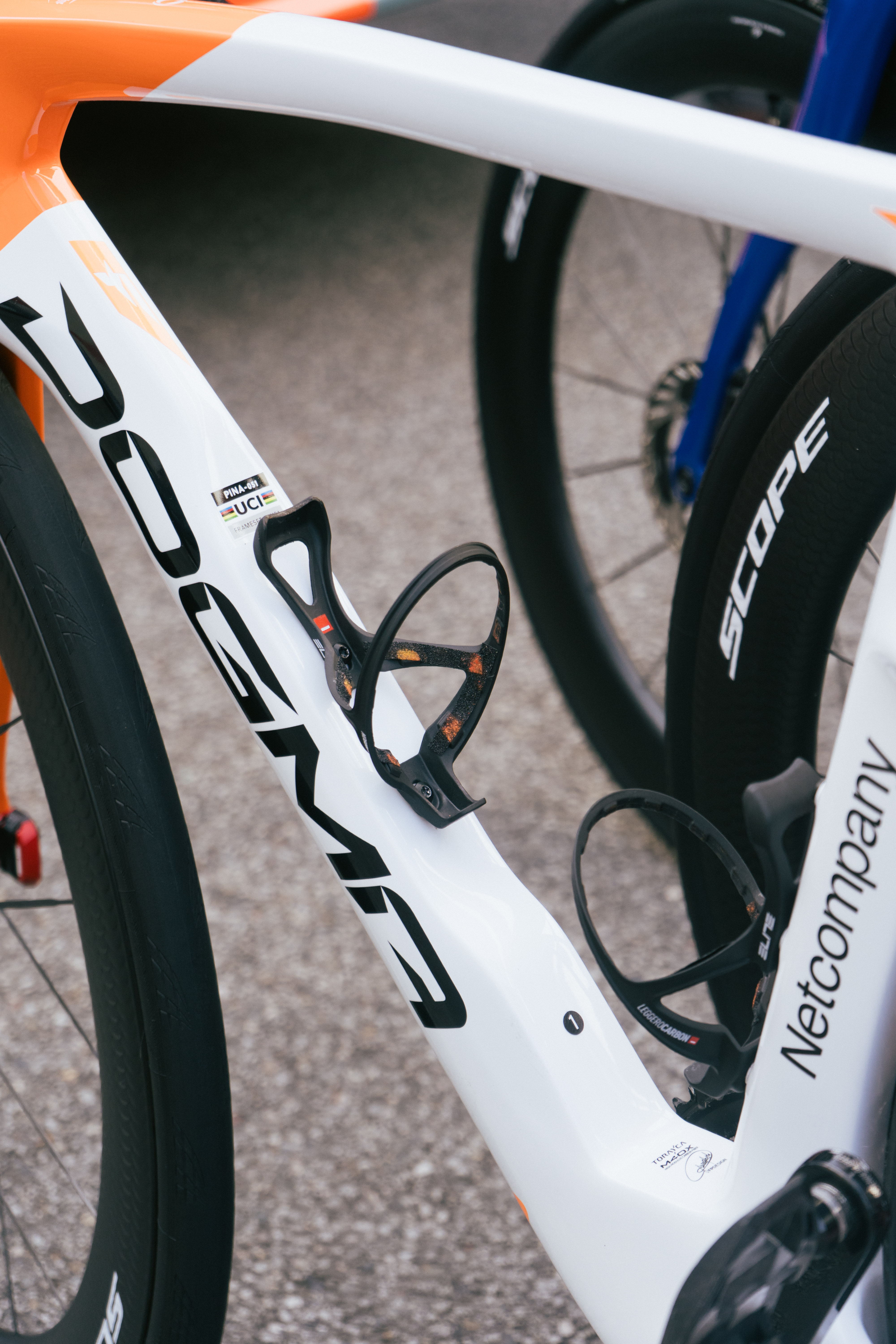
Now sponsored by Netcompany, the new livery basically amounts to a big logo on the current machines. Expect these to get a refresh in due course, though.
(Image credit: Will Jones)
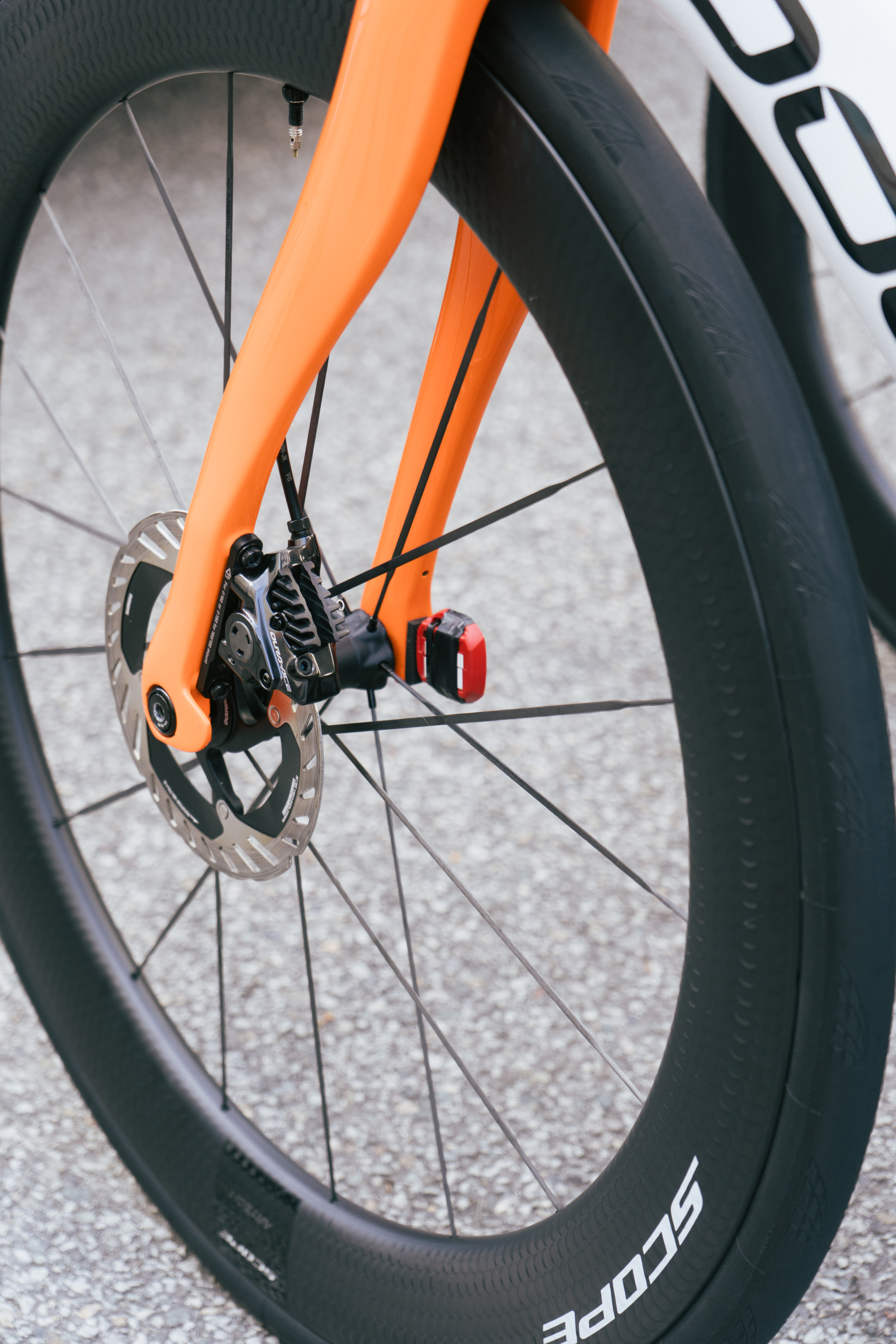
Ineos, formerly Team Sky, pioneered marginal gains, and that still goes on today with this neat race transponder placement.
(Image credit: Will Jones)
Oscar Onley has strips of sandpaper in his bottle cages for extra security, something we usually only see in the Classics.
(Image credit: Will Jones)
Here’s the back side of the transponder, mounted directly into the fork tabs.
(Image credit: Will Jones)
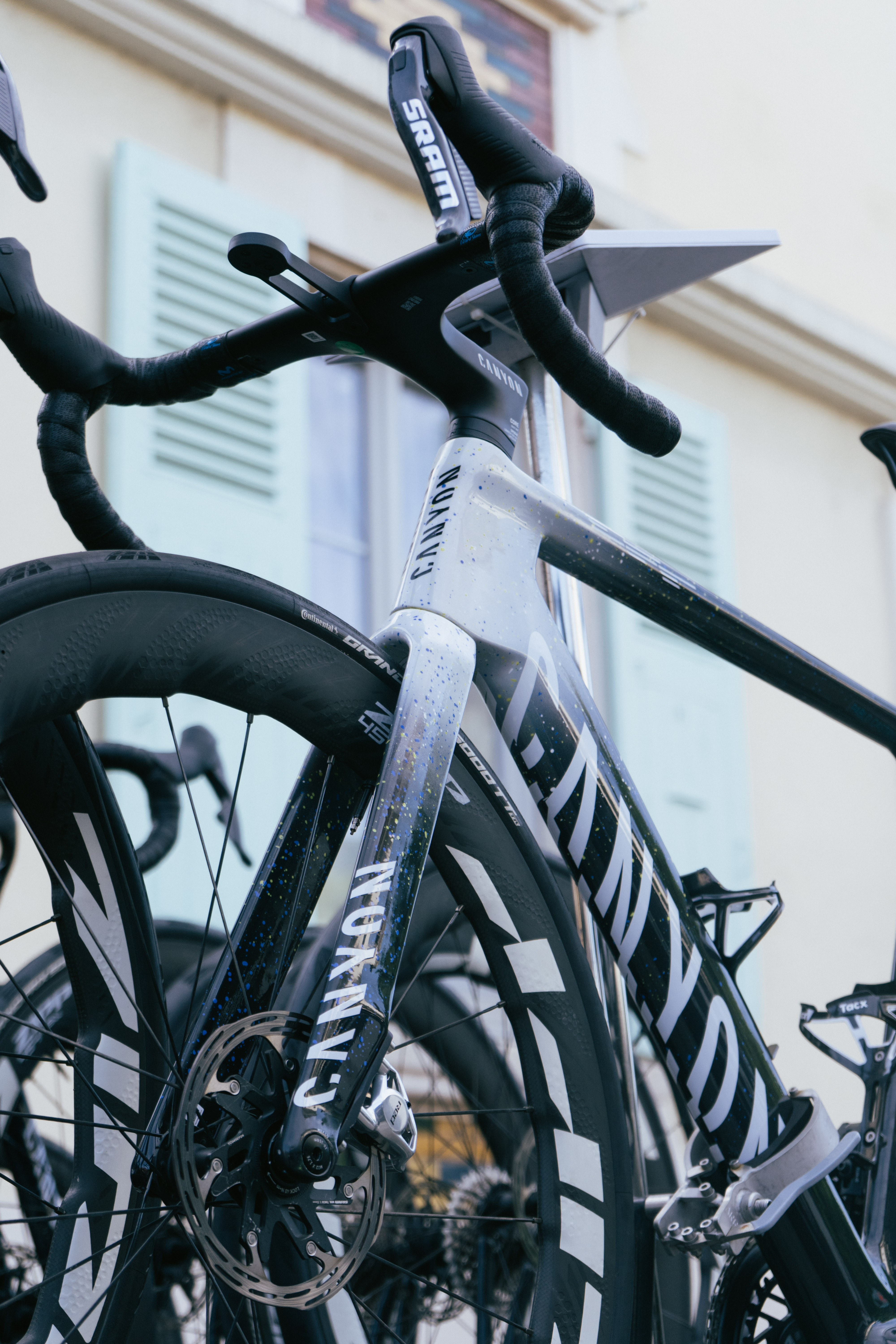
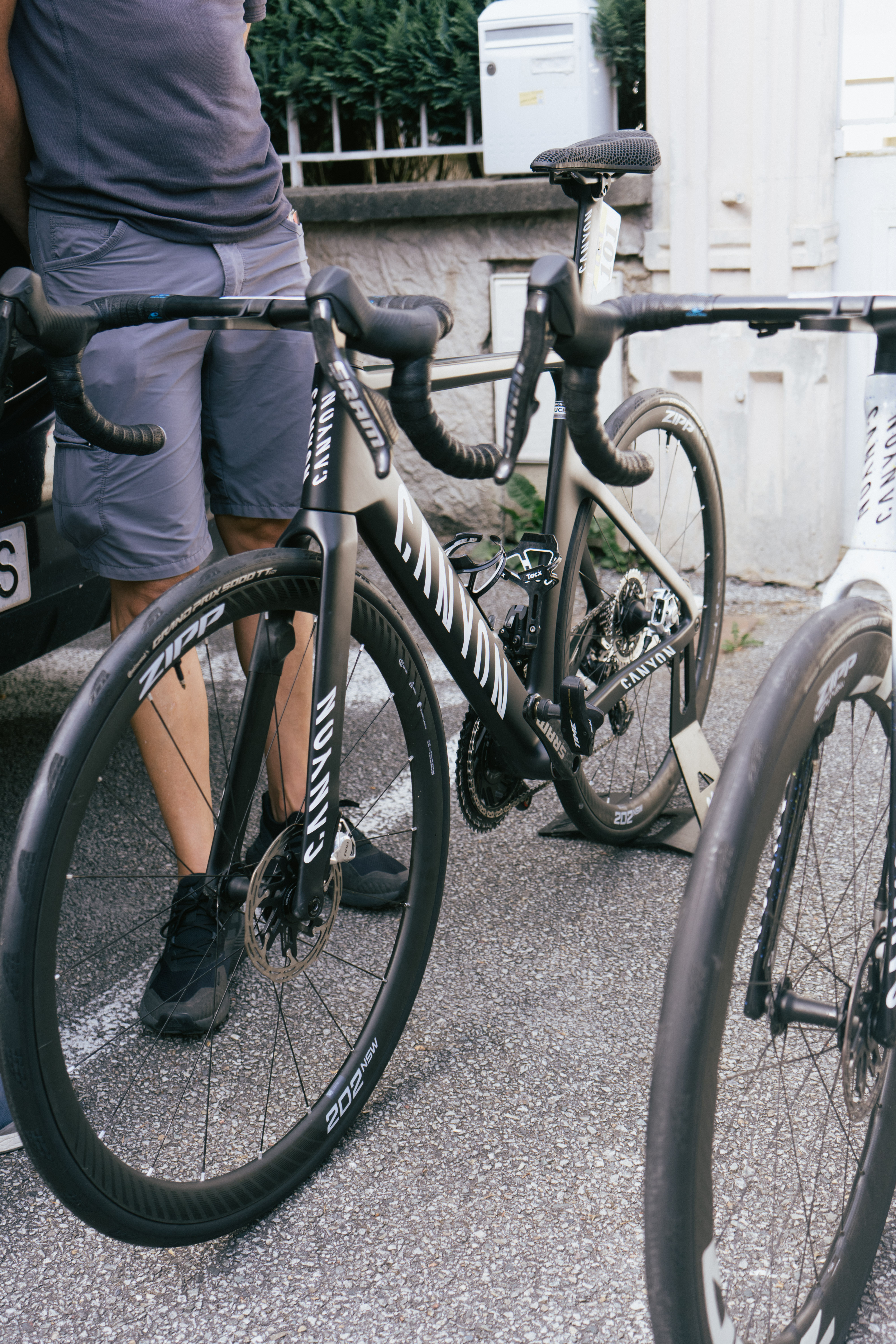
I think this is new paint on the Canyon’s of Movistar, but it’s hard to keep up with Canyon paint as there are about ten thousand different editions now.
(Image credit: Will Jones)
Cian Uijtdebroeks had no paint on his machine, though, again to save weight, and the new Zipp 202 lightweight wheels.
(Image credit: Will Jones)
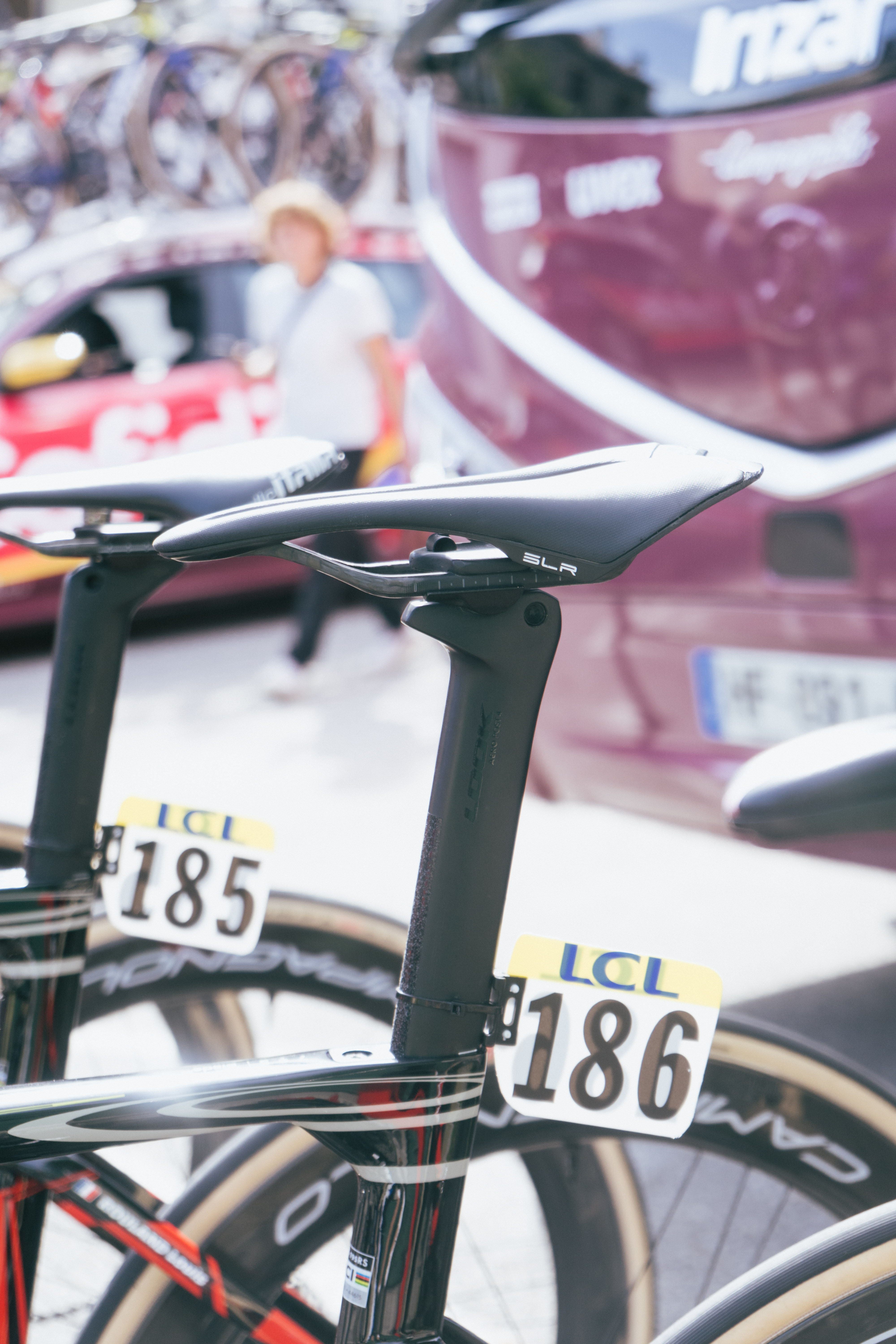
Some Look bikes at the Cofidis bus had these seatposts that look like they’ve been reversed. I don’t think they are, but they’re certainly a novel take on zero offset.
(Image credit: Will Jones)
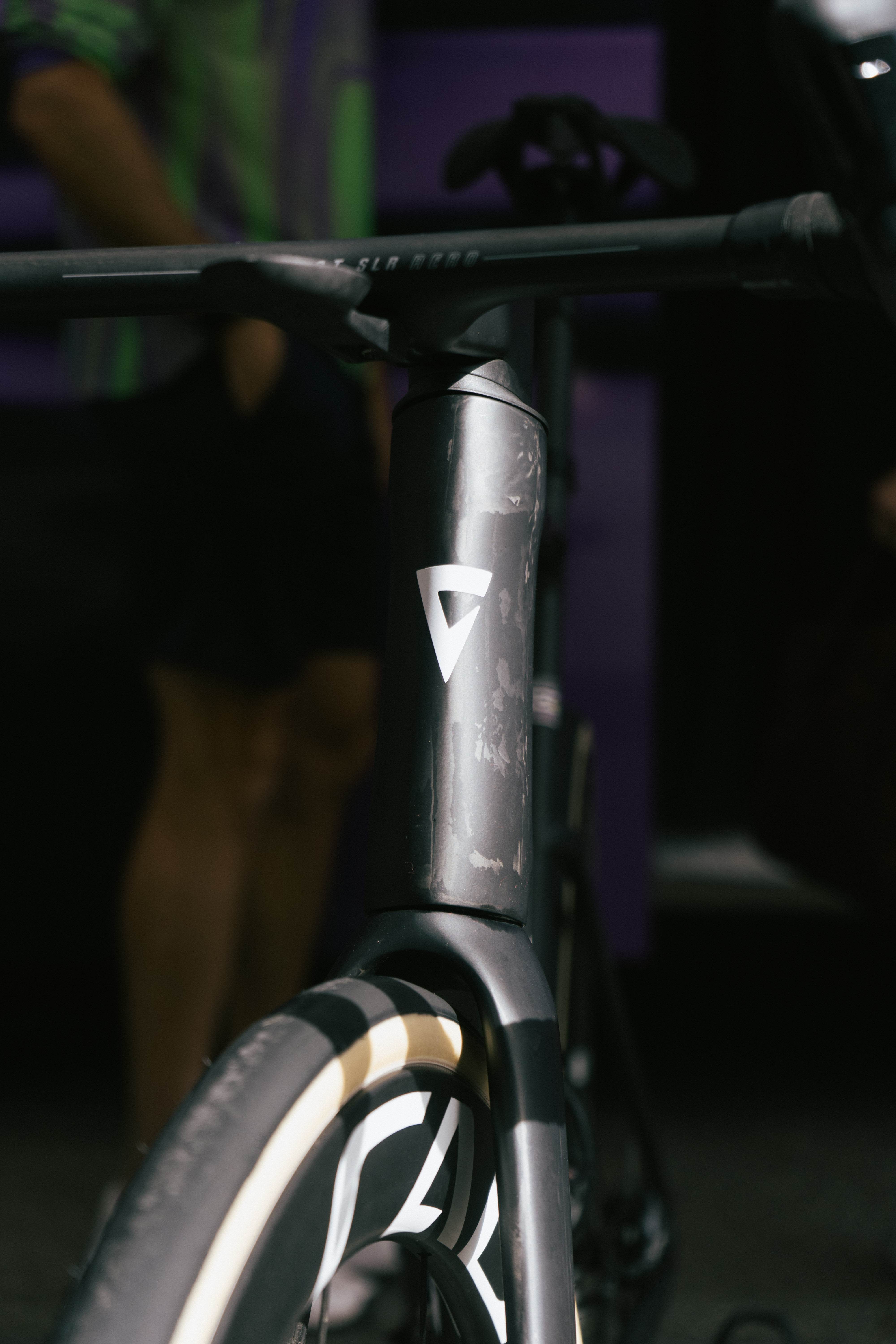
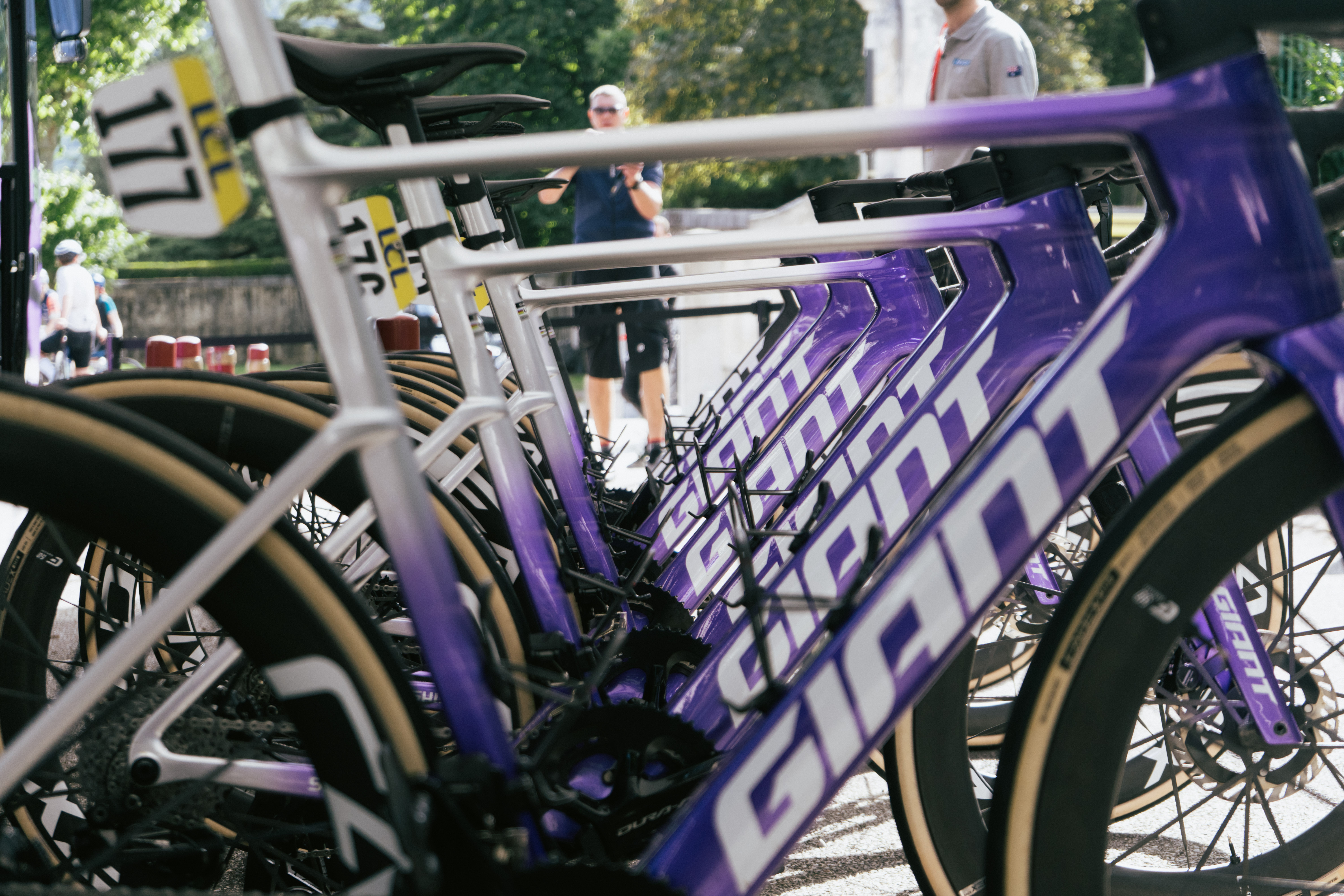
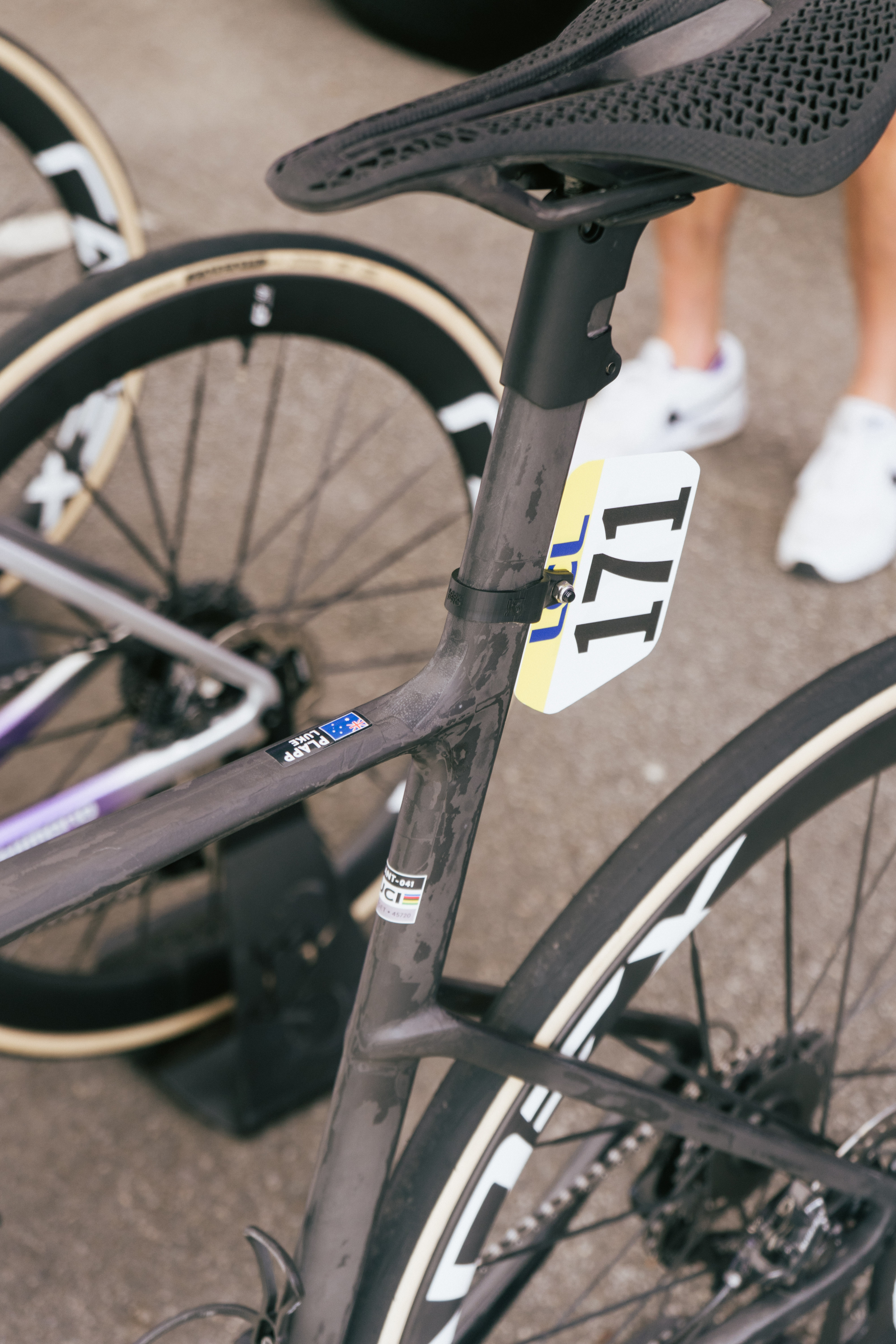
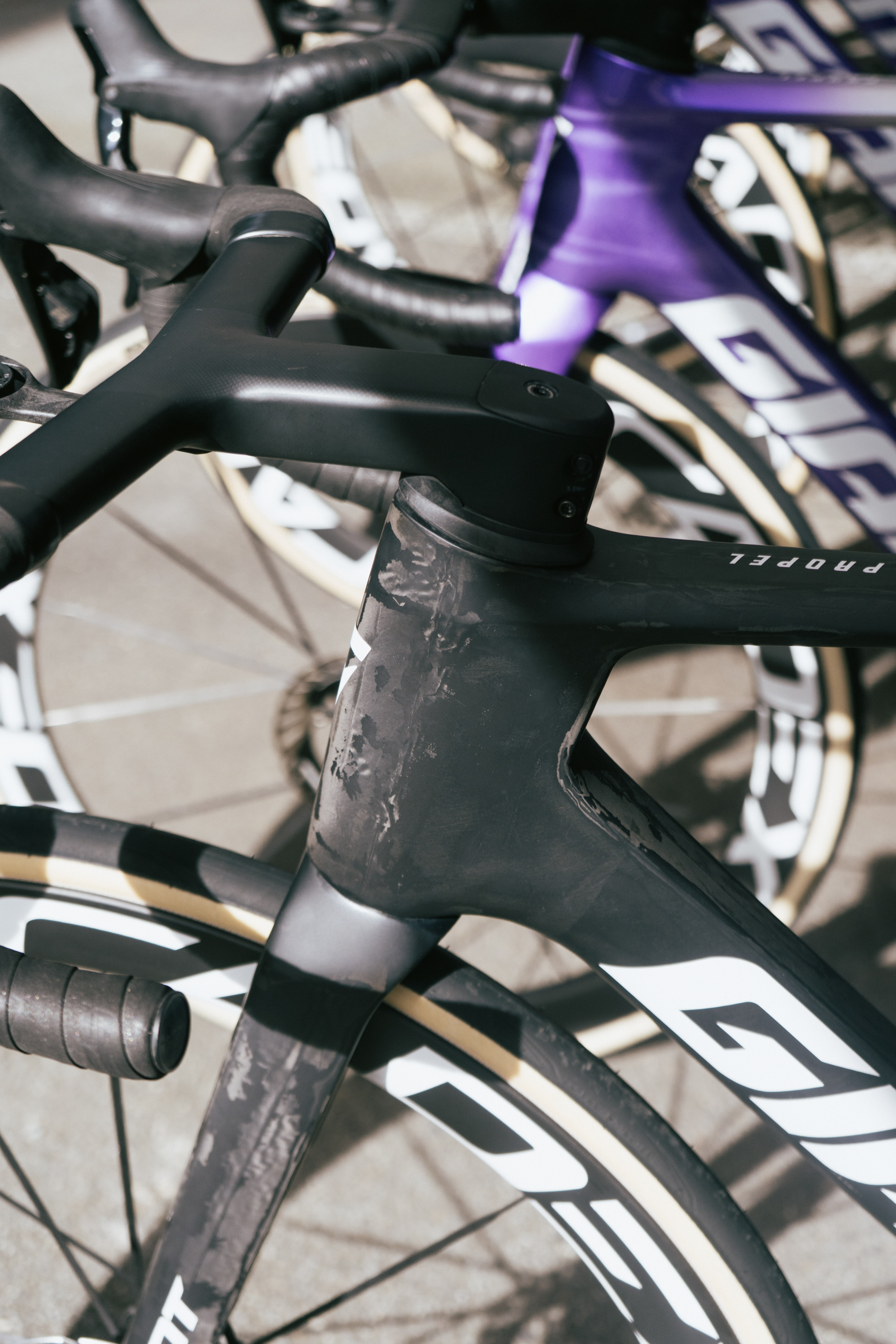
It seems that if you’ve got a GC contender and they don’t have a paintless bike, you’re lagging behind. Luke Plapp had the most extreme example I saw with his Giant Propel.
(Image credit: Will Jones)
You can just make it out at the back, hiding behind the much more eye-catching purple and silver machines.
(Image credit: Will Jones)
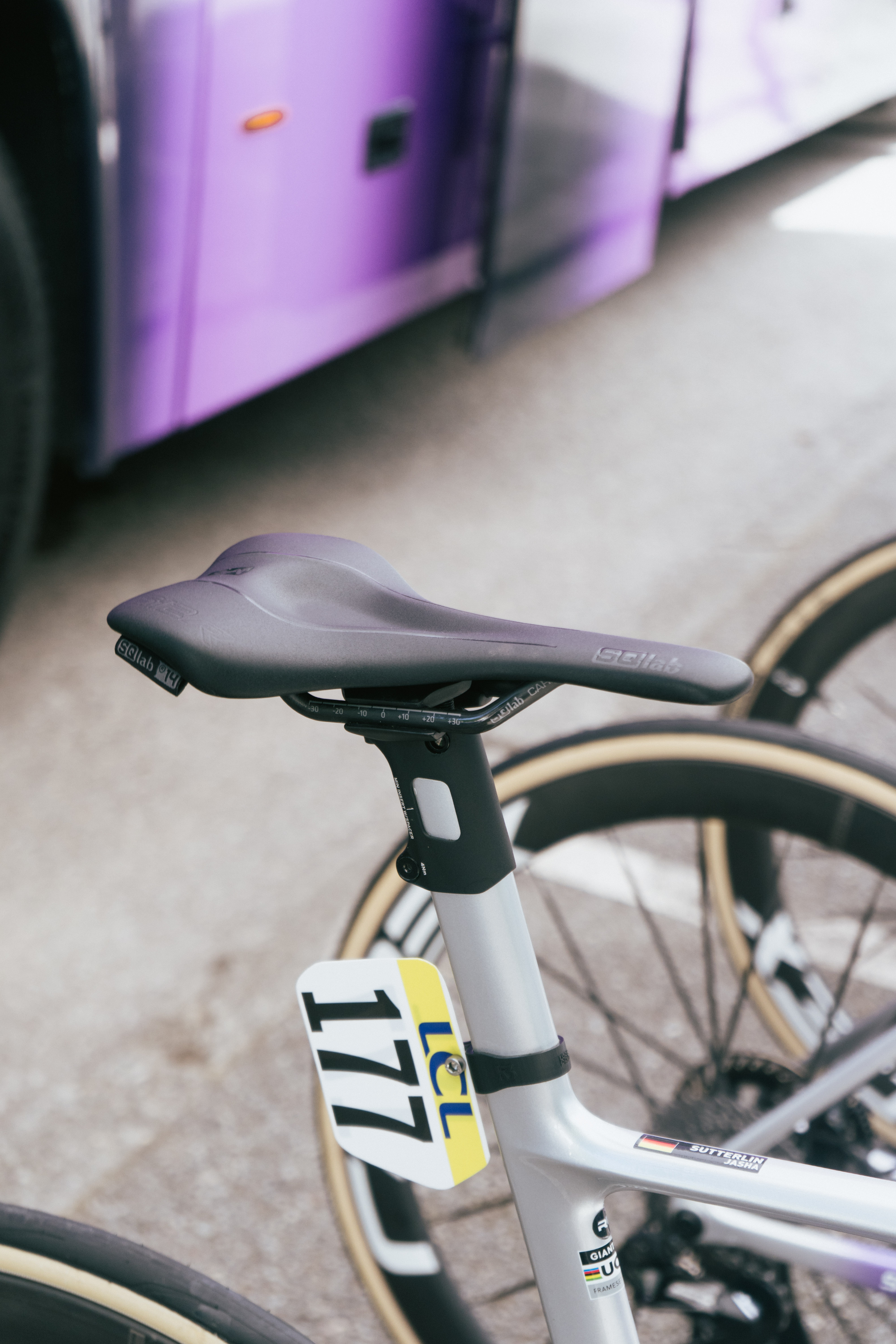
I’ve not seen this SQ Labs saddle before; It’s quite an unusual shape.
(Image credit: Will Jones)
Plapp had an even lighter-looking saddle on his machine, and by the looks of the finish on the frame, it doesn’t even have a clear coat over the raw carbon.
(Image credit: Will Jones)
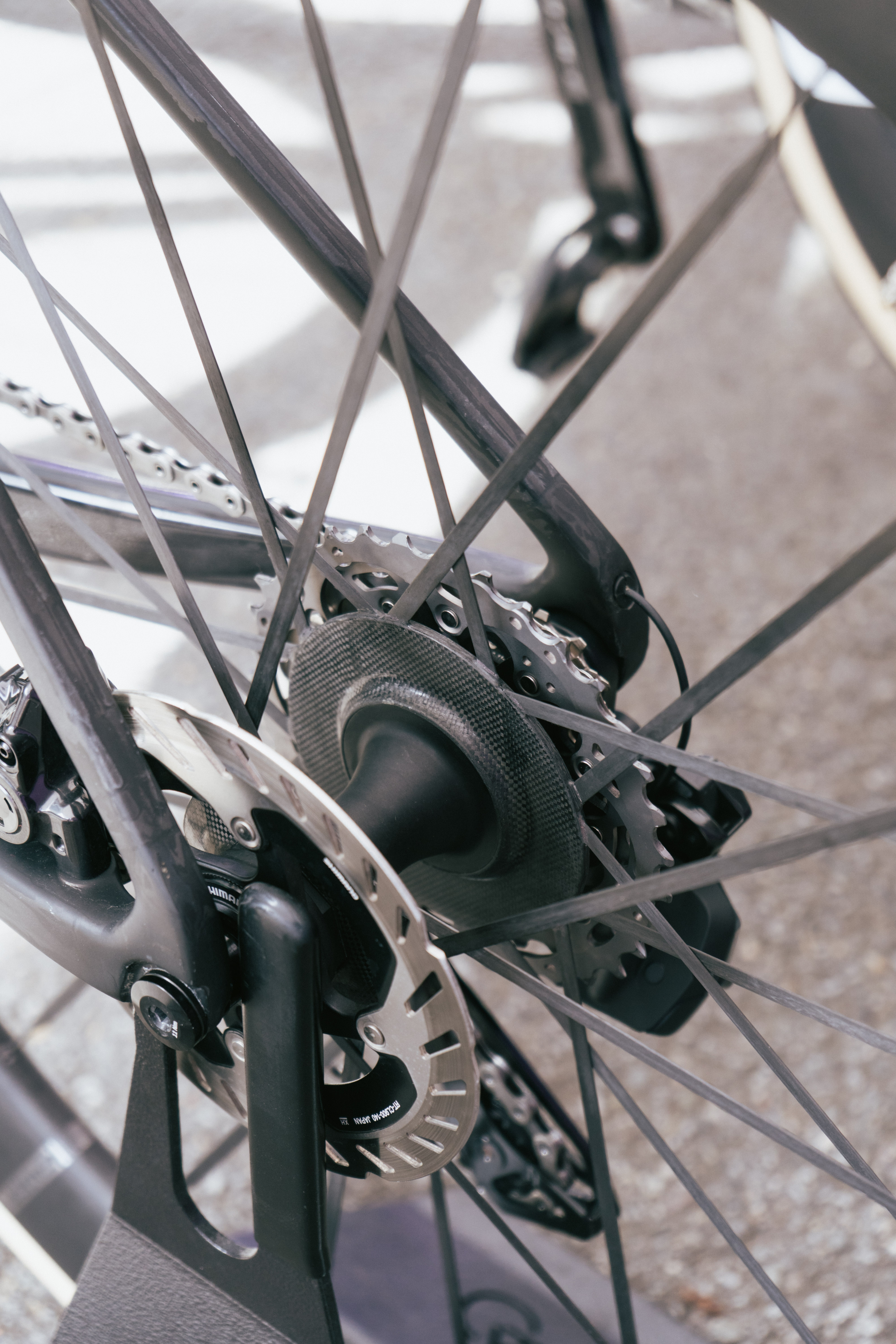
The raw carbon underneath really pops in the sun.
(Image credit: Will Jones)
This is mirrored pleasingly by the carbon hub flanges on his Cadex wheels.
(Image credit: Will Jones)
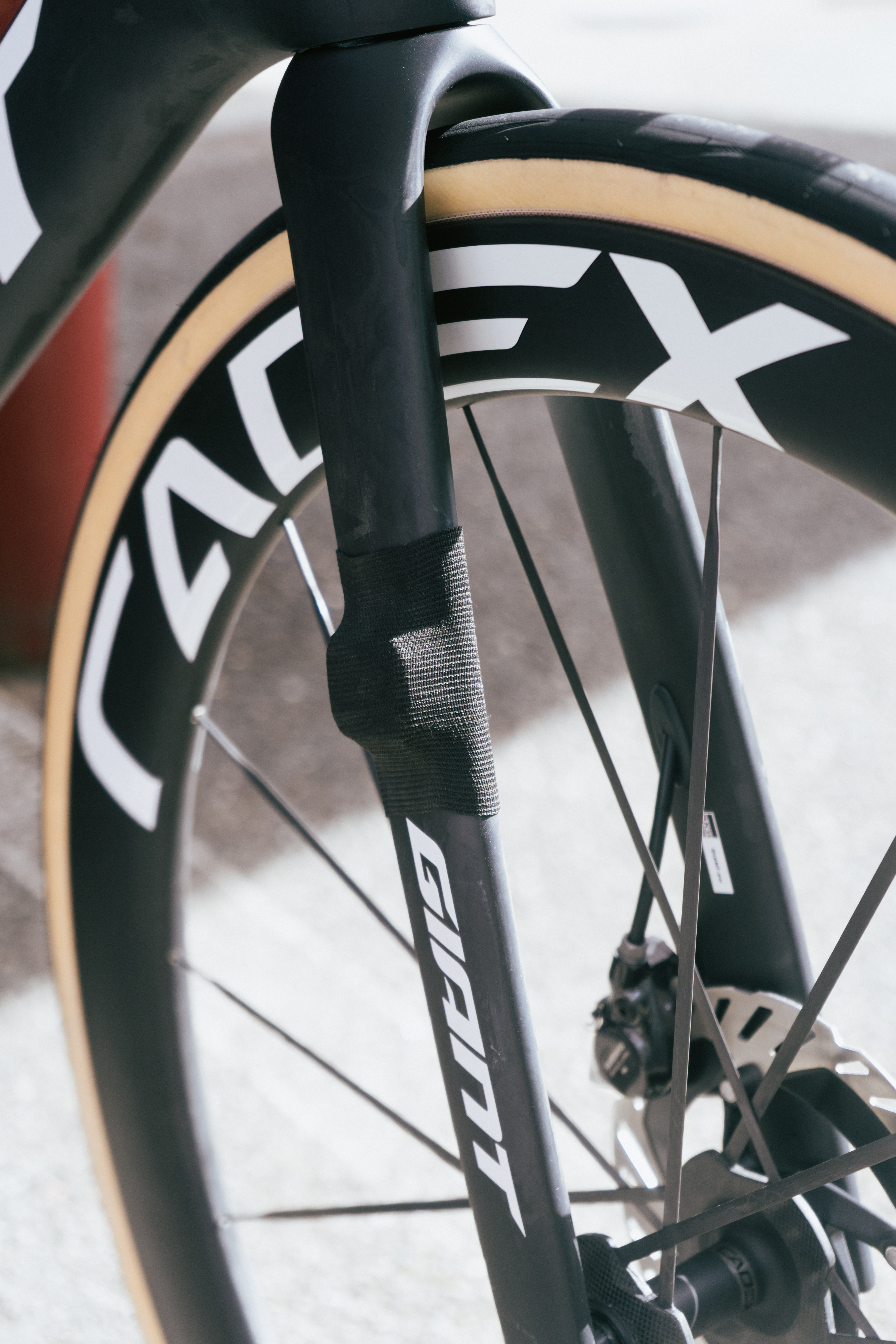
Unlike most teams, Jayco seemed to use fabric tape to secure the race transponders.
(Image credit: Will Jones)
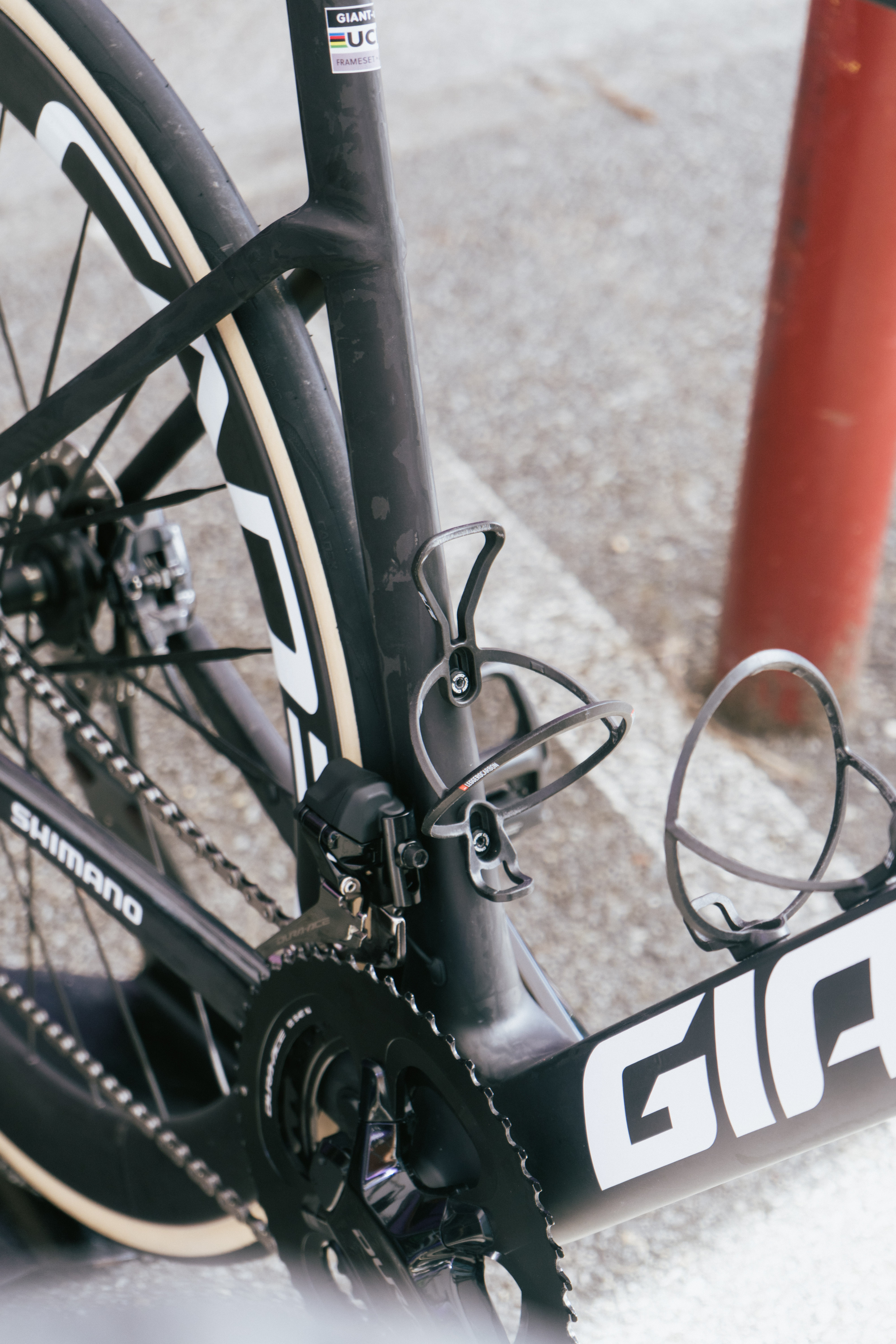
It’s those Elite Leggero bottle cages again to save more weight.
(Image credit: Will Jones)
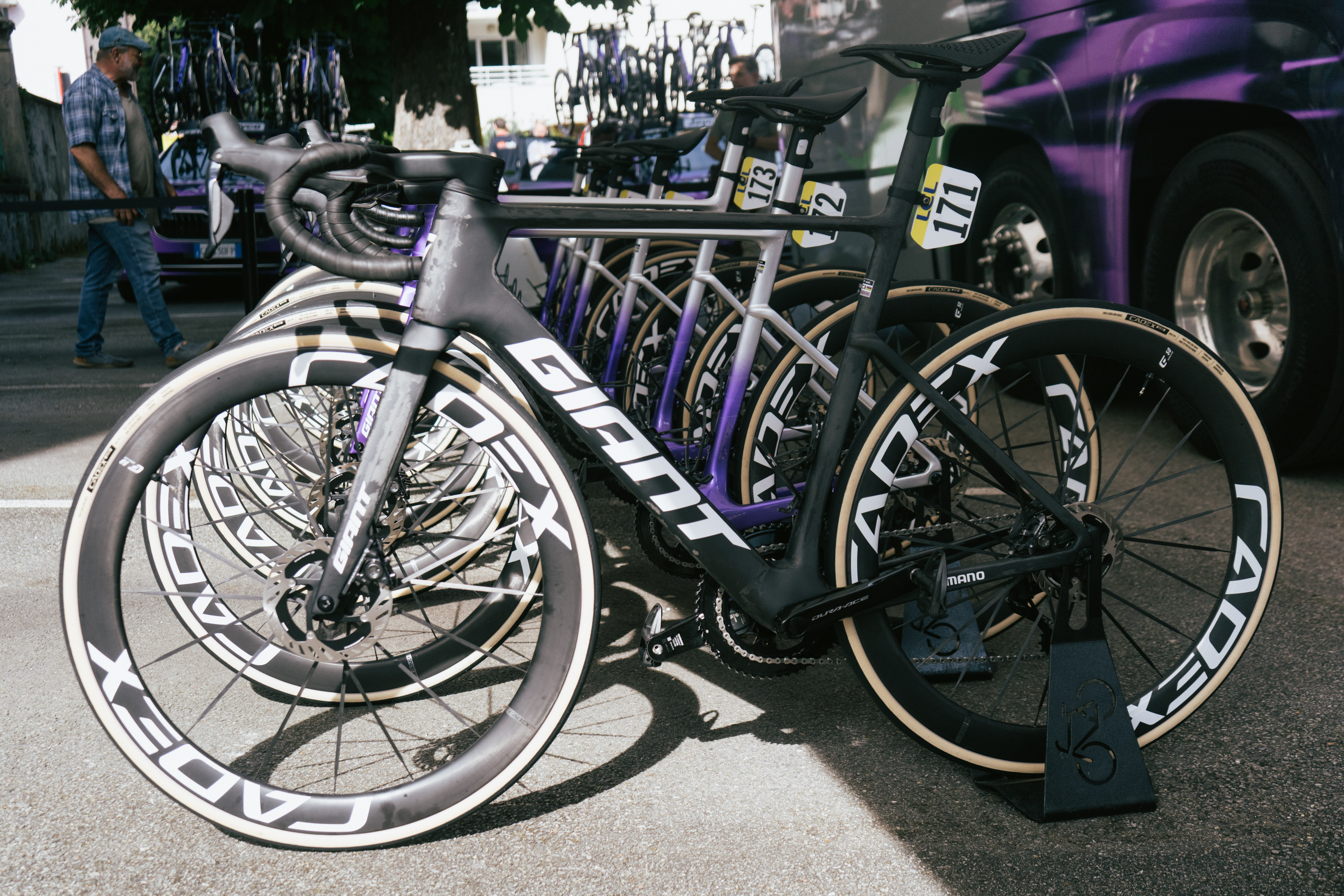
The team paint is cool, I think, and it’s a bit of a shame that more and more machines are ditching livery for performance gains, but it’s a performance sport, and every gram counts.
(Image credit: Will Jones)
Still, with the tan Cadex tyres, it does look pretty cool. I think black tyres would look better, but that’s just a personal preference.
(Image credit: Will Jones)
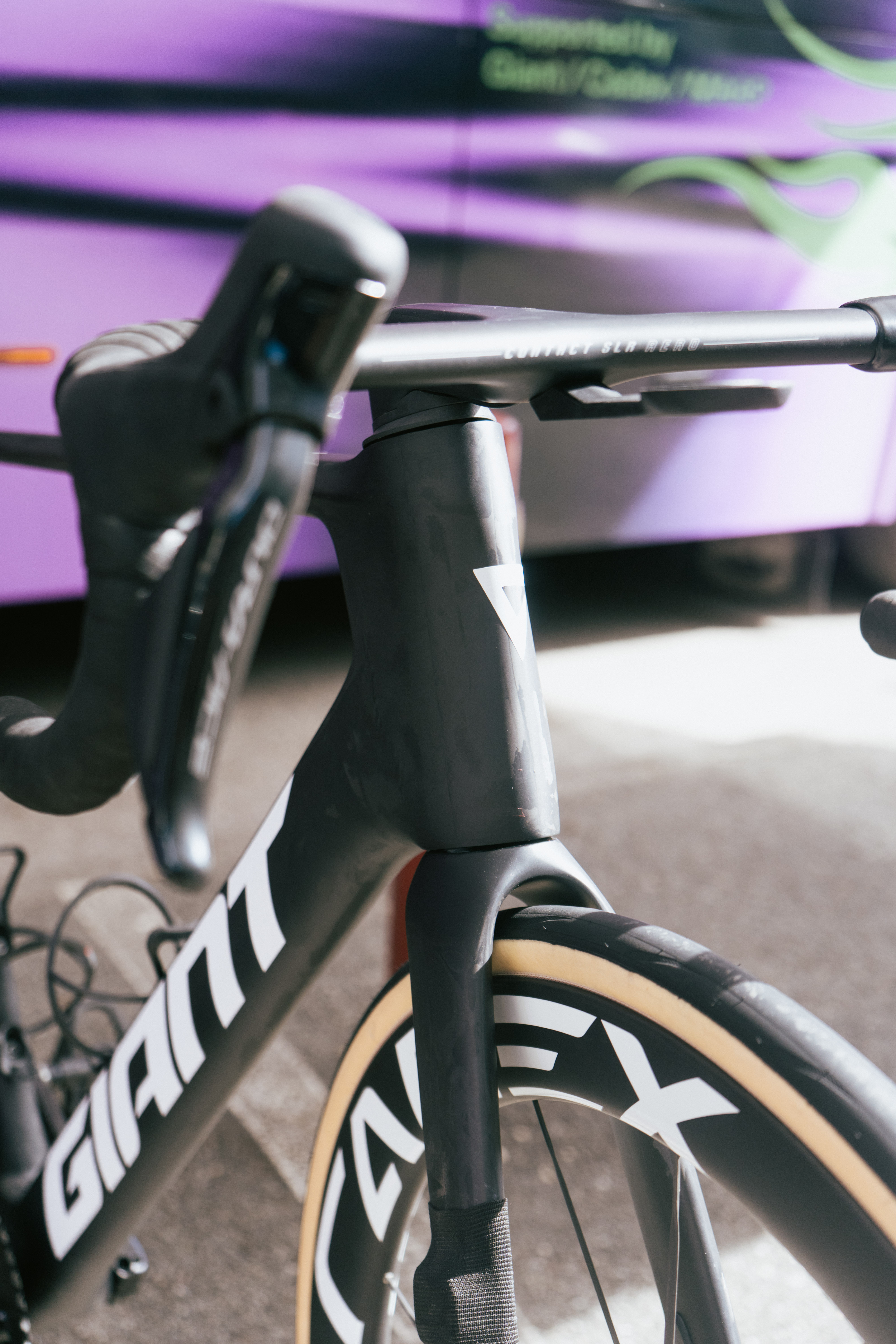
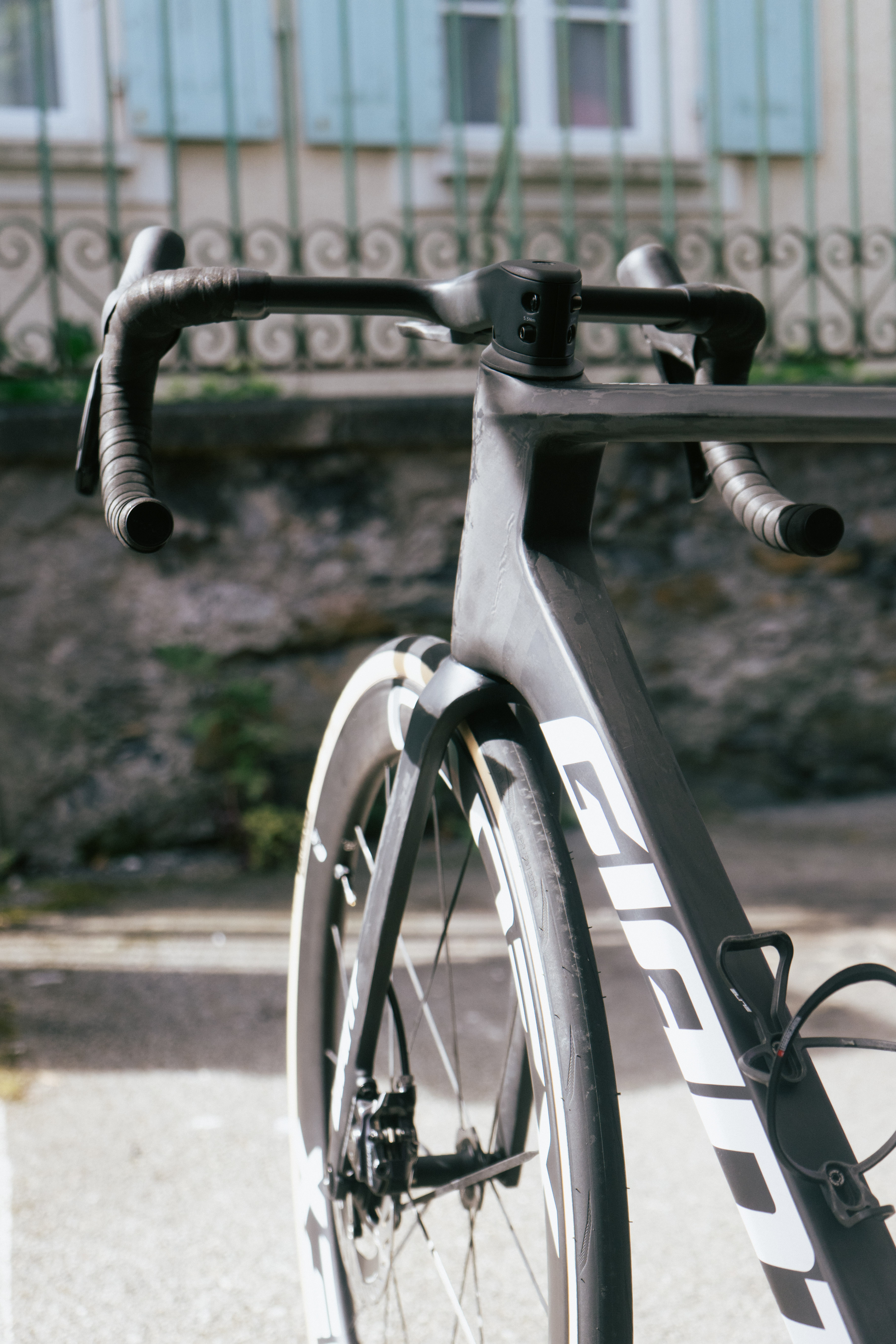
The new Propel looks pretty similar to the old one, but it’s a machine that’s been around long enough to have the weight of iterative history on its back when it comes to new designs.
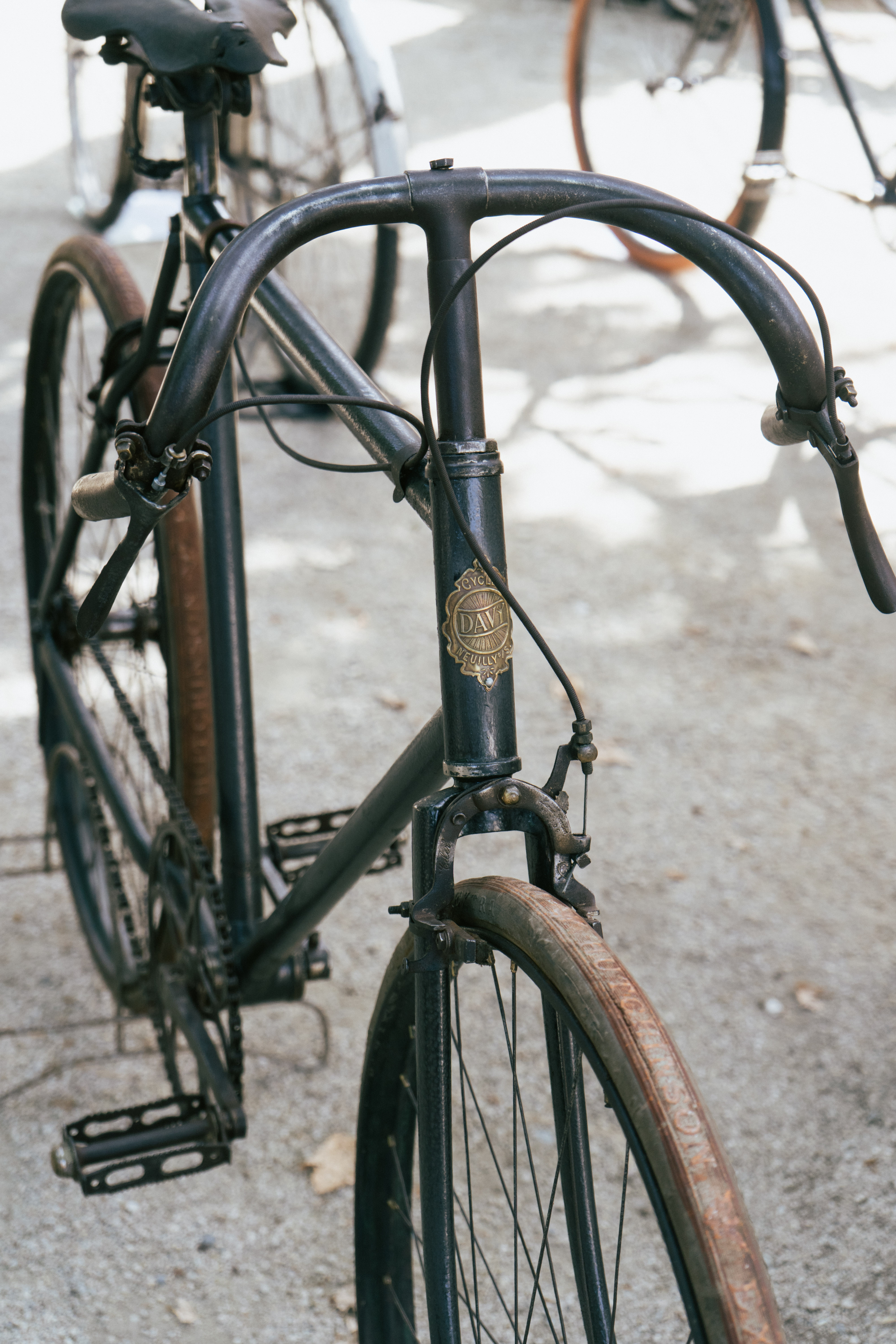
(Image credit: Will Jones)
It’s not just new bikes on show either… A stand of vintage race machines was erected at the start. Imagine racing for hours on these!
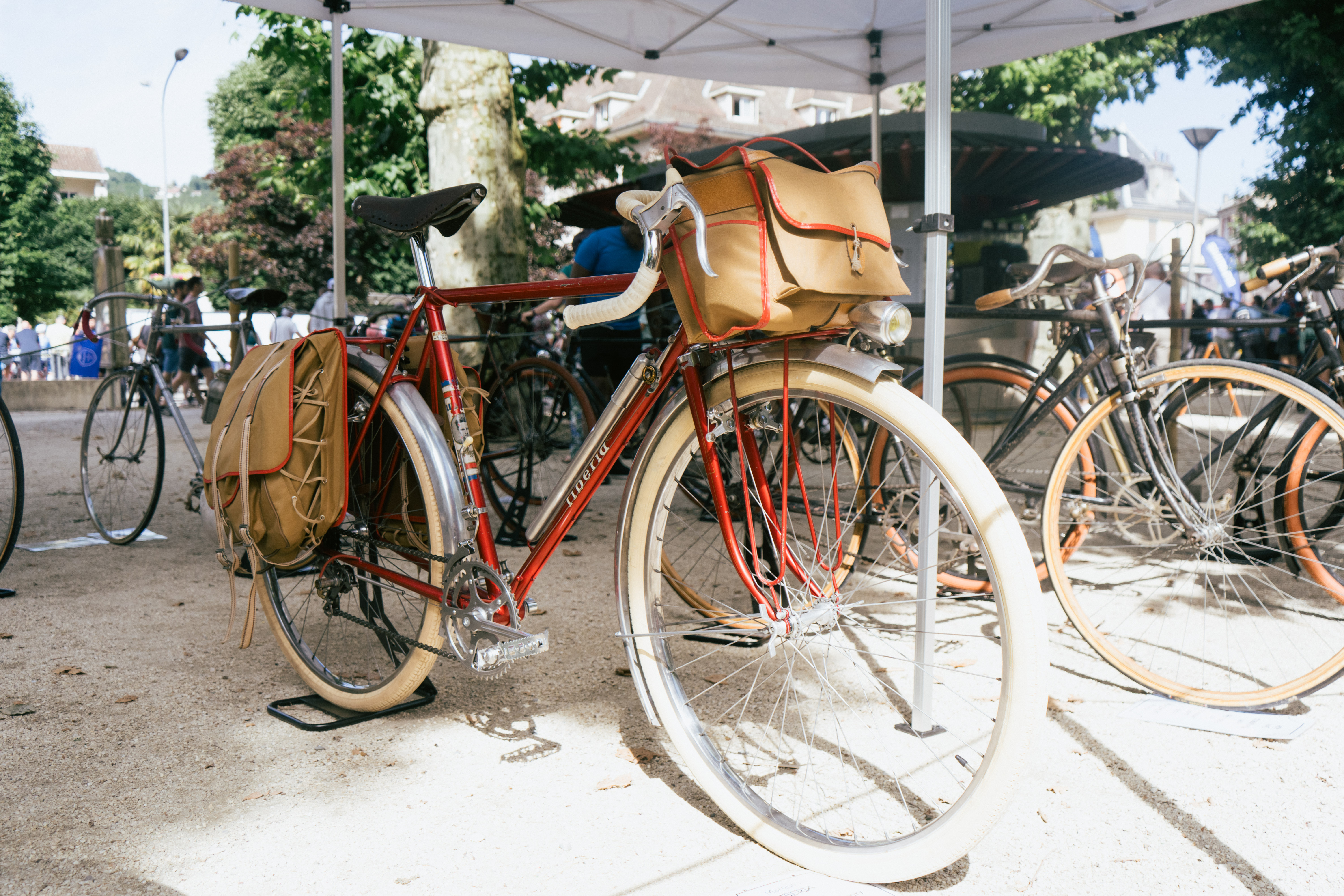
(Image credit: Will Jones)
As a fan of classic bikes, this really tickled my fancy. 650b wheels, because France, and gorgeous bags with matching piping.
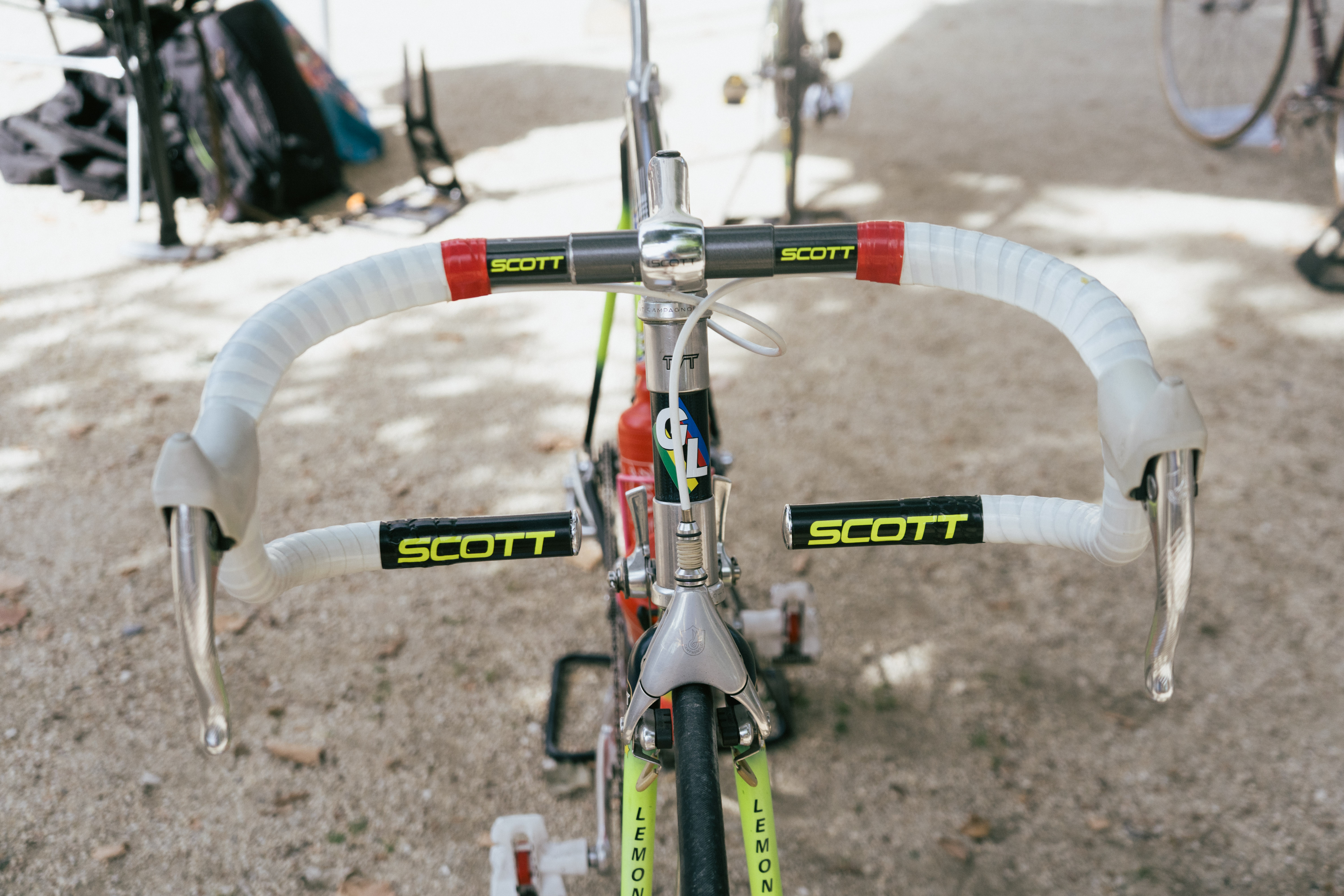
(Image credit: Will Jones)
This classic Lemond with THAT handlebar was on show too.
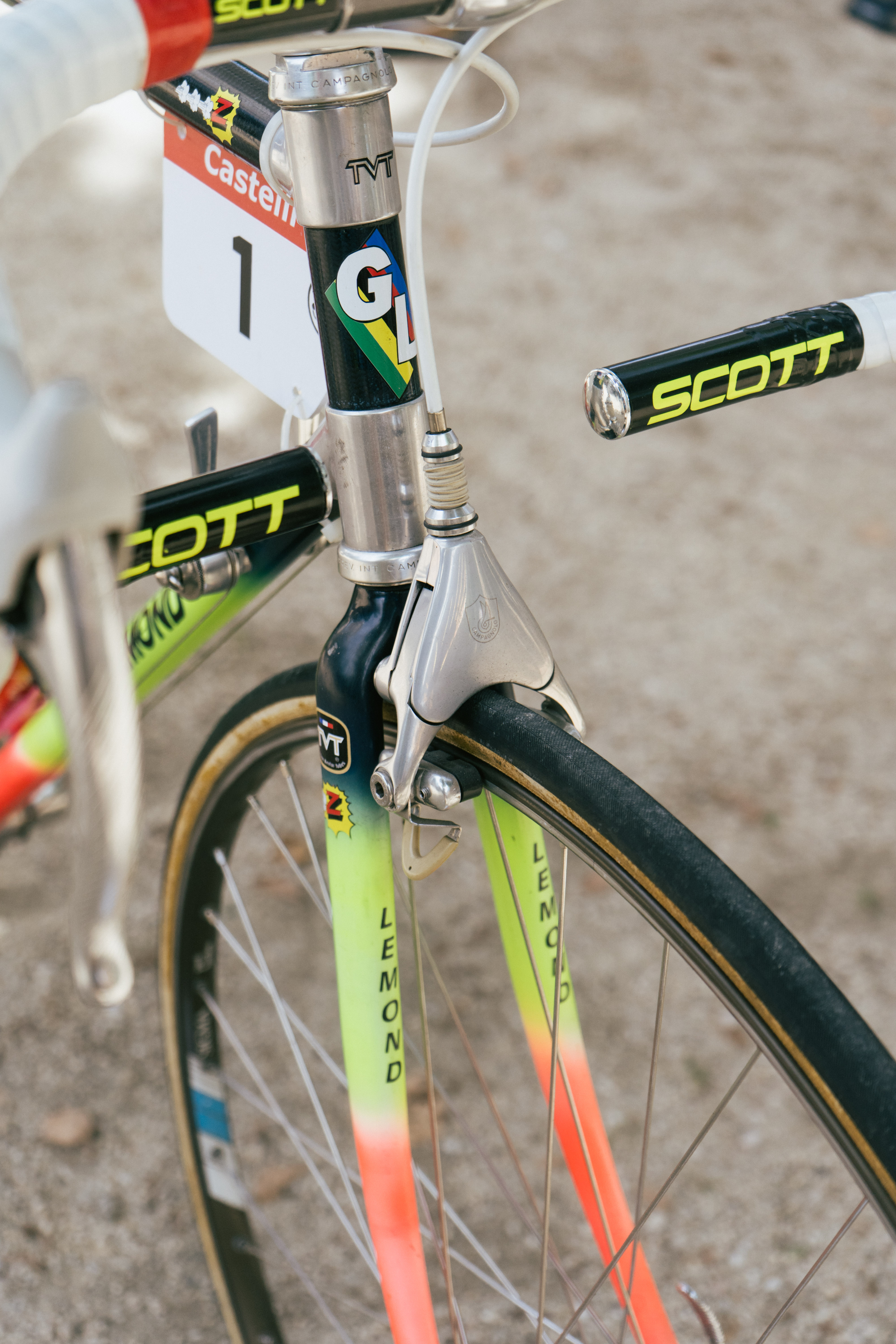
(Image credit: Will Jones)
And the best-looking rim brakes ever made, the Campagnolo Delta.

(Image credit: Will Jones)
Picnic-PostNL had new Michelin Power Cup S tyres. These have been seen for a while but are still yet to be released.
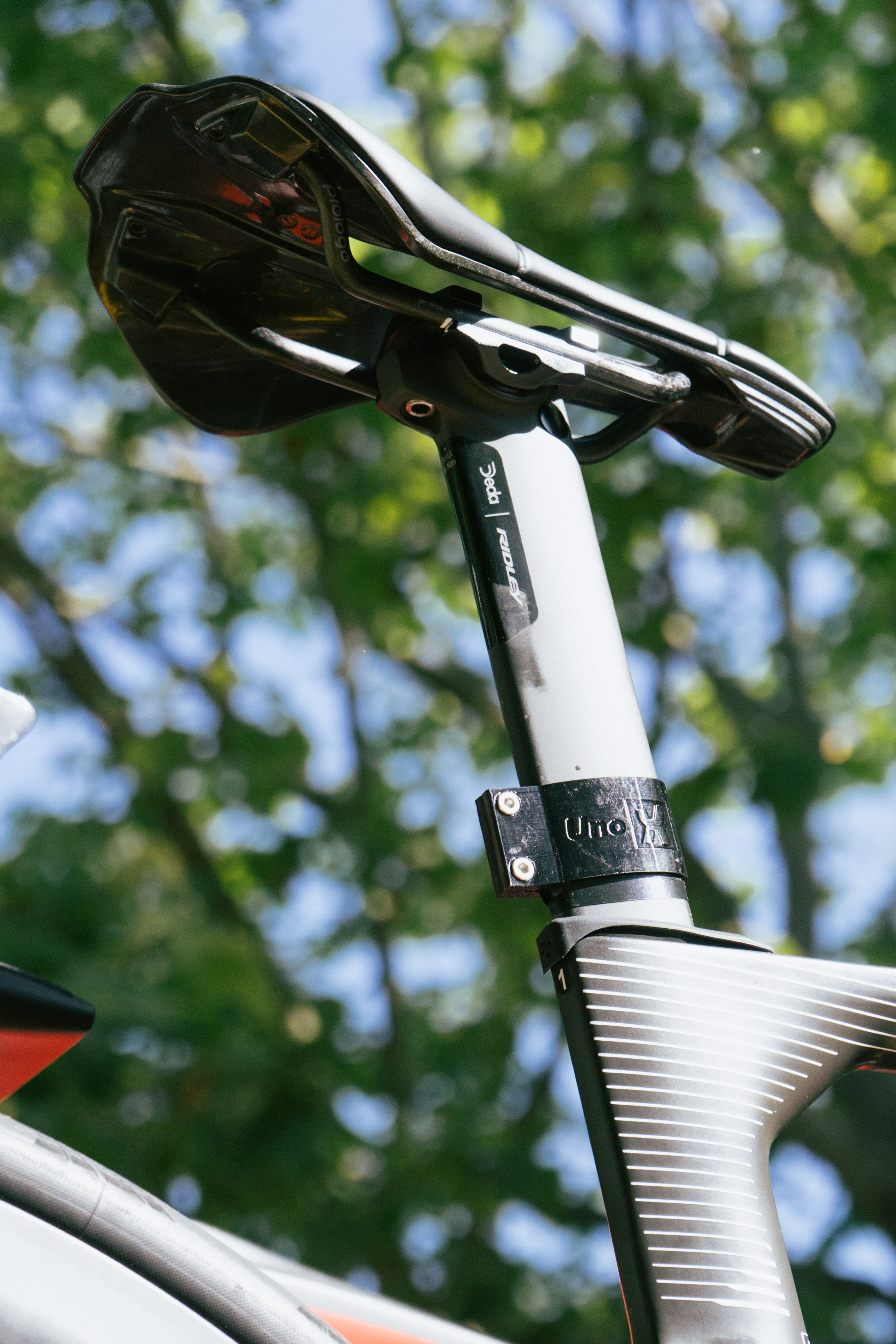
(Image credit: Will Jones)
Custom 3D-printed race number holders for Uno-X.
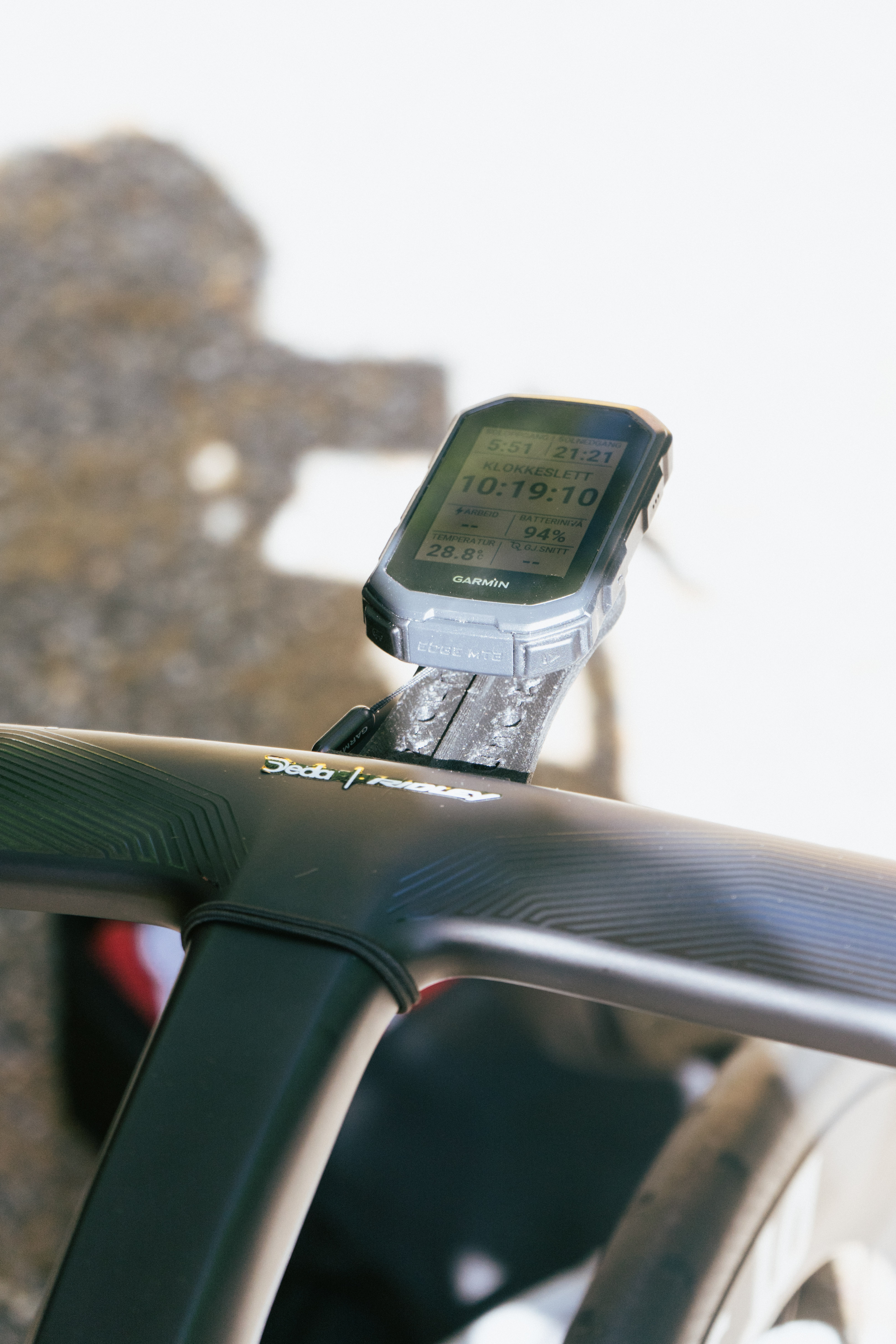
(Image credit: Will Jones)
On a custom 3D-printed computer mount, some riders were using the Garmin Edge MTB computer to save a few grams over the road versions.
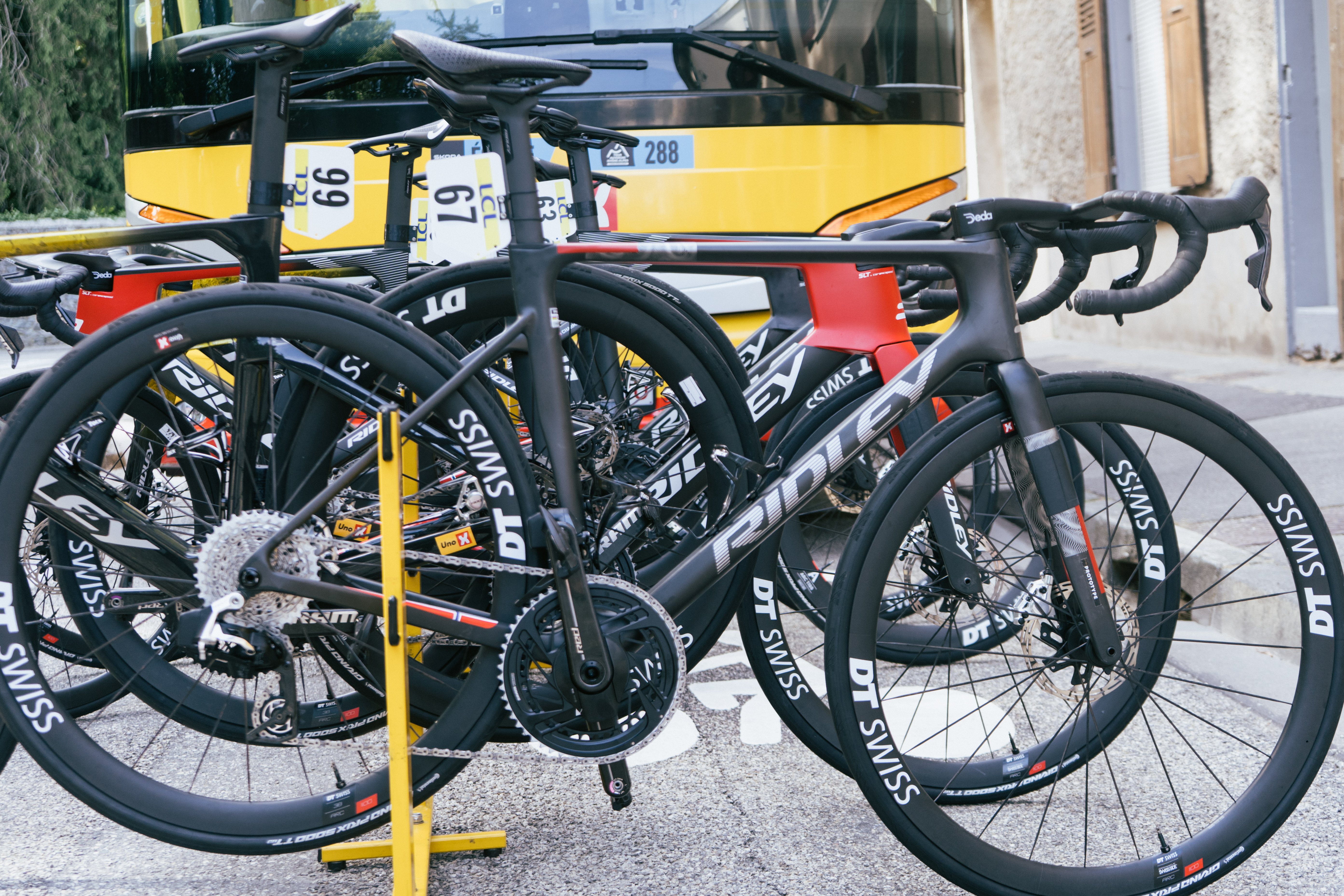
(Image credit: Will Jones)
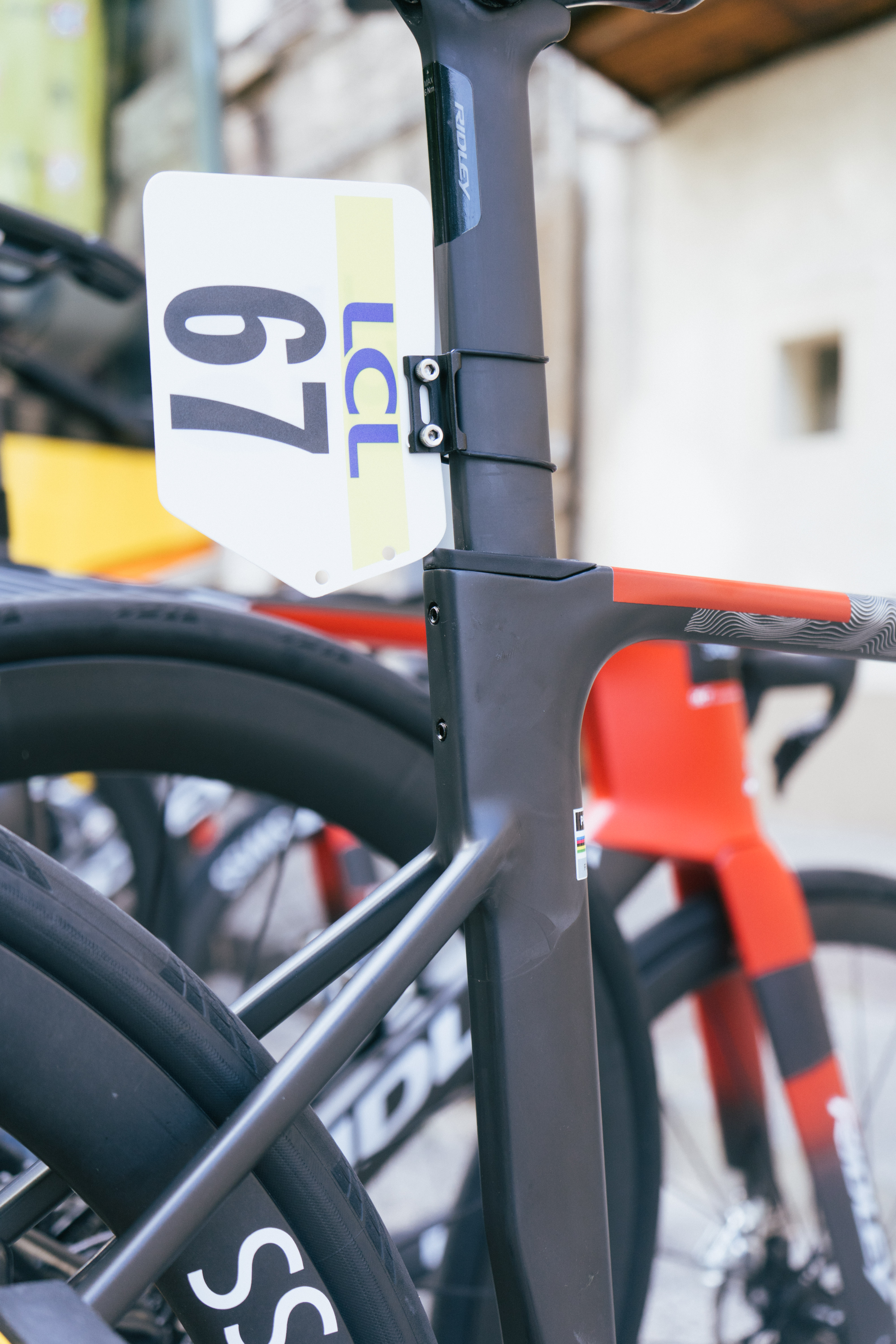
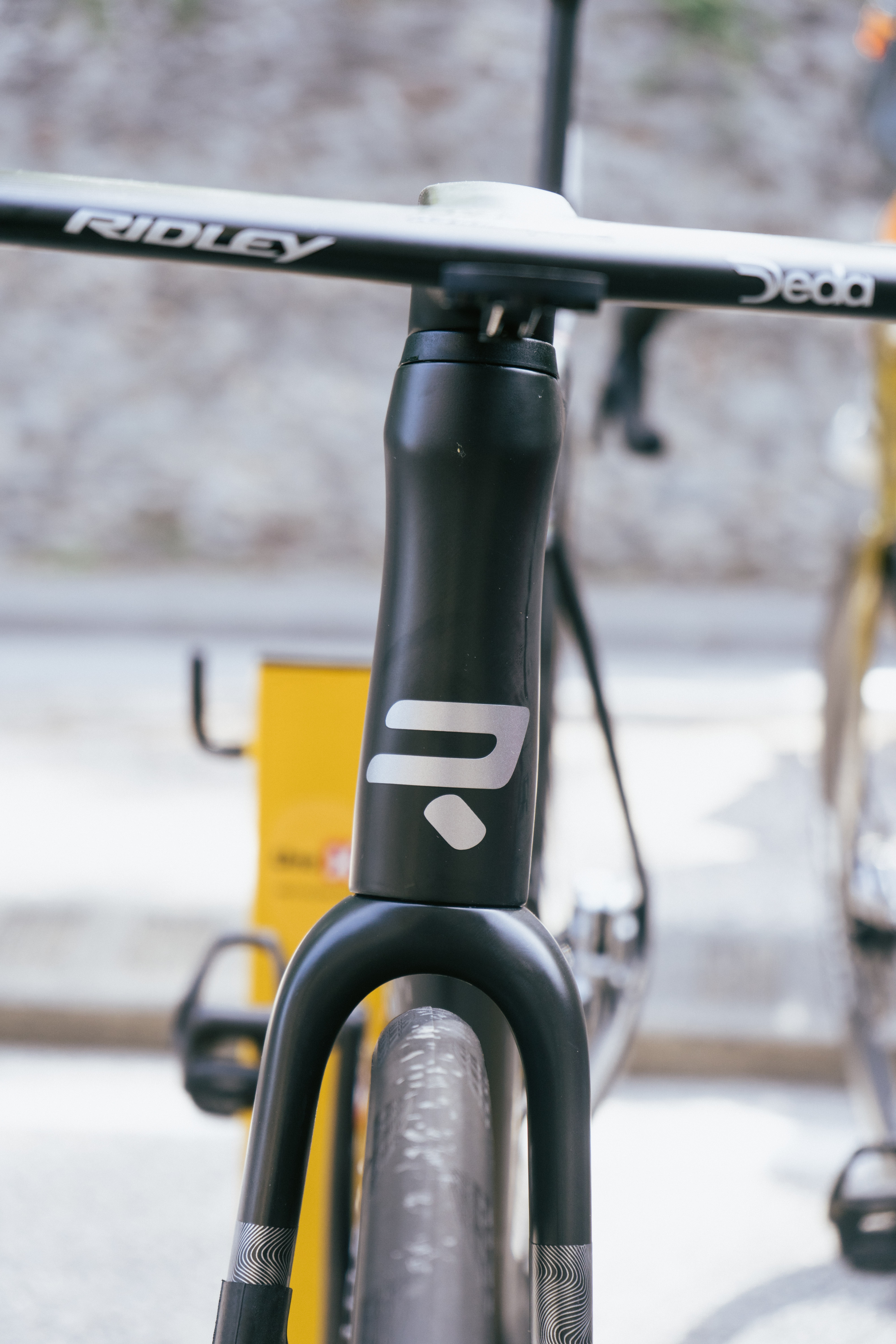
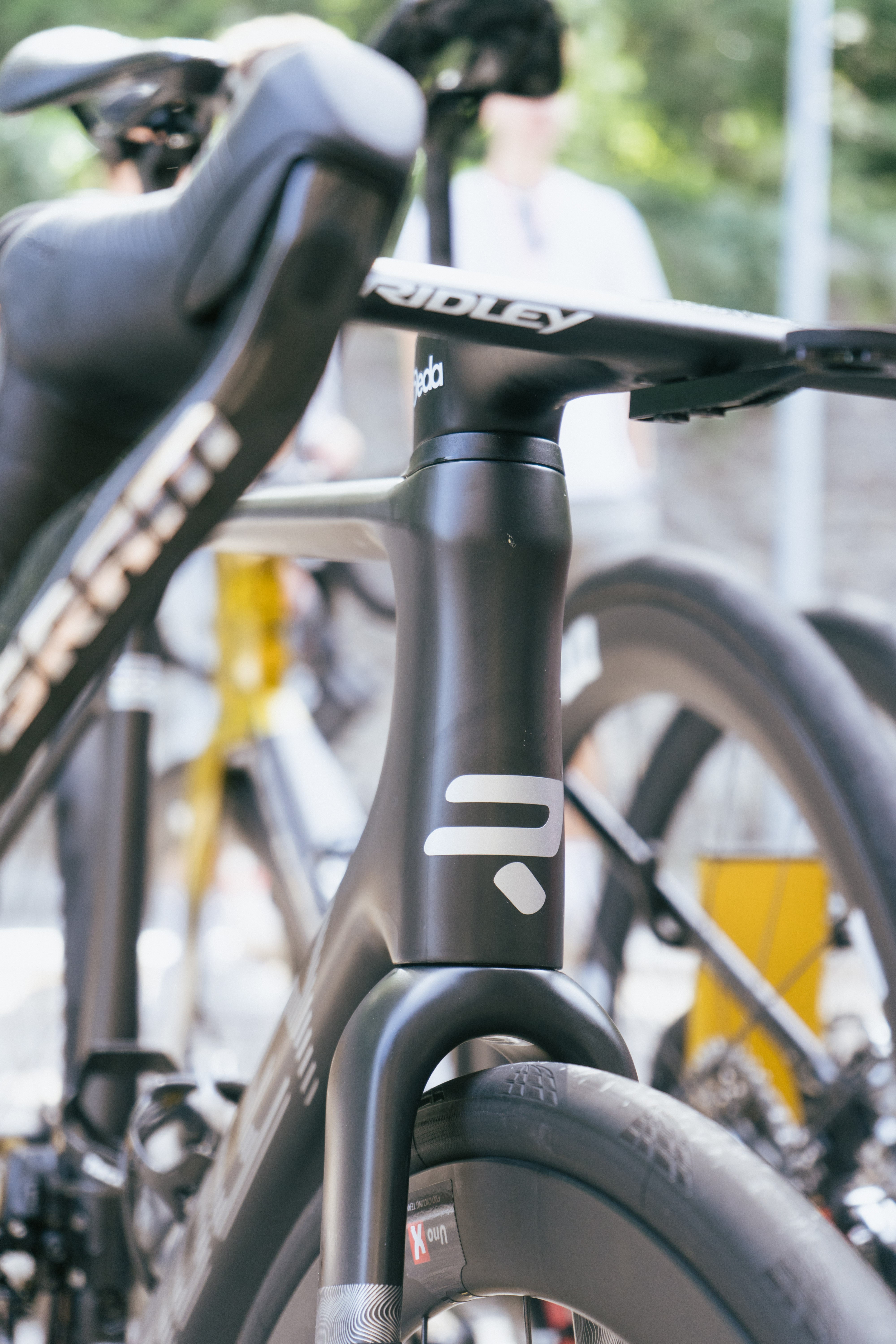
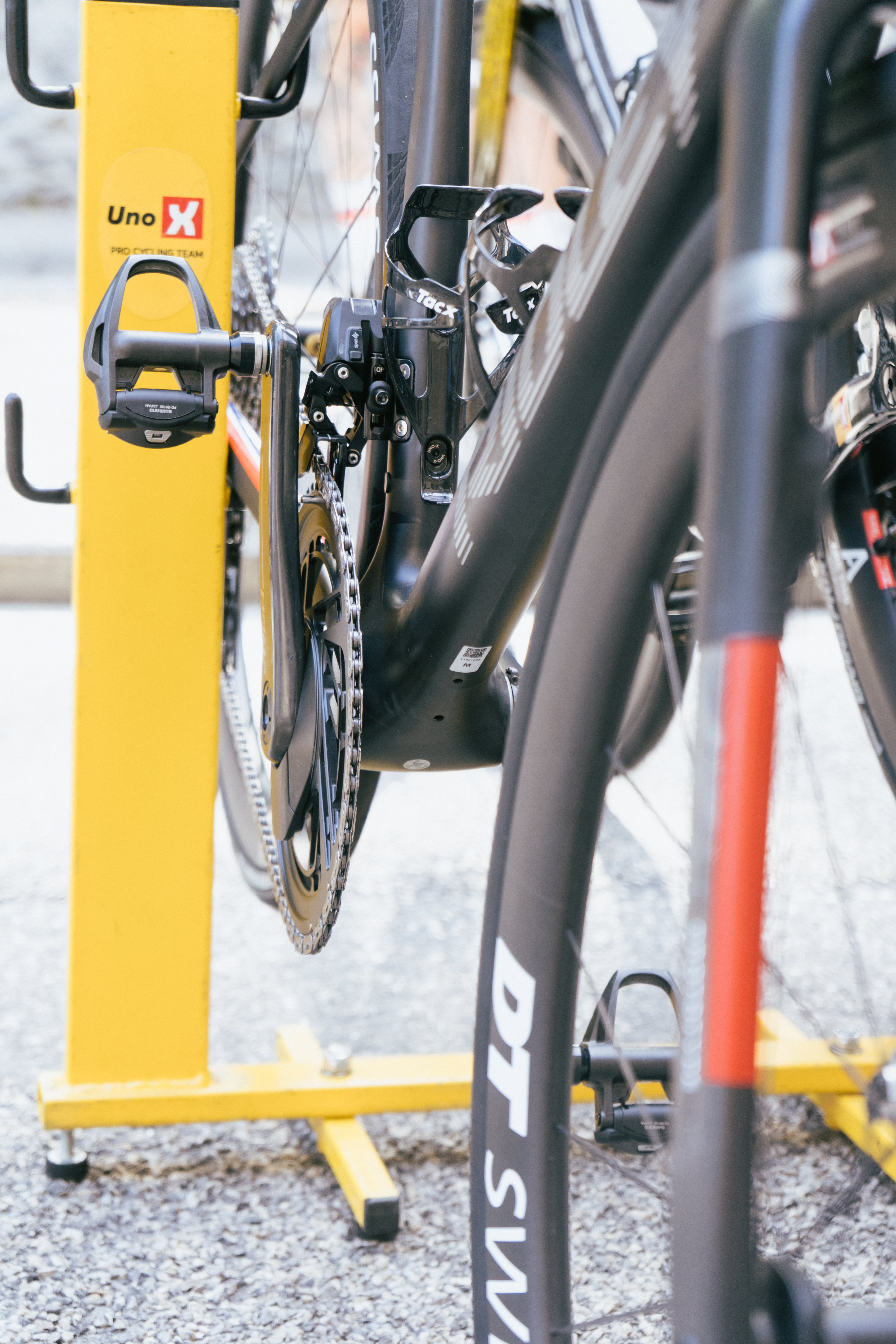
A new Ridley prototype, likely a replacement for the Falcn RS, was on show on the stands.
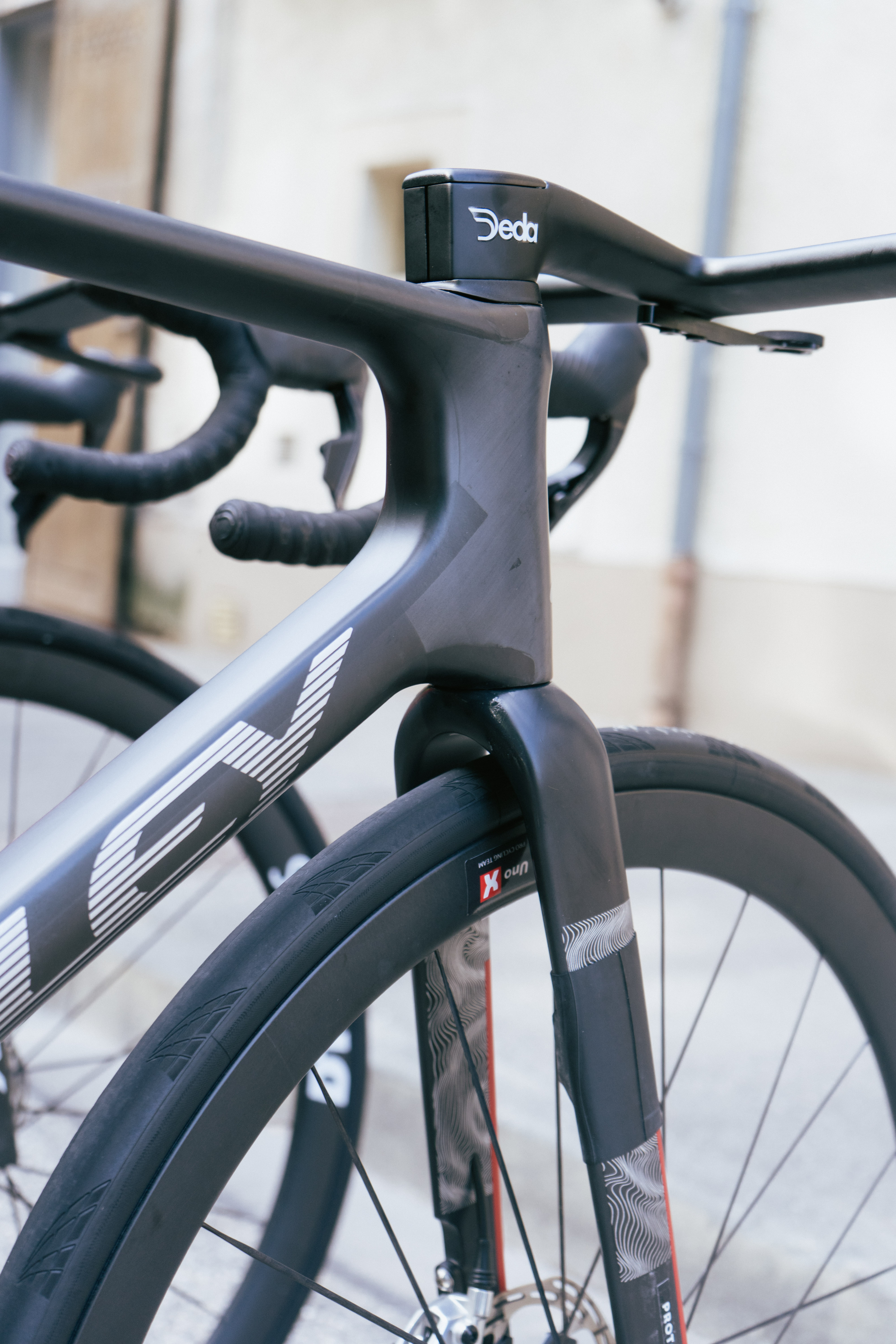
(Image credit: Will Jones)
While it’s clearly a climbing bike, aero shapes can be seen at the fork and head tube.
(Image credit: Will Jones)
A neat seat clamp is integrated into the seat tube.
(Image credit: Will Jones)
The fork looks able to accommodate a 36mm, perhaps even a 38mm at a push. The head tube has a distinct ridge on the upper portion, though, likely an aero feature.
(Image credit: Will Jones)
Here’s a better look at that head tube profile. It’s not quite a Speed Sniffer, but it’s on the same track.
(Image credit: Will Jones)
The bosses on the down tube suggest the battery is mounted low down in the frame for better weight distribution.
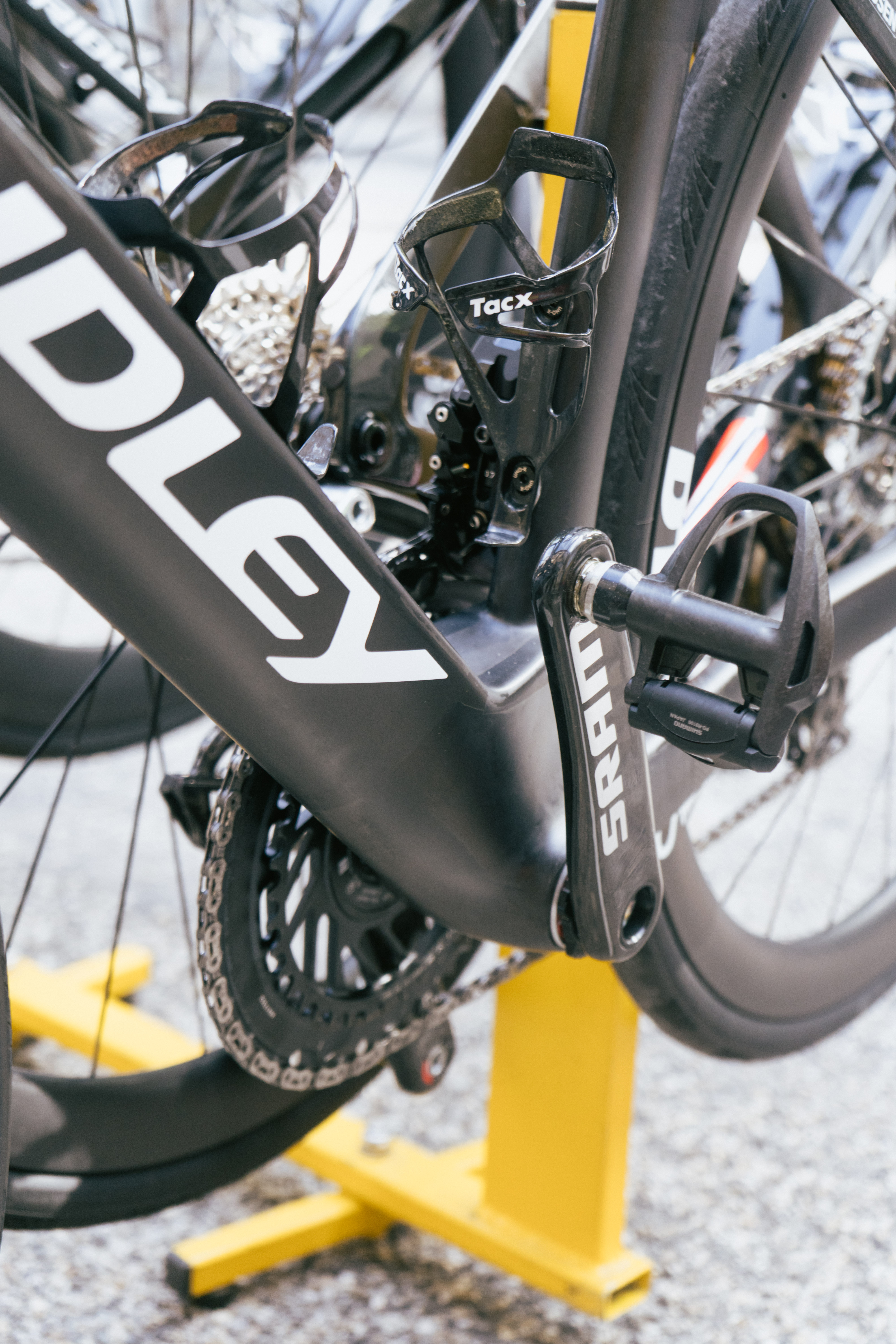
(Image credit: Will Jones)
Elsewhere, a paintless Noah Fast was also in evidence, as is the fashion.
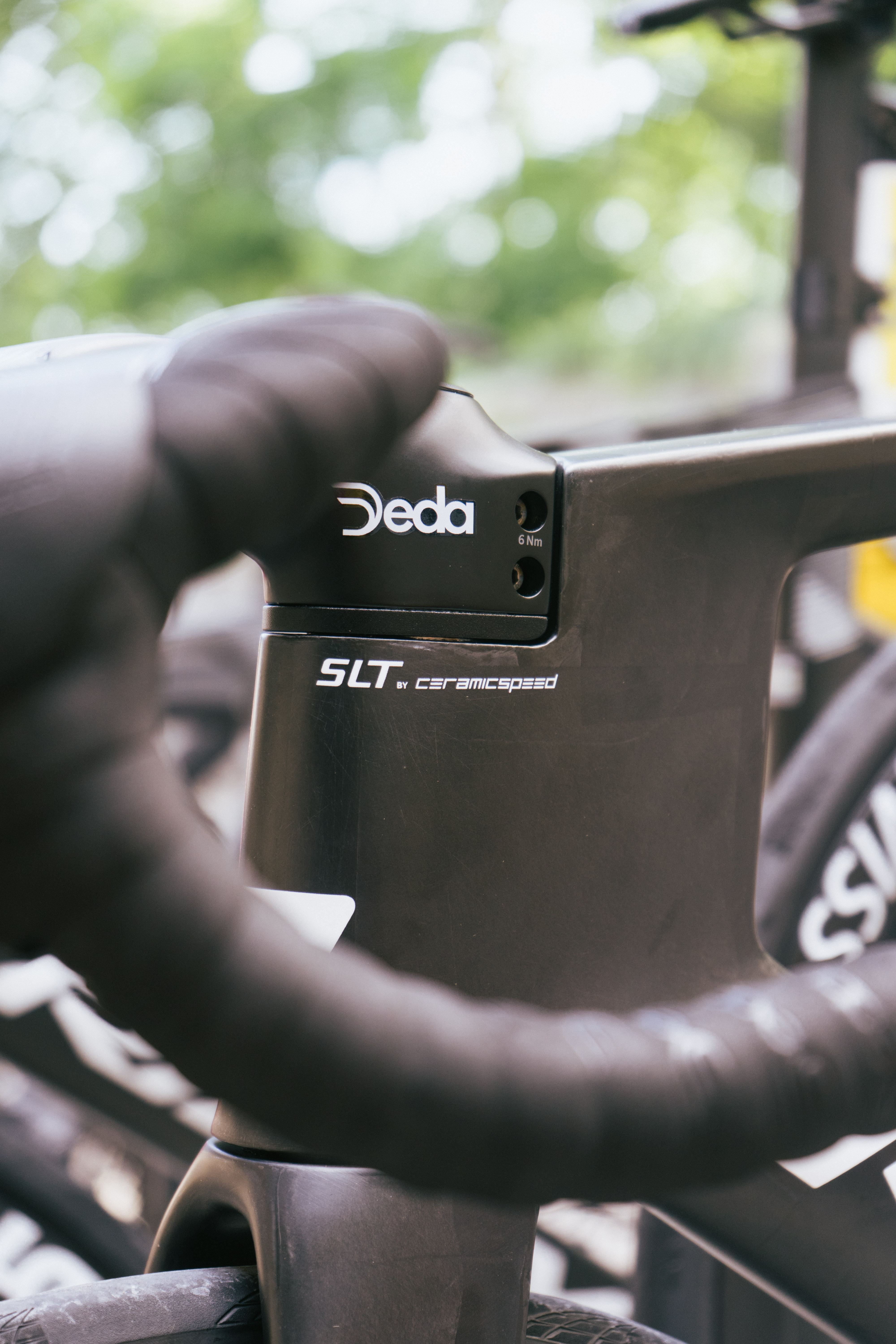
(Image credit: Will Jones)
To be fair, the Noah Fast has a lot of surface area, so ditching the paint here probably saves more than on most frames.
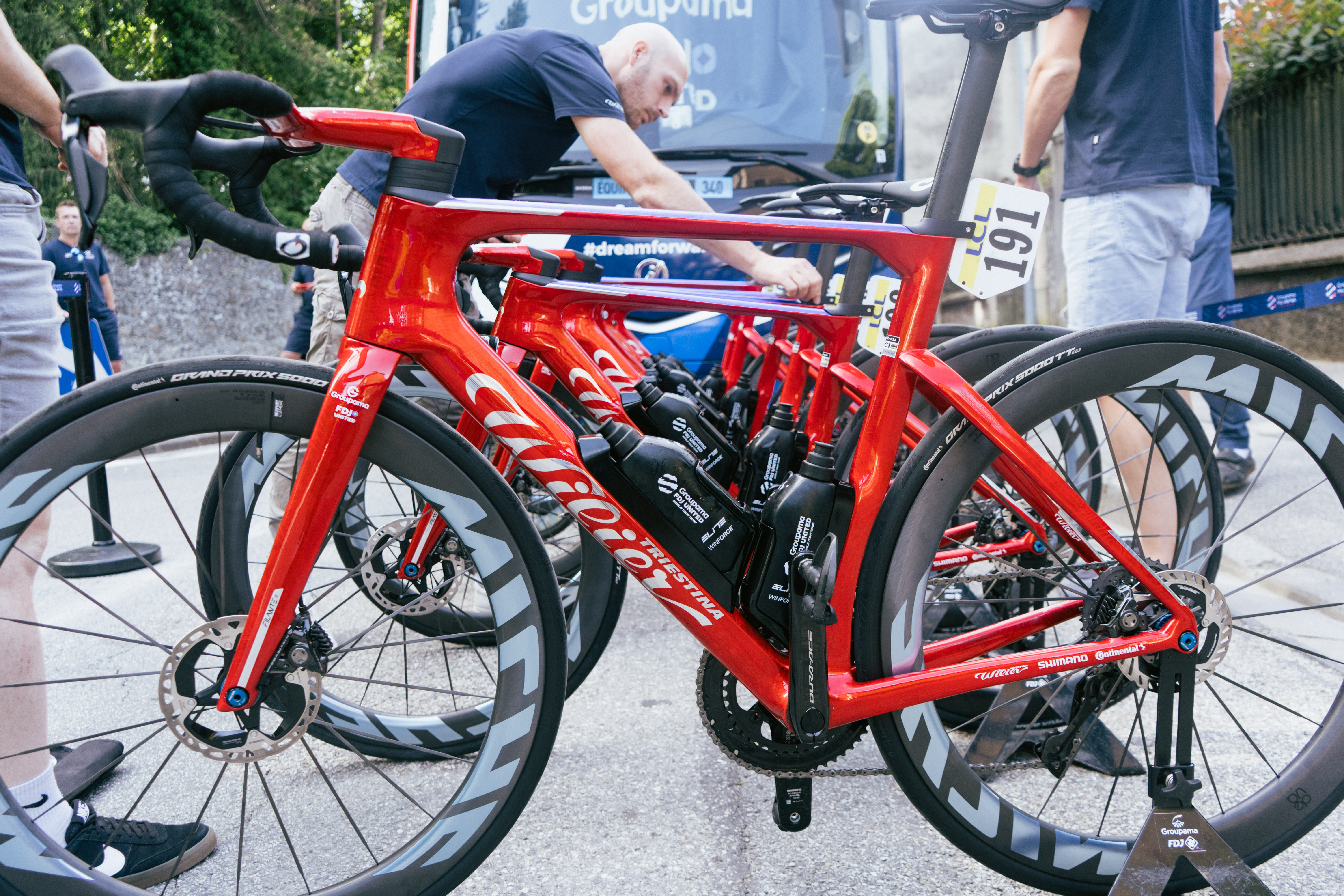
(Image credit: Will Jones)
While many teams are going for minimal paint, I love the fact that Groupama-FDJ has this gorgeous red.
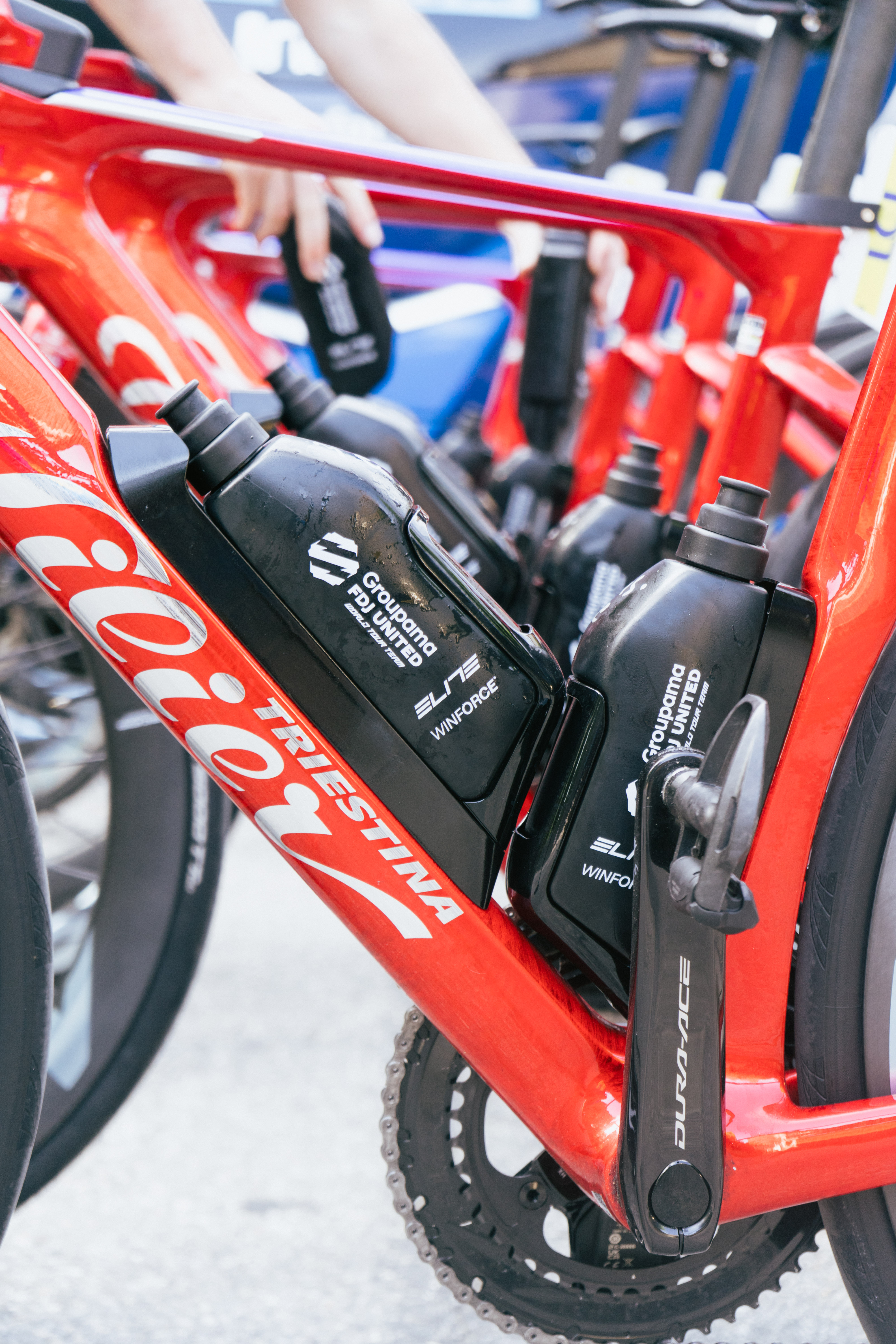
(Image credit: Will Jones)
Aero bottles aren’t everywhere yet, but they’re growing more common. While they’re faster, they aren’t often supported by neutral service bikes, though many aero cages nowadays also accept standard bottles.
(Image credit: Will Jones)
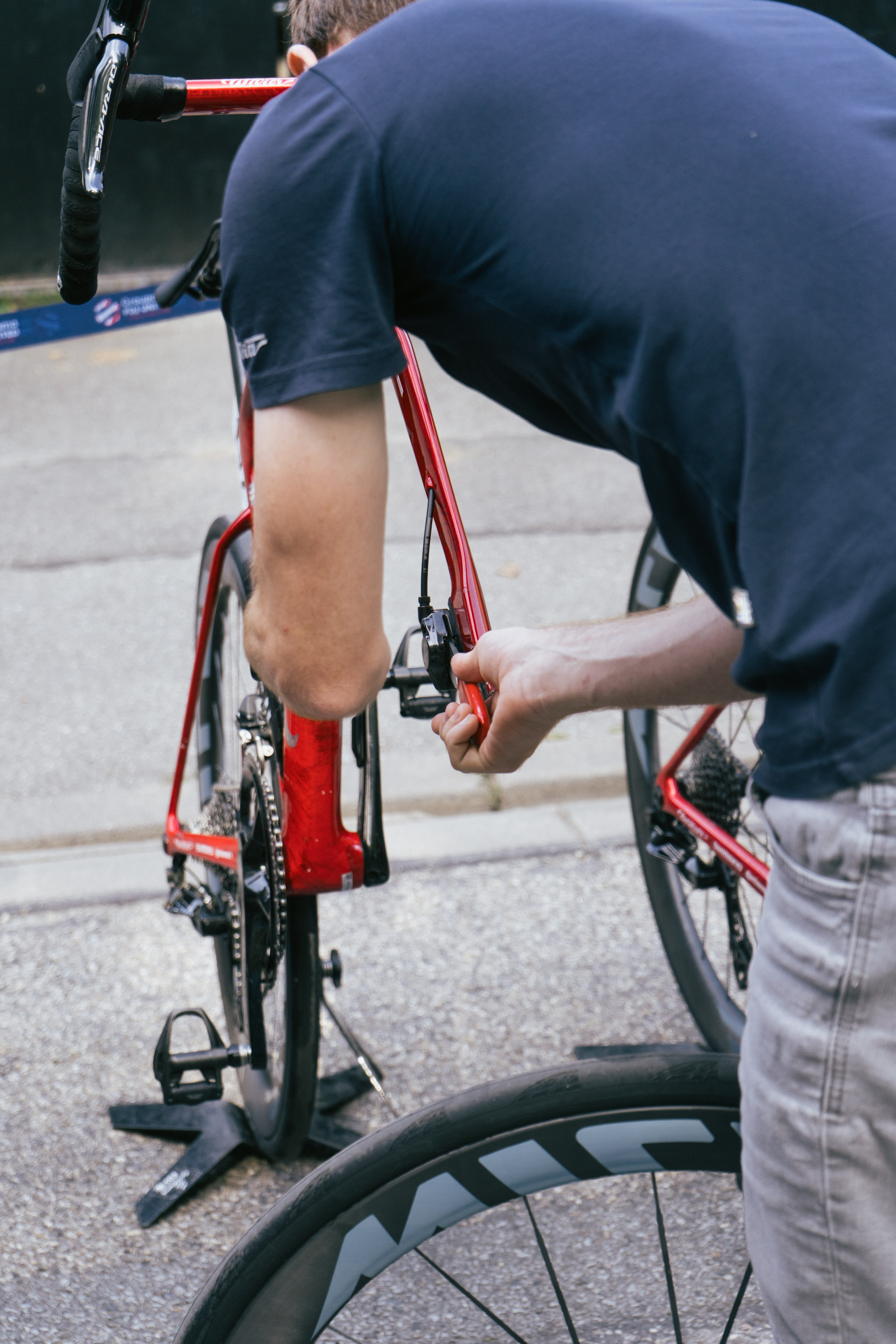
This bike needed a last-minute pad-spread minutes before the stage start.