
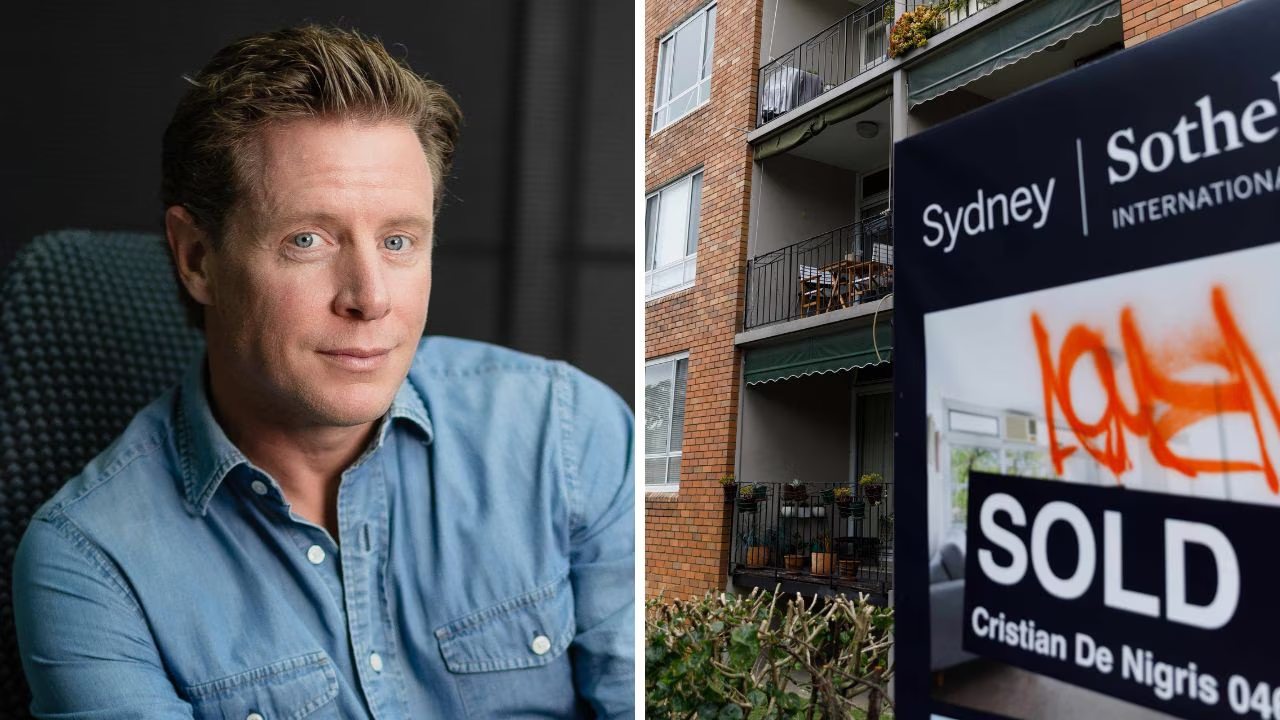
Barefoot Investor Scott Pape has given a brutally honest reply to a single mum who asked him if she’d “be okay” after buying her first home with a 2.5 per cent deposit.
The mum — referred to simply as “Fiona” — bought an apartment using the government’s low income single parent deposit scheme in 2024.
She put down a deposit of just 2.5 per cent and was “now in deep trouble” amid rising interest rates and falling house prices, Mr Pape wrote.
He didn’t blame Fiona for taking part in the scheme, explaining that at the time she bought her home, “every signal in the country, right from the very top, was pointing her in the same direction: This is how you get security”.
“The trouble was, what she bought wasn’t security. It was debt,” Mr Pape said.
“And debt and security are not the same thing. Not even close. Debt means you have to keep working no matter what. Security is when you don’t have to.”
The bestselling financial author, who had long warned his subscribers that the government’s low deposit schemes were the “political equivalent of a crap in a paper bag”, said he had checked in with Fiona this week to see how she was doing.
The mother told him she was working three jobs and her daughter was picking up retail shifts after school.
The pair were living in a share house and renting out the apartment, but had little income left after mortgage repayments, rates and strata fees.
On the phone, Fiona asked: “Prices always go up, so I’ll be okay when I retire, right?”
Mr Pape’s response was, “I honestly don’t know”.
He said Fiona’s case had exposed a truth that the federal government was refusing to say out loud.
“The only way to make housing affordable for people who don’t own a home, is to make it a worse investment for people who do,” he wrote.
“There is no version where both things happen at once. Yet they won’t say that.
“Instead they point us to the latest Treasury modelling that is confidently forecasting that the budget will only lower property prices by 2 per cent and raise rents by approximately $2 a week.”
‘Very dire’: Scary reality for first home buyers
Experts have sounded the alarm for young Aussies who recently took out massive mortgages to buy their first home and have now been left in negative equity.
The government’s 5 per cent deposit scheme for first home buyers was expanded in October, while single parents with at least one dependent can buy a home with a deposit as low as 2 per cent.
The government provides a guarantee for the rest of the 20 per cent deposit so that the buyer doesn’t have to purchase lenders mortgage insurance.
But critics say it places buyers in a financially risky position.
SQM Research founder Louis Christopher estimated that since October, 50,000 people using the scheme had bought in Sydney and Melbourne, where prices had since fallen.
It was very difficult to sell a home while in negative equity, and buyers would now be “essentially stuck” in their home until the balance turned positive, Mr Christopher told news.com.au.
Lending options elsewhere, such as car loans, would become “heavily restricted” for them, and “if you have a scenario where someone loses their job and they’re forced to sell, then it’s a very dire situation indeed”.
“It’s a real issue for anyone that wants to change their home or borrow money elsewhere,” the analyst said.
“And if anyone loses their job and they’re forced to sell in negative equity, heaven help them.”
The ABC’s Alan Kohler went so far as to say that a “generation of young families” who bought a house “using too much debt” would now be “devastated” in the correction.
Deyon mortgage broker Martin Eftimoski offered a different view, however, describing negative equity as a “strictly temporary phenomenon”.
“House prices in the long term will keep growing at least with inflation, and your mortgage will keep declining as long as you keep paying it off,” Mr Eftimoski told news.com.au.
“If that bothers you as someone on the 5 per cent guarantee scheme, then you need to think carefully about why you are pursuing the scheme.
“Is it because you desperately want to secure your housing, or because you want a money printing machine?”
The mortgage broker said that ultimately, a short-term decline in house prices would only affect the time it took a home buyer to refinance, sell, or buy another property to live in.
There were lots of reasons why home ownership made personal sense for people, he added, including family security, freedom and retirement benefits.
“Even if your equity goes down, you might still end up better off for all these practical reasons.”