
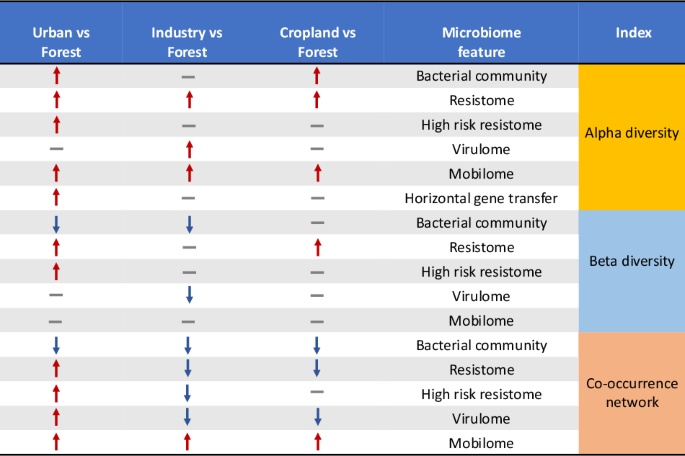
Soil resistomes and bacterial communities are responsive to anthropogenic land-use change and relevant to people and nature, yet their continental-scale turnover and co-occurrence remain poorly known. Here, we conducted metagenomics and metabarcoding across 27 forests and adjacent cropland, industrial, and urban sites in 2022-2023. Contrary to the biotic homogenization paradigm, which posits reduced bacterial taxonomic beta diversity under disturbance, resistome beta diversity increased in urban and cropland soils. Moreover, while bacterial taxon co-occurrence networks were simpler in disturbed soils than in forests, networks of resistome, virulome, and mobilome were more complex and robust in urban soils. Besides, the alpha diversity of bacterial communities, resistomes, and mobilomes all rose with disturbance, especially in urban soils, alongside more horizontal gene transfers. Together, the distinct patterns of spatial turnover and co-occurrence between resistomes and bacterial communities suggest potential limitations of taxa-centric mitigation strategies and highlights the importance of selective agents and transmission pathways.
 The alternative text for this image may have been generated using AI.