
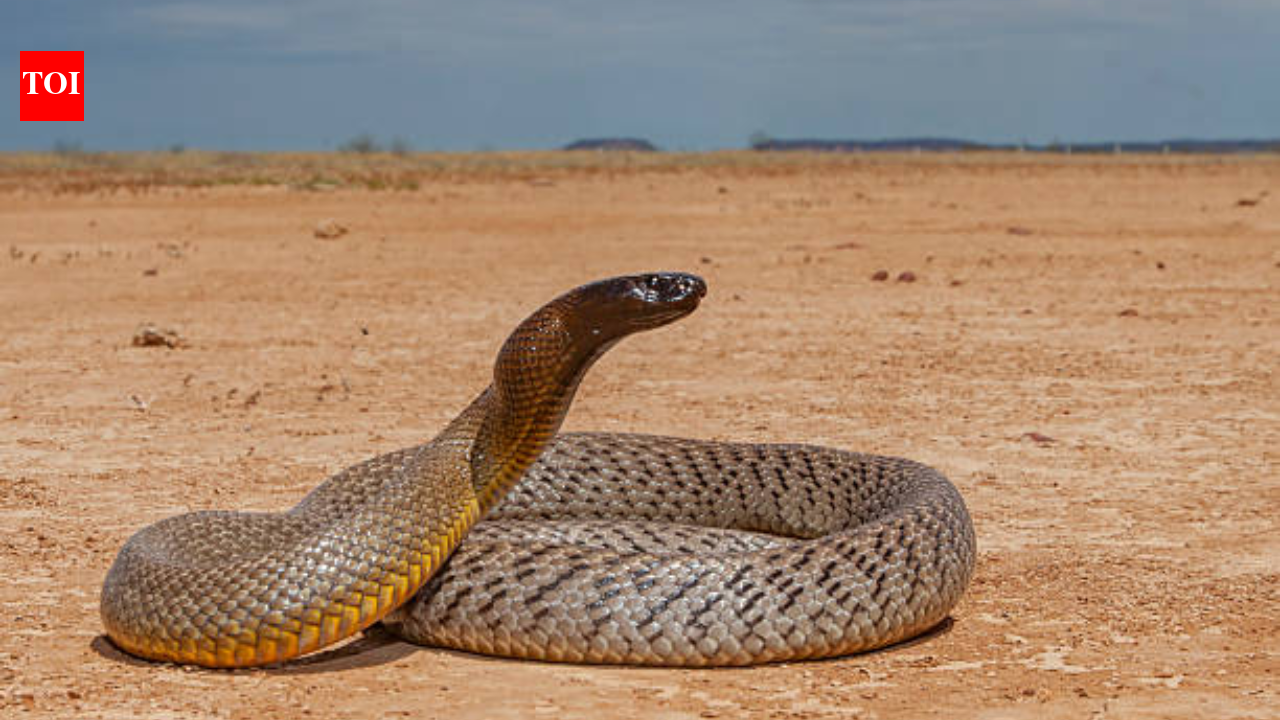
What this means for the taipan in practical terms: in winter, when the outback mornings are cold and every minute of basking counts, a near-black body warms up faster. Darkening in cooler seasons increases heat gain during brief basking windows in arid environments. And in summer, when shade temperatures can push past 40°C and the sun is genuinely dangerous, a pale body slows down the heat absorption that would otherwise send the snake’s core temperature into a lethal spiral.
The Australian Museum, one of the country’s most authoritative sources on native fauna, notes that the inland taipan is a medium to large snake with a robust build and a deep, rectangular-shaped head, and that the head and neck are several to many shades darker than the body, a gradient that makes sense when you consider that the head is usually angled toward the sun during basking while the body stays partially sheltered in a soil crack.
And there’s one more layer. In captivity, the related coastal taipan changes colour with the seasons, becoming a bright coppery colour in summer and dull brown in winter.