
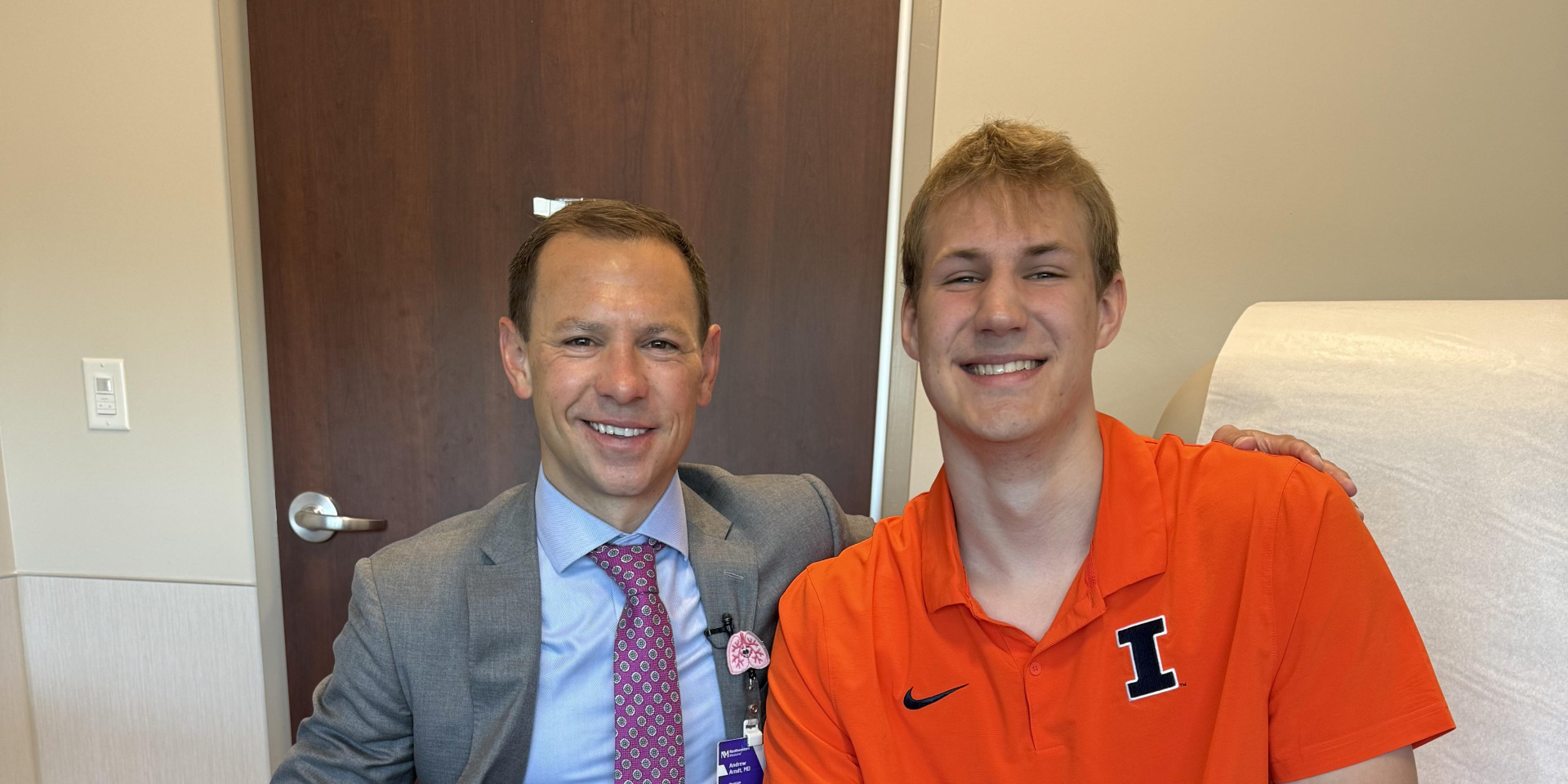
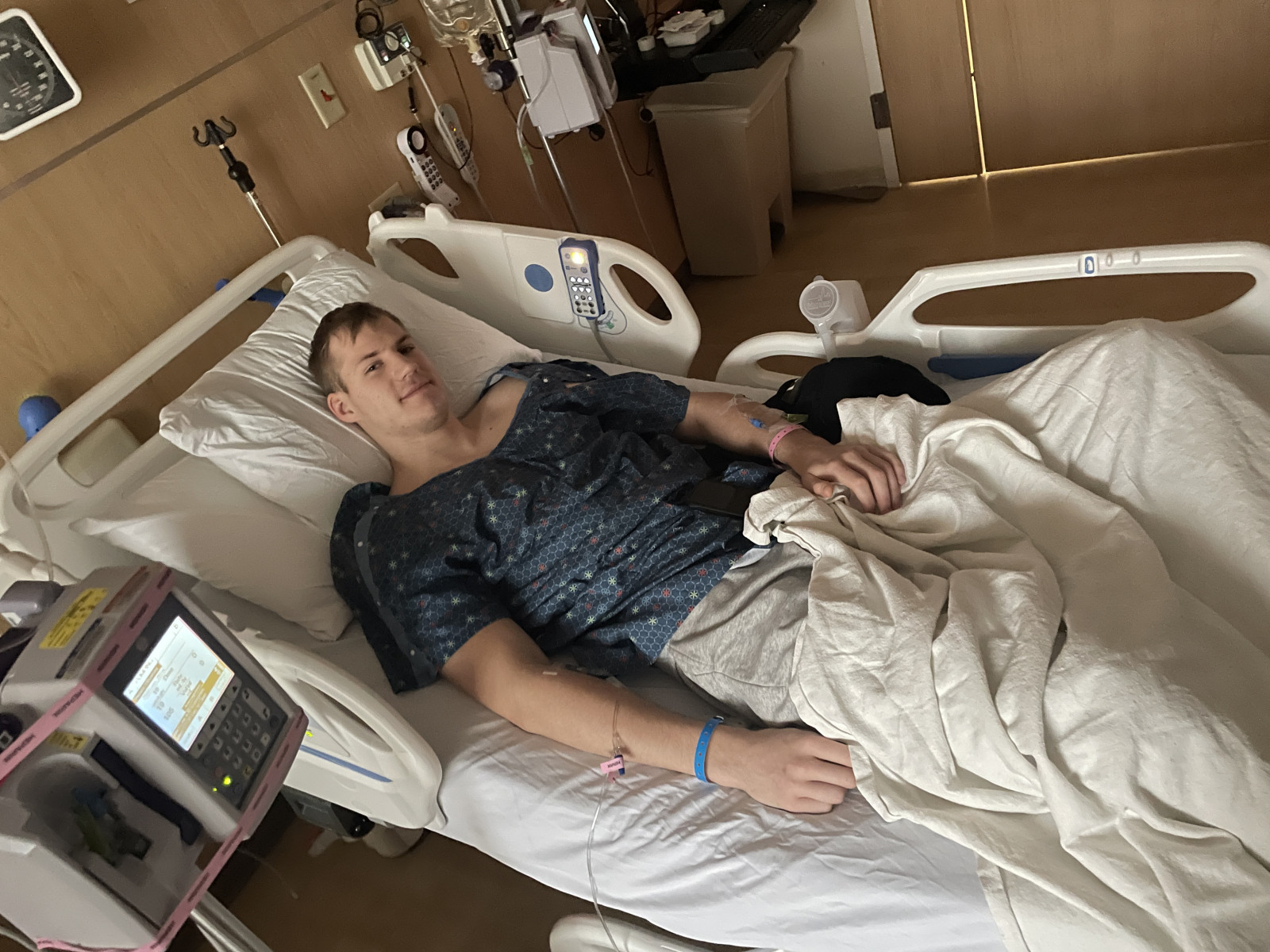
Jason in the hospital photo 1
First Signs Something Wasn’t Right
Jakstys first realized something was wrong the day before the University of Illinois men’s basketball game against the University of Maryland on Jan. 21, 2026.
While sitting in class, Jakstys experienced discomfort in his left arm that stood out from typical soreness associated with basketball. Despite those symptoms, he played in the game the next day.
“I noticed my shoulder was kind of bugging me, but, being a basketball player, you play through it,” Jakstys said.
The day after the game, the pain had intensified, signaling that the issue was more serious than a routine injury. While weightlifting after a light practice, Jakstys’ left arm was discolored.
“My arm just starts bulging up, becomes red, veins were bulging,” Jakstys said. “Guys are looking at it, like that’s kind of weird. I knew something was wrong, but I still finished practice and then coach said, ‘Yeah, we need to get this looked at.’”
An ultrasound determined it was a blood clot and Jakstys was immediately put on blood thinners. Further evaluation led to the diagnosis of venous thoracic outlet syndrome.
About Thoracic Outlet Syndrome
Thoracic outlet syndrome occurs when blood vessels or nerves are compressed in the space between the collarbone and first rib.
In Jakstys’ case, the condition involved compression of the subclavian vein, known as venous thoracic outlet syndrome. This can lead to blood clots, swelling and discomfort in the arm and shoulder. “Jason being an athlete, with repetitive overhead and upper body activity, contributed to this development,” Dr. Arndt said.
Venous thoracic outlet syndrome is rare, but it occurs more often in high-level athletes whose repetitive overhead movements can compress blood vessels and threaten their ability to compete.
“I was definitely surprised and devastated. I put in two years of hard work and then, in a matter of seconds, my season was over,” Jakstys said.
‘;