
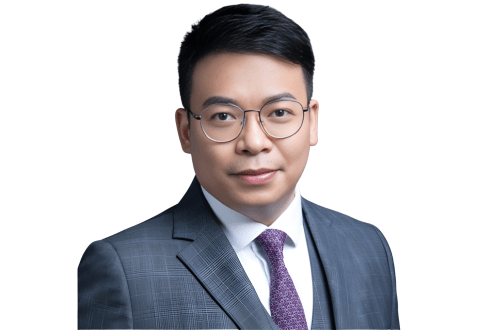
As mainland Chinese wealth becomes more global, offshore wealth management is moving beyond product access and trade execution. For Matthew Chan, Managing Director, Head of Product & Investment Solutions, Wealth Management Business at CITIC Securities International, the opportunity lies in combining China insight, product breadth, digital capability and structured wealth planning. The firm’s focus is not only on helping clients access opportunities, but on guiding them towards more disciplined asset allocation and a more integrated approach to long-term wealth management.
Key Takeaways
CITIC Securities is building a broader offshore wealth platform: Chan leads product and investment solutions in Hong Kong, supporting regional offices including Singapore, Australia and Japan.
The product role extends into portfolio advice: The team covers funds, bonds, equities, product onboarding, client engagement, RM support and broader investment solutions.
Wealth solutions are increasingly important: The firm offers consultation services to clients on tax advisory coordination, trust planning and single-family office set-up in Hong Kong and Singapore.
China insight is a differentiator: Chan sees CITIC Securities’ familiarity with mainland Chinese clients, onshore managers and offshore China strategies as a core strength.
Speed and execution matter: The platform aims to support efficient account opening, product assessment and execution while maintaining KYC and regulatory standards.
Digitalisation is a priority: CITIC Securities wants to narrow the gap between the highly digital onshore client experience and the more manual offshore wealth management process.
AI will expand, but accuracy is critical: Chan expects significant AI experimentation across the industry, but says client-facing use cases must be carefully tested.
Chan’s role sits at the centre of CITIC Securities’ offshore wealth management proposition. Based in Hong Kong, he leads the product and investment solutions function, supporting regional offices including Singapore, Australia and Japan. His team covers product onboarding and management across funds, bonds and equities, while also supporting relationship managers and meeting clients directly.
The function is not simply about maintaining a product shelf. Chan says the objective is to help clients move from single opportunities towards broader portfolio construction.
“We are not only onboarding products,” he says. “We also promote products to our RMs and meet clients from time to time to provide advices on their wealth management needs. Different clients have different needs, so we need to offer solutions on a portfolio basis, not only from a trading perspective.”
That shift is important because many clients still approach wealth through specific trades or product ideas. CITIC Securities International can support those needs, but Chan says the more valuable role is to help clients think about asset allocation and the wider purpose of their capital.
“We do have a lot of trading ideas,” he says. “But we are not just handling one opportunity. We are handling their asset allocation.”
From Products to Wealth Structuring
The platform also extends into wealth solutions. Chan’s team supports clients with tax advisory coordination, trust planning and guidance around single-family office set-up in Hong Kong and Singapore.
Trust planning is another area where clients often require education before making decisions. Chan stresses that structures must be established for genuine planning purposes, rather than simply for the sake of having a trust.
“When we talk about trusts, we are talking about genuine trusts,” he says. “We are not setting up a trust for no purpose. It should be for asset segregation, succession or another clear purpose. The trust needs to be effective.”
CITIC Securities International works with external professional advisers where needed, but Chan says the early-stage conversation often begins with helping clients understand whether a structure is relevant in the first place.
“Some clients are still deciding whether they need a trust,” he says. “Our team can explain why it may be needed, especially for wealthy and ultra-high-net-worth clients with a number of family members.”
China Insight and Offshore Access
Chan sees CITIC Securities’ China connectivity as a major differentiator. The firm has familiarity with onshore investment managers, and can identify China strategies before they become widely distributed offshore.
This is particularly relevant when Chinese managers launch offshore vehicles. Chan says some of these strategies can provide more active exposure to China and may be attractive to clients seeking opportunities beyond more conventional benchmark-aware approaches.
“Our strength is in some very strong Chinese managers,” he says. “We are familiar with the onshore market, and when they offer offshore solutions or offshore vehicles for specific China strategies, we can understand and support that.”
He also points to product assessment as an area where responsiveness matters. If a client wants to execute a product that is not yet on the platform, CITIC Securities can assess the product separately and determine whether execution can proceed within regulatory requirements.
Relationship, Language and Client Understanding
For Chan, wealth management remains relationship-led, even as more processes move online.
Language is also central to the client experience. Chan says many clients prefer Mandarin-speaking RMs, investment counsellors and product specialists, particularly when dealing with English-language documents such as factsheets and prospectuses.
“When clients speak the same language, it is much better for relationship management and investment communication,” he says. “They may understand English documents, but when a Mandarin-speaking RM explains the product, it is more effective.”
That has shaped the firm’s approach to materials. Chan says many client-facing materials are bilingual, with Chinese-language content used where appropriate.
A More Digital Experience
Digitalisation is one of Chan’s clearest priorities. CITIC Securities International wants to move more solutions online, including product recommendations, execution workflows and a broader range of investment products. Chan says this should not remove advisory support, but should make the process more efficient for both clients and relationship managers.
“We will put more solutions online so clients can choose by themselves,” he says. “It is not only funds. We want to put more products online.”
He sees this as part of a broader industry shift. Clients may receive advice from their RM, review the idea digitally, and confirm the trade through an online channel. That gives clients more time to consider decisions while reducing manual steps.
“You can provide the rationale, advice and view on the product, then let the client decide whether to trade,” he says. “That is a good way to work.”
Key Priorities
CITIC Securities International’ priorities are shaped by the need to strengthen client education and build greater automation across the wealth management platform.
The first priority is to narrow the gap between onshore and offshore wealth management, offshore wealth management needs to become more efficient.
“We want to improve the offshore wealth management experience to better match client expectations,” he says. “We will put more solutions online so clients can choose and trade more efficiently.”
The second priority is education. Clients need to move beyond single investment opportunities towards asset allocation. “We need to provide more investment education,” he says. “Instead of looking at one opportunity, they need to take a wider asset allocation approach.”
The third priority is automation, CITIC Securities has expanded technology resources supporting the wealth management business, with the aim of improving efficiency, revenue generation and customer experience.
“You can imagine that a lot of automation will be done,” he says. “It will help generate revenue, enhance efficiency and improve the customer experience.”
Into The Future
Chan expects the next 6 to 12 months to bring more AI adoption across wealth management. Different firms will use AI in different ways, from investment ideas and portfolio tools to client service and internal workflow support.
He is cautious, however, about assuming that AI tools automatically create value. Stock recommendations, asset allocation tools and portfolio optimisation engines must prove that they improve outcomes, rather than simply demonstrate technical capability.
“Rolling out AI does not mean it is really helping clients make money or make better calls,” he says. “You can have AI tools to recommend stocks or optimise portfolios, but that does not mean they have value for the client.”
The most practical near-term use cases may sit in client service. Chan sees potential for AI agents that can answer questions about portfolios, structured product terms, lock-out dates, observation dates or other information that clients would otherwise need to search for manually.
“One thing clients should welcome is AI that improves customer experience,” he says. “An AI agent could help them ask questions about their portfolio or product terms.”
Accuracy is the main constraint. Chan says financial institutions remain responsible for the information provided to clients. If an AI tool misreads a term sheet or gives the wrong product detail, the risk sits with the institution.
“The accuracy has to be the key,” he says. “If we provide the wrong answer to a client, we still own the responsibility, especially from a regulatory perspective.”
For that reason, Chan expects much AI adoption to begin internally before becoming fully client-facing. The technology will become more important, but only where it is accurate, controlled and genuinely useful.
The broader direction for CITIC Securities International is to combine digital efficiency with relationship-led service, China insight with offshore execution, and product access with more structured wealth solutions. Chan sees the firm’s role expanding beyond transactions towards a more holistic model of offshore wealth management.