
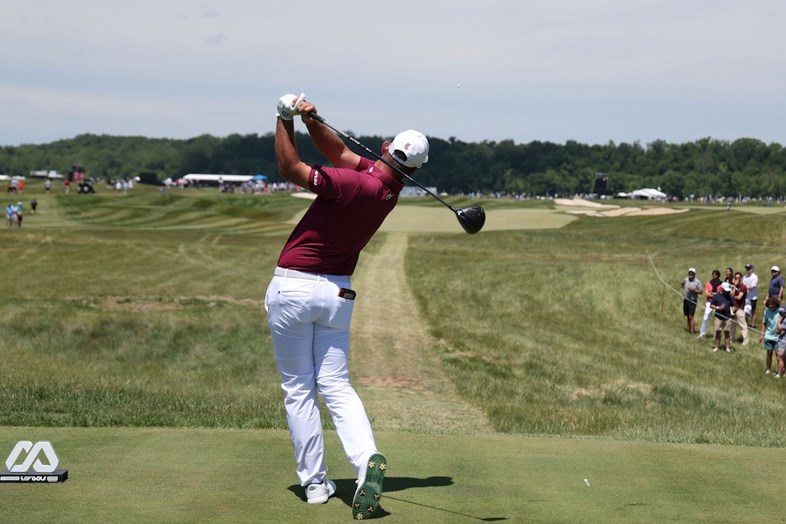
It was eight years ago that Herbert birdied the opening hole of his very first major, before contriving to shoot a 13-over-par 83 in his opening round at Shinnecock Hills. He recovered with a 74 on Friday, but the 2018 tournament proved a brutal lesson for an Australian only three years into his professional career.
“I grew up on the sandbelt and there’s so much strategy with playing those golf courses and figuring out angles into flags, when to attack and when not to,” Herbert tells TG. “When you get out and play a lot of regular events in professional golf, there’s not as much strategy any more. It’s the way the modern game is – get it down there as far as you can and try and get it as close as you can. Once I got to the majors, that was when I realized that was the big strategy test.”
In fairness, Herbert could hardly have picked a more unforgiving place to start. His 83 was far from an aberration on a madcap week on Long Island, where eight-over-par was enough to make the weekend.
“The US Open is a different beast,” he adds. “So many things I learned that week. It’s just so hard and you’ve got to be so disciplined with the way you play a game. You make a bogey and it can take nine holes to get that back. The year before I showed up was Erin Hills and Brooks [Koepka] won on 16-under. I’d never played Erin Hills and I’d never played Shinnecock. I had no references for how hard either of those courses were.
“I’m playing the practice round at Shinnecock going, ‘Hang on, I’ve got no idea how the hell these guys are doing this.’ It was nice to see that, ‘OK, everyone finds this like I do.’ I’m really excited to go back and use what I’ve learned over the last eight years to hopefully finish better than where I did last time.”
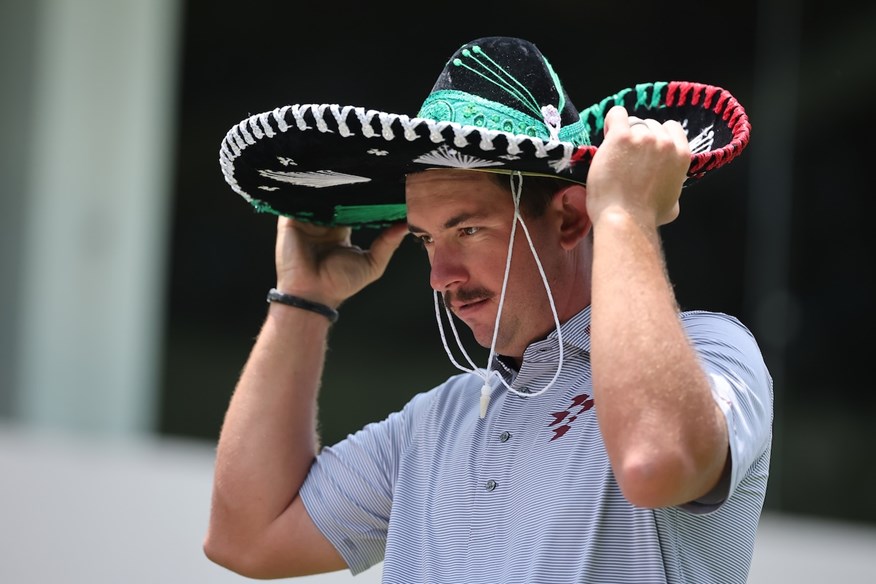
Herbert is now 30 and has since landed seven wins across an intrepid career. After joining LIV Golf in his peak years, he’s been one of the most outspoken loyalists on the now embattled breakaway league. His maiden LIV victory in May – where Herbert rose from his sick bed to win in Virginia – secured the sole US Open spot available for the league’s top player not otherwise exempt in the standings.
But Herbert is irked that his results in majors have belied a game that has become rounded by his success all around the world. In 16 major starts, Herbert has made eight cuts and a tie for 13th at the 2022 PGA Championship is his best showing.
He returns to Shinnecock taking inspiration from Aaron Rai, his contemporary who also hadn’t had a top-10 in a major before his magical Sunday at Aronimink last month.
“We played on the European Tour together and then both got our PGA Tour cards at the same time,” Herbert explains. “Obviously he’s a phenomenal player, but seeing someone that I grew up coming through the professional ranks playing with has given me a bit of fire in the belly. Whether it’s at Shinnecock or Birkdale, to try and go and play a little better than my major record would reflect at the minute.”
Herbert left the PGA Tour and joined LIV in 2024 knowing majors would be harder to come by. He has played in two so far since joining the league, and was one of only three players inside the world’s top-100 who missed out on the PGA Championship.
But Herbert became the second LIV player to qualify via the US Open’s new criteria and is also into The Open after securing the only spot available at the New Zealand Open in March.
“It definitely validates what the league is doing,” he says. “The direction we’re headed is good with the pathways into the major championships now. I’m obviously proof, I’m playing in the next two majors – somewhat through LIV, obviously the New Zealand Open wasn’t directly LIV but with the schedule allowing for what it does, it’s partly through LIV.”
Of course, Herbert’s tour is engulfed in uncertainty right now, with a search ongoing for new investment after the retreat from its Saudi Arabian benefactors. In the meantime, the debate will continue at Shinnecock about whether the league’s current schedule is hindering preparations for the four majors. Herbert, however, is adamant that LIV is only improving his game.
“When I joined LIV, my focus was to get better as a player,” he says. “I feel like the opportunities that LIV has provided me – whether it be the ability to play against some really high level players every week, the team aspect with with Ripper and what I’ve been able to learn from those guys and the break in the schedule at the end of the season to be able to go away and do a block of work – all those have been a big contributing factor to me getting better at golf. Whereas when you’re playing out on tour, you just don’t get a chance to have those kinds of development blocks.
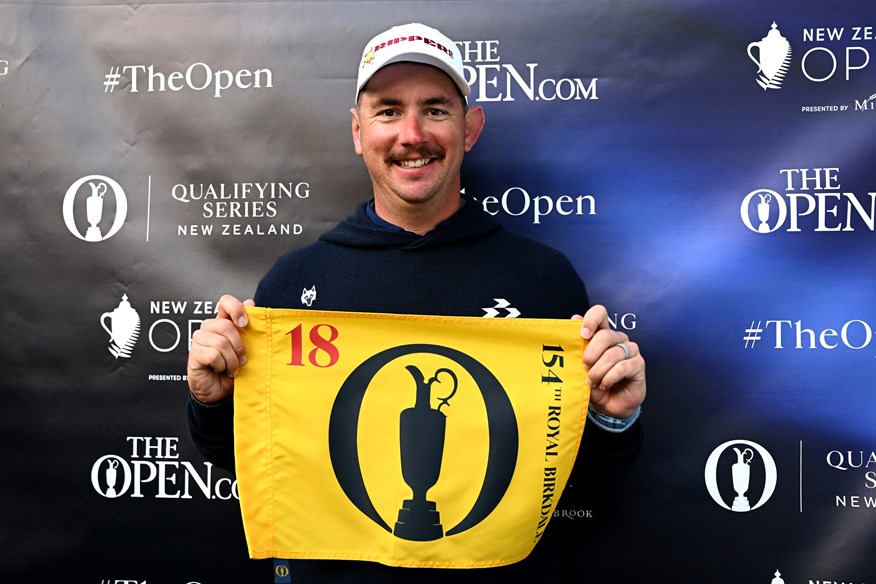
“Had I stayed on the PGA Tour, I arguably could have had more access to majors in the last three years. But what I know within myself is that I’ve got the next two majors and I’ve got a much better chance to play well or to win those and even my progression in my own game as a result of LIV. The access has been more difficult, but when I’ve gotten access, I feel like I’ve got a much better opportunity to play well and take advantage of those opportunities.”
With the clock ticking for LIV to find new investment partners, it comes as no surprise that Herbert is one of the players desperate for chief executive Scott O’Neil to fill its financial black hole. Should the league continue in 2027, Herbert envisages a reduced schedule populated by several national opens.
“Coming to LIV, two and a half years ago, it was tricky to know whether it was going to be a good or a bad thing,” he says. “It’s going to be a change next year. It’s tricky to know whether it’s going to be a good or a bad thing in terms of a shortened schedule.
“But the locations that we’re going to go to are obviously earmarked as some of the really crucial markets. Those are the exciting events that we’re looking forward to. Australia is going to be the number one on the schedule that, we want to make sure that one gets in the right slot.
“I don’t know exactly how, how all the cards are going to fall but I can see LIV being something that’s going to be really important in the future.”