

A pair of Melbourne brothers who quit their jobs to launch a legal start-up less than a year ago have raised $700,000 in seed funding, reinvigorating faith in Australia’s fledgling entrepreneurial landscape.
Umar, 27, and Abdur-Rahman Butler, 25, jumped on the fast-moving artificial intelligence (AI) boom with their family company Isaacus, an AI software model the siblings describe as “legal superintelligence”.
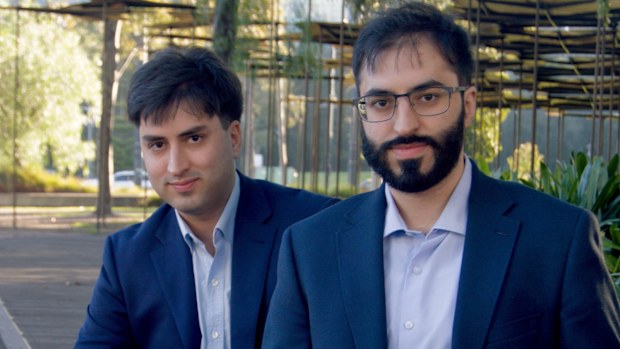
Melbourne brothers Abdur-Rahman and Umar Butler began legal AI research company Isaacus. Supplied
After less than 12 months, Isaacus is used by over 600 law firms, governments and businesses – paving the way for the Victorian start-up to scale up internationally.
The brothers are part of a new generation of Gen-Z tech founders, following in the footsteps of fellow Australian start-ups Canva and Atlassian.
But the Butlers say finding investor confidence in Australia wasn’t easy and there is a growing risk of a “brain drain” as top talent depart in droves for the likes of Silicon Valley.
“It’s pretty important to us that we’re based in Australia. That’s where we grew up and Australia’s sort of home for us,” Umar, former assistant director of data science at the Attorney-General’s Department, told nine.com.au.
“There is actually a commercial angle to it, in that the quality of talent in Australia coming out of Melbourne Uni, Sydney University, University of Sydney, top-tier universities, is comparable to the quality of talent you’ll find in the US or the UK.
“It’s just that a lot of Aussies tend to move overseas because the opportunities here aren’t that great.”
Isaacus secured the world’s first-ever VC-backed foundational legal AI investment in September after $700,000 in pre-seed funding from Aura Ventures and Galileo Ventures.
It is now in the process of a capital raise and is expanding into the US, UK and Canada.
“The end goal is to sort of cover every valuable use of AI in law. We have a very wide scope and ambition and vision,” Umar said.
“But we’ve been able to achieve a lot by just focusing on this vertical and doing it really, really well.”
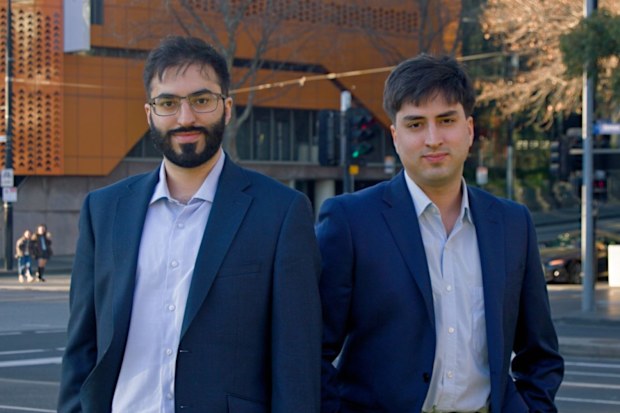
The Isaacus founders say there is a “brain drain” hurting Australia’s start-up culture. Supplied
Isaacus’ rapid success is a micro-reflection of the eye-watering cash that AI founders are making on a global scale.
Behemoth Open AI is pushing for a historic $1 trillion listing on Wall Street, while Anthropic hit a $965 billion valuation ahead of its public listing.
The Isaacus founders haven’t joined the cynics who predict the AI bubble will burst – and soon.
Though they say Australia is unlikely to benefit from the trillions of dollars unless there is major local investment.
“Unless we have our own AI companies, unless we have our own critical digital infrastructure companies, we’re not going to get a slice of that,” Umar said.
Tech whizzes needed for early start-ups like Isaacus are becoming a rare breed in Australia.
Isaacus’ latest hire lives in the UK for six months out of the year and the brothers are currently recruiting staff in the US and Britain.
According to HR and payroll platform Deel’s 2025 State of Global Hiring report, software engineers are the most common cross-border hire for local businesses.
Thousands of Australian businesses are also setting up their operations overseas.
The Australian Computer Society (ACS) found last year that 11,000 start-ups and other companies have abandoned Australia for the US, UK and Canada in the past 20 years.
“People sometimes have the assumption that, if it is happening in Australia, it can’t be innovative, or it’s a logical impossibility to have someone building an AI lab in Australia, it should inherently be in San Francisco,” Umar said.
“There’s a bit of difficulty there, and our venture capital (VC) industry is a bit less mature, and most of the capital in Australia comes from outside Australia.”
Business owners sounded the alarm after the federal government flagged plans to abolish the 50 per cent capital gains tax (CGT) in the 2026 federal budget and warned there may be a mass exodus of entrepreneurs leaving Australia for friendlier taxes overseas.

Isaacus has already secured $700,000 in pre-seed funding. Supplied
While other governments around the world incentivise emerging businesses, some claim the Australian government is building more obstacles.
Abdur-Rahman, an economist and data scientist, said Australia’s start-up culture should be nurtured by the federal government, not hindered by changing tax laws, before it becomes a bigger problem.
He warned it may be “less attractive” and far riskier for start-ups to keep boots on the ground here.
“It just worsens an already pretty bad situation in terms of the brain drain attrition we have with Australian start-ups, pre-CGT,” he said.
“When you are in an innovative field that’s very competitive, you’re competing against Americans, Europeans that are well financed, they’re flushed with government cash.
“I think the government should be doing way more on the tax front to incentivise people to invest in start-ups,” Umar added.
“Once we become very successful, I’m happy to pay a lot of tax through the company, but there needs to be some incentive for people to go and start these ventures.”