
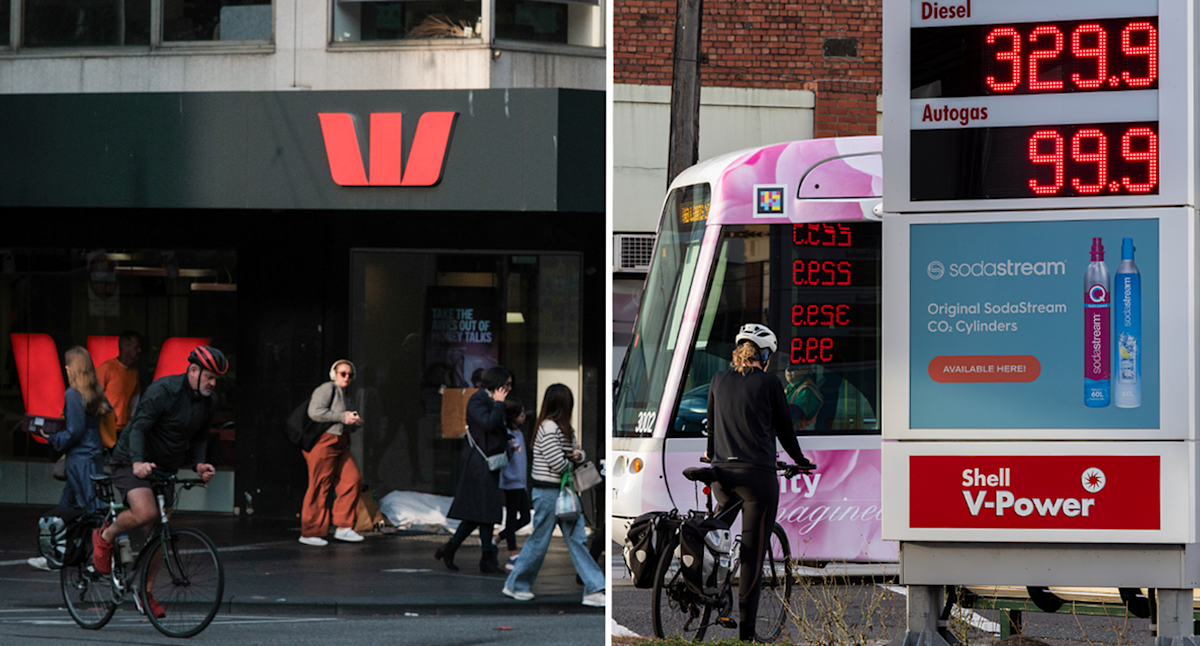
 Optimism about price falls from Iran war resolution ‘will be pared back’. · Getty
The hip pocket reprieve Aussie drivers are currently enjoying at the petrol pump will be as good as it gets for the rest of the year. As the world waits for details on a tentative deal between the US and Iran to cease hostilities, major bank Westpac says optimism about what it will mean for the flow of oil and prices in the economy will soon be “pared back”.
If a peaceful resolution sticks, it will be the first step in unwinding the energy shock. But in a best case scenario, it will still take a very long time for things to return to normal.
And if a deal is tested and shipping is again constrained through the Strait of Hormuz, Westpac economists expect diesel prices to be at $3 and petrol prices to hit around $2.68 by Christmas.
RELATED
The framework agreement aimed at ending the war in Iran is due to be signed this weekend in Switzerland, sending markets higher earlier this week and pushing the global benchmark oil price down.
“We expect this optimism to be pared back, with prices to push higher as it becomes evident that the return of Gulf oil production will still take time,” Sian Fenner, Westpac’s Head of Business and Industry, wrote in a note published Wednesday.
“We see two sided risks around what the reopening of Hormuz will mean in practice for shipping, production and prices.”
So far, the global price of oil has remained much lower than predicted at the outset of the conflict. That has partly been the result of China’s large reserves and record US exports ramping up which have cushioned supply. But those temporary buffers will fade, the Westpac economist warned, “with inventories likely to continue to fall or remain close to critical levels in coming months”.
Westpac’s most likely ‘base case’ scenario of a peace deal holding up sees only a gradual normalisation in shipping through the Strait of Hormuz, with flows not returning to pre‑conflict levels until the middle of next year.
Oil fields and facilities in the region that have been shut-in will take time to be re-started, and damage from the war will also take a long time to repair before Gulf production is restored to pre-war levels.
“Even if shipowners’ fears over security are allayed, with assurances around attacks or mines, vessels still need to be repositioned back to the Strait and contracts realigned. Insurance costs are therefore likely to remain elevated,” Fenner wrote.
 Westpac has outlined three potential price scenarios for drivers in the next 18 months. · Westpac
However an “adverse scenario” in which a deal falls apart and flare ups in the conflict persist, modelling from the bank predicts oil prices rising above US$155 a barrel this year and remaining above US$100 into the end of next year. Currently it is about $77.
“In Australia, diesel and petrol prices average around $3.07 a litre and $2.68 a litre by year-end, or 75cents and 65cents higher than in our base case,” the Westpac note said of its worst case scenario.
That scenario also includes the government’s cut to the fuel excise ending after this month. The excise cut and GST rebate is set to expire on June 30 with members of the government this week giving mixed signals about whether it could be extended or not.
Prime Minister Anthony Albanese also cautioned that an end to the Middle East conflict will take time to be seen at the bowser.
“It will be at a minimum many months before things return to normal”, he told reporters on Monday.
Get the latest Yahoo Finance news – follow us on Facebook, LinkedIn and Instagram.