
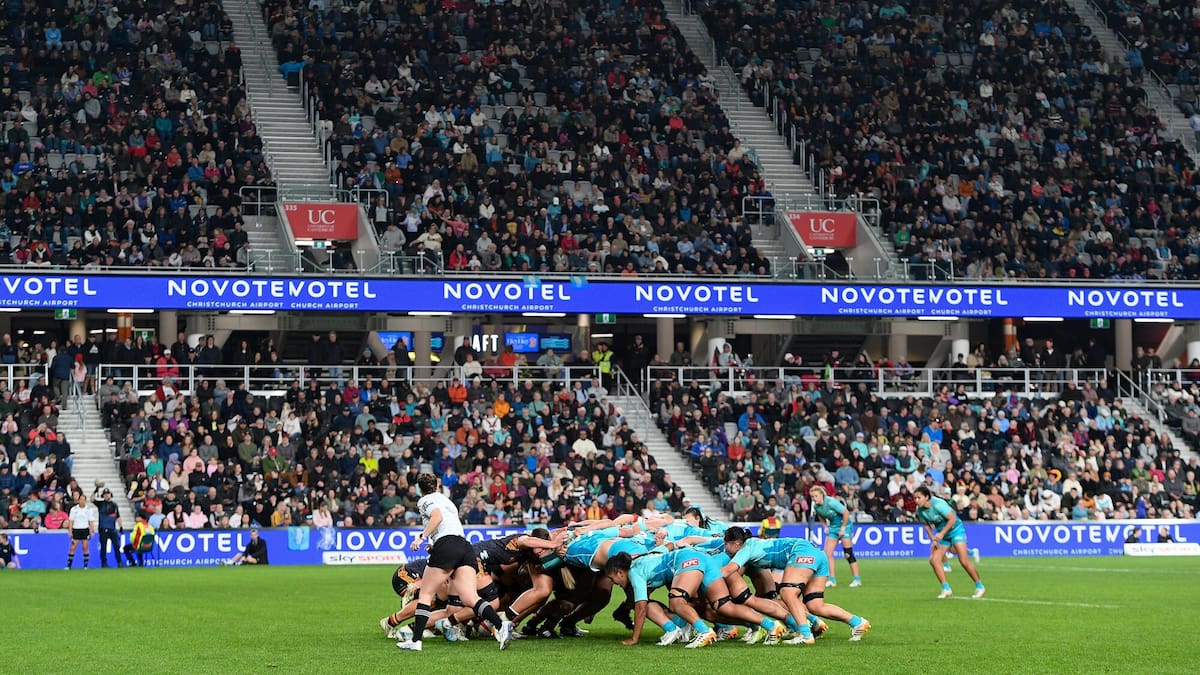
The first is the occasion. Some matches come with their own magnetism, such as the Super Rugby final, while others have to create it for themselves, think Super Round or Matatū’s record breaker. The latter are cases of the sport putting itself out there, of making a moment and then inviting fans to join in. The occasion is what underpins the emotional stakes. Tugging on the heartstrings, playing to sectionalism, making you feel that you simply must be there.
Matatū player Winnie Palamo with fans after the Super Rugby Aupiki match against Chiefs Manawa in Christchurch. Photo / Photosport
This translates over to the second factor, the marketing push. Last week, Matatū and the Hurricanes went hard on this. Set a new women’s record and “fill the tin” for the semi-final, their asks were clear and tied back to the occasion. This didn’t result in sell-outs for either franchise but it helped them build all-important momentum. In the Hurricanes case, the call to “fill the tin” was modified this week to add “to the brim”. The rallying cry resonated, driving a speedy final sell-out. If Matatū secure a home final this season, a sell-out is now also within reach.
Marketing tells the story of the occasion but you need a community to hear it. That’s the real work that Matatū has been putting in. The southern franchise took five years to set the new standard. Starting with intention, they stepped away from the bigger stadiums early. Until this season, they primarily played their home games at Ngā Puna Wai. In doing so, they took control of the atmosphere and experience for their core fanbase.
The Aupiki seasons are still impossibly short. If a franchise waits to activate their base at kickoff, chances are they will only cut through just as the final whistle blows. Matatū tackled this issue by being the first franchise to employ their head coach year-round. They followed the success of England’s example and reached out to the regions. Running Matatū-branded camps for under-16 and under-18 girls in partnership with their provinces from Otago to Tasman. They found other opportunities to pull on team colours, taking a Matatū team to the global sevens tournament.
All of that groundwork meant they had spent the time turning up for the community so when they put the call out to turn up for Matatū, their community heard them loud and clear. Breaking the record, setting a new standard and showing women’s rugby in Aotearoa how it should be done.
A sense of occasion, a marketing push and a community to pull through. That’s the secret behind getting bums on seats. Draw that attention regularly and the rest of modern sport’s financial equation will take care of itself.
Alice Soper is a sports columnist for the Herald on Sunday. A former provincial rugby player and current club coach, she has a particular interest in telling stories of the emerging world of women’s sports.