
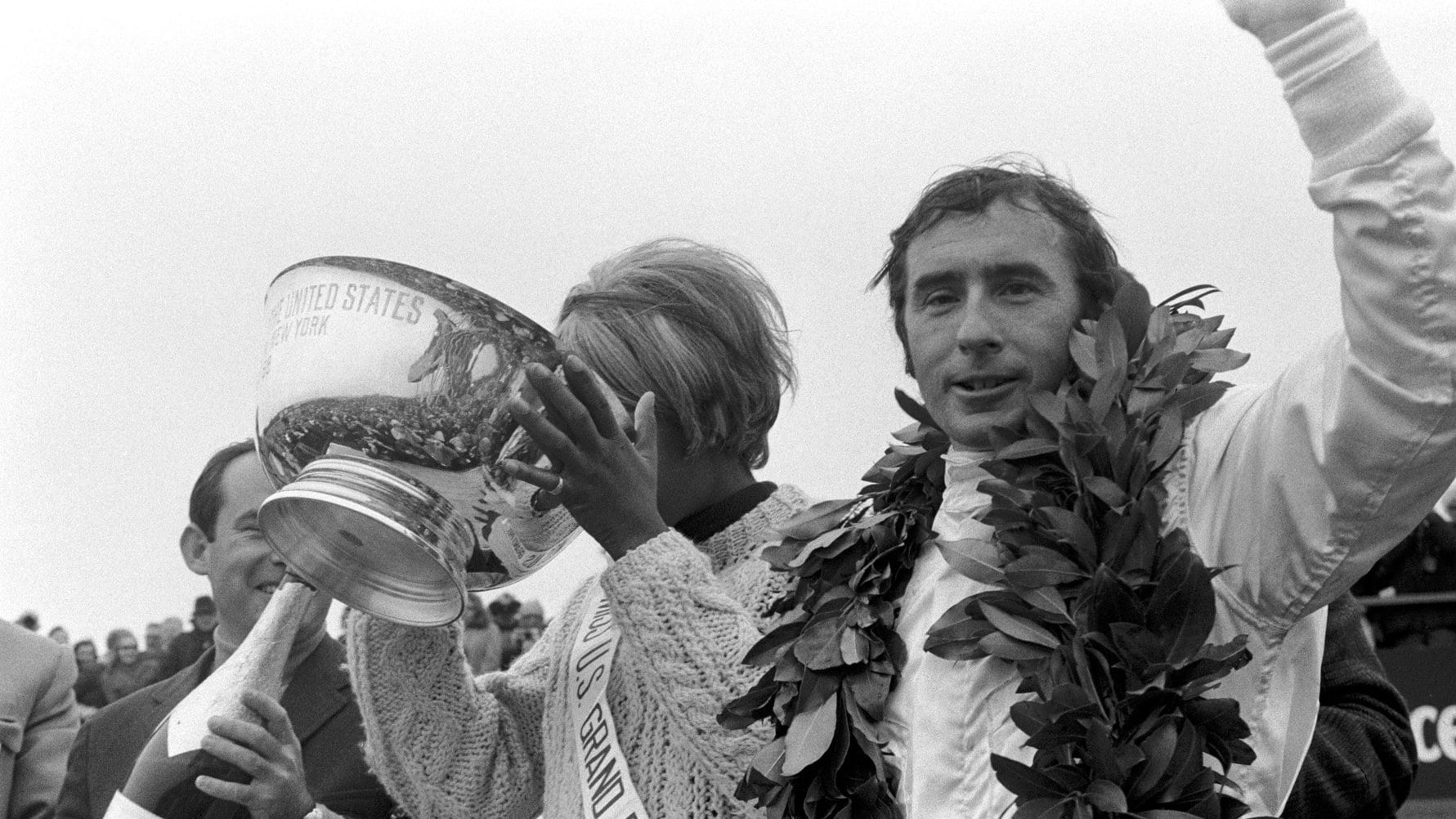
When Lewis Hamilton, George Russell and Lando Norris climbed onto the Barcelona podium together, the statistic attached to it reached back further than most people watching had any reason to expect, considering the huge success of British drivers in a 58-year span.
Not since Watkins Glen, 1968, had three British drivers swept a Formula 1 podium.
Fifty-eight years is a long wait for a coincidence of nationality to repeat itself, and the gap is explained partly by chance and partly by the fact that grids stopped being so thoroughly British long before they became so thoroughly multinational.
But the 1968 United States Grand Prix was not really a coincidence either.
It was the convergence of three careers moving in three different directions; at one moment, they all happened to be capable of occupying the same piece of track at the same time.
Jackie Stewart, Graham Hill and John Surtees arrived at Watkins Glen at very different points in their careers.
One was about to become the sport’s biggest star. One was at his peak, soon to have two titles to his name. And one was nearing the end of a career that had reached its crowning glory four years earlier.
Stewart – The heir to the throne
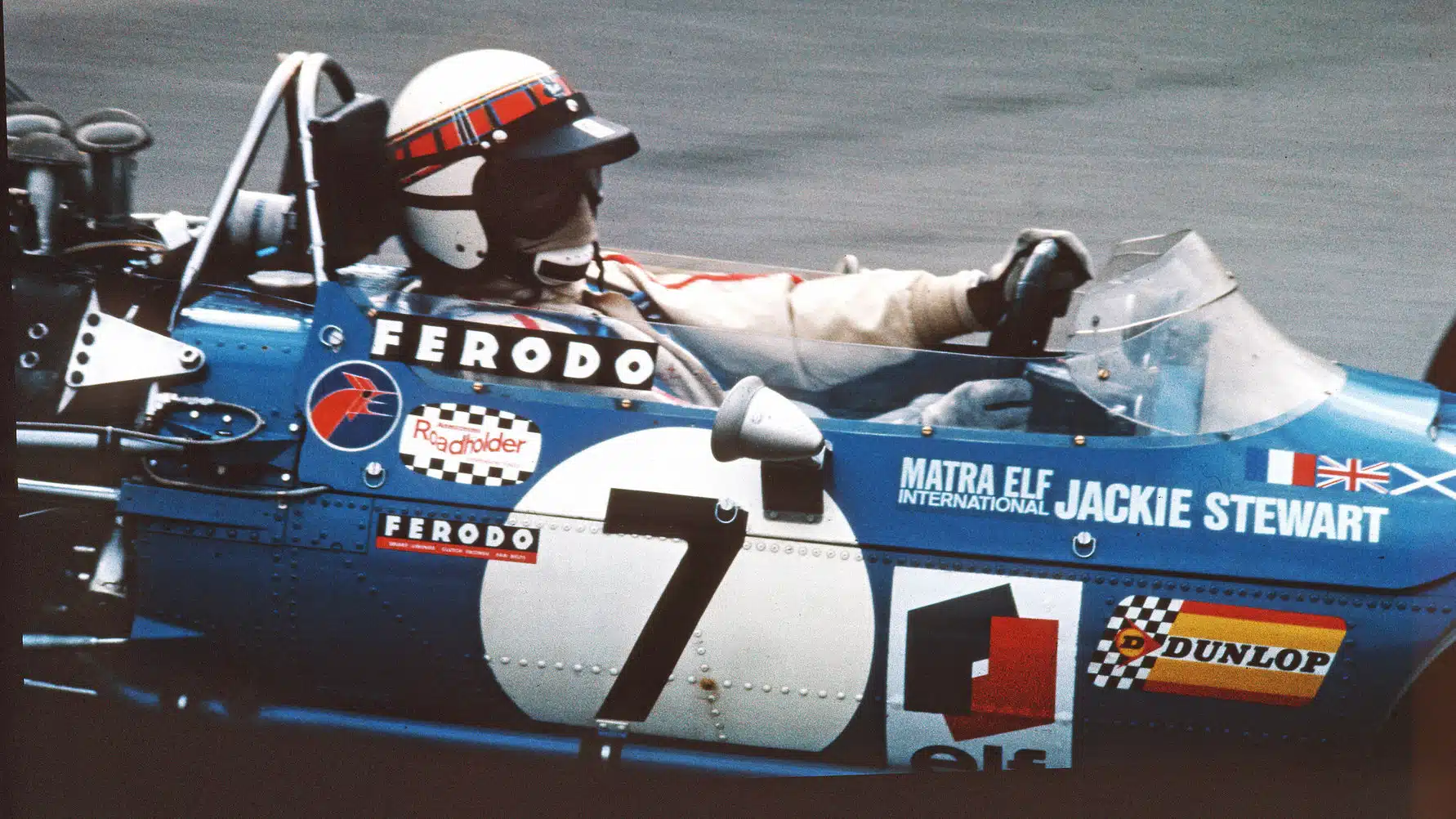
Stewart was a year away from his first title
Grand Prix Photo
It’s worth remembering that in 1968, F1 used the classic two-session qualifying format that was standard from the championship’s inception in 1950 all the way through to 1995, running on Friday and Saturday.
Stewart had been the fastest driver at the Glen all weekend.
His Matra-Cosworth set the first day’s fastest time of 1min 4.27sec in a needle match with Chris Amon‘s Ferrari that pushed both men under the 1min 05sec barrier for the first time that weekend.
Then Stewart broke a stub axle in Saturday’s final hour and coasted to a stop, the wheel held on by nothing but the disc calipers, unable to defend the time.
Pole went instead to Mario Andretti, on his Formula 1 debut, who shaved a further 0.17sec off the fastest lap time in a Lotus he had barely learned to drive on a circuit he had never raced.
Stewart didn’t need pole, however. He just needed the first corner, and he took it under braking, diving inside Andretti at the loop before the first lap was even finished.
From there, the race became less of a contest and more of a demonstration, particularly after Andretti retired on lap 32 with a clutch issue.
Stewart led from lap 2, set the fastest lap of the afternoon at 1min 05.22sec on his way to a new track record, and crossed the line 24 seconds clear of his closest rival.
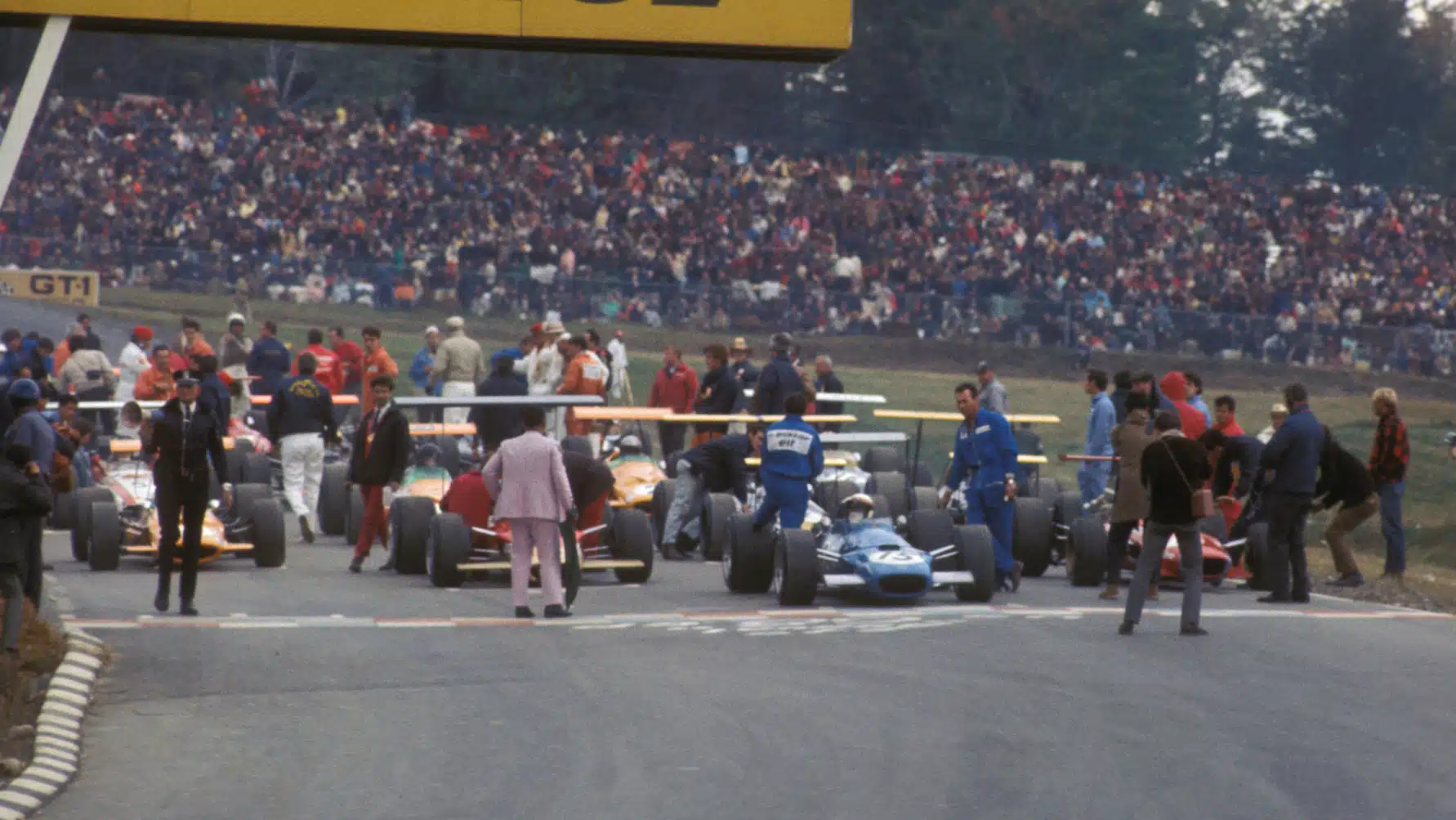
Stewart started second, but was quick to take the lead
Grand Prix Photo
There was a moment, late on, when his own pit crew hung out a sign reading ‘OIL PRES’, but there was nothing to it: the V8 was running perfectly, the gauge steady throughout. It was the closest the afternoon came to drama in his car.
It was his third win of a season in which he had spent long stretches driving with a broken wrist, and his third of the year for the Tyrrell-run Matra squad he had followed his old Formula 3 boss Ken Tyrrell into.
The result moved him to within three points of Hill at the top of the championship with one round left, a gap that would come down to six points separating three men, Hill, Stewart and Denny Hulme, heading into the Mexican GP finale.
Stewart would not win the title in 1968.
He would win it the year after next, and then twice more, but the manner of this performance, imperious from a man not yet a world champion, sitting comfortably ahead of two men who already were, told its own story about which way the decade’s balance of power was shifting.
Hill – The benchmark
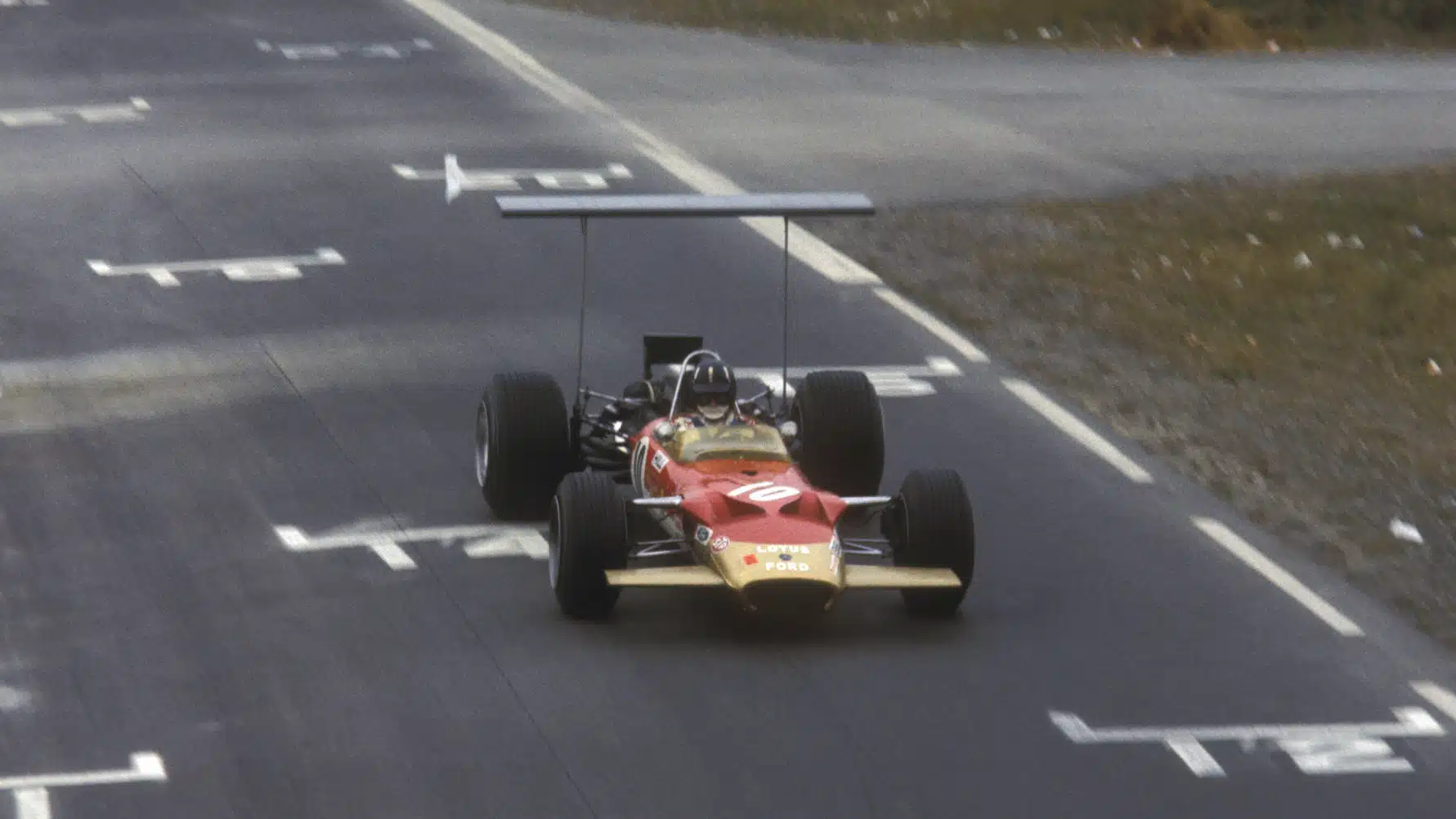
Hill would go on to take the title, his second
Grand Prix Photo
Hill’s afternoon began going wrong before the first corner was even behind him. As Stewart dived past Andretti at the loop, Hill braked hard, and the steering column shot forward, pinning his fingers against the dashboard.
Freeing them knocked the dashboard switches out of position, and by the time he had sorted himself out, Amon’s Ferrari had gone by.
The column never fully settled for the rest of the afternoon; it kept working loose in its slightly oversized collar, a low-grade mechanical irritation Hill simply had to drive around for two hours, in a year when Lotus had already lost Jim Clark and was leaning on Hill, its talisman, to hold the team together.
He held the team together by finishing second, 24 seconds behind a driver — Stewart — he had no answer to, his Cosworth V8 running so close to empty by the finish that a check after the cool-down lap found barely a pint of fuel left in the tank.
While it wasn’t a winning drive, it was a championship leader’s performance: limit the damage and bank the points, maximising everything to achieve the best possible result.