

The first suspected case of a deadly strain of bird flu that has killed millions of birds and mammals worldwide has been found in Australia, the federal government has confirmed.
A wild migratory bird in Western Australia has returned a suspected positive result for avian influenza, which, if confirmed as the H5 strain, would mean the virus had finally spread to every continent on the planet.
The highly pathogenic H5 strain has devastated populations of seabirds, seals and other animals across the world.
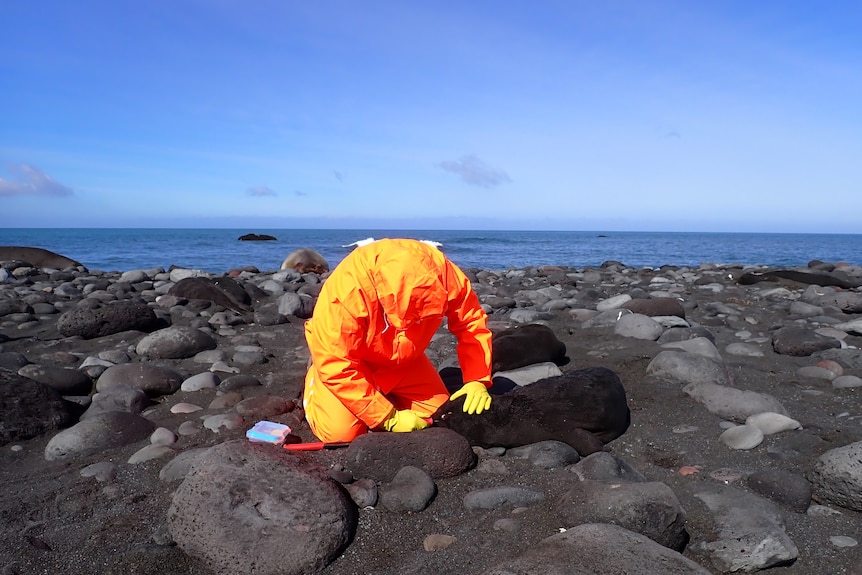
Bird flu can also affect mammals and has devastated populations of seals, including on Heard Island. (Supplied: Julie McInnes)
This afternoon, Federal Agricultural Minister Julie Collins said the WA Department of Primary Industries and Regional Development was investigating.
“[The suspected case is] in a single migratory wild bird that was found sick in an isolated area in southern Western Australia,” she said.
“The initial testing at the Western Australian laboratory has returned a suspected positive result for avian influenza.”
13,000 seal pups dead from bird flu on remote Australian island
Ms Collins said samples had been sent to CSIRO’s Australian Centre for Disease Preparedness.
She said the results were expected tomorrow.
“We cannot confirm yet whether it is the strain of concern that is circulating, at this stage, known as the H5 bird flu,” she said.
“There is no evidence of mass mortality at this time, nor is there any evidence of any infection in poultry.”
Ms Collins said Western Australia would coordinate a response, with the national coordination to be led by the Department of Agriculture, Fisheries and Forestry.
Keep ‘safe distance’ from sick birds
The minister asked Australians not to touch sick or dead birds or animals.
“If you see multiple sick or dead birds or other animals. Please take photos or record it from a safe distance,” Ms Collins said.
“Record your location and go to birdflu.gov.au to report it.”
Ms Collins said the bird in question was a migratory wildlife bird but could not say any more.
“I reiterate that it’s not in the poultry system nor is it in the agriculture system, this is a wild migratory bird and one,” she said.
The bird was found a few days ago, but testing came back late yesterday.
Ms Collins would only say it was in the south-west of Western Australia but could not be any more specific.
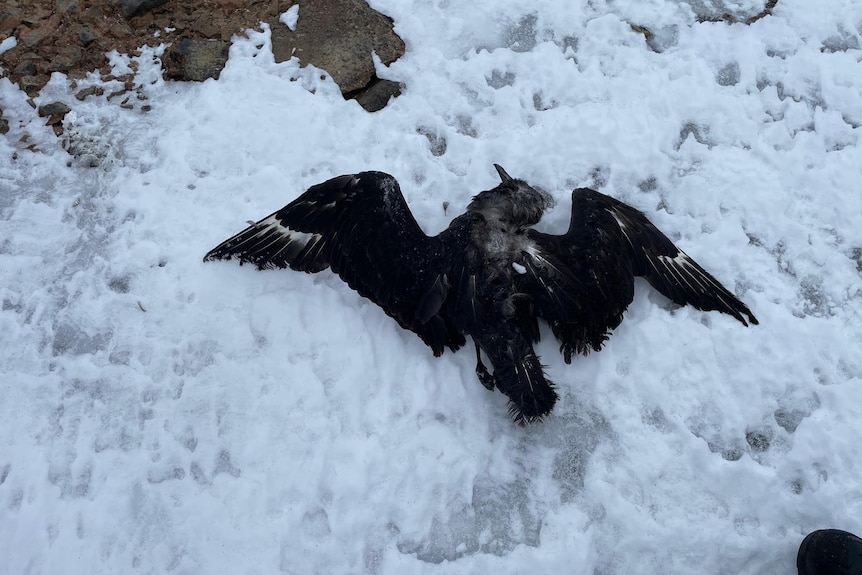
Bird flu was detected on the Antarctic Peninsula in 2024. Australia is the last continent without a confirmed case. (Supplied: Meagan Dewar)
She said Australia had been preparing for the H5 strain for some time.
“If it is confirmed to be the H5 bird flu, this will be sobering but not unexpected given the spread globally,” she said.
“I want to reassure the public that we’re well placed to respond to and to manage this situation.”
The Australian government has called together a meeting of the states and territories and industry experts to discuss the issue.
“Western Australia, as the lead jurisdiction, would increase surveillance with some of the other states and territories if it is confirmed,” Ms Collins said.
Ms Collins said another unwell bird found in the same area was being tested.
WA Agriculture and Food Minister Jackie Jarvis confirmed the suspected detection was found in a single seabird on the south coast of Western Australia.
She is due to hold a press conference at 3pm WA time.
Bird flu is a type of virus that mainly affects birds. It can also affect other animals and, on rare occasions, humans.
However, if you don’t work directly with birds, your risk of catching bird flu in Australia is low.
If you think you may have been in contact with infected birds and have any bird flu symptoms, talk to your health professional.
Signs of bird flu usually appear in several or all birds in a flock, including:
Sudden deathLethargy or reluctance to walk, eat or drinkDroopy appearance or ruffled feathersHead or limb swellingBruising of the wattle, comb, feet or skinRespiratory signs such as panting, nasal discharge or sneezingDiarrhoeaUnusual head or neck posture, incoordination, inability to walk or standUnusual reduction in egg production
For more information, check the federal government bird flu information website
‘Critical test of Australia’s preparedness’
The policy director of the Invasive Species Council, Carol Booth, said in a statement on Friday that the possibility avian influenza had made it to the mainland was “deeply concerning given the devastating impacts the virus is having on wildlife around the world”.
“We desperately hope this is not the realisation of our worst dreams,” Dr Booth said.
“The recently reported mass deaths of elephant seals on Heard Island were a harbinger of the potential catastrophe for Australian wildlife if the virus has made it to mainland Australia.”
Dr Booth said if H5N1 is confirmed the “government’s own risk assessment predicts potentially catastrophic impacts on native birds, while the virus’ increasing ability to infect mammals raises the prospect of severe impacts on marine mammals and other wildlife”.
“It is a good thing governments have spent the past two years preparing for the arrival of bird flu, but a mainland detection would be a critical test of Australia’s preparedness and response systems,” she said.
“Even if this is a false alarm it warns against any complacency. Australia needs to be ready … with clear response plans.
“It also highlights the urgency of mitigating other threats to potentially susceptible wildlife.”
National Farmers Federation chief executive officer Michael Guerin said if the strain is confirmed it would be a stressful time for farmers and communities.
“Cross-species risk means all livestock sectors need to be prepared, and it reinforces why strong biodiversity is critical for Australia,” he said.
“The economic impact is very hard to gauge. We don’t know where it will impact, what the impact will be, and indeed if it can be contained where it is.
“We’re in the hands of the scientists waiting for confirmation as a first step, and then secondly to be guided by the experience of what comes next.”
How H5 bird flu has spread around the world
The H5 strain of bird flu first started to cause mass mortality outbreaks in seabirds in the northern hemisphere in late 2021.
An outbreak in Argentina in 2022 left 96 per cent of southern elephant seal pups dead, with ongoing impacts apparent a year later, when only one third of seals returned to breed.
It was confirmed in Antarctica in mid 2025 and killed tens of thousands of penguins, seals and sea lions.
It was detected on the remote Australian territories of Heard Island and McDonald Islands in October last year.
Loading…
A report released yesterday found that since then, 13,359 baby seals have been killed out of a population of 17,364.
H5 bird flu has also been detected in domestic pets, including cats and dogs, farm animals, dolphins, foxes and polar bears.