
Mercedes’ power unit battery issues are largely “understood” and should be phased out as new batteries get cycled in throughout the season.
That’s the claim of Mercedes’ technical director James Allison, who has opened up on the approach the manufacturer is taking through this uncertain phase.
Mercedes battery issue breakthrough explained by James Allison
Want more PlanetF1.com coverage? Add us as a preferred source on Google to your favourites list for news you can trust.
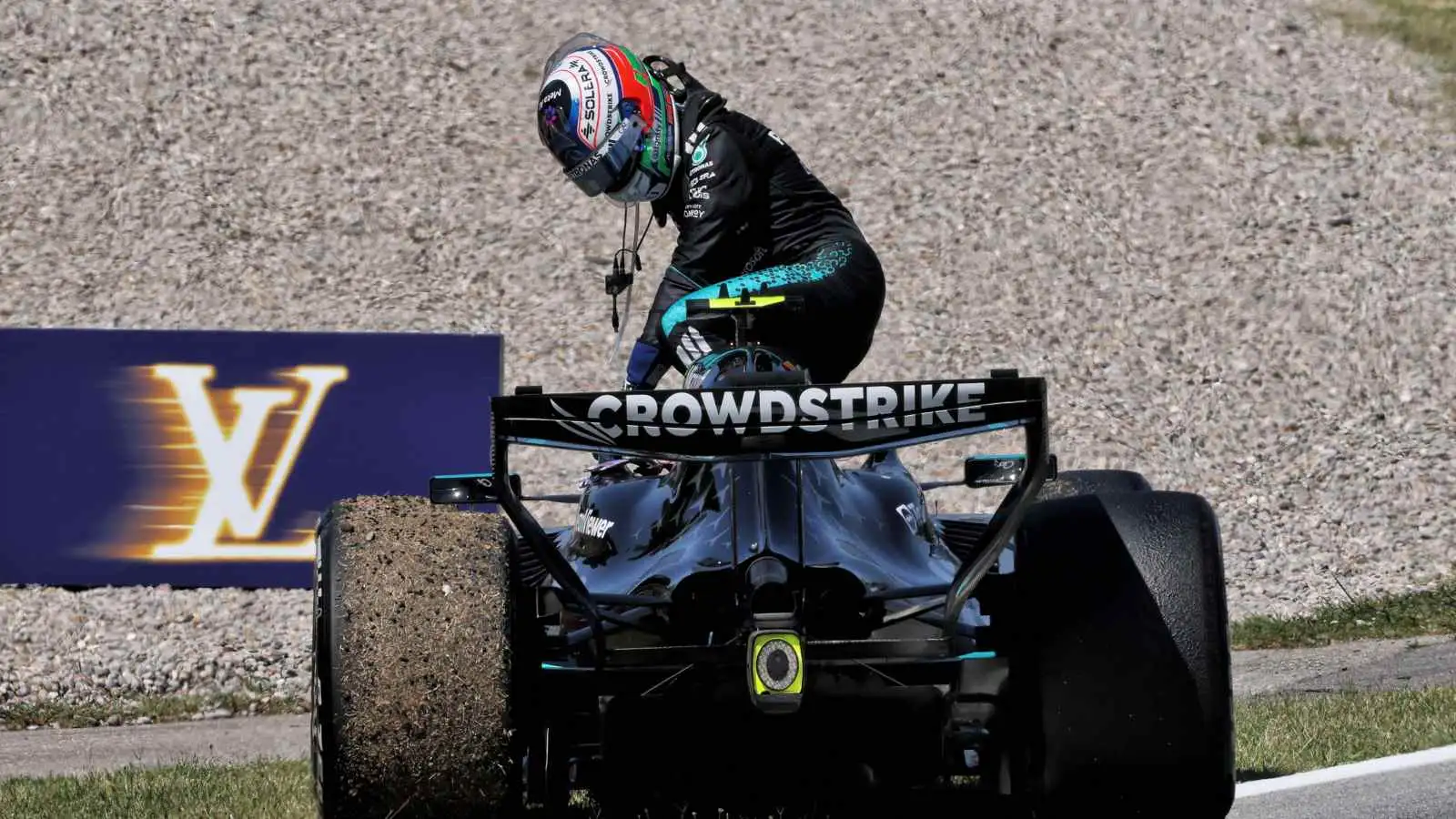
Mercedes was hit by another power unit-related issue in Barcelona, with Kimi Antonelli retiring from second place in the grand prix within sight of the chequered flag, having just overtaken George Russell for the position.
But just a few weeks ago, Russell himself was sidelined by a strikingly similar scenario when his W17 died while in battle with Antonelli, forcing the British driver to pull over and stop while leading in Montreal.
McLaren, too, has had some battery-related issues on their cars, with Lando Norris changing batteries twice in Monaco, while the team itself suffered a double did-not-start at the Chinese Grand Prix due to electrical issues on its cars.
More on Mercedes in F1 2026
Mercedes reveals costly George Russell pitstop error behind Barcelona pace drop
Why did Mercedes walk away from its George Russell Monaco appeal?
After Russell’s Canadian Grand Prix, Mercedes revealed it could be months before a firm answer as to what happened to his battery can be revealed, as it is shipped back to the UK by sea, due to the fire risk of it being sent on an airplane.
“It had to undergo some pretty unusual safety procedures and then has to be shipped back to the UK,” deputy team principal Bradley Lord explained after Canada.
“So it’ll be several months before the hardware gets back, and we need to really dig through the data to understand exactly what went wrong, and then how we can try and prevent a repeat on any of the other modules [batteries] in the future.”
Appearing on the Nu Silver Arrows radio show, Allison revealed that the level of understanding of the problems is sufficient to be able to have started work on improving the situation.
“I think anyone who’s a keen watcher of the sport will have seen that this has laid a few Mercedes-engined cars low over the season so far,” he said.
“They’re not all identical, but they do sort of originate in the same broad part of the battery, and I think that most of the areas of risk have been understood.
“With a bit of luck, when we start to phase in the new modules [batteries] into the racing season, then our fortunes as a fleet should pick up, and obviously, for us, that’s an important thing.
“These DNFs are very, very painful.”
With the two sides of the Mercedes operation, the chassis and the power unit, working in tandem on the W17, Allison explained that such failures can have an impact on the approach to performance the team takes as it tries to establish a stable baseline in response.
“You accept that there will be failure,” he said about trying to find a balance between performance and reliability.
“We try to make sure that failure happens in testing or on rigs, and that it happens as little as possible when you’re out there trying to earn championship points.
“Now, clearly, it doesn’t always work, because occasionally the car will DNF, and that is definitely a failure of our process, and all of our attempts to deliver performance without the downside of that performance.
“But, when a failure like that does happen, then in the first instance and perhaps before it’s fully understood, the team will tend to take a slight half step backwards to be more cautious with the equipment to push it slightly less hard, just to give a little bit of resilience to the kit that’s obviously suffering.
“But a different part of the team will try to figure out what was the root cause of that failure to design that out, prove that out, and put something back on the table that is sufficiently robust, so you do a first intervention that is just to try to give the vulnerable thing an easier life, while then working on a proper, proper cure that lets you really cane it.”
Want to be the first to know exclusive information from the F1 paddock? Join our broadcast channel on WhatsApp to get the scoop on the latest developments from our team of accredited journalists.
You can also subscribe to the PlanetF1 YouTube channel for exclusive features, hear from our paddock journalists with stories from the heart of Formula 1 and much more!
Read next: Sky F1 presenter lifts lid on ‘horrific’ abuse after 2025 Max Verstappen interview