
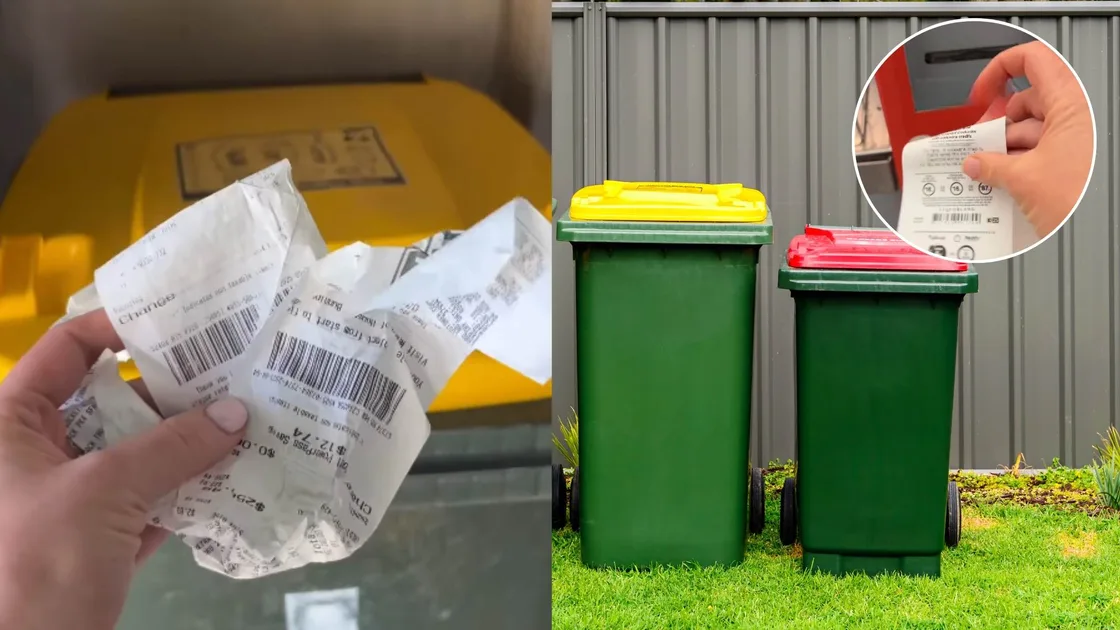
Most of us try to do the right thing after a trip to the supermarket, but there’s one small item many people are putting in the wrong bin.
Every time you toss a thermal receipt into your recycling, you could be contaminating an entire batch of otherwise recyclable material. And the reason has nothing to do with paper.
KEY TAKEAWAYS
Thermal receipts cannot go in your yellow-lid recycling bin — they belong in general waste.
It’s the plastic coating that makes receipts unrecyclable.
BPA-free doesn’t mean recyclable
The fix is simple: decline the receipt at checkout or opt out through your loyalty app.
Can you recycle receipts in Australia?
There’s been a lot of talk about receipts and the chemicals used to make thermal paper. And while it’s great to see supermarkets switching to BPA-free receipts, it’s likely the alternatives still can’t be recycled.
Sustainability expert Lottle Dalziel, founder of Banish and Brad, Australia’s hard-to-recycle program, says, “The coating is what makes receipts non-recyclable, regardless of the chemical used.“
“Because thermal printers don’t use ink, they print on thermal plastic paper, which can’t be recycled even if it doesn’t contain BPA.”
Lottie adds, “So while it’s great that Woolworths and Coles have gone BPA-free (which is better for health), it doesn’t change the recycling advice. The thermal paper still has that plastic coating that contaminates the recycling stream.
“That’s why councils have a blanket no thermal paper rule; it’s about the material itself, not just the chemicals.”
Councils
Many councils across Australia apply the same rule: thermal receipts go in the general waste bin.
The ACT Recyclopedia page says, “Receipts, absorbable paper, thermal receipts and waxed paper contaminate the paper recycling process and are often made from very short fibres which are not of high enough quality to be recycled.”
Clean Up Australia echoes this, noting the safest disposal method is the general waste bin, which at least isolates the material from the recycling stream.
What to do instead
The good news? The fix is simple. Lottie says the best move is to skip the paper receipt altogether.
“The best thing people can do is opt out of paper receipts altogether through their loyalty apps or just decline them at checkout.
“Digital receipts are the way to go.”
Can receipts be recycled in Australia?
Thermal receipts cannot be recycled in Australia. The plastic coating on thermal paper contaminates the recycling stream, so they belong in your general waste bin.
What should I do with old receipts?
Old receipts need to go in the red lidded bin. Better yet, start declining receipts at the checkout or opting for digital receipts through your loyalty app going forward.
Related

Writer
Livia Gamble
Senior Digital Content Producer
Sign up for our newsletter
Sign up for the latest news from Better Homes & Gardens including offers and discounts we choose to share with you.
Disclaimer: By joining, you agree to our Privacy Policy & Terms of Use
About your privacy Are Media Pty Limited collects your personal information through this site to process registrations, send out newsletters, communicate offers, discounts, competitions, or surveys, and to provide you with targeted advertising based on your online activities. Our Privacy Policy contains information on how you can access or correct your personal information, which entities we may disclose your personal information to (including overseas recipients), how to opt out of targeted advertising, and how to lodge a complaint.
Related