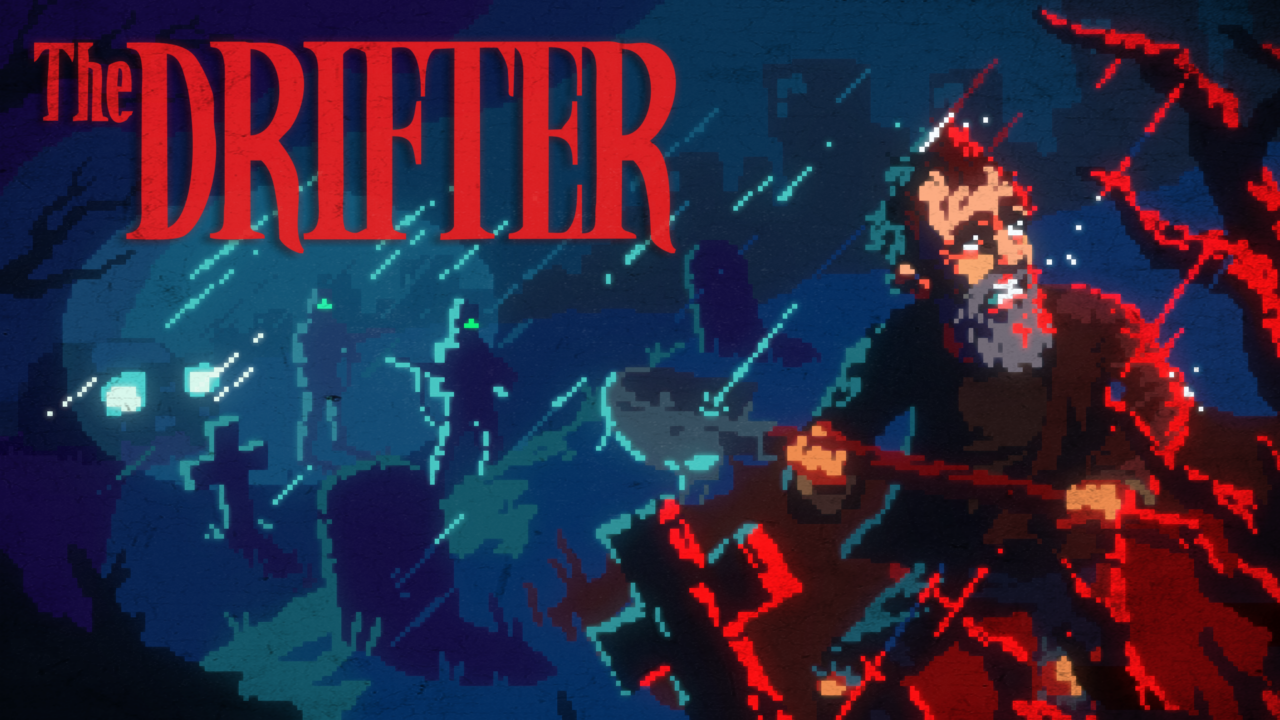
We’re long past the heady glory days of the point-and-click adventure game. Days when LucasArts and Sierra dominated, and games like Monkey Island, Space Quest and Broken Sword occupied the space where Call of Duty and GTA now reside. Adventure games were king, and for good reason. But as technology improved and games became more complex, adventure games fell by the wayside and became a niche genre.
And it’s a shame that they’re not as ubiquitous as they once were. Adventure games can, and have, delivered some of the most memorable, best narrative gaming experiences one can have. Even in recent memory, Disco Elysium has shown that there’s still plenty of life in the old girl yet.
The same can be said of The Drifter by Melbourne developer Powerhoof. A sci-fi, technoir thriller with a beating synth heart and one that fully embraces its ‘Ozploitation’ inspirations, The Drifter is a rumination on trauma, guilt, and loss as only Aussies could.
The Drifter
In The Drifter, players step into the worn and beaten shoes of Mick. Mick’s the titular drifter. He’s been living rough for some time. He floats from job to job, rides in cargo trains, and, as we eventually learn, is running from his past. Brought back to his hometown by the death of his mother, Mick soon finds himself at the centre of a bizarre conspiracy involving missing homeless people, a serial killer, a paramilitary group and time travel.
Or, is it all in his head?
The Drifter’s story and core narrative thrust are about trauma and the effect it and grief can have, and the various forms it can take. How different people can react to the exact same circumstances in vastly different ways, and how events can drastically alter the path a person’s life takes. For Mick, he dealt with his trauma and grief by running away. By becoming The Drifter and trying to forget. Mick’s ex-wife opted instead to devote her life to charity. Most of the characters in The Drifter have something of a tragic backstory that’s shaped who they are, but this is Mick’s story and he takes front and centre.
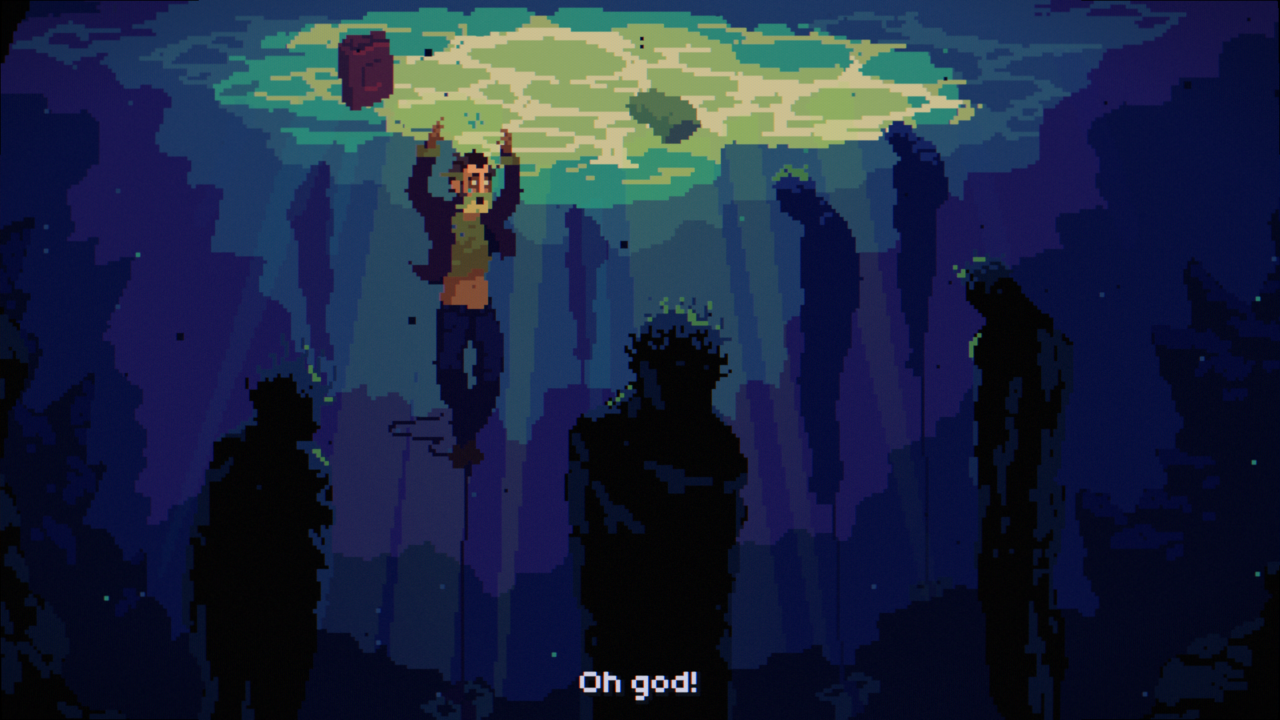
It’s not long after Mick arrives back home that he’s shot at by some shadowy figures and then tossed in a reservoir to drown…which he does. But then something insane happens, and Mick comes back. His mind time-travels to a few moments before his death, and he has another chance to escape. This time-travelling mechanic is one of the main gameplay hooks in The Drifter and is used to great effect throughout.
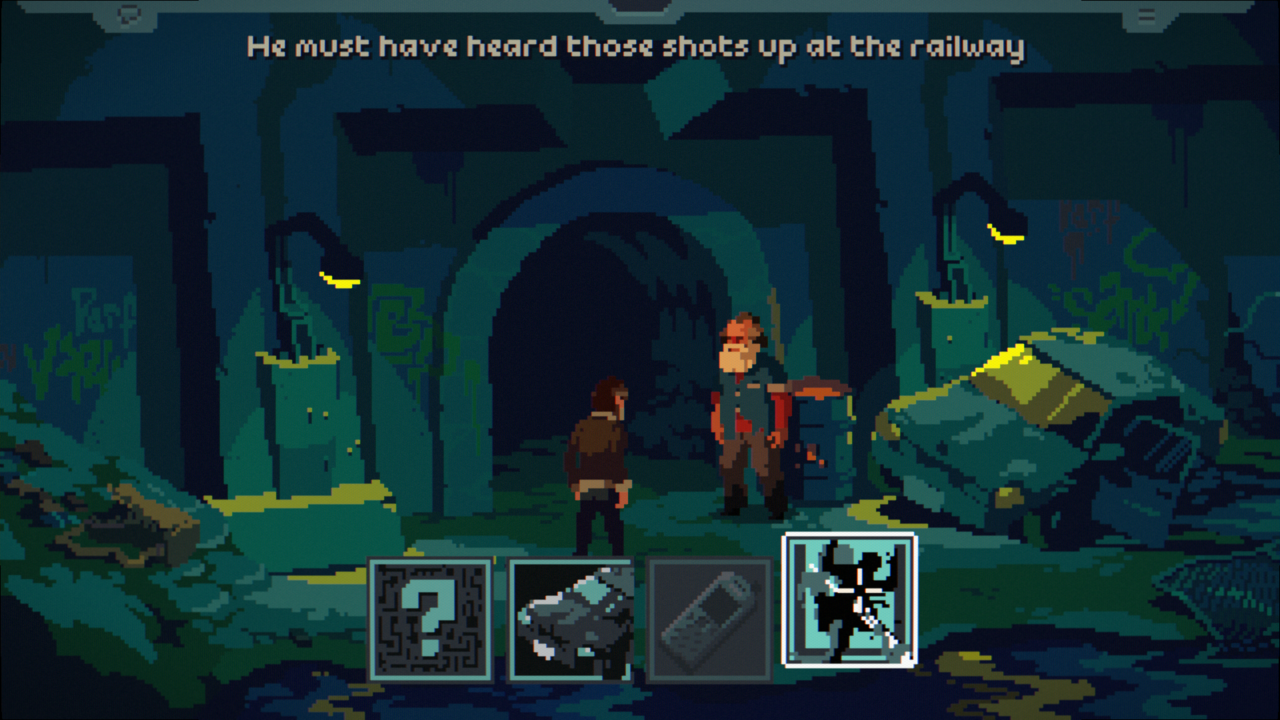
The Drifter was released for PC in July last year and is now available for Switch and Switch 2. While I’m sure The Drifter feels right at home on PC, I couldn’t think of a better way to play than on Switch 2. The Drifter uses an intuitive twin-stick control scheme that allows for free movement with the left stick while the right stick aims at points of interest as Mick wanders around. When you’re aiming at the item or person you want to interact with, you click the ZR button and away you go.
It’s such a brilliant control scheme and works so well for adventure gaming; I have to assume it’s going to be stolen and iterated upon by other developers moving forward. The Switch 2 version also allows you to use the Joy-Con 2 mouse controls if you like. It works well enough and feels more like a classic point-and-click game, but it’s much nicer and feels better to use the twin-stick controls. I’m sure purists will balk and stick with mouse, but hey, whatever blows your hair back.
In classic adventure game fashion, Mick moves through the world by picking up items, using them to solve logic puzzles and finding clues by chatting up everyone he sees. Unlike a lot of adventure games, the puzzles haven’t been designed as some archaic, arcane test to see just how obtuse it can be. The Drifter’s puzzles make sense and have a logic about them. That’s not to say I romped through every one of them without a thought, but rather, solving them was satisfying and instead of aimlessly trying every combination of item and object, I could figure out what needed to happen and why.
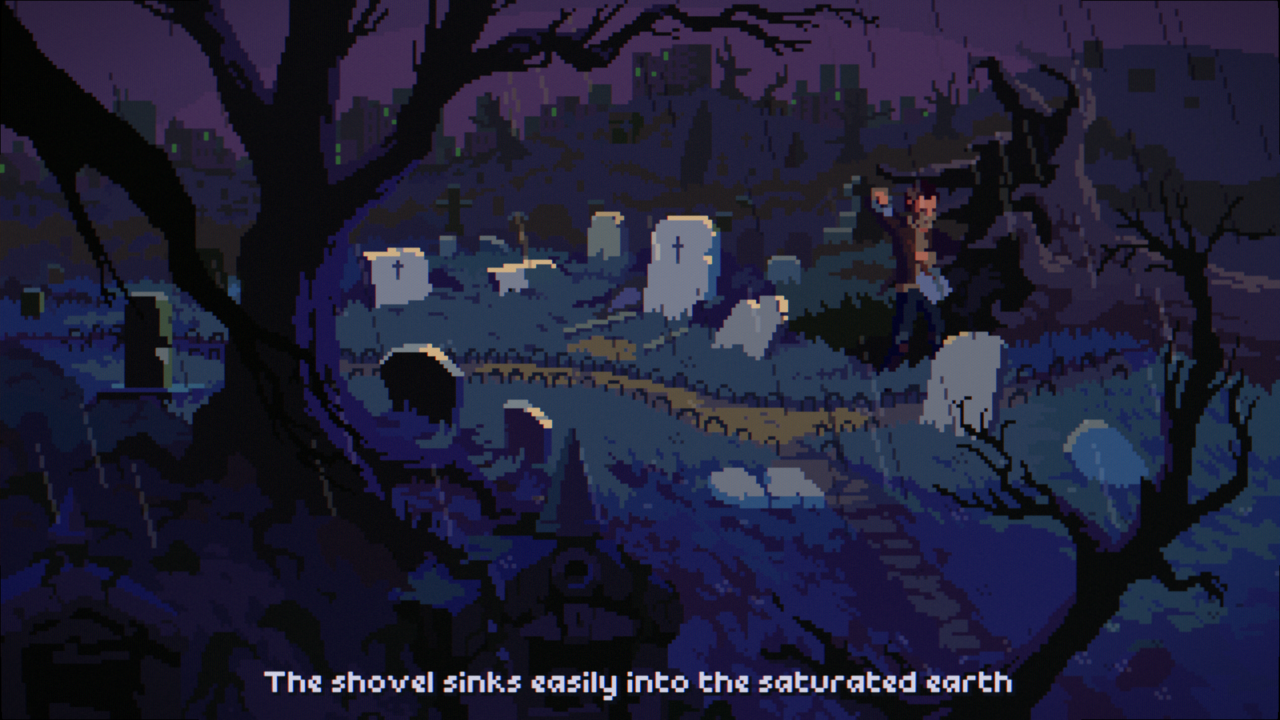
At some points during The Drifter, you’ll reach a scene/puzzle that, if not solved correctly, will result in Mick’s death. However, should you die, Mick’s time-travelling ability kicks in, and you get to try again…and again…and again…sometimes as many as a dozen times, if you’re anything like me. It’s a clever use of an integral part of the story and feels more organic than simply reloading your save. It gives narrative heft to the gameplay and renders each of your deaths part of the story, rather than something to be avoided and ignored.
Across The Drifter’s nine chapters and roughly 10 hours, you’ll gradually uncover Mick’s history and unravel the bonkers yet brilliant story. I’m loath to give anything away so as not to spoil any surprises, but trust me when I say The Drifter delivers a brilliant, bizarre and deeply Aussie story. Each chapter moves at a decent clip, and the pacing of The Drifter is uniformly excellent.
There are times, once or twice, that the narrative begins to stall (in a couple of chapters with lots of backtracking and chapter-long puzzles to solve), but never so much that the game or story begins to drag. I played The Drifter from start to finish in one sitting, and not once did I want to stop until I saw what came next.
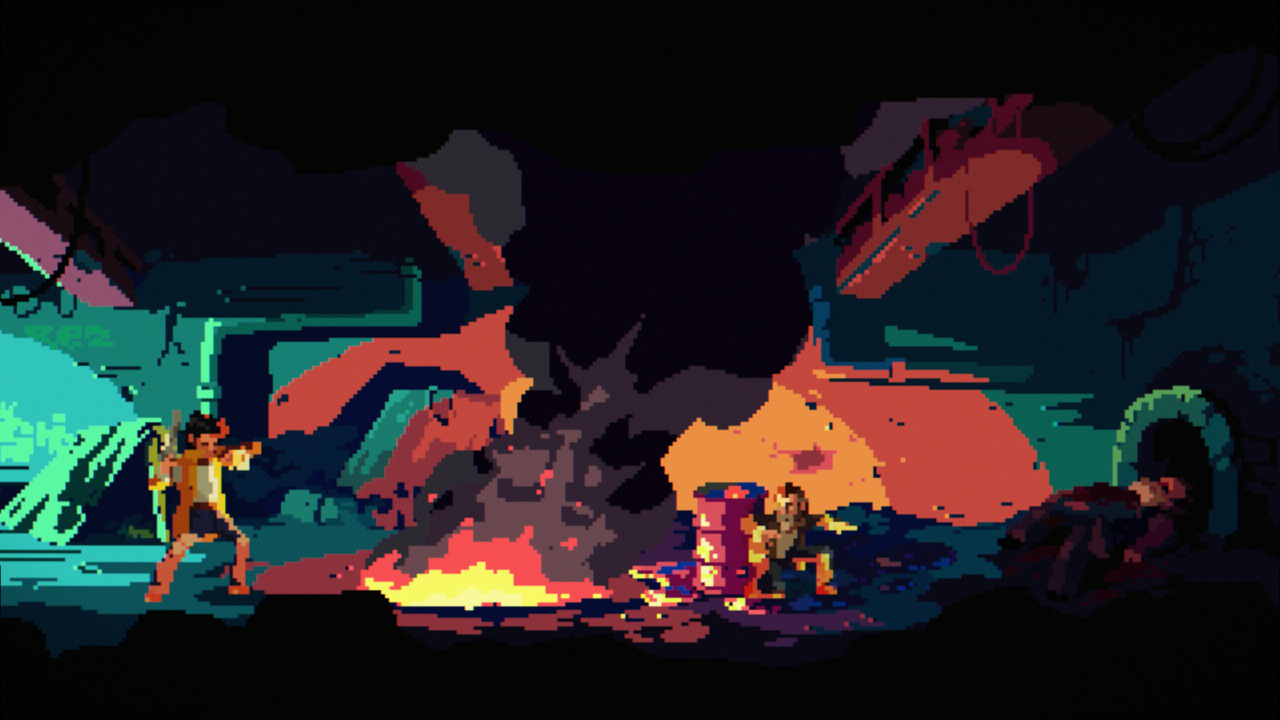
A big part of what makes The Drifter so enjoyable is the writing and stellar voice acting. Mick narrates the entire game, explaining what he’s doing, what he sees and who he’s talking to. Mick’s voice actor, Adrian Vaughan, has an unbelievable amount of gravitas and pathos. He sounds like a classic Aussie bloke. One who knows how to fix anything while sinking VBs. Your dad’s loose mate who only came around every now and then but always had a story to tell. His gravelly tone and sadness-tinged delivery make Mick feel very human and very alive. And while Mick is the protagonist and a standout character, every other person you meet in The Drifter feels pulled out of a real Australian town; local ‘characters’ you could find anywhere and everywhere.
On the music side of the audio, The Drifter has an incredible dark-synth soundtrack that perfectly suits the Aussie grindhouse vibe. It imbues The Drifter with a truly cinematic vibe, and the score underpins and reinforces the dark, brooding, grimy feel of the game’s locations. There’s a low rumbling sense of dread that comes with The Drifter and while a lot of it has to do with the story and writing, the audio is doing some pretty heavy lifting.
Visually, The Drifter is spectacular. The pixel art is both nostalgic and genuinely gorgeous. Like the voice acting and score, the visuals help to create a cinematic atmosphere and one that somehow feels both truly oppressive and fundamentally Australian. The amount of detail in each scene and the way characters emote is kind of mind-blowing given the visual fidelity, and the animation is so buttery smooth you’ll want to spread it on some toast with Vegemite.
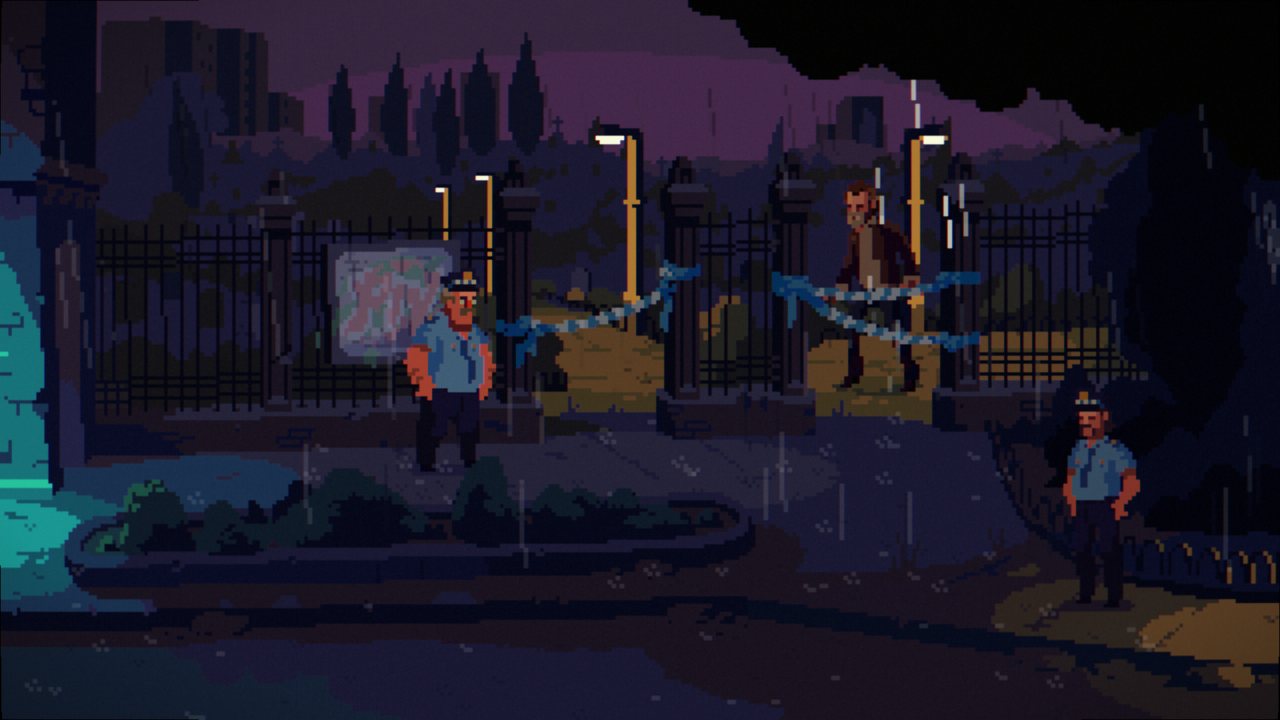
The Drifter is a stunning achievement in narrative game design. The twin-stick control scheme is an absolute game-changer for adventure games, but it still respects the art form enough to let players play with a mouse, even on Switch 2. The visuals, voice acting and score all come together to create something truly cinematic and engaging, while the plot veers wildly between grim family drama, sci-fi thriller, body horror, and Aussie grindhouse.
There’s just something about The Drifter that absolutely works, and once you start, you won’t want to stop. The memorable scenes, locations and characters will stay with you long after you’ve finished, and the pull to start all over again is strong. Like all good pulp stories, the basis of The Drifter is rooted in reality and emotion. The themes of guilt, grief and trauma are universal and while the story goes to some wild places, the foundation remains sound and solid throughout.
Powerhoof has delivered an incredible port of an incredible game with The Drifter on Switch 2. If you’re a fan of adventure games, do yourself an enormous favour and play this one as soon as possible. And even if you’re not a fan of the genre, I’d urge you to pick this one up and give it a go. Odds are you’ll be drawn into Mick’s world just as deeply as I was.
The Drifter was reviewed on Switch 2 using digital code provided by Powerhoof.