
June 22, 2026 at 11:30 AM EDT
When Dave Ricks became chief executive officer of Eli Lilly & Co. in 2017, he was facing an industry under siege. Americans held drug companies in lower esteem than airlines, law firms and even the federal government. President Donald Trump, then starting his first term, was excoriating them for their high prices. A mounting number of reports showed that soaring costs were even forcing some diabetics to ration insulin.
Ricks, the 11th CEO in Lilly’s 150-year history, concedes that one was a public-relations nightmare. Eventually it became personal: One day he received a letter from a young boy detailing the lengths to which his mother was going to afford insulin. Similar messages piled in from others. Ricks says he read almost all of them and about 90% accused Lilly of price-gouging patients. “I couldn’t sit there and accept it,” he recalls. “It was a major problem.”
Almost a decade later, the mood at Lilly has shifted dramatically. The company’s hit diabetes shot, Mounjaro, and obesity shot, Zepbound, have transformed its fortunes and, in many ways, its public image. Lilly is the most valuable healthcare corporation in the world, joining only a dozen or so other companies, mostly in tech, that have reached a $1 trillion market capitalization. Ricks, formerly just another embattled pharmaceutical executive in Washington, is a frequent White House ally who helped persuade the Trump administration to expand Medicare coverage for obesity drugs. Even the mail is better these days: Patients send him rapturous testimonials of their weight loss success, complete with before-and-after photos. One 52-year-old correspondent told Ricks that his doctor said he’d almost certainly die before 60. Then he started Mounjaro and shed more than 200 pounds in 18 months. “His only wish was to go to his daughter’s wedding,” Ricks says. “And he was like, ‘Now I can do it.’ ”
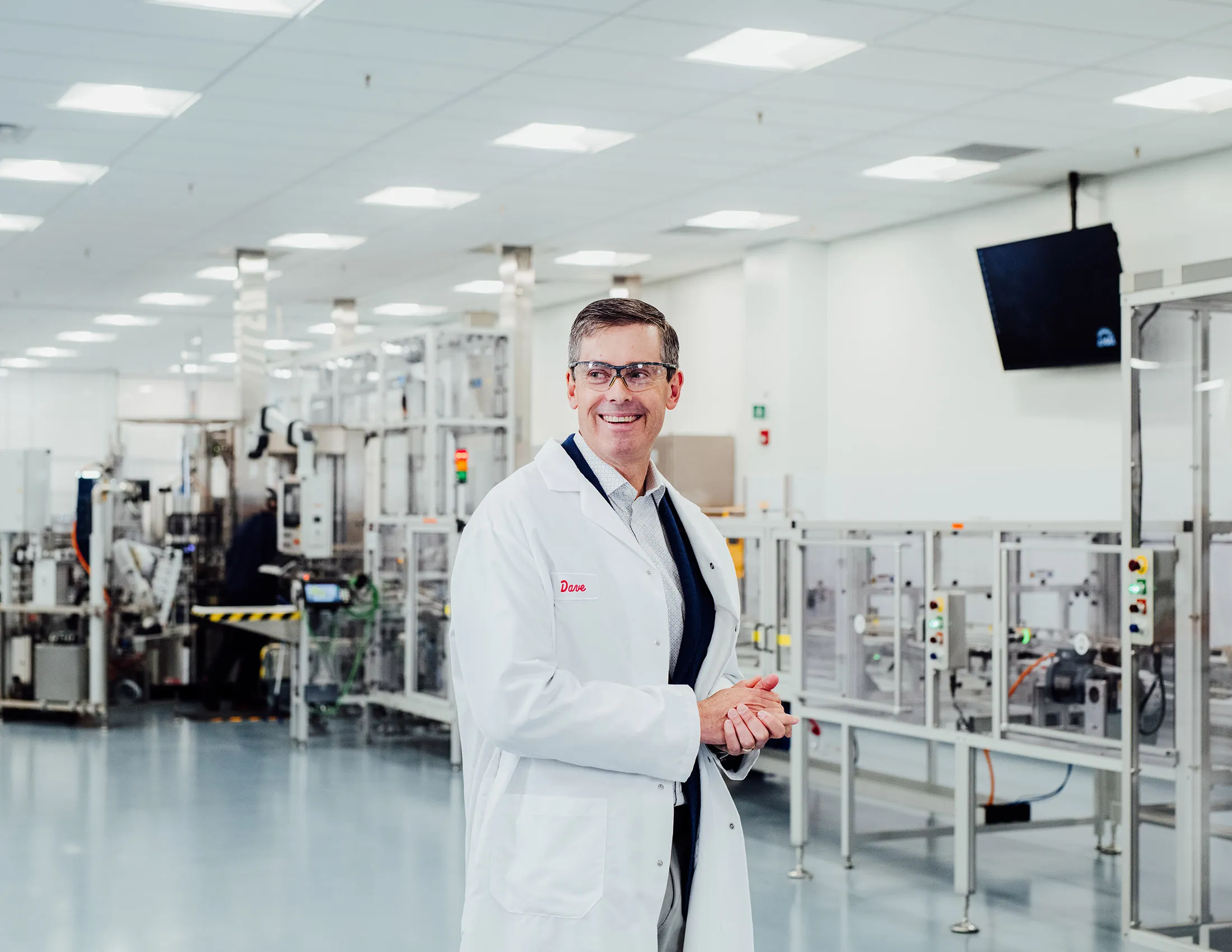 Ricks at Lilly’s headquarters in Indianapolis.
Millions of patients all over the world are taking Mounjaro, Zepbound and other GLP-1 receptor agonists made by Lilly and its longtime rival, Denmark-based Novo Nordisk A/S. These revolutionary drugs — the acronym stands for glucagon-like peptide-1, a gut hormone the medicines are designed to mimic — have surged in popularity thanks to their ability to suppress people’s appetites and melt away stubborn pounds. Available first as injections and then also as oral medications, GLP-1s are beginning to turn the tide on the US obesity epidemic, an unfathomable outcome a few years ago. Now their efficacy is being studied for other potentially deadly conditions, including heart disease and drug addiction, with promising results.
Investors can’t get enough of Lilly’s drugs. Since Mounjaro was approved in May 2022, it has passed Merck & Co.’s cancer blockbuster Keytruda as the world’s bestselling medication, helping bump Lilly’s stock nearly 300%. Zepbound is the planet’s most popular obesity medicine despite being released only two years ago. (Ricks says Lilly is shipping seven Zepbound injections every second.) Foundayo, a daily pill introduced in April that also helps patients lose weight, has already racked up about 89,000 prescriptions, according to analysts, even though the company only recently started advertising it.
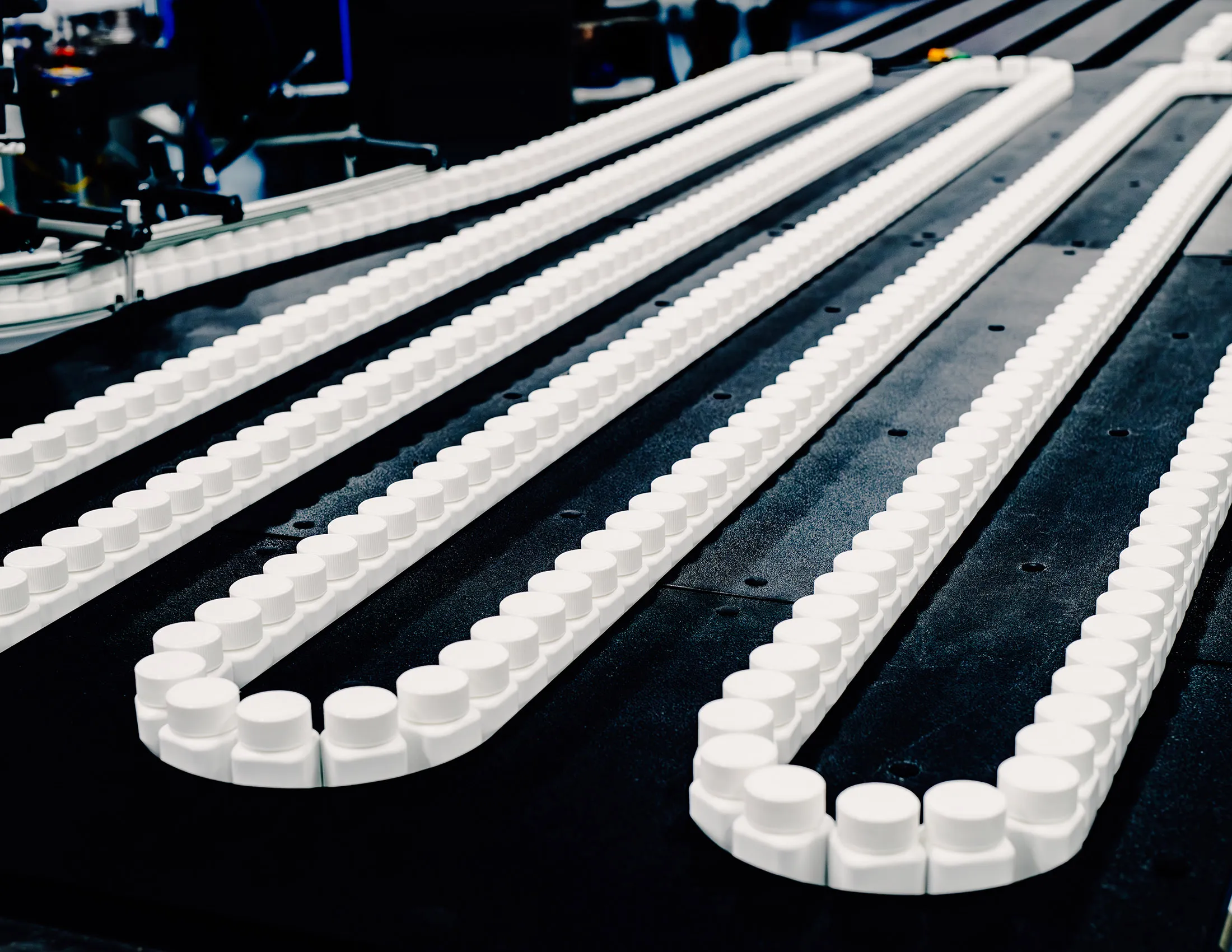 Bottles of Foundayo, the oral GLP-1 Lilly introduced in April.
People are also clamoring to get their hands on retatrutide, a next-generation compound Lilly has in testing. That drug, which mimics three different hormones versus two for Zepbound and one for Novo’s Wegovy, yielded average weight loss of 28% across 18 months in a late-stage trial — a decline previously thought possible only through gastric bypass surgery. And Lilly has more obesity drugs coming. “We basically put a bet on every rational idea and said, ‘We should be first or best on every conceivable concept,’ ” Ricks says.
Behind the blockbusters is a company that’s been remade by Ricks’ personality, with speed the top priority and mistakes not an option. He’s resolved widespread supply shortages, supercharged research and development, poured billions of dollars into manufacturing and artificial intelligence, and pioneered direct-to-consumer strategies, including launching LillyDirect, an online platform where patients can connect with doctors and get obesity drugs.
These moves have helped Lilly capitalize on the obesity boom in ways its peers have struggled to match. Novo, whose diabetes drug Ozempic created the modern weight loss frenzy, has stumbled amid US pricing pressures, lagging insurance coverage, intensifying competition and, especially, by assuming its early lead would hold. “Lilly is just playing at a completely different game level than any other pharmaceutical company,” says Wei-Li Shao, who spent 18 years at Lilly and is now president of virtual care platform provider Omada Health Inc.
The test for Ricks now is whether Lilly can outlast the industry’s familiar boom-and-bust cycle. Although drug patents last about two decades, they’re typically granted years in advance of US Food and Drug Administration approval, so companies don’t get that much time to reap a profit before cheaper generics begin to erode sales. Roughly half of Lilly’s revenue last year came from Mounjaro and Zepbound, a precarious dependency for any drug company. While Lilly has about a decade of patent protection left on those drugs, the competition is already intensifying. Hundreds of thousands of people are taking Novo’s new Wegovy pill, and at least 120 companies, a third of them in China, collectively have hundreds of such drugs in development, according to Bloomberg Intelligence. The rapid rise of AI has also introduced a new threat: that the next big drug will come from Silicon Valley. And Lilly has some internal challenges too, with insiders saying its newly hard-driving corporate culture has led to high executive turnover and poor morale.
Watch: How Eli Lilly Became a $1 Trillion Company
Ricks is undeterred. Now in his 10th year as CEO, he says he wants to imbue Eli Lilly with the consistency and dominance of technology giants such as Apple Inc. and Amazon.com Inc. In addition to flooding Lilly’s pipeline with new treatments, he’s got the company on an unprecedented acquisition spree and in a ubiquitous advertising campaign that seeks to inspire Nike-like brand fidelity.
“If you look at healthcare, most people would say it is, perhaps next to government services, the worst consumer experience they have every day,” Ricks says. But, he adds, “there are a bunch of people posting on Reddit when their package arrives from Lilly at their door. They unwrap it. They make a video of it. It’s like an iPhone. It’s an exciting moment.”
In 1876 a former Union army colonel named Eli Lilly opened a small laboratory on Pearl Street in Indianapolis. He wanted to improve on the era’s patent medicines and counter snake oil salesmen by making quality products patients could trust. It took some time — early medications such as Succus Alteran, marketed as a blood purifier for syphilis and other ailments, were themselves little more than quackery — but Lilly eventually found success selling pills coated in gelatin, a major improvement on the putrid medicinal liquids and powders patients commonly choked down.
Over the following 150 years, Lilly grew from that tiny, two-story brick building into a powerhouse with roughly 50,000 employees around the world. Today its Indianapolis headquarters, a mile north of the original operation, is so large it has its own ZIP code. In that time it’s been at the forefront of addressing America’s most pressing ailments and anxieties: diabetes, polio, depression, erectile dysfunction, Covid-19 and, now, obesity.
Rising With the Peptides
Year-over-year change in revenue
In the early 2000s, Lilly learned what it was like to have the profits from an enormously popular drug vanish virtually overnight. Prozac, approved as a breakthrough treatment for depression in 1987, by then accounted for about a quarter of the company’s sales, prescribed to tens of millions of patients. Executives tried to plan for the loss of crucial patents for the drug in 2001, focusing heavily on mental health, cancer and diabetes. But although Lilly’s research led to the development of GLP-1 drugs for diabetes, the company failed to find a replacement hit at the time, and in the process it ignored some early research showing how GLP-1s might help with obesity.
 Featured in Bloomberg Businessweek, July 2026. Subscribe now. Photographer: Kevin Serna for Bloomberg Businessweek
By 2008, Lilly had lost a third of its revenue since the turn of the century and had seen an even bigger drop in profits. It was forced to undertake a massive cost-cutting effort that eliminated 5,500 jobs, roughly 14% of its workforce. From 2005 to 2009 the company got only two new drugs approved, a blood thinner called Effient and a diabetes treatment called Byetta. Novo Nordisk, in contrast, was moving on GLP-1s for weight loss; by 2013, when the American Medical Association declared obesity a chronic disease and not the result of weak willpower or bad lifestyle choices, it was ready. The next year, Novo got approval for Saxenda, the first GLP-1 drug cleared for weight loss in the US.
Those were formative years for Ricks, who’d joined Lilly as a business development associate in 1996 after growing up in the San Francisco Bay Area and studying industrial management at Purdue University. He ascended the ranks, managing Lilly’s businesses in Canada and China before returning to oversee the company’s most important market. Along the way he developed a reputation as an uncompromising manager with an aversion to the “Lilly nice” culture of harmonious collaboration. Shortly after Ricks joined the executive committee, he remembers, he asked then-CEO John Lechleiter for some constructive feedback. “You have an overdeveloped sense of urgency,” Lechleiter told him. “You mean I’m impatient?” Ricks replied. “He’s like, ‘Yeah, sometimes it gets you in trouble.’ I’m like, ‘OK, some trouble’s good.’ ”
In July 2016, Lilly announced Ricks would become CEO. At the time, it took an average of 13 to 14 years for a promising medication to make it through the company’s test labs to an FDA approval decision. Dan Skovronsky, Lilly’s chief scientific and product officer, says he remembers the speech Ricks gave when he started as CEO — especially the priority on speed. “It’s not just about getting to the patients faster — of course, we care a lot about that — or beating your competitors,” Skovronsky says, summing up the message. “It’s also such a tough business that you need to learn, and you can learn faster if you move faster.”
That year, Novo published impressive results from a weekly GLP-1 shot that went on to become Ozempic. Under Ricks, Lilly needed to come up with something better. He turned to Skovronsky, a physician, neuroscientist and entrepreneur who’d joined the company after it acquired his startup, Avid Radiopharmaceuticals, in 2010. Lilly scientists had been experimenting with combinations of GLP-1s and other gut hormones, which had the potential to be more powerful than GLP-1s alone. That research led to early-stage testing of several different compounds, one of which stood out to Skovronsky: tirzepatide. In just a month, healthy volunteers who took the drug lost from 3% to 5% of their body weight. “We said, ‘This is working,’ ” he recalls. “This is really going to be a special medicine.”
At Ricks’ direction, Skovronsky was also working on an initiative to cut Lilly’s development timeline in half. “We tried to reinvent every step of the drug development process with an eye on speed,” Skovronsky says. Tirzepatide was “the first molecule that got the full-speed treatment.” He turned the R&D department into a pseudo biotech startup, calling the group GIP Bio (in reference to one of the hormones the drug mimics) and freeing it from bureaucratic requirements such as commercial viability assessments. “We were hungry to prove ourselves,” Skovronsky said at an R&D day years later.
Tirzepatide won FDA approval in 2022, roughly five years after Ricks and Skovronsky decided to expedite it. Lilly had been so optimistic about the drug — which would be branded as Mounjaro — that it had started looking at manufacturing sites nearly four years before the approval came through, a step it had never taken before. Ricks was determined to catch up to Novo. “We’re not going to lose because someone leapfrogged us,” he remembers thinking.
By the time Zepbound was approved, in late 2023, GLP-1 hype was at a fever pitch. Patients were documenting their weight loss journeys on TikTok and swapping tips for managing side effects on Reddit. But Novo was struggling to manufacture enough semaglutide, the active ingredient in Ozempic and Wegovy. Seeking an edge, Lilly priced Zepbound about 20% cheaper than Wegovy. It also introduced LillyDirect, whose launch had been closely managed by Ricks himself. There, patients could connect online with doctors to get a weight loss drug prescription and pay directly if their insurance didn’t cover it, as was often the case. (The site was janky at first, but today 55% of new Zepbound patients are buying through LillyDirect.)
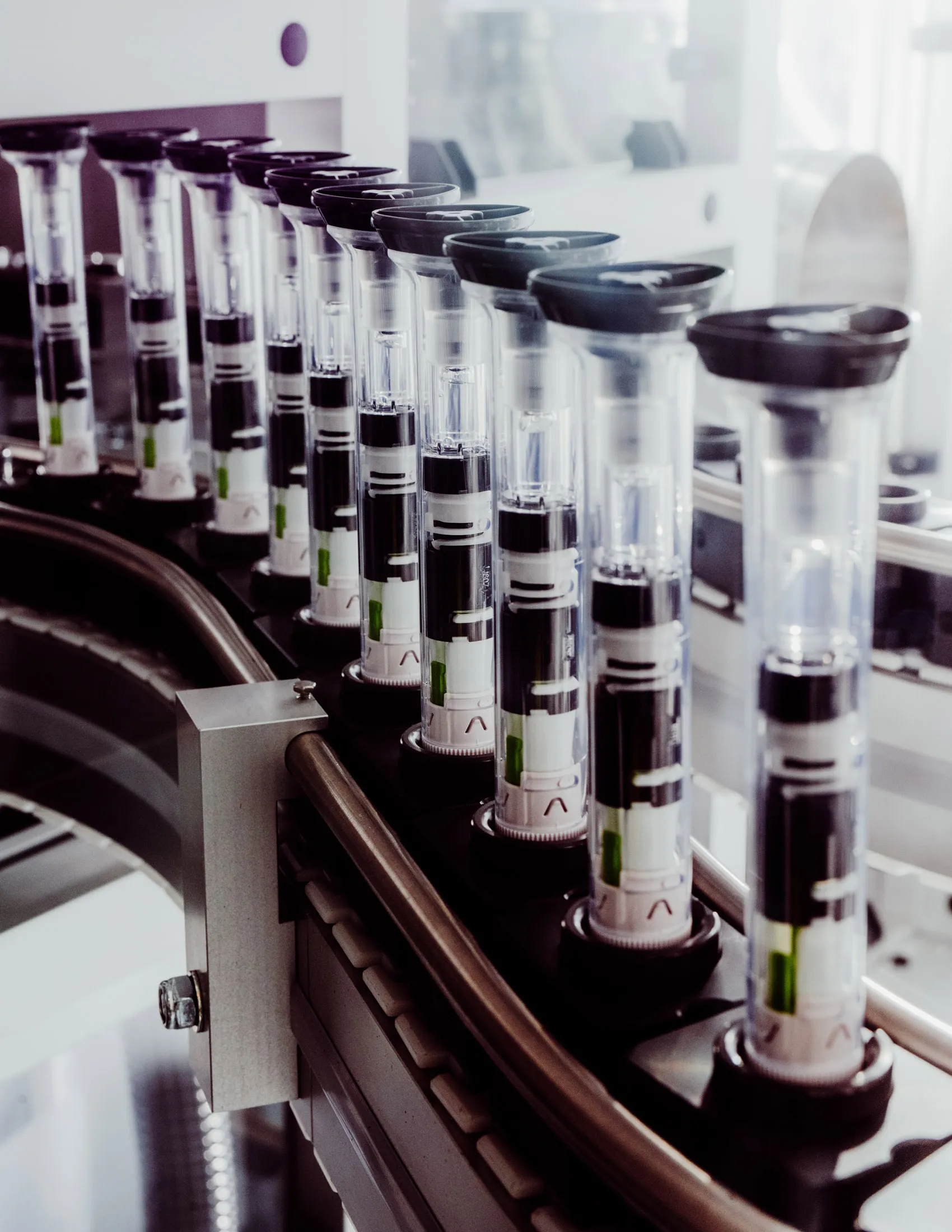 Zepbound pens on an assembly line in Indianapolis.
Demand quickly spiraled out of control for Lilly, however, as it had for Novo. Within months, patients across the US were clamoring to find Zepbound in stock at local pharmacies. Frantic, some railed against both companies on social media. Many turned to telehealth providers such as Ro and Hims & Hers Health Inc., which were selling cheaper copycat versions of the drugs, something that’s allowed when medicines are in short supply. Ricks pushed his staff to get the situation under control, pouring billions into Lilly’s manufacturing sites in Indiana, North Carolina, Wisconsin, Ireland and Germany. “Our workers come every hour of every day to every plant in the world to make more, 24/7, 365, overtime, weekends, holidays,” Ricks told Bloomberg Businessweek in 2024. “We’re operating above the theoretical capacity of those sites.”
Lilly’s bottlenecks, unlike Novo’s, stemmed not from an ingredient shortage but from the complexity of its plastic injector pens. The company found a workaround by instead offering the drug in a small, single-use vial. This required customers to fill a syringe and inject the drug themselves, but such was Zepbound’s promise that most overcame any squeamishness. Novo, lacking an immediate solution, was forced to limit the sale of introductory Wegovy doses. “You cannot make it hard for your customers to get your product, especially if there’s an alternative that may even be a little better,” says BMO Capital Markets analyst Evan Seigerman. “When you do, you permanently change behaviors.”
Vials were also cheaper to produce than pens, so in August 2024, Ricks cut the price of Zepbound vials in half on LillyDirect, the only place that offered them at the time. Patients could now buy the drug there for as little as $399 a month. Single-use Zepbound vials quickly became the site’s bestselling product, allowing Lilly to capitalize on the burgeoning cash-pay market in a way that Novo, which wasn’t selling Wegovy in vials and didn’t have a direct-to-consumer site, couldn’t. It took the Danish company an additional seven months to roll out a similarly low-priced offering and more than a year to start its own consumer website. But by then it was too late: With Ricks at the helm, Lilly had turned the tables, surpassing its chief rival in the most economically and culturally transformative drug category in recent memory.
The opportunity before Lilly was vast. Obesity affects more than 100 million people in the US and 1 billion around the world. Many more are considered clinically overweight. Countless business empires have been built around the age-old challenge of helping people shed unwanted pounds. And GLP-1s weren’t a fad diet or a willpower-testing exercise regimen, but rather a scientifically proven drug with few serious side effects. Lilly’s focus shifted from making enough medicine to putting it in the hands of as many patients as possible, including those covered by Medicare, and to cultivating a deeper connection with their customers.
The brand overhaul started with Lina Polimeni, who during a 22-year career at Lilly had gone from peddling medicines to Los Angeles-area doctors to serving as the company’s top marketing executive. For the campaign she was planning, Polimeni wanted to hire Portland, Oregon-based advertising firm Wieden+Kennedy, best known for its relationship with Nike Inc. But such was the poor reputation of drug advertising — characterized by euphemistic references to illnesses, blithely smiling patients and long regulatory disclosures encompassing every conceivable side effect — that the agency rejected Lilly. “I had to reverse-pitch them three times,” Polimeni says. “They didn’t want to work in pharma.”
Eventually she persuaded Wieden+Kennedy to give Lilly a chance, and together they produced a short film during the pandemic, when the Covid vaccines were making Pfizer and Moderna household names. The spot established a friendly new identity for Lilly as “a medicine company.” Some of Polimeni’s colleagues, including Ricks, still needed convincing of the merits of a larger campaign, though. “There were a lot of discussions in terms of whether this was the right thing to do,” Polimeni recalls. Ricks wanted to make sure the imagery incorporated doctors and scientists, but he eventually gave the green light.
When a sponsor of the US Olympic team backed out ahead of the pandemic-delayed Tokyo Summer Games in 2021, Polimeni got her chance to go big. Lilly stepped in to promote not one of its drug franchises but the company itself. The move was successful enough that its brand advertising became ubiquitous, appearing most anywhere potential patients might be paying attention: the Oscars, the Super Bowl, the subway. “We want people to know that we’re here for you,” Ricks says, envisioning a world where customers gravitate toward trusted Lilly drugs over competing options. “That’s where we’re headed.”
Brand awareness doesn’t matter much, though, if people can’t afford the medicine, and most insurance companies are still reluctant to cover GLP-1s for weight loss. Lilly itself switched plans for the first time in ages last year after its pharmacy benefit manager, CVS Caremark, moved Zepbound off the plan’s list of preferred medications. (Caremark put it back on this May.) A not-insignificant share of Lilly’s employees are on a GLP-1, Ricks says, a fact underscored by the medical waste containers full of used Zepbound and Mounjaro pens in its campus bathrooms.
Although obesity is a chronic disease, “half of the people don’t have access or coverage for getting treatment,” says Ilya Yuffa, who oversees Lilly’s US business and has, like Ricks, been with the company for 30 years. The access gap traditionally extended to Medicare, which until recently was legally barred from covering drugs used solely for weight loss. As for Medicaid, it’s allowed but expensive. The cost is prohibitive enough that only 13 US states currently cover weight loss drugs, and some of the largest, including California, have stopped doing so for that reason.
“I kind of hope Lilly’s like that — where we’re demanding as hell on the what, but really quite sympathetic on the how”
During his most recent presidential campaign, Trump promised to go after drug companies that charge more for the same medications in America than in other wealthy nations. After Trump won, Ricks, who has personally donated primarily to Republicans, started appearing on Fox News for the first time in years and made frequent trips to Washington. With the president also pushing American companies to invest in domestic manufacturing, Lilly announced it would spend $27 billion to build four new plants in the US. By spring, Trump was almost obsessively touting Ricks by name, referring to him variously in speeches as “a great gentleman,” “an incredible executive” and “one of the hottest people in the world.” Trump said Lilly wouldn’t be subject to the tariffs he was threatening because it was investing in the US.
Ricks’ relationships in Washington served him well last summer, when the Trump administration hauled drugmakers into the White House for closed-door meetings about lowering drug prices. The negotiations carried on into the fall, culminating in an infamous November event in the Oval Office, at which Trump, Ricks and Novo Nordisk CEO Mike Doustdar announced that Lilly and Novo would cut the prices of their weight loss medications in exchange for Medicare reimbursement and a three-year reprieve from tariffs.
When Ricks got his moment to speak, a patient Lilly had brought to the event fainted in the background. Centers for Medicare and Medicaid Administrator Mehmet Oz jumped in to help the man, with Doustdar and another executive holding up his legs as Trump and Ricks looked on. Footage of the incident went viral, and Saturday Night Live spoofed it days later. Cast member Mikey Day played Ricks, capturing his deliberate speaking style, manicured Midwestern polish and utter astonishment at being caught in the chaotic center of the political storm around drug prices and GLP-1s.
For Ricks, who’s 59, the challenge now is less about making history than about escaping it. Every drug company lucky enough to have a wildly successful medicine must reckon with the reality that sooner or later, patents expire and competition arrives. Over a decade ago, to take one example, expiring patents on AstraZeneca Plc’s Seroquel and Crestor left the company in a dismal state. It struggled for several years before CEO Pascal Soriot shifted its focus to oncology and turned its fortunes around. “There’s a long list of companies that did well, got big and then failed,” Ricks says. “We don’t want to be on that list.”
As Lilly tries to avoid a slump, the intensity has ratcheted up internally, chipping away at the genial culture that long defined its workplace. Ricks has stringently maintained the company’s head count despite Lilly’s massive growth in recent years, and four current and former employees who requested anonymity to freely discuss internal matters say some staff feel overworked and burned out. There’s widespread fear that making mistakes will lead to serious repercussions, and there’s been some loss of civility. Ricks is known to be an “epic micromanager,” one of the employees says — prone to getting involved in projects CEOs normally wouldn’t bother with. Meetings with him can be intense, several people say, albeit because he knows everyone’s job better than they do.
Ricks bristles at the suggestion that he’s a micromanager, though he concedes “no problem is too small” for his attention if it’s important to the business. “It’s not about sticking your nose in stuff and throwing your weight around,” he says. “It’s about proving to people that we can solve problems.” At a leadership off-site sometime in the past few years, according to one of the former employees, he warned executives Lilly isn’t an easy place to be and asked them to honestly assess whether they were aligned with where the company was heading.
“I think I’m easy to be with and hard to work for,” Ricks says. “That’s in my best days. I mean, we all have bad days.” He adds: “I kind of hope Lilly’s like that — where we’re demanding as hell on the what, but really quite sympathetic on the how.”
As Lilly works to sharpen its edge, new products, aggressive rebates and mounting political pressure have driven down GLP-1 prices far faster than many investors expected, raising questions about future profitability. Generic versions of Novo’s GLP-1 drugs are already available in countries including India and Canada. And industry giants such as AbbVie, Amgen and Pfizer are trying to develop obesity drugs that are more tolerable, easier to take or longer-lasting than the current options.
Still, no one is leapfrogging Lilly — at least not yet. If anything, the company seems set to build on its lead, with plans to launch several new obesity medicines, including drugs that may have fewer side effects. Its next big thing will likely be retatrutide, the three-hormone drug that cut weight by 28% in trials, which is due out next year assuming it’s approved. Although Lilly originally positioned it as something for people on the higher end of the body mass index spectrum, Ricks now sees “mass-market” potential at lower doses.
There’s already some evidence of that potential, if not the kind Ricks likes to see. People all over the world have begun buying peptides — short chains of amino acids that form the basis of GLP-1s and other medicines — on the black market online. Shady overseas sellers, who’ve obtained the formula for retatrutide from Lilly’s patent applications and scientific papers, are illegally hawking the drug under names including Reta, GLP-3, Triple G and even ratatouille. This is before Lilly has completed clinical testing or safety reviews on the drug, and despite warnings from the FDA that such sales are illegal. “People say ‘peptides’ like a magic word,” Ricks says. But “it’s like saying ‘chemical.’ You wouldn’t put a crop protection chemical in your body. You wouldn’t put [just] any peptide in your body, but people somehow think it’s magic beans. I think these products should go through testing. They should be manufactured in a controlled setting. And none of those things are occurring. That’s scary.”
The industry is also worrying about potential usurpers from outside the field. Anthropic, Google, OpenAI and other companies are developing artificial intelligence systems that could one day be capable of designing novel molecules, raising the specter that the next generation of breakthrough medicines won’t be developed by a pharmaceutical company at all. Ricks has doubts, naturally. “There’s no magic where you can turn on a computer and invent a drug today,” he says. “Maybe we’ll get there someday.” He points out the rich irony that Lilly is taking over a South San Francisco building previously occupied by Verily, Alphabet Inc.’s embattled life sciences unit, and adds, “It turns out that language models are not good models for predictions of biology.”
If AI is going to reshape the industry, though, Ricks wants Lilly to be a major participant. He’s become a student of the technology after toying with ChatGPT over Christmas in 2022 and later taking a coding class alongside his chief information and digital officer, Diogo Rau. “I can probably count on my fingers how many CEOs could actually code or write a code for a large language model, including tech CEOs,” Rau says. Ricks, who calls himself a “tech nerd,” admits to running two LLMs at once during most meetings, in part to keep up with his brightest scientists. (These days he favors Claude and Grok over ChatGPT.) Signs all over Lilly’s Indianapolis headquarters encourage employees to use the technology too. “How will you change the game by harnessing the power of AI?” a cafeteria poster reads.
Already, Ricks says, Lilly scientists have used it in ways that are “as impressive as AlphaFold,” referring to Google’s landmark tool for predicting protein structures. Lilly’s AI drug discovery tools, which have been trained on decades of in-house research data, are stored in TuneLab, a service that smaller biotech companies can also access. All they have to do is prove they’re real biotechs and not “some Chinese AI lab that’s just, like, interrogating our models,” Ricks says.
In 2026, Lilly unveiled a supercomputer, built in partnership with Nvidia Corp., that’s designed to help researchers sift through vast amounts of biological data and accelerate the search for new medicines. The two companies are also building a $1 billion lab in San Francisco that will allow Lilly to advance drug development and Nvidia to improve its pharma capabilities. Beyond that, Ricks says, “we have a data advantage, because most of the tech-bio companies that you talk to, even some of the scale players, they’re just training on public data, but there’s only 4,000 ever approved drugs. Lilly alone has more than 3 million failed drugs.” He’s convinced that if computers will one day design novel medications, Lilly has an unassailable head start.
Ricks isn’t waiting for a technological revolution to rescue the company from its impending patent cliff, though, or from a future in which the obesity market may be saturated. As the company looks beyond obesity, he’s furiously reinvesting in its internal pipeline and deploying its balance sheet to fund acquisitions — a record $20 billion so far this year alone. Those transactions have brought Lilly into new fields and reinvigorated old efforts in areas such as sleep disorders and infectious disease. The company recently spent $7.8 billion to buy Centessa Pharmaceuticals Plc, one of its largest acquisitions ever, gaining experimental medicines for narcolepsy and similar sleep and alertness disorders. Lilly sees sleep as an untapped opportunity with the potential to be as big as obesity. “I have a sense it could be that the diseases of sleep, like narcolepsy, are just the tip of the iceberg,” says Skovronsky, the chief scientific officer. “As we learn more about the science, maybe someday we can make medicines that can help a broad range of people sleep better and be better awake during the daytime.”
Internally the company spent more than $13 billion on research and development last year. It’s continuing to invest in obesity and other metabolic health conditions, while also pouring resources into areas including cancer, immunology, neuroscience and gene therapy, which now accounts for a third of its early-stage pipeline. Lilly recently released data from a small initial study of a gene therapy that showed promise in treating high cholesterol with a single infusion. Those results garnered much fanfare, including from Elon Musk, who’s used Mounjaro to lose weight. “Impressive new drugs coming from Lilly!” he wrote on X. The company is weighing, too, whether to expand into consumer-facing areas such as aesthetics (which could mean hair loss or skin care) and even psychedelics, according to people familiar with its plans.
It’s all part of Lilly’s effort to prepare for the inevitable day its GLP-1 dominance ends. “We spent a lot of time as an executive committee looking at other examples of pharma companies that have had extremely large franchises, where eventually either growth slows or they get genericized,” says Jacob Van Naarden, head of business development and oncology. “We are trying to do something unbelievably hard that no one’s ever done before.”
For Ricks, that’s the largest and last item on his CEO to-do list, which he started in a letter he wrote to himself on a legal pad a decade ago while taking a class for new CEOs at Harvard Business School. “If I look back at that list, most of those things are solved,” he says. Planning for continued growth after Zepbound “is to me the defining challenge we have.” He adds: “There is still lots to do to check that one off the list.”
Editors
Jeremy Keehn and Jim Aley