
The world is currently experiencing a “plastic crisis,” with over 400 million tons of plastic waste generated annually that is causing widespread pollution, increasing the impacts of climate change and leading to trillions of microplastics in ponds, rivers, streams, oceans and urban ecosystems, according to the Natural Recourses Defense Council.
Only about 5% to 9% of all plastic ever created has been successfully recycled, with the vast majority sitting in landfills or polluting the world’s oceans, according to the NRDC. As plastic continues to cause environmental havoc, activists and scientists are racing toward plastic alternatives that are more sustainable, cost-effective and eco-friendly.
According to officials with the United Nations environment program, plastic waste can take anywhere from “20 to 500 years to decompose.” But even when plastic breaks down, it turns into smaller plastic pieces called microplastics that stay in the environment and are impossible to fully remove. The health impacts of microplastics remain unclear, as health officials say most humans have consumed nearly a credit card size of microplastic in their bodies, as they commonly leach into our food products.
A University of Connecticut graduate had an idea to help solve the crisis and is putting the idea into action with a top entrepreneurship prize and a new startup aimed at revolutionizing the way we package and consume food.
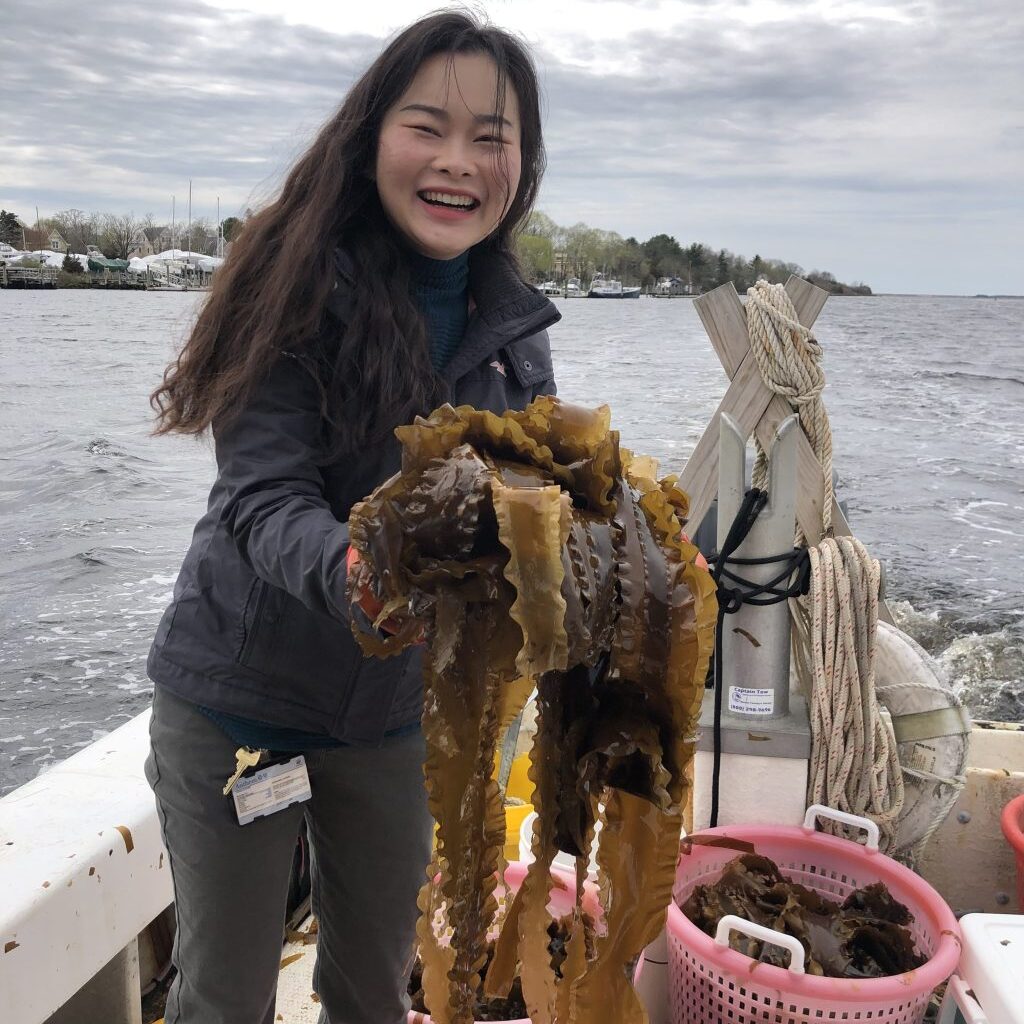
Dr. Yidan Zhang, a recent doctoral graduate in food, nutrition and wellness studies, is developing a seaweed coating to replace plastic in food packaging. Her startup, SeaSol Technologies, aims to make paper packaging easier to recycle and compost, helping solve a major part the world’s plastic crisis. Zhang graduated with her PhD in May.
“Single-use disposable food packaging is definitely one of the leading causes of plastic being disposed every year,” Zhang said. “So if you think not only of the use, but also the disposal, it is a major problem. Single-use packaging always gets disposed immediately. Plastic food packaging is also a leading cause of consumer concern. Everybody is worried about whether plastics are harmful.”
Zhang said that there is also mounting political and regulatory pressure from several states to ban or limit the use of plastic in food containers. California has passed some of the strictest regulations in the nation regarding plastic food packaging. A bill passed last year requires producers to phase out single-use plastics and ensure all packaging is 100% recyclable, compostable or reusable by 2032.
“While California has taken a lead on this, there is also a lot of discussion in the New England states,” Zhang said. “So that’s a big reason we wanted to focus on food packaging. The decision to turn our focus to food packaging has two main reasons, including the impact and how much people are throwing away each year, but also the business potential as regulators phase out single-use plastic.”
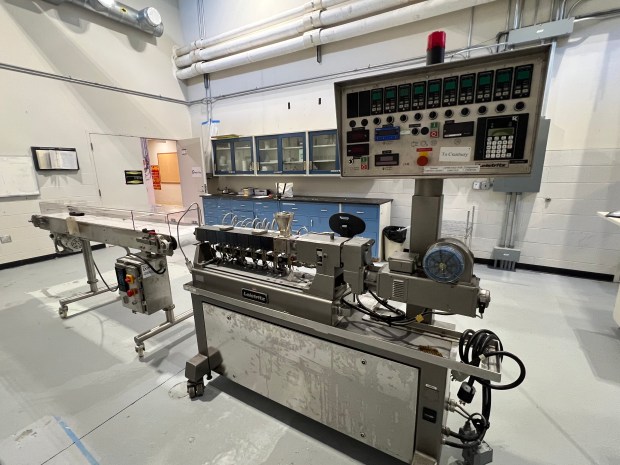
Zhang was named the grand prize winner at the Wolff New Venture Competition last year. She was awarded a $30,000 prize and $5,000 in pro-bono services from Wolff Financial Group to help launch SeaSol Technologies into a reality. Because of this, she said that she was able to purchase expensive machinery to take her idea from the lab to production.
Zhang’s patent-pending process involves grinding up seaweed and turning it into a coating that is tasteless, scentless and healthier for humans than paper wrappers coated in plastic. Because it is compostable, she said the packaging would also be better for the environment, as it degrades naturally. Before her innovative process, she said that converting seaweed was a lengthy process that involved wetting and drying using tremendous energy.
“Ours is a very quick process,” Zhang said. “The beauty of our process is it’s a one-step process, comparing to the former 14-step process that was used before. We can take fresh never-dried seaweed and cut it and feed into our equipment directly. We have eliminated the washing, drying and grinding that use to be part of this. That’s how we make this process cheap and efficient.”
Courtesy of Dr. Yidan Zhang
Dr. Yidan Zhang has created a patent-pending process to turn seaweed into compostable food packaging. (Courtesy of Dr. Yidan Zhang)
While plastic alternatives have existed for years, many of them have high price points compared to plastics, making them less cost-effective and often not as widely available. Zhang said her coating is far more cost-effective than many of the alternatives on the market.
“We did a market analysis and we know that many alternatives out there are usually much more expensive, some of them might be like three times more expensive and some are 10 times more expensive than plastics,” Zhang said. “Many of these alternatives have been on the market for a while, but many people are still using plastics, even though they know they want to change. Our material is not cheaper than plastic, we are about 30% more expensive currently. So we’re still cost saving compared to other materials on the market.
“We talked with packaging makers and brands and got their feedback. We found that we are able to manufacture using our new process and make it much cheaper,” Zhang added. “We are able to commit to 30% more expensive than traditional plastics. Many of the makers told us that the alternatives out there are almost 100% more expensive than traditional plastics and that they have been looking for cheaper alternatives. Will our process ever be cheaper than traditional plastics? As a material scientist by training and someone who worked in the plastics industry, nobody is ever going to match that price point because the sheer scale of the plastic industry makes it so cheap. If anyone said they can make an alternative cheaper than plastic, their calculations are wrong. But we’re getting much closer.”
Zhang works with kelp farmers across New England and purchases hundreds of pounds of sugar kelp to be used in the manufacturing process. She said that sugar kelp is the most widely farmed seaweed species in the United States. But she said she’s also looking into other types of seaweed that can be used in the manufacturing process.
“Sugar kelp is the most widely farmed seaweed in the world and also in New England. We want to get our seaweed from local farms so we have control over the quality because we’re using it as food packaging, so it’s having direct contact with food. It’s important to make sure we track the safety profile and that we have a very sustainable supply chain of our raw material. Our technology is able to manufacture any species in the kelp family.”
Zhang said that she is hoping to have a soft launch of her product within the next year. She said that she is currently in conversation with food festival organizers about where SeaSol Technologies can display its product.
“We are seeking to scale up by over 10 times production from where we are now,” Zhang said. “At the same time, we are partnering with packaging companies to run those tests and make sure our coating fits into their system. In the next 12 months, we will be at 10 times more production and will need to figure out some technical challenges. Those will be addressed over the next year.
“We are very excited for the future,” she added. “I lived in the United States for the past 10 years in multiple states and I love Connecticut. Everyone has been so supportive and particularly the University of Connecticut. I didn’t start as an entrepreneur when I started my PhD at UConn, but I got a lot of support from the people around me. Everyone at UConn wants you to be successful and I really love it here.”
Stephen Underwood can be reached at sunderwood@courant.com