
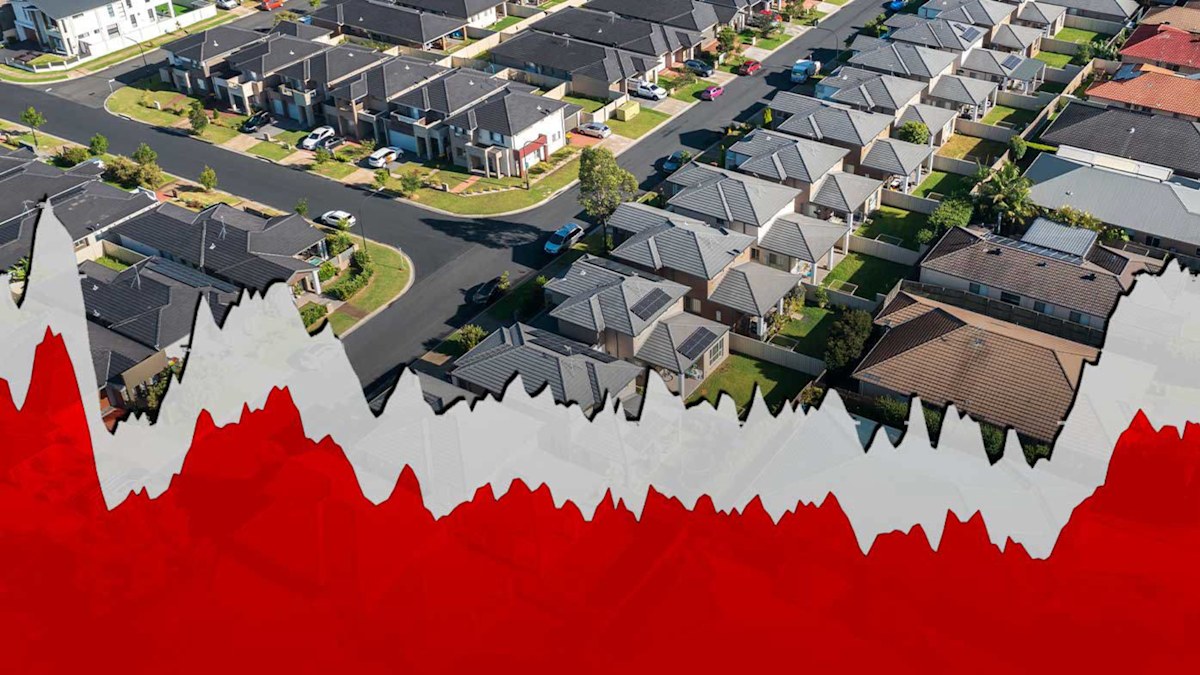
Tens of thousands more Australians are at higher risk from their mortgages than just one month ago, new research reveals, as borrowers sweat on this week’s inflation figures.
While the Reserve Bank of Australia held interest rates last week, three hikes in a row had already made almost 1.5 million people at risk of “mortgage stress” due to how much of their income went towards bank repayments.
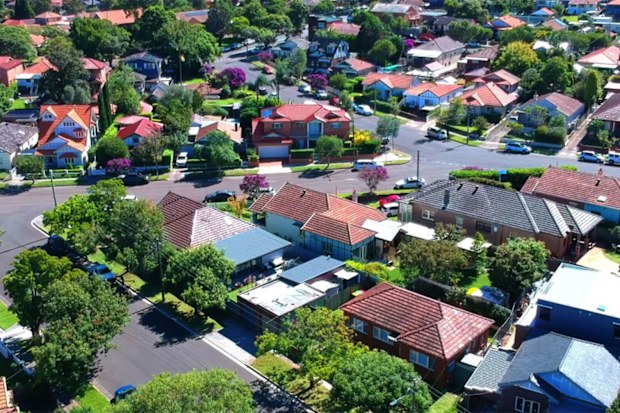
Hundreds of thousands of Australian mortgage holders are worried they will be unable to make their home loan repayments. nna\kristy.johnson
The latest edition of Roy Morgan’s monthly figures carried more bad news, with another 65,000 people falling into the at-risk category, pushing the total number to 1,538,000.
CEO Michele Levine said the measurement was just one indicator of the pressure Australians were under.
“Mortgage stress is up four months in a row, interest rates have increased three times already this year, housing prices are coming down in key markets, and the Australian workforce has shrunk for three straight months,” she said.
The risk of mortgage stress is defined as when repayments are higher than a certain percentage of household income.
That percentage varies depending on income and spending because while spending 40 per cent of $1000 a week on a mortgage would be difficult, 40 per cent of $10,000 would leave rather a lot of spending money left over.
The even more dire category is “extremely at risk”, when even paying off just the interest on a mortgage would go past that barrier. The latest figures showed a staggering 1,084,000 Australians were in that position, or one in every five mortgage holders.
As of May, more than 65,000 people had contacted the National Debt Helpline this year, with mortgage stress remaining the top reason for calling.
RBA governor Michele Bullock acknowledged the pain rates were causing borrowers after the latest interest rate decision but stressed controlling inflation was the top priority.
“It’s hard on those households with mortgages and debt. Yes, this is hurting them immensely,” she said.
“The thing is, though, and I’ve said this before, inflation is actually hurting everyone, including those people.
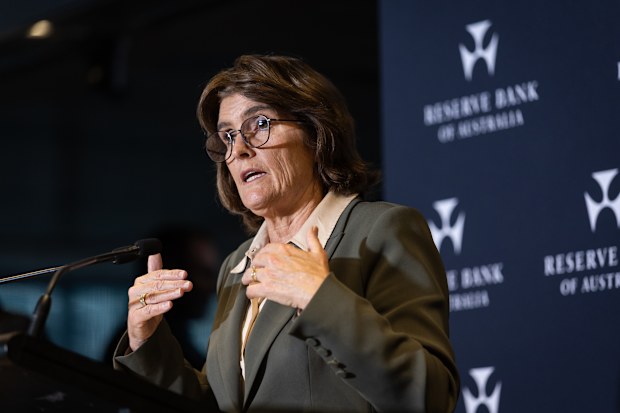
The Reserve Bank’s widely expected rate hold has come as a huge relief for struggling mortgage holders. Louie Douvis
“So they’ve got a double whammy, but the people who are most impacted by inflation are the most vulnerable, the people on the lowest incomes. They’re the ones who – they don’t have savings, they don’t have earnings from interest or anything like that.”
That’s one of many reasons analysts will be closely watching for the Australian Bureau of Statistics latest inflation figures on Wednesday. Roughly, the lower that number is, the less likely the bank is to hike rates again at its next meeting in August.
Headline inflation eased to 4.2 per cent in April, still significantly above the Reserve Bank’s preferred target range of 2-3 per cent.
The conflict in the Middle East had analysts worried it would surge much higher than that but those predictions have calmed slightly since the memorandum of understanding between the US and Iran was signed.

The Strait of Hormuz, a vital shipping route for the region’s oil and gas, was effectively blockaded since the outbreak of war between the United States and Iran in late February Getty Images
The weekly ANZ-Roy Morgan Inflation Expectations declined sharply in May and continued to do so in the last week, sitting at 5.8 per cent, down from a peak of 7.3 per cent in March.
“The sharp fall in Inflation Expectations since late March, down by 1.5 percentage points to 5.8 per cent this week, shows that concerns about inflation are moderating and the pressure on the Reserve Bank to raise interest rates again has declined,” Levine said.
“These factors no doubt contributed to the Reserve Bank’s decision to leave interest rates unchanged at 4.35 per cent at their most recent meeting in mid-June.”
Roy Morgan expects the number of people at risk of mortgage stress to keep rising over coming months, to 1,562,000 or 29.5 per cent of mortgage holders in July.
Based on the data firm’s modelling, a 25 basis point rate hike in August to 4.6 per cent would push another 62,000 people over the edge, leaving 1.6 million Australians at risk of mortgage stress.
That would edge the figure closer to its GFC peak of 35.6 per cent of borrowers being “at risk”.