
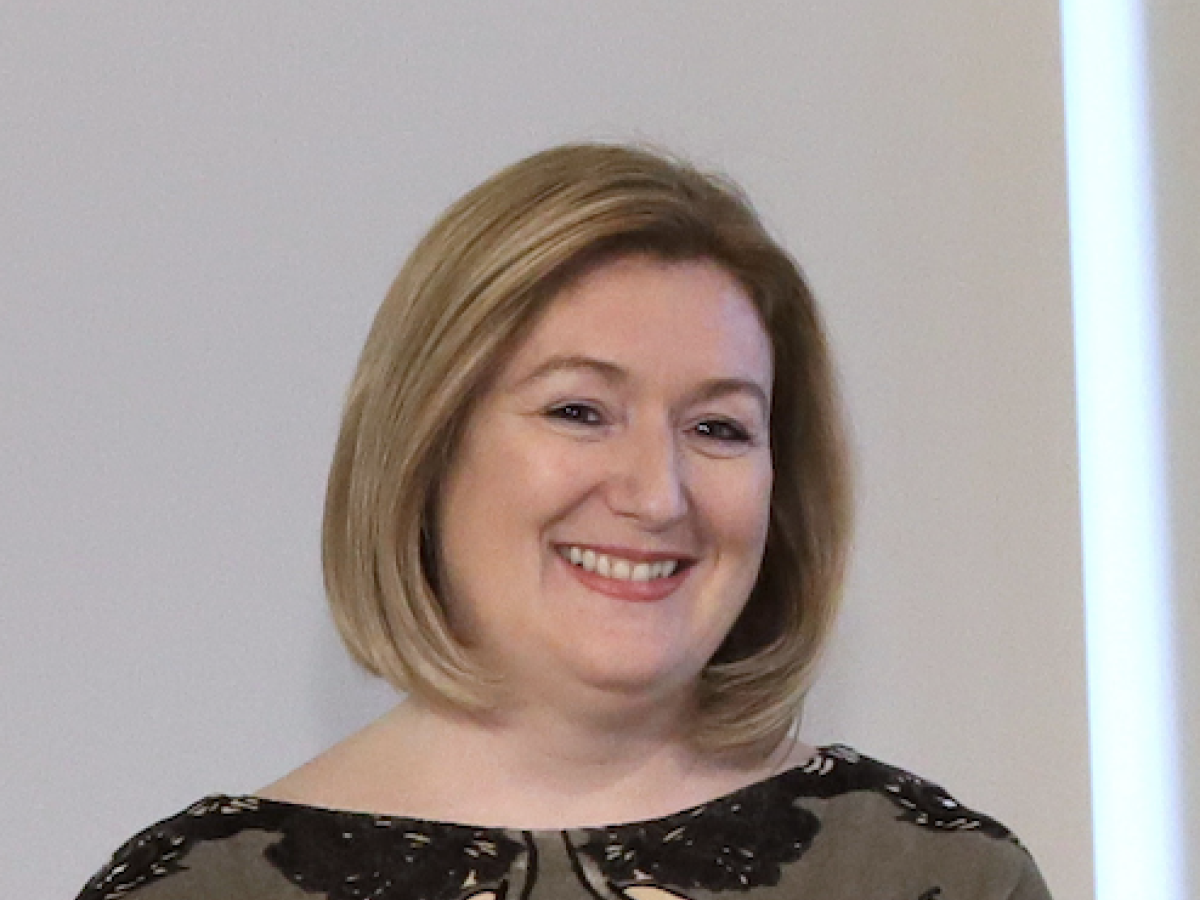
Jane Carlton was born on the 7th of January, 1967, in Scotland’s capital, Edinburgh. She attended St George’s School for Girls, “where girls are fearless and free”. She completed a degree and PhD in genetics at the University of Edinburgh, graduating in 1995, and then moved to the US and taking up a research position at the University of Florida, where she used her skills in molecular biology to produce the world’s first full genome sequences of the malaria parasite. Since then she’s also worked at NIH in Maryland and New York University. Jane was recently elected as a Fellow of the American Academy of Microbiology, and named Honorary Fellow by the London School of Hygiene & Tropical Medicine in 2024. She is now Director of the Malaria Research Institute at Johns Hopkins University in Baltimore, Maryland, a post she took up in 2023. Chris Smith began by asking Jane to tell us about parasites…
Jane – Parasites are fascinating organisms. They live in or on a host and usually to the detriment of that host. That can be through making the host unwell or perhaps reducing the ability of the host to reproduce, or even changing the behaviour of the host. And the parasite that I work on in particular, the malaria parasite, is a protozoan, a single-celled organism.
Chris – What took you down that path, though? Tell us a bit about the young Jane Carlton that got interested in parasites in the first place. How did that happen?
Jane – It wasn’t initially parasites that I was interested in, actually, but genetics. And that’s because my brother went to university and he came back with this new book all about genetics, and I really liked the front cover, which showed some chromosomes, and I thought, well, how cool is that, that the biology of an organism can be determined by these things called genes and then how they’re inherited can really affect their biology. So it was really through genetics and through my brother that I got first interested. And then when I went to the University of Edinburgh, there was quite a well-known and well-thought-of group that worked on the genetics of malaria parasites, and that’s really when I got into the world of parasitology.
Chris – But how old were you when you picked up that genetics book then?
Jane – Actually, I think I was about 10 years, or maybe eight years old. I can’t remember. I still have it, actually.
Chris – You stole it!
Jane – I did! I’ve stolen a few things from my brother over the years, as he knows.
Chris – But you must be pretty unusual. There are not many eight to 10-year-olds reading genetics books. I mean, that singles you out as a bit special.
Jane – Oh, well, I don’t know. I mean, there’s an interesting interpretation of the word special, isn’t there? But no, I think my brother was the special one bringing the book home and that he actually taught me an awful lot about the world that we live in. So no, I put it down to him, not me really.
Chris – But obviously that must have inspired you because presumably you then followed a science track through primary school, secondary school, that would enable you to apply to Edinburgh University to do, because you did genetics there, didn’t you? So how did you end up in that degree course? Was it just because of that book and then pursuing science at school?
Jane – Well, it was always an interest in the natural world around me, actually. So I was always very much an outdoorsy girl, and I loved riding, and going off by myself, and investigating things. And so then it was really wanting to know more about the biology and the kind of ecology of many of the organisms that I came across, and the plants in the real world. And then knowing how those developed and the role of genes and genetics, that’s how I really got interested and decided to take that degree at the University of Edinburgh.
Chris – And it was that degree that then turned you on to malaria because you were applying that genetics interest to the malaria parasite, because at this time, this must have been, what, the mid-90s. And although we take it for granted these days, I’ll just sequence that, and we read the genetic code of everything we come across, don’t we? In those days, the Human Genome Project was still, what, five or six years away from reporting its initial draft. So this was very early on in the game.
Jane – Yes, it was. I was very fortunate at the University of Edinburgh and in the Department of Genetics that there was a very large group, very well-known group of malaria researchers that used genetics to study the malaria parasite. And so that’s really how I got involved and did my PhD, doing genetic crosses between different parasite strains that had different susceptibilities to anti-malarial drugs. And I had to generate the first genetic map of a particular malaria parasite species because the genome had not been sequenced, and that was very painstaking, and it wasn’t that great a map, and that’s really when I started to hear about news, especially in the United States, of an initiative to sequence the human genome. And I knew that there was a group at the University of Florida that was planning to sequence the malaria parasite genome, and so I jumped at the chance to try and join them.
Chris – And that’s what took you to the States?
Jane – Yes, that’s right. It took me to the University of Florida, and I think many British people seem to have an attraction to Florida because of the wonderful weather. I went there both for the weather, but also because of this great group who were tagging the genes of certain species of malaria parasite.