
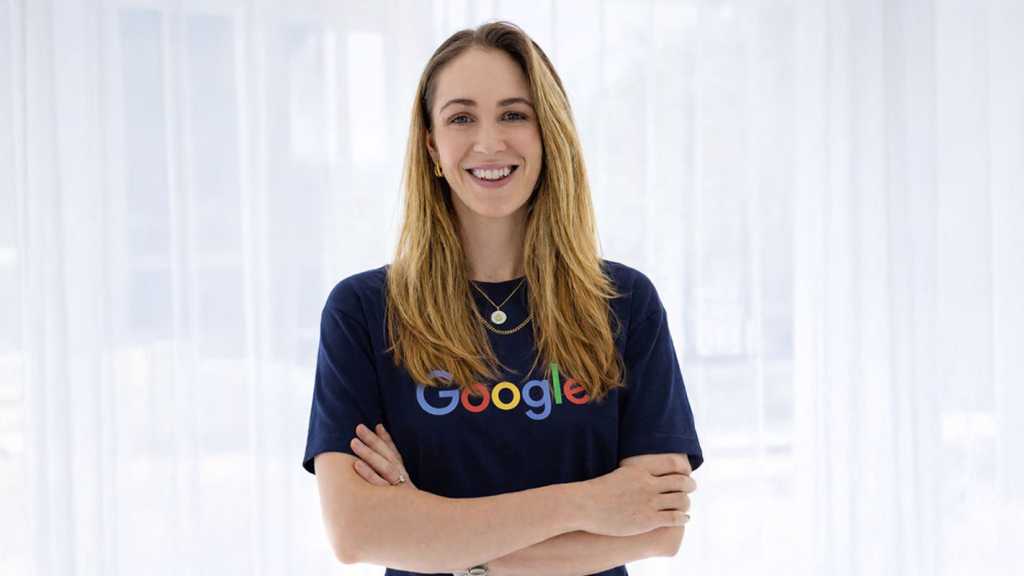
“Technology will continue to change, but if we’re anchored in customer outcomes, we can support them in building the right competencies and capabilities.
“In understanding which technology solutions will drive the best results.”
Taking an outcomes-first approach, before any technology is considered, supports partners in identifying the strategy for achieving customer outcomes.
“Our partners when they’re supporting customers—they’re the essential architects in all of this—but we still go to market as one, and we’re doing that more and more,” Svendsen added.
Achieving this requires avoiding vendor encroachment by being clear on roles, aligned on outcomes, and working as a single team.
“When building a [Google Cloud and partner] team to engage quickly with a customer, we need to make sure we keep the customer outcome front and centre and rally around that,” Svendsen said.
“It’s about being clear on how we all bring value to the customer and how we work as one.
“[This] means having the outcome in mind and bringing our absolute best—from both our partners and Google—to serve that outcome.”
Unlocking opportunity
With that mindset, Google Cloud’s incentives and the structure of its partner network have been designed to drive towards customer outcomes.
“I think our partner network program—our global team is running at 90-day sprints at the moment to continue to evolve,” explained Svendsen. “I think gone are the days of partner programmes having a refresh, let’s say, once a year.
“The way that the Google partner team globally has set itself up is being locked into the local markets but continuing to iterate. “I think that is something really unique about what we’re doing.”
Having an outcomes driven partner model is something that helps Google Cloud partners like Quantium focus on culture and business transformation – which is it its edge.
AI consulting company Quantium executive head of partnerships Justin Spratt told ARN it needs to be able to rely on Google for the technical stack. As well as being able to clearly prove value with metrics and avoid channel conflict. Ultimately making their AI/agent work more strategic and defensible.
“We’ve been partnering with them for many years, but perhaps not in a formal partner structure until recently,” he said. “We have been a Google technology shop for a long time, and so there’s a lot of very strong relationships between both businesses.
“I think the formalisation of the partnership strategic partnerships unit is about, let’s say, a year old.
“That is very much a function of this AI world being incredibly multi-dimensional and complex, and if you look at the industry, you don’t see many people winning and succeeding by themselves.”
According to Spratt the capital needed for solo success is voracious and the demand is incredible.
“Partnering together is any way you can really successfully help clients deliver value. I think most people feel like they’re drinking from a fire hydrant.
“It’s still daunting to keep up [with the speed of products] and the infrastructure around them is incredibly complex.
“The real blockers come down to culture change and transformation. I often say AI moves at the speed of culture—no matter how fast it evolves, unless humans can derive actionable intelligence, that’s where the friction lies.”
From Quantium’s perspective, Google Cloud offers the technology, guardrails and platforms needed to build agentic workflows, with complete trust in its ability to deliver.
“We focus on the culture and strategy side, and on building agents that deliver actionable intelligence,” observed Spratt. “That partnership means we don’t have to worry about infrastructure or security.
“We come in with deep subject matter expertise and build solutions that support humans and create real headroom for better outcomes.
“Without that, we’d have to build and manage everything ourselves, from data infrastructure to models and governance. This setup allows us to focus on what we do best, and it’s incredibly powerful.”
Having Google take care of the backend complexity allows Spratt to focus on delivering better outcomes. This is at a time when helping clients become AI‑ready remains his biggest concern.
“I think one of the challenges, if you look at culture at the speed of AI, helping [customers] unlock culture that fits in this AI world,” observed Spratt. “Sometimes we see those as bottlenecks, and you can see, hang on, just on the other side of this are some incredible outcomes for the humans in the business.
“That keeps me up at night and wanting to just kind of open that up a bit.”