
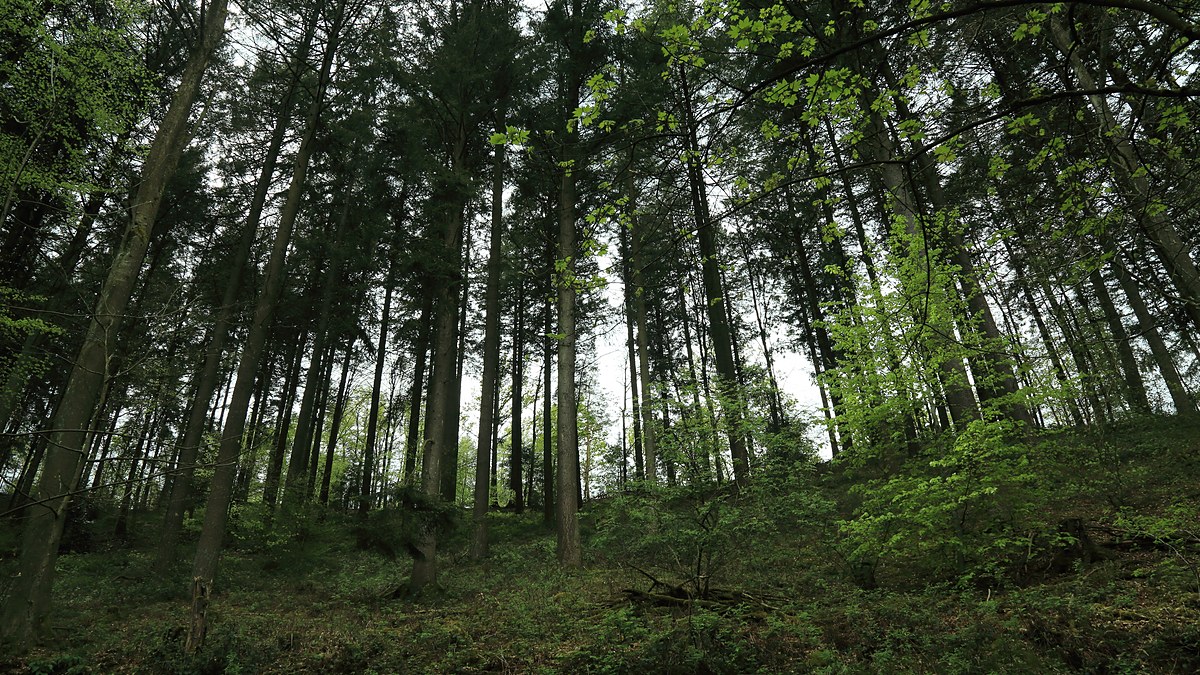
One of the most widely used climate land models may overstate how much carbon forests will store this century by as much as 30 per cent, because hotter, drier air is slowing tree growth even as photosynthesis continues. That is according to a Cornell University study published in Geophysical Research Letters, built on eight years of growth records from European forests.
Brendan Clark, a postdoctoral researcher at Cornell, said the land models wrongly assume photosynthesis and growth move in step. “So the tree may be photosynthesizing, but it’s not growing,” Clark said.
As it stands, land absorbs 27 per cent of the carbon dioxide released by burning fossil fuels, with the ocean taking up about 25 per cent, leaving the remainder to drive atmospheric warming. Any sustained slowdown in forest growth would erode that buffer, compounding a global land carbon sink that already weakened sharply in 2023.
Clark’s team used measurements from Swiss forests to track how fast broadleaf and coniferous species grew under shifting conditions, finding that hotter, drier air consistently slowed the rate at which the trees grew. Ecologists have since observed the same effect across North America, where lower water pressure within tree cells curbed growth even as photosynthesis remained steady.
From that data, Clark built a statistical model to project tree growth and carbon storage to 2069, then compared it with simulations from an open-source land surface model widely used. The comparison showed the land model overshot growth by a factor of two for broadleaf trees and a factor of three for conifers, with the widest gaps in regions forecast to turn hotter and drier.
The evidence on heat and tree growth is not uniform, with separate tree-ring research finding only small effects of drought on tropical stem growth. Clark’s analysis centres on European stands, where atmospheric dryness rather than rainfall alone drove the slowdown.
Senior author Daniele Visioni, an assistant professor of earth and atmospheric sciences at Cornell, said the research sharpened estimates of the extent of damage additional warming would cause to the land sink. His caution follows evidence that parts of Australia’s tropical forests have already shifted from carbon sink to carbon source, as rising tree mortality outpaces new growth.
Clark first encountered the ecological findings through co-author Shan Kothari, an ecologist at the University of Alberta, and began attending forest ecology conferences to follow the emerging research. He now wants to write code that embeds slower growth directly into the land models other researchers use, narrowing a divide he sees between ecologists and modellers.

Wood Central is Australia’s first and only dedicated platform covering wood-based media across all digital platforms. Our vision is to develop an integrated platform for media, events, education, and products that connect, inform, and inspire the people and organisations who work in and promote forestry, timber, and fibre.