
The road ahead – automated vehicle trials in Australia and overseas
Moving through SAE Levels 0 to 6 to cement a future with automated vehicles is not linear. A broad range of companies are investing vast sums and running extensive trials of Level 4 autonomous cars worldwide (working towards Level 5), as other tech giants and carmakers concentrate on developing ADAS and conditional automation at Levels 2 and 3.
Large-scale programs using Level 4 robotaxis that offer driverless ride-hail services are widespread in the United States and China – and rapidly expanding in other regions, such as Europe and the Middle East – where vehicles are operated in tightly controlled, geofenced and heavily monitored areas.
In the US, Waymo robotaxis are into their sixth generation and have collectively travelled more than 275 million kilometres. According to Waymo, its automated vehicles have been involved in 92% fewer serious crashes compared to human drivers in the same areas, although these results are based on company data and specific operating conditions.
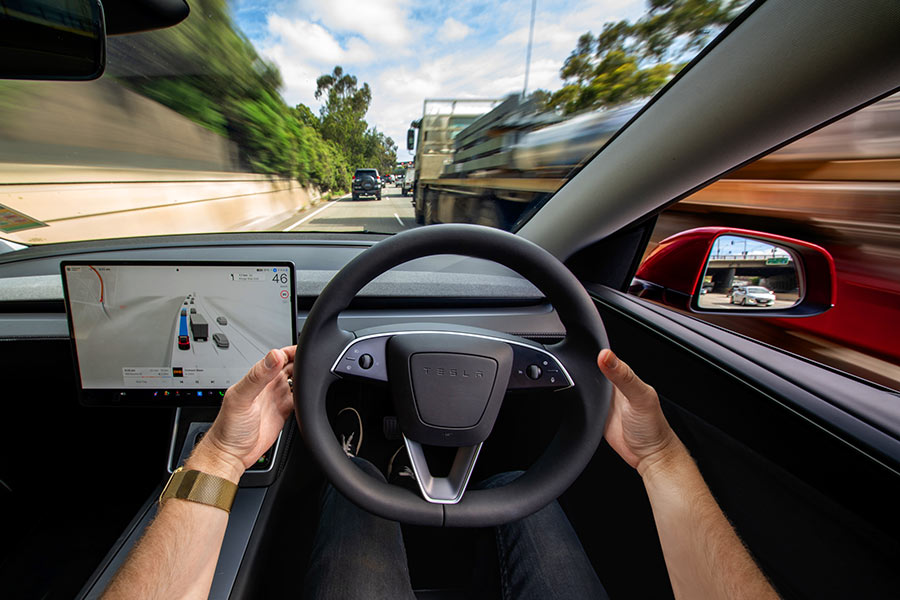
Other major players include Baidu Apollo, WeRide and Pony.ai, while Tesla is ramping up its own robotaxi programs with Cybercab and other models in its automated fleet. Mercedes-Benz is also working on a robotaxi program with various ride-share and tech giants, including Uber and NVIDIA, and is one of the few carmakers testing Level 4 automated driving on urban roads and highways in Beijing, China, for privately owned vehicles.
In Australia, Waymo is believed to be preparing a robotaxi trial. To date, local Level 4 automated vehicle trials have largely concentrated on low-speed shuttle buses.
“RACV welcomes in principle the introduction of self-driving robotaxi services in Australia, but deployment needs to be carefully managed and under trial conditions,” says Williams.
“Controlled trials are how this technology earns the trust of the public. To scale safely, robotaxi operators need to demonstrate – to an independent regulator – that their vehicles can handle Australian conditions, including our road markings, signage, wildlife, regional roads and weather conditions.
“National safety laws and an in-service regulator are what make that assurance credible.”