
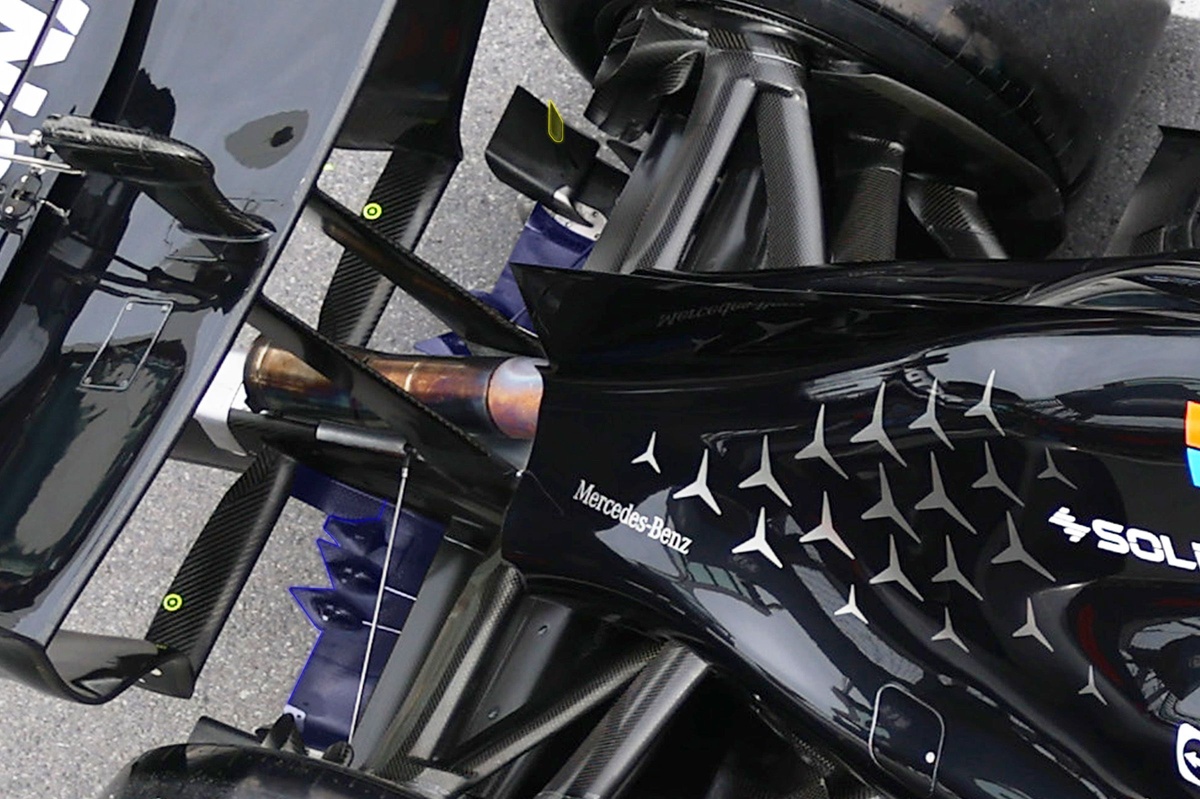
“Small beer” is how Mercedes deputy team principal Bradley Lord described all the fuss surrounding the diffuser on Friday. And he is probably right, just as that applies to several topics during the 2026 Formula 1 season.
After all, who still remembers that back in January all the attention was focused on the compression ratio of Mercedes’ internal combustion engine, only for nobody in the paddock to be talking about it anymore by the time 1 June arrived – the date on which the stricter checks came into force.
Nevertheless, the way in which the FIA arrived at the technical directive regarding the diffusers – nowadays referred to as an FIA doc – remains interesting.
It dates back to the beginning of this year, when Ferrari submitted a proposal to the FIA to effectively extend the working of its diffuser. That idea worked somewhat differently from Mercedes’ extensions and was considered more extreme by the governing body.
It explains why Ferrari was told “no”, whereas Mercedes was initially given the green light for the solution it introduced in Montreal. That was partly because Toto Wolff’s team made clever use of several other passages in the technical regulations.
It is related to floor stays to stop bodywork from flexing at high load, as described in Article C3.2.6. Teams are allowed to use “edge” and “fillet” parts on those stays to remove sharp edges.
Anyone looking at the Mercedes solution from above could indeed spot two small floor stays, meaning the fairings could be justified in that way.
Mercedes has stated that the FIA fully inspected its Montreal solution and deemed it legal, partly for the reason mentioned above.
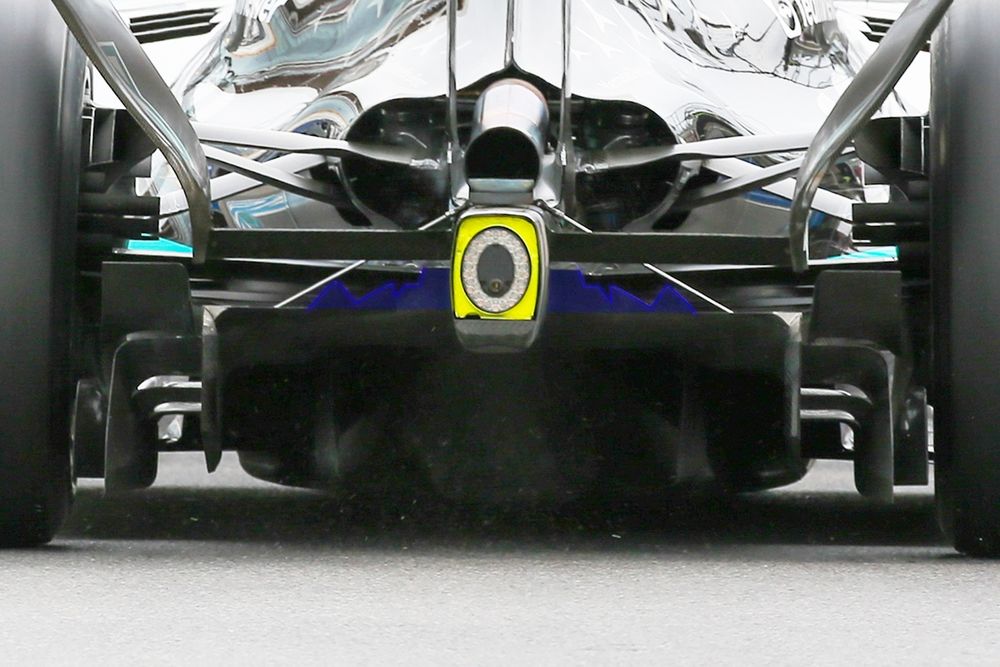
Mercedes diffuser
Photo by: Alessio Morgese / NurPhoto via Getty Images
FIA seeks to prevent extreme solutions with technical directive
That is correct, but it understandably led to frustration at Ferrari.
The Scuderia subsequently requested clarification, but was initially told that the Mercedes version was different and therefore permitted, unlike the concept Ferrari itself had wanted to introduce at the beginning of the season.
Afterwards, however, other teams also questioned the FIA about Mercedes’ diffuser, something Red Bull confirmed to Autosport in the Spielberg paddock.
That process prompted the FIA to tighten its guidelines, mainly to avoid opening the door to even more extreme designs in the future.
Ferrari warned the governing body that allowing the Mercedes solution with its spike-like profile could also lead to extreme designs involving other parts of the floor.
One example raised by the Scuderia was the introduction of serrated areas on the floor edges. That could lead to dangerous situations and punctures if two cars come into close proximity.
That is naturally not the intention, which is why the FIA clarified in the document issued after Barcelona that the leeway offered by the regulations can no longer be used for aerodynamic purposes.
Read Also:
Andrea Kimi Antonelli, Mercedes
Photo by: Pauline Ballet / Formula 1 via Getty Images
What impact does the change have on Mercedes?
Because the FIA doc came into force immediately, Mercedes and Racing Bulls had to modify their diffusers ahead of the Austrian Grand Prix.
According to Lord, however, this is not a significant issue for the team that currently leads both championships.
“The FIA has done a full inspection on all of the geometry before it came to the track in Montreal. They’ve clearly had some conversations since then and slightly revised their view and their interpretation,” Mercedes’ deputy team principal explained.
“We’ve had a bit of back and forth and then brought a modified solution here. I think it’s just all part of the game in Formula 1, but probably a lot more has been written about it.
“There’s been a lot more energy going into the reporting than there has into the adapting and fine-tuning because it’s relatively small beer in overall terms.”
Moreover, according to Lord, it is only logical that the W17 is under the microscope, especially as Mercedes is still regarded by rivals as the benchmark.
“It’s small stuff. Now, obviously, Formula 1 is a world of marginal gains and small gains add up to bigger ones, so every little bit counts,” he said. “But yeah, I think we’re pretty happy that we’ve managed to minimise any potential impact and the car seems to be running pretty well here in Austria as well.”
Read Also:
We want to hear from you!
Let us know what you would like to see from us in the future.
– The Autosport.com Team