
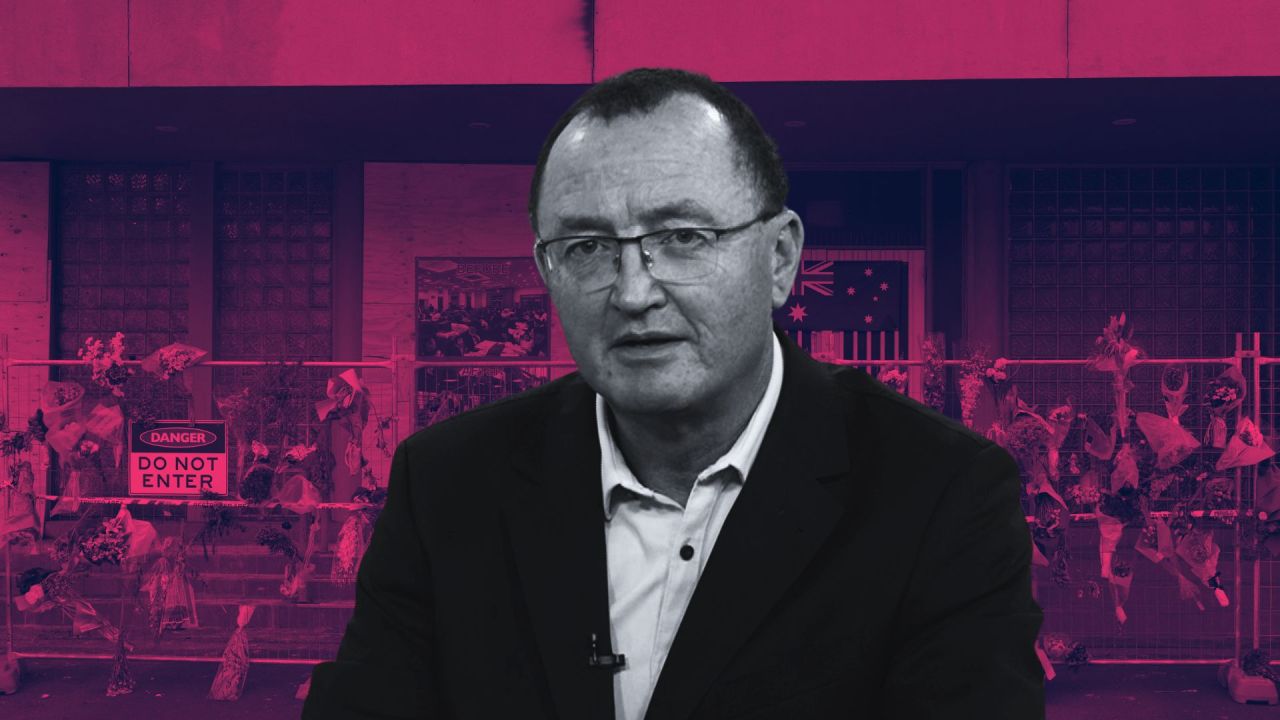
Established organised crime networks have handed hostile state actors a ready-made platform to operate inside Australia, a national security analyst has warned, after the nation’s spy chief exposed a link between international terrorism and tobacco gangs.
Australian Security Intelligence Organisation boss Mike Burgess this week revealed Iran’s Islamic Revolutionary Guard Corps protected an exiled Melbourne gangster and supported his criminal exploits.
Mr Burgess suggested Kazem Hamad – who he did not name – was recruited by the Islamic Revolutionary Guard Corps (IRGC) through Iraqi-based militias, as exposed by the Herald Sun.
Hamad was identified as the architect behind the firebombing of a Melbourne synagogue and is understood to have continued to play a role in Victoria’s illicit tobacco trade since he was deported in 2023.
The links have suggested Australia’s illicit tobacco gangs have become so lucrative and powerful, foreign sponsors of terrorism were likely to target them for recruitment.
Michael Shoebridge, Director of Strategic Analysis Australia, agreed with suggestions the IRGC was likely to try establishing connections with Middle East-linked crime syndicates operating within Australia.
“What it does is it immediately gives the IRGC, the Iranian state sponsor of terrorist groups like Hamas and Hezbollah, a front door network in Australia,” he told Sky News this week.
“That’s what’s so disturbing. They don’t have to go around and recruit their own operatives and agents.
“They can use this criminal network, and that looks like what happened with that firebombing of the synagogue in Melbourne.”
Mr Shoebridge said the risk of terror organisations meddling in Australian crime syndicates had been somewhat subdued in the past.
He labelled an apparent evolution in the underworld “disturbing”.
“National security analysts for years have been concerned about the potential connection between terrorism and organised crime,” he said.
“But most organised crime groups have steered clear of terrorism, stuck to good old fashioned violent crime and drugs because terrorism is so radioactive and law enforcement agencies will clamp down high.
“That looks like what’s happening here now, but it’s a very disturbing development.”
The now-jailed organised crime boss Hamad was concluded to have ordered the firebombing of Melbourne’s Adass Israel synagogue in 2024.
“Valuing his high wealth and criminal connections, the IRGC protected him and supported his illegal enterprises,” Mr Burgess said this week.
“That changed dramatically after ASIO publicly named Iran’s involvement in the antisemitic arsons. This person’s Iranian backers lost their enthusiasm and, after further pressure from Australian and local law enforcement, they threw him in prison.”
Hamad was locked in Iraqi jail late last year accused of drug trafficking.
Australian authorities deported him in 2023 after he did a stint behind bars for his role in a heroin trafficking syndicate.
Hamad masterminded the monopolisation of Victoria’s illicit tobacco market by ordering extortion fees and firebombing competitors.
Authorities have previously referred to him as the orchestrator of the Adass Israel synagogue firebombing.
Mr Burgess delivered broader warnings for Australia during his terror evaluation on Wednesday.
“Grievance continues, social cohesion is strained and the likelihood of violence has increased,” he said.
“Conflict in the Middle East contributes to these dynamics, fuelling frustrations and anger. The impacts could become even more profound if there are further economic shocks or shortages.
“Social media is amplifying and accelerating grievance narratives, eroding trust in institutions, promoting discord and inflammatory rhetoric, exacerbating polarisation, and creating a permissive environment for violence.
“At the same time, global terrorism threats are re-emerging. Traditional groups such as Islamic State and al-Qa’ida and their affiliates are growing their capability to conduct and inspire attacks, enabled both by permissive geographic and online spaces.”
Mr Burgess said ASIO had foiled 31 “major” terrorism plots since 2014.
Fourteen “significant terror-related cases” had been resolved since the December 14 Bondi terror attack last year, he added.