
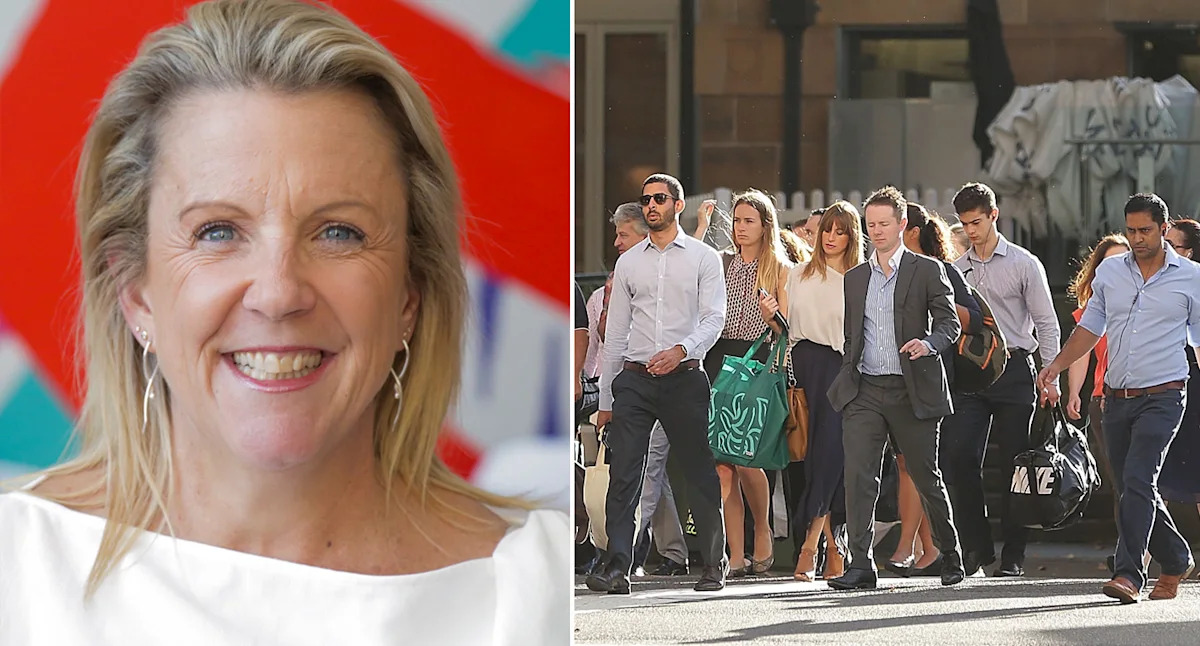
Rebel Berenyi knows a thing or two about workplace hiring. But when the experienced HR worker re-entered the job market earlier this year, she got a rude shock.
Applying for one role she appeared on paper to be perfect for, it took no time at all to receive a response from the firm. She was swiftly rejected by an AI screening technology not long after submitting her resumé.
“For me going into the recruitment process was new as I’d been at least 10 years in my previous role. But because I work in HR, I was very much aware of the impact AI was having from a recruitment perspective,” she told Yahoo Finance.
“So I knew what I was up against.”
RELATED
The large organisation where she applied for the job is upfront about using AI tech to screen job applications, relying on it to read cover letters and CVs.
“The role was like-for-like with my experience,” she said, recalling how she applied one evening and “before midday” the following day received an AI-generated email rejection.
“No human was involved in that process,” she said. The rejection came with a message that the company would not provide a reason for the decision.
She has since found a role she is happy in, and while she took no offence in the “robot” rejection, that particular incident vexed her so much she found the senior recruitment lead at the company on LinkedIn and emailed them, asking about its recruitment process and values.
“People will question an organisation if that’s how they’re going to recruit,” she said.
She never got a response back.
Job applicants face ‘zero touch’ rejections in tough labour market
Rebel landed her current role through personal relationships and her professional network – something she said job hunters will have to increasingly leverage in the current market, rather than just applying to postings advertised online.
She knows a number of people in her profession that are currently dealing with the frustrating omnipresence of AI filtering in the hiring process these days.
“I’ve got a few of them in the market at the moment, and they are all dealing with the same issue of AI-generated application responses. It’s silent from a human perspective,” she said.
“Speaking from experience, from my close network of HR friends who are in the market, it is driving them crazy. It’s hard, and it’s hard to break through.”
Story continues
For young workers entering the workforce for the first time, and don’t have a professional network to call upon, or those undergoing a major career change, it can be particularly challenging to get their foot in the door.
“For the people in the market who don’t have that network, maybe they’re just new to employment, it’s incredibly difficult,” Rebel said.
Risk to companies as tech embraced by Woolworths, Bunnings and government departments
Increasingly job hunters feel like they need to use generative AI to apply for roles, while companies are equally turning to the technology to deal with the high volume of applicants.
Evelina Samuels is the co-founder of HR recruitment firm Samuels Donegan, and said while the technology isn’t going anywhere, companies need to be thoughtful about the downsides or “risks” of being overly reliant on it.
“The risk isn’t just poor candidate experience, it’s poor hiring decisions disguised as efficiency. If organisations rely too heavily on automation without appropriate human oversight, there’s a real possibility they’ll overlook high-quality candidates who don’t fit a standard pattern,” she told Yahoo Finance.
 HR expert Evelina Samuels says companies need to tread carefully with growing AI reliance. · Supplied
“The organisations that will get the best outcomes won’t be those that replace recruiters with AI. They’ll be the ones that use AI to remove administrative burden so recruiters and hiring managers can spend more time on the conversations that require judgement, relationship building, and decision making.”
Major companies including Woolworths and Bunnings use various AI platforms to screen job applicants, while the NSW government also uses tech platforms to remove humans from the initial interview phase.
But she echoed Rebel’s warnings that large companies can receive backlash if candidates think the recruitment system isn’t fair or open.
“Candidate experience is no longer just an HR issue, it’s a brand issue. Every interaction someone has during the recruitment process shapes how they perceive an organisation. In a competitive market, that reputation matters,” she said.
Jobs market ‘weakening’ despite recent bounce
An extra 40,300 jobs were added to the economy in May, as stronger than expected jobs data released by the ABS on Thursday saw the unemployment rate drop from 4.5 per cent to 4.4 per cent.
The labour force survey is notoriously volatile and the drop in the unemployment rate comes after it jumped 0.2 percentage points in the month prior.
“Looking past these sources of noise, there appears to be a genuine weakening taking hold,” Westpac economist Ryan Wells noted.
“While the unemployment rate temporarily dipped lower around the turn of the year, it is once again trending higher on a three-month average basis, while the participation rate has held broadly steady around an average of 66.7 per cent.”
Get the latest Yahoo Finance news – follow us on Facebook, LinkedIn and Instagram.