
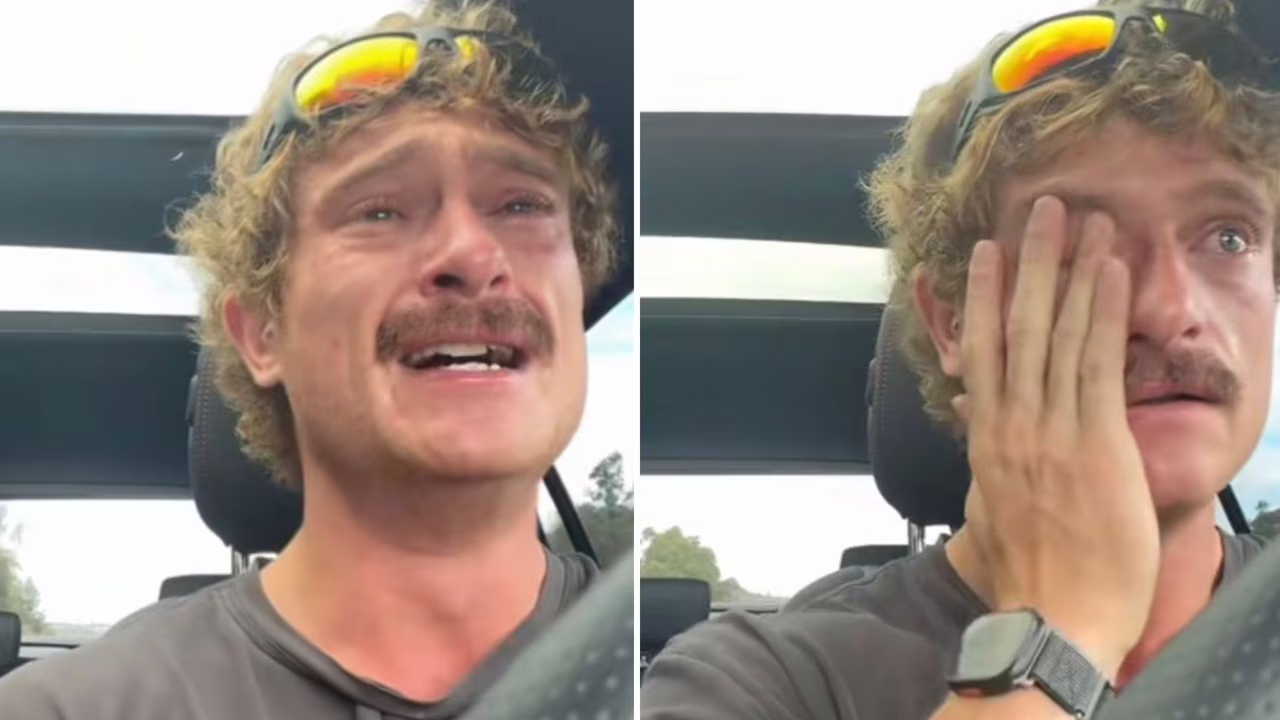
A viral video of a man breaking down and crying in his car has drawn widespread praise for its ‘bravery’ and ‘vulnerability’, but experts warn it exposes a concerning disconnect in how society actually handles men’s mental health.
In the clip, a young Sydney-based man by the name of Luh on TikTok spoke for several minutes in his car, while wiping away tears, about his mental health struggles and loneliness.

“I really need someone to talk to,” he began in the video, which has since racked up more than five million views.
“I’m so f***ing lonely, and I spend every day pretending that I’m not. I moved to Sydney after a break-up like four years ago and I still haven’t made any friends.”
The ‘raw’ and ‘powerful’ footage struck a nerve for many young men alike, who wrote they “felt the same way” as the Sydneysider.
“This is the strongest and bravest thing I’ve seen anyone do,” one user commented.
“You’re a braver man than me … vulnerability will get you everywhere and everything,” said another, while a third added: “This one video could save a man’s life one day. So powerful and raw”.
Online, we’re seeing an unprecedented cultural shift, with more young men than ever before talking about their mental health, emotional literacy and adopting ‘therapy-speak’.
But while young men might finally have the vocabulary online, evidence shows that the practical, real-world shifts are still lagging behind.
As we near the end of Men’s Mental Health Month, the disturbing reality remains unchanged: nearly half of men are estimated to experience a mental health issue at some point in their lives and suicide remains leading cause of death for men aged between 15 and 44.
Despite this, only a small percentage actually reach out for help when they need it.
The pressure to ‘man up’
Gen Z podcaster and author, Nathan Moss believes that the modern expectation and pressure for men to ‘have it all figured out’ is pushing an entire generation to the brink.
His own experiences navigating the brutal reality of early adulthood prompted him to write the book Sort of Okay, Sort of Not, with the goal of helping other young men who might be lost or struggling.
“This idea of a man being super masculine, fit, having lots of money, always being okay, and never struggling is unrealistic,” Mr Moss told news.com.au.
He explains that when young men inevitably face uncertainty and struggle to find their purpose, it becomes a “very dark and scary place” to navigate alone.
“That’s why all of this ‘red pill’ and ‘manosphere’ content has really taken off. It’s given a lot of scared, uncertain, and confused young men an identity that they can latch onto and feel successful and complete,” he explained.
This desperate need to fit a hyper-masculine mould has given way to these ‘toxic’ subcultures like ‘looksmaxxing’ trends, which has seen young, impressionable men pursuing dangerous physical modifications to meet impossible aesthetic standards.
Some are even going to extreme lengths like “bone smashing” — literally hitting their own faces with hard objects in a misguided attempt to chisel and reshape their jawlines.
A 2022 survey by The Man Cave found that a quarter of young men saw controversial internet personality Andrew Tate as a role model, while 36 per cent found him relatable.
And, as explored in Louis Theroux’s recent documentary, Inside the Manosphere, these influential figures are using ‘seemingly harmless’ topics like health, fitness, and financial success to recruit lonely, purposeless young men who feel society has discarded them.
But, despite the powerful grip of the ‘manosphere’, Mr Moss says the overwhelming wave of solidarity for the crying man proves that young men, more than ever before, “genuinely want to incite change” and are moving away from the “toxic alpha-male narrative”.
So close yet so far
Dr Zac Seidler, one of Australia’s leading male mental health experts, says we’re currently living in an era of ‘terrifying contradictions’.
“Young men have more language for mental health than any previous generation, more access to therapy, more cultural permission to struggle openly, and yet we’re seeing escalating rates of loneliness, disconnection, and radicalisation,” Dr Seidler told news.com.au.
He points out that the digital revolution of emotional literacy is completely useless without real-world emotional safety.
“A young man can know the word ‘shame’ and still have nowhere to take it,” Dr Seidler says, noting that the manosphere remains a formidable threat because, unlike many traditional mental health avenues, it actually listens to these young men.
“It correctly names young men’s pain, alienation, and social displacement, which is why it’s so effective,” he said.
“A young man who’s lonely, purposeless, and quietly furious doesn’t tend to open a wellbeing app. He goes where he feels seen and activated.”
Dr Seidler argues the true antidote isn’t just telling young men to ‘open up’, or seeing videos of men talking, or crying, online — but rather a need to completely rebuild the social architecture around us.
Bridging the gaps
So, what can be done to replace these toxic online echo chambers with genuine connection?
Sydney father Alex Linco, 31, realised the current mental health system was not being utilised by the everyday Aussie man, prompting him to launch Mate Talk — a social support line built specifically to connect people more authentically.
“What I’m seeing now is that men are more aware than ever that they’re struggling, which is genuinely progress,” he told news.com.au.
“But awareness without somewhere safe to actually put it down doesn’t help much.
“The gap between knowing you’re not okay and doing something about it is still enormous for most men,” noting that Mate Talk is more than just a call line, but rather a ‘genuine and physical community’ built through footy nights, pub catch-ups, and group runs.
“The manosphere understands something that a lot of mental health messaging doesn’t: men don’t just want tools and resources, they want to belong somewhere,” Mr Linco explains.
“The toxic corners of the internet recruits lonely men, so therefore the natural antidote is to ensure that no man is lonely in the first place.”
The consensus from both experts and everyday men is clear: if we want to see true change, society must build practical, real-world scaffolding that can genuinely hold space for this new wave of male vulnerability.
If you or someone you know is experiencing mental health challenges, you can call MensLine Australia on 1300 78 99 78 or Lifeline on 1300 789 978.