
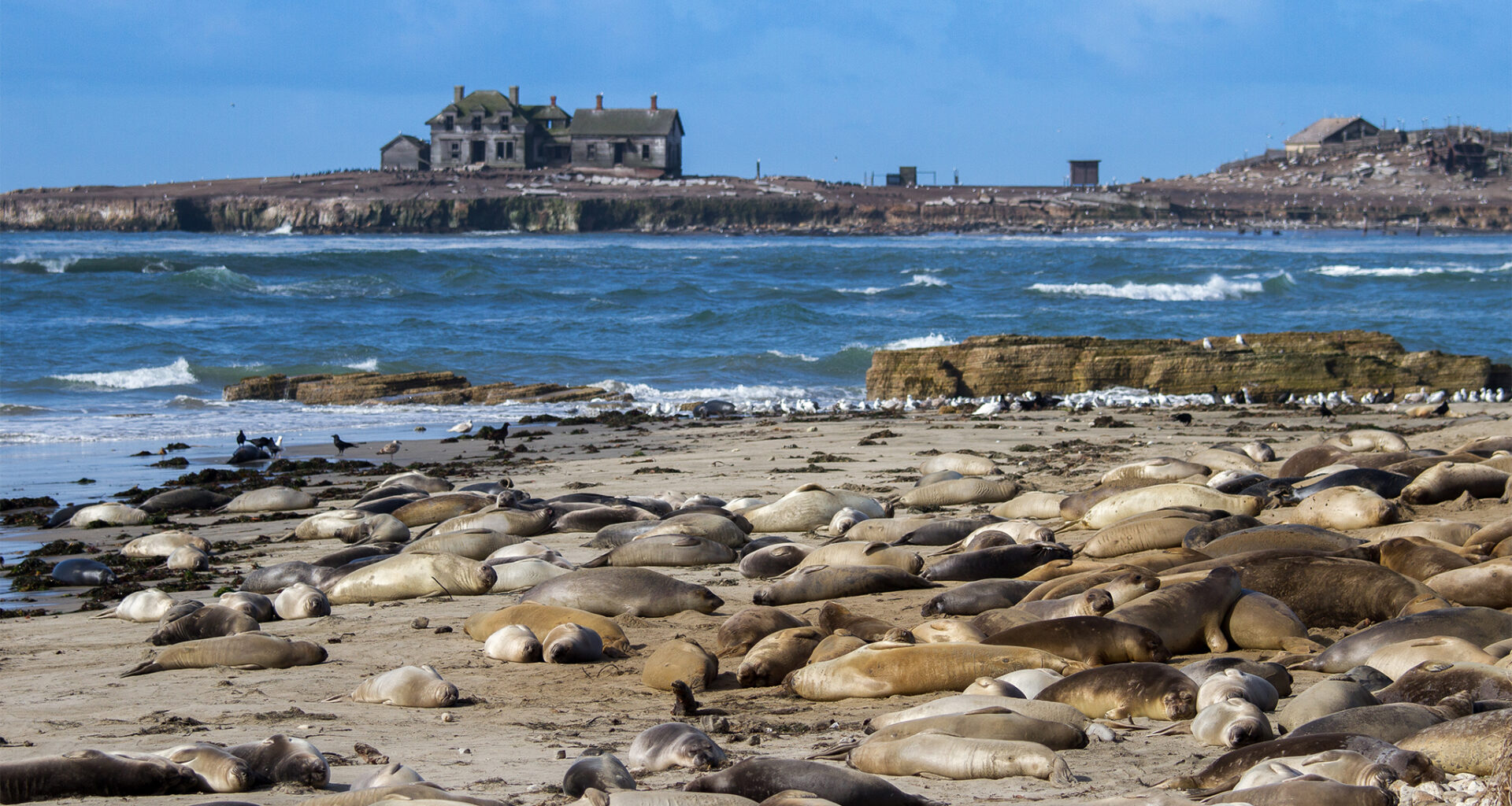
Months after an avian flu outbreak swept through the elephant seal population at Año Nuevo State Park, another unusual sighting has emerged in the pinnipeds dwelling along the windswept coastline of San Mateo County.
On Saturday, park docents at Bight Beach discovered an elephant seal sporting a “strange” shade of bright purple from its flippers to its tail. This was no mishap involving Violet Beauregarde and a certain chocolate factory, however. While experts initially thought the source of the strange coloring may have been a diet of sea urchins or a more troubling cause, such as internal bleeding, they soon found the answer.
It was the bed of red algae the seal was resting on, which gave the animal its “striking appearance, just in time for Summer,” park officials wrote on Instagram.
Red algae is often associated with harmful algal blooms or red tides, but not all algae is considered toxic. Light-harvesting pigments that give the algae its crimson color can also leave a natural dye on snoozing seals when it drifts ashore, eventually washing off as the animals return to the water to swim. The phenomenon is uncommon but has also been observed in sea otters off the coast of Monterey.
Elephant seals at Año Nuevo State Park are currently coming ashore for their annual molting season, which lasts from the beginning of April through the end of August. Once a year, the animals shed their outer layer of skin and fur to make way for a new coat to keep them warm before they go back to the frigid ocean. People with visitor permits, which are free to obtain at the entrance of the park, can go on self-guided walks to view the seals daily.
Safety measures for viewing elephant seals at the park have lifted since the deadly HPAI H5N1 outbreak in California marine mammals concluded at the end of March, scientists confirmed in May. The outbreak lasted between February 12 and March 24, with positive cases found in 57 elephant seals, six California sea lions and one southern sea otter. Most cases were concentrated in San Mateo County, with others detected in Santa Cruz, Monterey and San Luis Obispo counties. The first detection of avian flu ever confirmed in a California marine mammal was at Año Nuevo State Park.
Scientists plan to continue monitoring the species as birds migrate in the fall.