
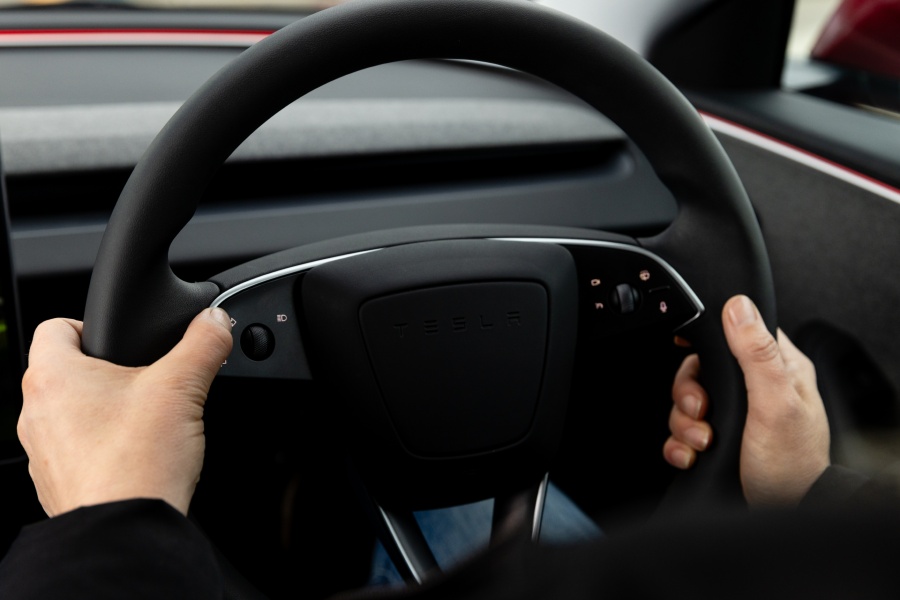
Remain focused on the road
Victoria’s road rules state that you must not drive a motor vehicle unless you have a clear view of the road and traffic, as well as ahead, behind and to each side of you as the driver.
This means that you must give supervising an automated vehicle the same attention you would if you were physically driving the car.
Know the limits of automated vehicles
Automated vehicles, as they currently exist, can have their safe performance impaired by factors such as:
Weather (for example, rain or fog) Visibility (for example, at dawn and dusk) Poor signage or road markings Complex traffic environments
Automated driving systems can disengage or encounter conditions they cannot manage, requiring a transition out of automated mode.
The key difference between Level 3 and Level 4 vehicle automation lies in how this transition is managed. In a Level 3 vehicle, the system will issue a takeover request, and the driver must respond promptly to safely resume control. In contrast, a Level 4 vehicle can bring itself to a safe stop if the driver does not intervene. Responsibility for managing the vehicle in these situations therefore shifts from the human driver (Level 3) to the automated system itself (Level 4).
For this reason, it’s critical that motorists understand both their vehicle’s level of automation and its operating limitations.
Manage fatigue and distractions
As motoring moves towards automation, its important motorists educate themselves on the risks of distracted driving and fatigue, as well as put in place mitigation strategies. This could include taking more rest breaks or sharing the driving.
Currently, drivers must remain actively engaged and responsive to their automated vehicle, even if not physically driving it themselves.
RACV is calling on the Victorian Government to take a close look at the Drive Test and public education and awareness so that all motorists understand what is required of them to monitor or supervise a driving system (rather than perform the driving task) and to take back control when required.
“Supervising an automated vehicle is a different skill to driving one,” says Williams. “It requires sustained attention with relatively little to do, which can be challenging for any driver.”
Driver Monitoring Systems can also help address fatigue, though they shouldn’t be relied upon. These systems use cameras and sensors to help detect fatigue, inattention or impairment in a driver.