
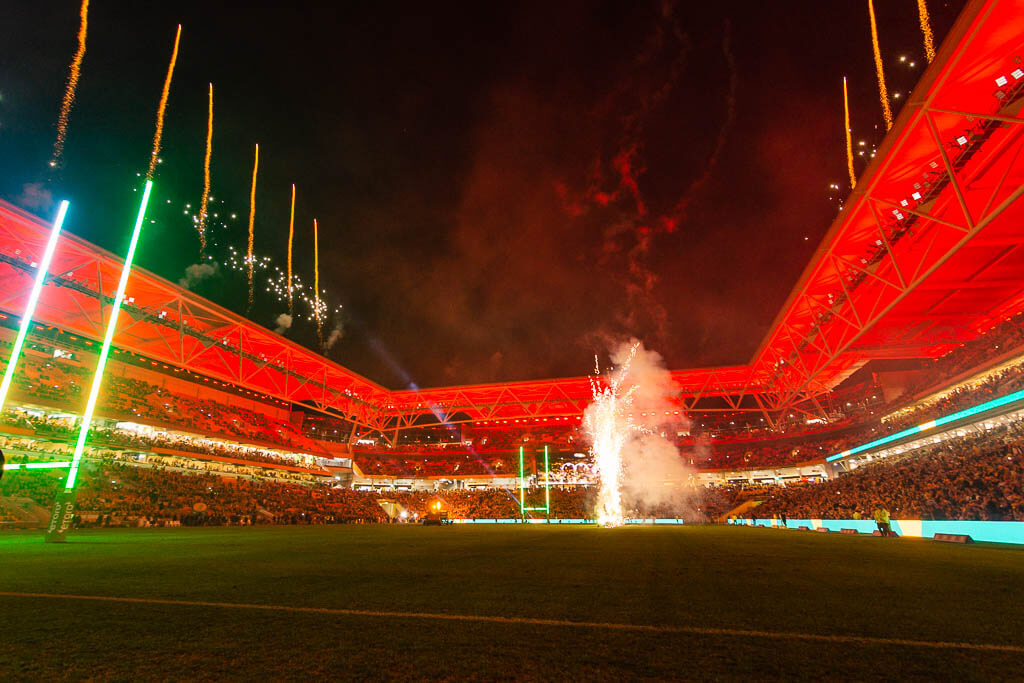
Happy Hump Day G&GRs, it’s finally starting. The international games kick off and it’s time to put the Super season behind us, well Australia has for a while, but now for Canes and Chiefs fans can as well. Lots to look forward to this week, especially once the teams are named and we see which way the coaches are going with things. Will the Wallabies and ABs be able to take control of their games in the Nations Championship?
A quick point to note here is that these articles contain my personal opinions – this is after all an opinion site – and don’t necessarily reflect the opinion of anyone else. I’m happy to have these opinions challenged, after all that’s what opinions are for, but let’s keep it tidy and respectful. After all this is not the ‘shouty site’ that went under.
Referee corner

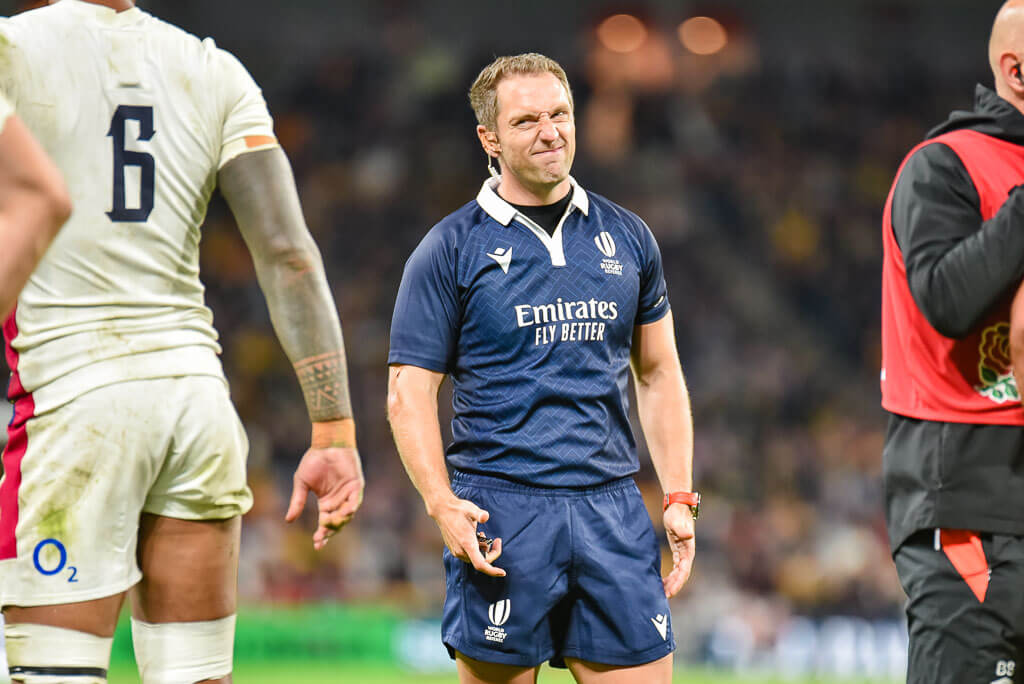 Referee Andrew Brace
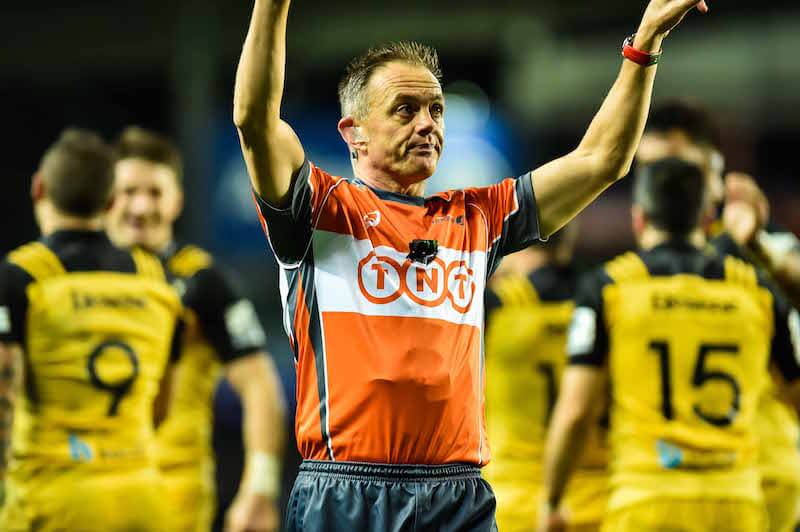 Photo courtesy of Keith McInnes
With the internationals coming up this week there’ll likely be changes to what we see on the field from an officiating point of view. It’ll be a test for the captains of the teams to make sure they quickly recognise the differences and adapt accordingly or their team may struggle. No point in sitting down after the game and complaining as by then it’ll be too late. I’m sure we’ll also hear from the commentators about how much the adjudicating of the game and the referee application of the laws is so different and why can’t we just get some consistency.
The issue we have to deal with is that SANZAAR has instructed referees to apply the law more tactically to allow the game to open up and flow. This has meant that referees have been very liberal in what they perceive as incidents having a material effect on the game and a lot of things have been let go that are likely to be called in the international game. A lot of the reason that SANZAAR have directed this is because they want to make the game less stop and start and because they still seem to think they need to compete with the NRL and ARL on their terms – which I personally think is just stupid. To be fair, it has made the games better to watch in some ways, but it also opened the games up to some pretty serious accusations of fans on the wrongs their team received because of the officiating. The main issue I see with this is that because we don’t hear why referees have made the calls they did on the field and because we saw a picture that showed a different outcome we don’t know why the specific calls were made and so start to question the officiating. This has led to some pretty high levels of vitriol directed to the referees at times which I think has been very unfair. So what are the likely changes we will see?
I think we will see a lot more TMO input than what we have been used to. Especially for foul play, whether deliberate or accidental, but also for things like players being offside and infringing at the tackle and ruck. A lot of this will be passed directly to the referee without us hearing it, or knowing it came from the TMO, and so it could get quite frustrating at times.
The offside line is likely to be officiated a lot more strictly and players who are offside out wide are likely to be picked up a lot more than they are in Super Rugby. The tackle height rulings and use of the arms in attempting to wrap are also likely to be held to a stricter level and some of the ‘challenges’ we saw in Super Rugby may get pulled up a lot more.
Penalties are likely to play a bigger part in the game. Most of the NH teams have very good kickers and are likely to take the 3 points more than we’ve been experiencing in Super Rugby. This can be important because a team can quite easily be 9 or 12 points down early and have to chance their arm a lot earlier in the game to get back into it.
The officiating is likely going to make the game tighter with less ball movement out to the wing and with less chance of having multiple players passing inside and out breaking the line of defence. This is also because the standard of defence is likely to be higher with all positions having world class players who know how to defend properly.
The biggest challenge will be on the teams to adapt their play to the officiating. The referees will have their differences and I think it will be even more important for the captains and coaches to quickly adapt on the fly to each game as they start understanding how the officials are adjudicating. Those who adapt the fastest are likely to have better results than those who don’t. It’s going to be interesting.
Another one bites the dust! – What’s happening at the Waratahs?
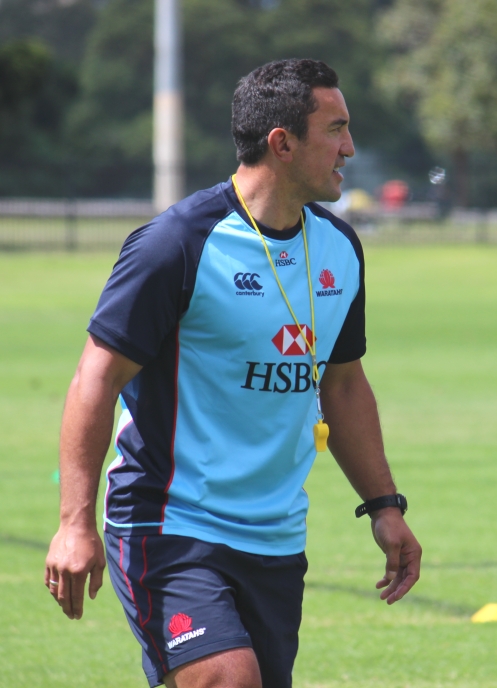
 Someone get the swear jar ready.
 ‘I should have stayed in Canberra’
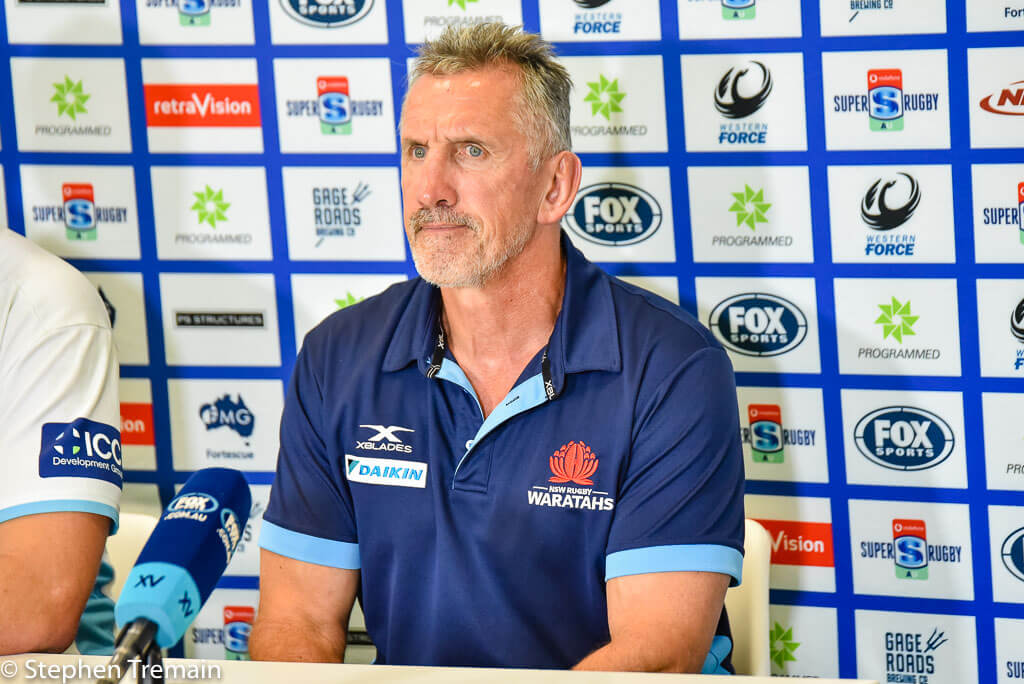
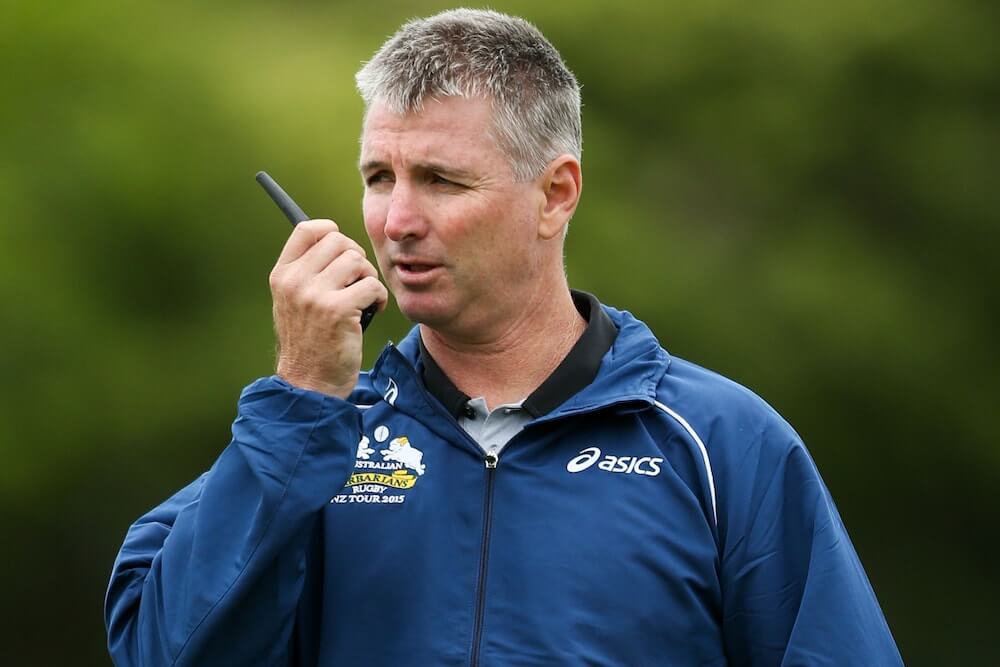
So the Waratahs have lost another coach before his contract tenure was completed. This is becoming a common occurrence and, for me, asks some questions about the organisation as much as it does about the coaches.
Darryl Gibson was an assistant under Cheika and took over from him after the Tahs won the Super Rugby competition in 2014. He led the team to a semi-final in 2018 and left in June 2019 before the final year of his contract and after losing 55% of the games while he was in charge.
Rob Penney replaced Gibson and lasted just two years before being removed in March 2021 after five consecutive losses including a 46 to 12 loss to the Reds. He had a 73% loss record which contributed to the sacking. He was replaced by Gilmore and Whitaker as interim coaches until Darren Coleman was promoted to head coach after some very good Shute Shield successes.
Coleman only lasted two years as well and was sacked before his contract was finished. He had a 63% loss record that contributed to him being moved on.
McKellar is now the latest coach leaving before his contract was complete. He has a loss record of 57% and just a week or so ago was talking enthusiastically about taking the Waratahs forward in 2027. While the official comment is that he has stepped away for ‘personal reasons’ one can’t but wonder at this after the previous comments he made and I certainly feel that perhaps he was ‘encouraged’ to step away.
I think the real issue here is the high turnover of coaches combined with a high changeover of players and some pretty average results points to some deeper issues than just poor coaching. I’ve stated before on this site, and elsewhere, that I don’t believe there’s a huge difference between the skill sets of the different players in the different teams. Sure there are some that stand out with great individual skills like Jordan, Jorgensen, Roigard, McReight and others, but these players can’t win a game by themselves, they require the team they play for to be synchronised, working together and playing for each other to allow them to showcase their skills. An organisation’s culture is about the lived experience of trust and daily collaboration where everyone is working to the same outcome. For me the biggest difference between those teams that seem to be consistently good and those who struggle to sustain a high level of play is the culture and leadership of the organisation, rather the individual performances of the players, coaches or administration staff.
I see the culture as being the shared behaviours, values and unwritten rules that govern how members interact, solve problems and achieve goals. It requires all members to place the team and organisation above themselves and ensure that all members of the organisation work towards the betterment of the organisation rather than looking after themselves. When working properly both of these occur at the same time. A person who works to the betterment of the organisation usually also improves themselves as they do that. When I talk about leadership of the organisation I’m talking about decisions that create the better good for the organisation, not some myopic thinking that is based on hope rather than clear deliberate thought.
When I think of the culture of the Tahs there are two main things I recall. No 1 is that rolling maul the Reds did a couple of seasons ago where a couple of the Waratah players just jogged down beside it with no effort made to get back and try and halt it. To me those players were looking after themselves not the team and seemed to be thinking That’s someone else’s job to manage. The second one was the issue at the start of this season when a fight at training left a player with a broken eye socket. Not only does a fight going that far suggest players don’t have the team as their priority, the insipid response when the player causing the damage was suspended for only two pre-season games demonstrated that the organisation doesn’t have a true accountability, nor does it see the team as greater than the individual.
This does go even further for me as I see an organisation that seems to be looking at a silver bullet of an individual player or coach who will somehow transform the entire team into a winning proposition without addressing what has got them into this situation in the first place. The recruitment of league players at the expense of the development of rugby players and the blame attached to coaches is indicative of an organisation that is not willing to look internally into the core issues that are causing the problem of poor performance. Personally, while there may be a recruitment of a coach or player that could make an initial change of the team’s performance through some specific motivation, or bullying, without addressing the core issues of the organisation none of it will be sustainable and the Waratahs will continue to under perform.
Antoine Dupont pulls out of France’s Nations Championship
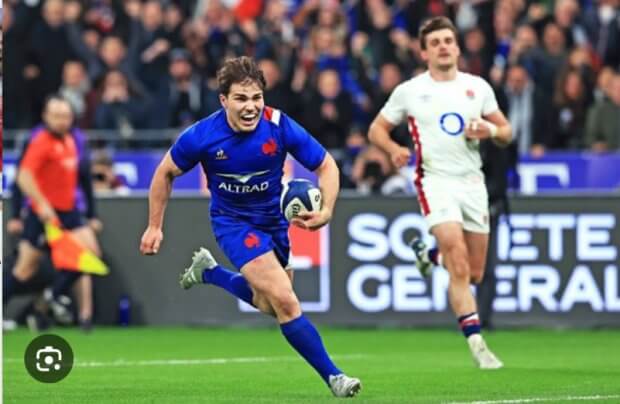
In some bad news for France, but good news for the Wallabies and Japan, Antoine Dupont has managed to injure himself and has pulled out of the French Nations Championship team, at least for the July round of matches. I didn’t include the ABs in this because he was never going to play against them due to the timing of the finals in France.
This is a real shame for those people who want to watch the best rugby as he is without doubt, one of the better rugby players currently playing at the highest level. It would’ve been great to see him play in Australia and be tested against Tate and Lonergan. A brief press release sent by the French Rugby Federation (FFR) on Monday, a few hours before departure, confirmed the news: ‘Antoine Dupont is out. Paul Graou joins the French XV for the 2026 Nations Championship.’ Dupont himself added on social media ‘An MRI carried out this morning, following pain felt since the semi-final, has revealed a calf injury. It is therefore with a heavy heart that I must withdraw from selection for the matches against Australia and Japan. I wish the squad all the best for this tour.‘
This season was meant to be the first time since 2017 that Dupont had the opportunity to participate in summer matches with the French national team, outside of World Cup preparation. His only experience in the Southern Hemisphere dates back to 2017 during a tour of South Africa. Since then, he has consistently been rested due to the schedule of games in the NH and the need to rest and recover. However, this season he has only played 21 matches for a total of 1,159 minutes because of injuries, including a ruptured cruciate ligament in his right knee against Ireland in the 6N game. His replacement, Paul Graou, is set to make his debut. He started in 20 out of 31 games for Toulouse and is absolutely no slouch even if not at quite the same level as Dupont.
The French face NZ, Australia and Japan in July and will face Argentina, Fiji and South Africa in the October series.
Tom Hooper says he has returned to Wallabies ‘more of an athlete’
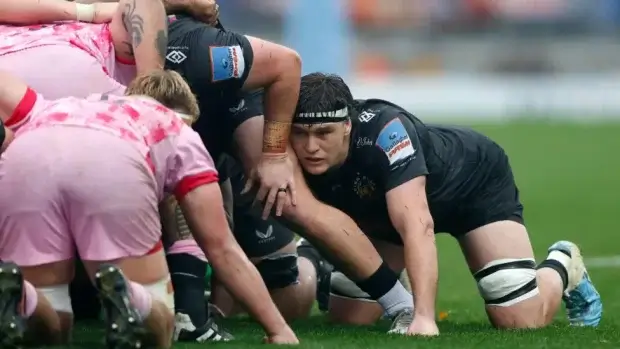
Tom Hooper is back on Australian shores and enjoying the familiar accents, but he also noticed a lot has changed since he was last in Australia and preparing for a Wallabies series of games. Last week he was playing with Exeter in a final loss to Northampton and quickly returned to Australia for the Wallabies as part of the Nations Championship squad. Discussing his time in the NH he said ‘I think I’ve played 22 games for (Exeter) already; you rack them up pretty rapidly,‘ adding that ‘So it was important for me to make sure I’m looking after my body well, and I also turned into more of an athlete; I went over there a little bit on the pudgy side and had to get in the gym and work hard. It was cold outside, so there were no sacrifices, no beaches to be missed, so I just hopped in the gym, came back an athlete, and now I’ve got to look after my body if I want to play long seasons. I’ve certainly learned in that regard, and that’ll put me in good stead for these upcoming Test matches.‘
Hooper said it’s not just him who has undergone a transformation since the last Test season, ‘As Laurie Fisher says, “we’re in the business of getting better”, and everyone’s certainly done that in the 12 months I’ve been away.‘ Hooper noted that newbies Meredith and Shaw along with Charlie Cale have stepped up and got better since he last played with them at the Brumbies saying ‘I think we’re trending in the right direction, and it’s a great squad that we’ve picked.’ While Hooper said he wasn’t taken aback by any drastic differences in life up North compared to Super Rugby, he did find subtle differences that expanded his outlook on the game. ‘It’s pretty similar, to be honest although they have a few different approaches to the game and how they play it, which is always a good thing.’ adding ‘I certainly think I’ve improved because of that. I knew it was going to be a challenge, and it certainly was.‘
It’s great to see him back and injury free and I look forward to seeing him play in these next three games.
Stay in the loop with G&GR