
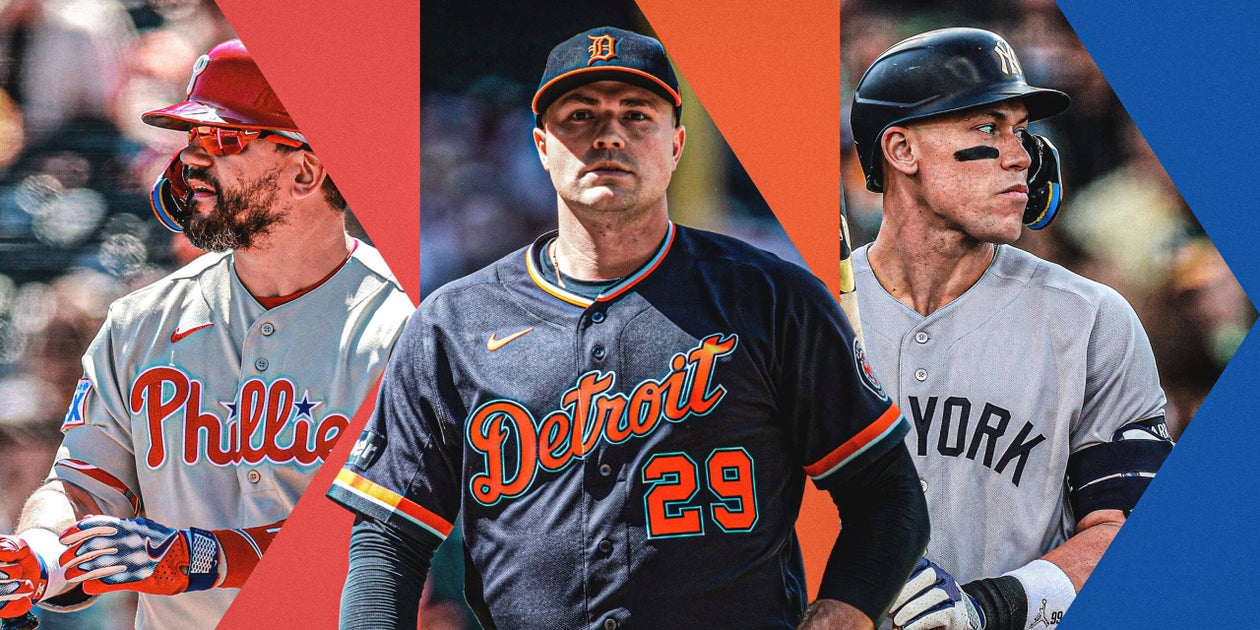
The trade deadline is basically a month away, and a month is a lot of time in a normal year. But it could be an eternity in a season as topsy-turvy as this one.
The Philadelphia Phillies were so bad a month into this season that they fired their manager. Now, they’re right back in the thick of things, looking like legitimate contenders. The Chicago White Sox were a last-place team in late April. Now they’re, somehow, making a run at a division title heading into July.
Most of the American League is a mess, and the National League’s murky middle is massive, but teams are undoubtedly talking trades behind the scenes, so it’s time to take stock of where things stand.
This is our first of two Trade Deadline Tiers. The goal is not necessarily to rank all 30 teams, but to group them into buyers, sellers and everyone stuck in between. We usually label a few teams as “tailors” — teams that could thread the needle between buying and selling — but there’s enough uncertainty at this point that Trade Tiers 1.0 is instead assigning a group of “hinge” teams that could go either way and potentially tip the scales of supply and demand.
We’ll update as the trade deadline gets closer, but for now, these are the MLB trade tiers.
Tier 1: Could be (should be) aggressive buyers
Not necessarily the top four teams in baseball, but four well positioned to make an aggressive push at the deadline. The Yankees are the only American League team in this tier, mostly because they’re heavy favorites to win the pennant — second-highest World Series odds in baseball, according to FanGraphs — but also because they have the financial resources to make a splash and take on a contract.
As for the three NL teams, the Phillies might be the team most firmly in this category. Their core is aging, their window is surely closing, and president of baseball operations Dave Dombrowski never needs an excuse to be aggressive. The Cubs have a clear need for pitching, and although their farm system is weak, it’s also hitter heavy, meaning they could afford to make some sacrifices. The Braves are finally good again after a series of disappointments. No reason to let that go to waste.
Tier 2: Typical buyers
What does it mean for the Dodgers to be “typical buyers?” What’s typical in L.A. might be the most aggressive move imaginable in Cleveland or Tampa Bay. Basically, it’s business as usual for the two-time champions (which means, maybe they’ll get Tarik Skubal). The Mariners have not been nearly as good as the Dodgers, but after coming within two runs of the AL pennant last season, they’re surely motivated to stay on the buy side of the ledger (even if there’s some tailor potential with their rotation).
The rest of this tier is made of three fairly small-market teams that have consistently won beyond their modest payrolls. There’s a good amount of prospect capital in each of those farm systems, too, leaving some opportunity for the Guardians, Brewers and Rays to make at least a modest splash at the deadline. Cleveland is probably most at risk of slipping toward the sell side, but the Guardians have made the playoffs two years in a row and have stayed in playoff contention these past three months.
Tier 3: Trending to the buy side
Imagine it’s Opening Day and you’ve been told that these seven teams will be grouped together at the end of June. What sort of list would you imagine it to be? Even if you knew it was a trade deadline list, wouldn’t you just assume the Rangers radically underperformed and this was a list of trade deadline sellers?
But, no!
The American League is a mess, and the White Sox might win the Central. The National League is confusing, and the rebuilding Cardinals have stayed relevant. The Pirates’ offseason additions are (mostly) helping. The Marlins are above .500 (with a shockingly good middle infield). The Rangers and Astros are shaky (but that might be enough in the AL West). The Athletics are probably not “trending” toward the buy side, but they could be interesting if they get healthy (and get some pitching).
Tier 4: The ‘hinge’ teams
These are the teams whose decisions around the deadline will define its landscape. Take the Nationals, for instance, who have spent a large chunk of the season exceeding expectations in the National League East. A Washington team that wants to go in on 2026 would add at least a few arms to its pitching staff. A Washington team that decides it’s not yet ready could make CJ Abrams the best bat available at the deadline.
That’s true of the Twins with Joe Ryan and the Red Sox with Sonny Gray, Aroldis Chapman and any of the young players they feel have become expendable.
Despite being under .500 since May 1, the Orioles have suggested they’ll still be buyers — a signal of both the American League’s flatness and Baltimore’s sense of urgency this season.
We placed the Padres here as well because A.J. Preller is always the trade deadline’s biggest wild card. Usually that’s in pushing in all his chips — and even some you didn’t know he had — to land the biggest names at the deadline. Does he do that again this year, does he take a milder approach for a team that has come back to earth, or does he even look to sell from the sport’s most dominant bullpen with an eye toward the future?
Tier 5: Trending to the sell side
The Tigers are the biggest hinge team of all, because they have the best player who might be moved at this deadline in Tarik Skubal. But Detroit’s playoff odds remain below 20 percent, and it needs to get within 10 games of .500, even in the putrid American League, to contemplate going for it this season. This is a big stretch for the Tigers in the here and now, as they follow this week’s road series in the Bronx with one in Texas before a homestand against the A’s and Phillies.
Tier 6: Typical sellers
The Rockies expected to be here, the Mets and Royals less so. While Mickey Moniak and Freddy Peralta and Kris Bubic are useful pieces to move, these squads don’t really have the rosters to shake up the deadline by embracing a more aggressive sale. Maybe the Mets make some guys with team control available (like Brett Baty or Mark Vientos), but that would be because they’re enduring disappointing seasons that have depressed their value.
Tier 7: Could be (should be) aggressive sellers
These aren’t necessarily the teams farthest from postseason contention. They’re the ones, though, that can add some bigger names to the list of deadline candidates. Pretty much nothing has gone right for Buster Posey and the Giants this year, and it’s gone wrong enough to wonder if San Francisco needs to start from scratch. That would mean moving not just impending free agent Robbie Ray but also exploring offers for Matt Chapman, Willy Adames and Rafael Devers — and eating money to make those trades plausible.
The Reds’ hot start has dissipated, and they have their own walk-year starter in Brady Singer, as well as Nathaniel Lowe at first base. Cincinnati could go bigger if it listens on Nick Lodolo (controlled through 2027) or on any of its early-arbitration bats like Spencer Steer.
While the Angels have long been reluctant to rebuild, the firing of GM Perry Minasian and installation of interim GM John Mozeliak could change how they operate this deadline. Even if Mike Trout doesn’t go on the block, starters Reid Detmers and José Soriano, as well as outfielder Jo Adell would bring back substantial prospect help.