

A leading economist has warned that more interest rate pain is looming for Aussie borrowers – even if the Reserve Bank of Australia (RBA) holds its hand steady when it meets in August.
The RBA spared Australians from a fourth rate hike in a row last month when it left the cash rate on hold at 4.35 per cent, and it is expected to do the same when they convene next month to make a call on interest rates.
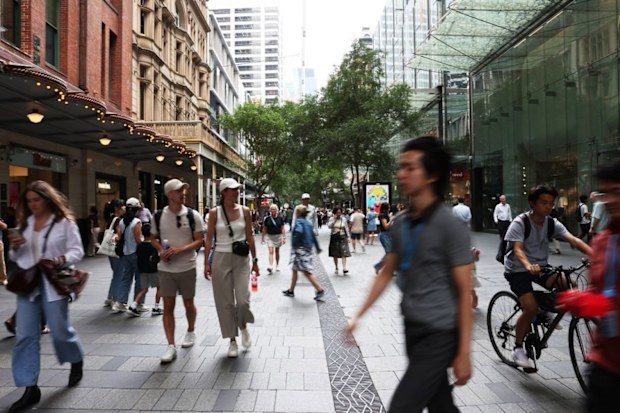
The reprieve from rate rises may not last for the rest of the year. Louise Kennerley
However, Aussies hoping a rate cut may be around the corner are mistaken, with the exact opposite more likely before the end of the year.
“Our view remains the tightening bias will continue throughout the new financial year, with the risk of one more hike around year-end, with recent talk of rate cuts next year appearing premature,” Bendigo Bank’s David Robertson said.
“Headline CPI fell to 4 per cent in the May inflation data, but core inflation rose to 3.6 per cent and appears likely to remain above target for at least another 12 months.”
He reiterated the RBA’s message that they were willing to do whatever it takes to keep inflation down, even if that means more rate hikes that would hit millions of Aussies hard and have negative impacts on the economy.
“Rate cuts in 2027 would need several prerequisites: the underlying inflation rate would presumably need to be close to 2.5%, and the RBA would need to form the view that the economy needs support,” Robertson said.
“A scenario where rate cuts would be more urgently needed is a sharper slowdown bordering on recession.”
He also expresses concern about the housing market, which has seen a downturn due to rate rises, as well as changes to negative gearing and the capital gains tax.
Robertson believes the current trends will continue.
“While outright falls in property prices remain confined to Sydney and Melbourne, there are concerns the slowdown may broaden,” he said.
“Our forecasts see national dwelling prices much flatter over the next twelve months with risks to the downside as the impact of tax changes becomes evident, but supply is still struggling to keep up with demand.”
However, he admitted: “How this all feeds into the broader economic slowdown remains to be seen,” saying the risk of a recession was low, looking to temper the negative outlook.
“Household spending data is showing resilience,” Robertson said, saying strong labour markets were also a positive sign.
He concluded by saying there could be a chance of a recovery at the start of next year, though he clarified this would require no global shock to occur again, such as the Middle East war and its impact on oil prices and the broader economy.
“Jobs, inflation, and household spending data will be key to the RBA’s next policy decision in August,” he said.
The RBA will hand down its next decision on August 11.
Australia enters ninth housing downturn
The Australian property market has entered its ninth downturn, but the history books offer hope for hard-pressed vendors.
New analysis released today by Domain forecasts the country’s two biggest property markets would be hit hardest, with Sydney house prices falling 7 per cent and Melbourne by 8 per cent in the new financial year.
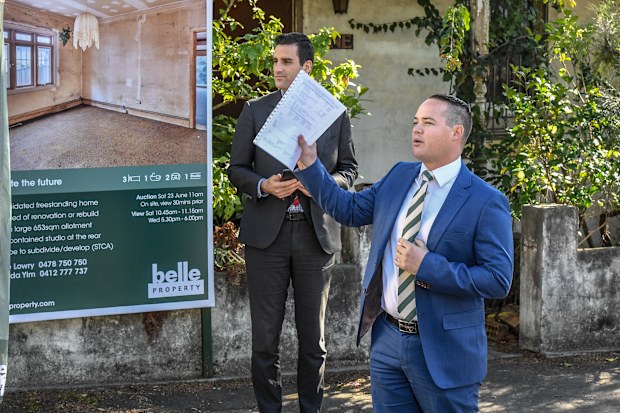
Domain data says the housing market has officially entered its ninth downturn. Peter Rae SMH
While would-be buyers are exposed to borrowing constraints in these markets, prices in more affordable Brisbane, Perth and Adelaide are expected to keep growing.
House values have been taking a caning during past months due to three consecutive interest rates, changes to capital gains tax and negative gearing, as well as the impact to consumer confidence of the US-Iran war.
The market is now sliding into its ninth slump in 30 years, leaving vendors asking should they hold off selling, while buyers are wondering if it’s the best time to purchase.
A look at what happened in previous housing downturns offers the answers.
It shows recovery followed every of the past eight, and when the uptick happened it not only reversed losses but propelled prices to new heights.
Typically, downturns have typically been short and contained, averaging a 2.9 per cent decline over about eight months. By contrast, upswings have been longer and significantly stronger, delivering 32 per cent growth on average for nearly three years.