
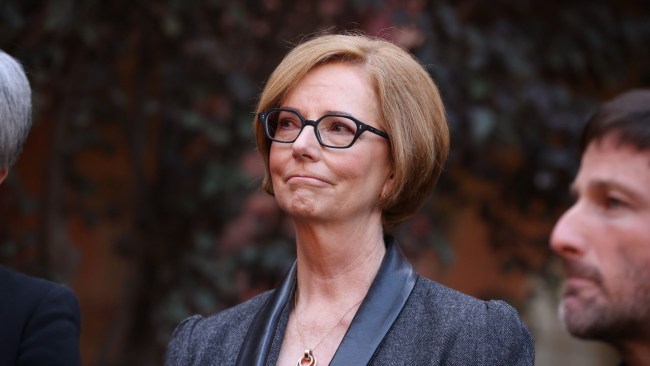
Former Australian prime minister Julia Gillard’s “different time” excuse for the ongoing impact of her government’s changes to the Sex Discrimination Act has been branded a “cop out” by a prominent women’s rights campaigner.
During the Cockroft Rutherford lecture at Manchester University, Ms Gillard was asked by an audience member if she had “considered or reflected” on the “unintended consequences” of changes to the law, including the implications for the high-profile Tickle versus Giggle court case.
She initially pushed back on the framing of the question and suggested it did not translate easily to a British audience.
“I’m not sure that this is going to be too interesting to the audience because it’s a very Australian matter,” Ms Gillard replied.
She then addressed the timing of the original reforms and the lack of public debate at the time.
“(The issues) were not raised by anyone back in 2012, when the legislation came before parliament because they simply weren’t a matter of public discourse the way they are today,” she said.
Ms Gillard later expanded on that point, drawing a clear line between past and present political debate.
“It was a different time,” she said.
“So, it is an error to uplift what we know now and the public discourse now and just putting it down to 14 years ago.”
The legislation at the centre of the debate removed statutory definitions of “man” and “woman” from the Sex Discrimination Act.
It also introduced new protected attributes including gender identity and intersex status.
At the time, government material said the change was designed to modernise discrimination protections.
However, that shift has had broader legal consequences in later court decisions.
It became central to the ongoing Tickle versus Giggle case, where the Federal Court found the Sex Discrimination Act does not confine sex strictly to biological definition in law.
Women’s Forum Australia Chief Executive Rachel Wong said that while Ms Gillard’s remarks were “progress”, they were still a “cop out” for suggesting it was a different time.
“I think she is trying to keep a foot in both camps,” she told Sky News host James Morrow.
“In the past, in relation to this question, she would say that’s a ‘gotcha’ question and wouldn’t really answer it.
“There has been a little bit of progress, and she is starting to acknowledge there are some issues that have come about as a result of the amendments to the Sex Discrimination Act back when her government was in power.”
Ms Wong argued that while the consequences of the changes were not known at the time, they are now “abundantly clear”.
“Her saying ‘it was a different time’ is clearly a cop out, and at the end of the day it’s less about whether the consequences were foreseen at the time but more about the fact that now they are abundantly clear, where we have women being sexually assaulted in prisons by men identifying as women, and we have women and girls being injured in sports.
“Is the current government going to do anything about it?”
Ms Gillard did not comment on the court case during her Manchester appearance, which is now subject to appeal.
Outside the venue, protest activity formed part of the wider backdrop to the event.
Around a dozen activists gathered outside the Nancy Rothwell Building, raising concerns about the impact of the 2013 reforms.
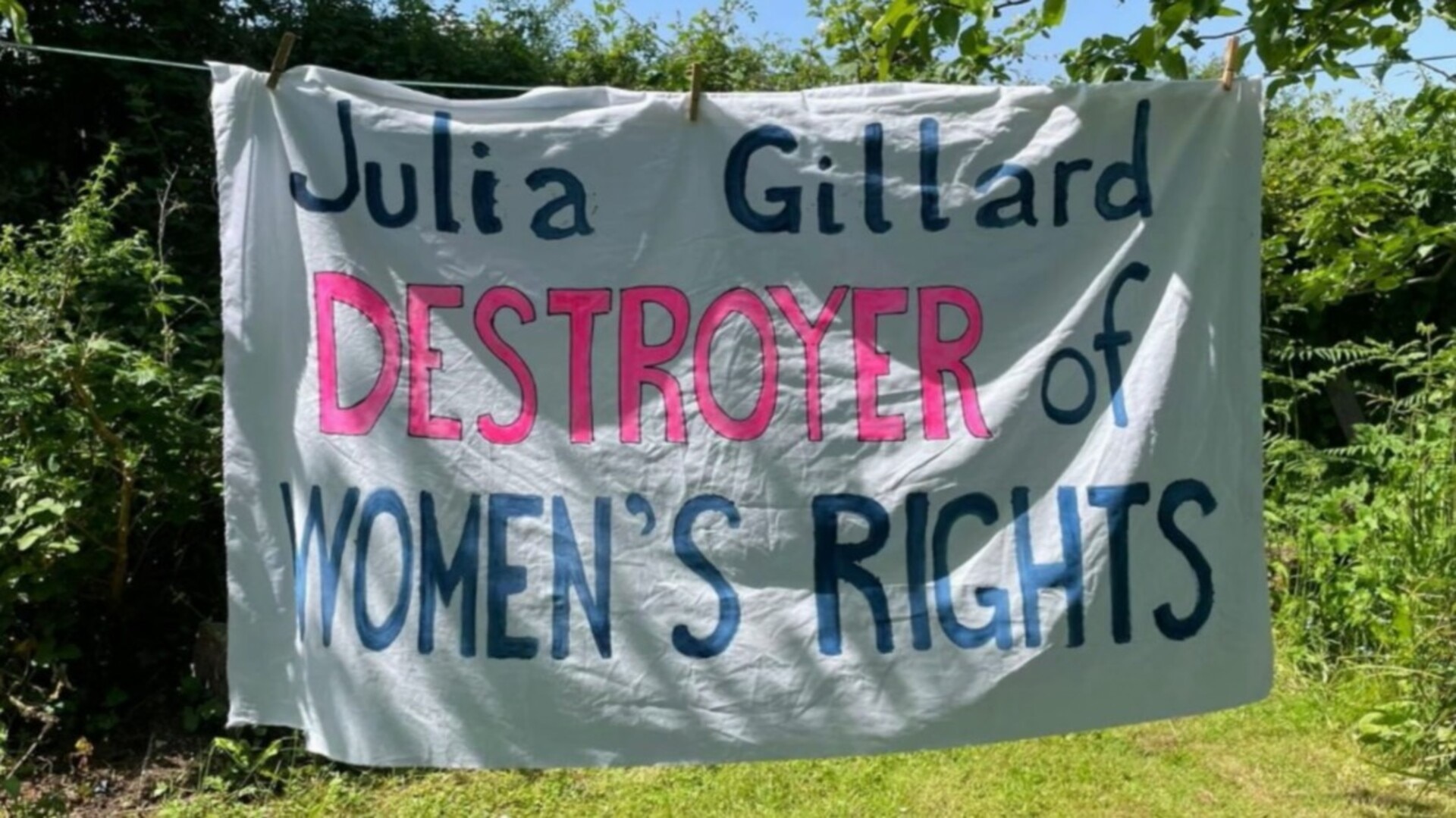
Some carried banners and distributed pamphlets to attendees as they entered the lecture.
The group also directed criticism at Ms Gillard’s record on women’s rights, chanting, “Julia Gillard is no feminist”.
Pamphlets distributed at the protest outlined claims about access to single-sex spaces and services under Australian law.
At the Hay Festival in Wales last month, Ms Gillard was confronted during a panel discussion when a protester interrupted proceedings.
During the event an audience member held up a banner criticising Ms Gillard’s legislative legacy, reading “Julia Gillard Destroyer of Women’s Rights”.