

A suspected positive case of H5 bird flu has been identified in New South Wales, the state agriculture minister has announced.
Samples were taken from a giant petrel near Hawks Nest on the Mid North Coast that tested positive for the strain of influenza in preliminary testing.
Live updates, reactions and contributions from ABC readers.
Fri 3 Jul 2026 at 1:19pm
Fri 3 Jul 2026 at 1:19pm
Lessons learned from former H7 bird flu outbreaks
Ms Collins has reiterated that there’s no current evidence of bird flu impacting Australia’s poultry or egg systems – meaning there’s no need for shoppers to panic shop stock.
As for what happens if there is a confirmed case in a poultry system in the future, Ms Collins said
“We’ve done everything we can do … to mitigate as much as we possibly can.
“We have learnt a lot from the H7 outbreaks that we have dealt with and successfully eradicated in Australia previously,” she said.
Ms Collins said if a H5 bird flu outbreak became worse, similar protocols would be followed to that of the H7 outbreak.
Fri 3 Jul 2026 at 1:16pm
Fri 3 Jul 2026 at 1:16pm
$113m already invested into mitigating bird flu
Ms Collins is now noting the investment that has gone into preparing and mitigating bird flu in Australia.
She says the federal government has already invested over $113 million.
She did not mention further investment however when asked.
Fri 3 Jul 2026 at 1:14pm
Fri 3 Jul 2026 at 1:14pm
‘This is not unexpected’
“It’s certainly disappointed that we’ve had further migratory birds have suspected positives [for bird flu],” Ms Collins said.
“This is not unexpected, of course, given that we do know that these migratory birds can travel long distances.
“At this point in time they are single migratory birds [infected] – we have no evidence of any mass mortalities in any other birds or animals in Australia at this point in time.”
Fri 3 Jul 2026 at 1:12pm
Fri 3 Jul 2026 at 1:12pm
What preparedness actually means
As for what that preparation in the poultry industry looks like, Ms Collins says on-farm biosecurity systems have been increased and strengthened and awareness campaigns made.
She has reiterated that management comes down to the state and territory agriculture ministers and their departments themselves.
Fri 3 Jul 2026 at 1:10pm
Fri 3 Jul 2026 at 1:10pm
Poultry and egg industries prepared, minister says
Given the suspected new case on Australia’s east coast in NSW, Ms Collins has been asked what this means for the region’s poultry and agricultural systems.
Ms Collins has confirmed that so far there had been no detection of confirmed cases in the systems.
“We have been preparing for the H5 bird flu incursion into Australia,” she says.
“We have been seeing what it has done overseas … Our preparedness, we have been working with the poultry and the egg industries to do everything we can do to mitigate against any incursions in our agricultural systems.”
Fri 3 Jul 2026 at 1:08pm
Fri 3 Jul 2026 at 1:08pm
More reports from public in recent weeks
Ms Collins says more Australians have been reporting sick or dead birds over recent weeks.
She reminded the public not to touch the birds, but record what they see, where it is and make a report to birdflu.gov.au.
Fri 3 Jul 2026 at 1:07pm
Fri 3 Jul 2026 at 1:07pm
Australia’s response to bird flu ‘swift’
Ms Collins is speaking now.
She says the Australian government’s response to bird flu has been “swift and coordinated”.
“Our national biosecurity response arrangements have been enacted, with state and territory governments managing the on-the-ground response,” she says.
Ms Collins says that earlier today she chaired a meeting with all the relevant agriculture ministers across the country to discuss the ongoing response to bird flu.
Fri 3 Jul 2026 at 12:56pm
Fri 3 Jul 2026 at 12:56pm
Standing by to hear from agriculture minister
We are standing by for a press conference with federal Minister for Agriculture, Fisheries and Forestry Julie Collins, regarding a suspected positive case of H5 bird flu in NSW.
There have been five confirmed cases of bird flu so far in Australia — specifically four cases in Western Australia and one in South Australia.
Ms Collins is expected to provide an update on bird flu following news of the NSW suspected case.
The samples have been sent to the CSIRO to confirm if it is the H5 high pathogenicity avian influenza, or bird flu, strain.
Agricultural Minister Tara Moriarty said the bird was wild and had flown in from “other parts of the world”, identified by a member of public who noticed it was ill.
“We don’t know yet it if it is the worst strain of the virus,” she said.
Samples from the bird at Bennetts Beach have been sent to the national testing lab in Geelong to determine the strain, after being assessed by vets and testing positive to H5 at an agricultural institute in Sydney’s Camden.
“We expect to have the results of that at some point tomorrow,” Ms Moriarty said.
The NSW government said it marked the first wild migratory seabird in the state to return a suspected positive result.
It is urging anyone who sees unusual deaths or illness in wild birds to avoid contact, record videos and pictures, and report to the Emergency Animal Disease hotline on 1800 675 888.
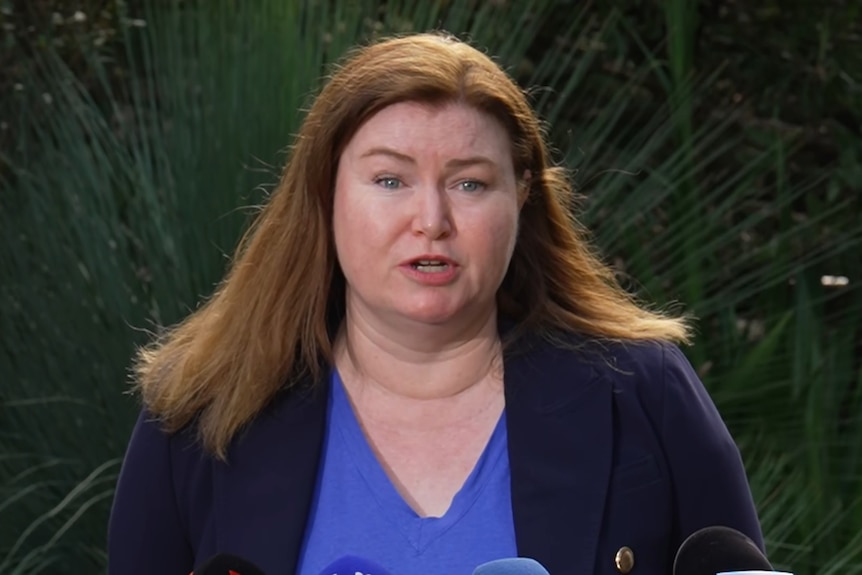
Ms Moriarty says the commercial poultry industry has been informed. (ABC News)
Five confirmed cases in Australia
The main symptoms are birds that look lethargic, showing respiratory signs of flu like watery eyes or difficulty breathing, or signs of paralysis and difficulty walking, NSW chief veterinary officer Jo Coombe said.
“It has had a devastating impact overseas. They have been species of birds affected and also over 50 species of mammals,” she said.
The first-known bird flu case in Australia was confirmed last month in a brown skua seabird at Western Australia’s Cape Le Grand beach.
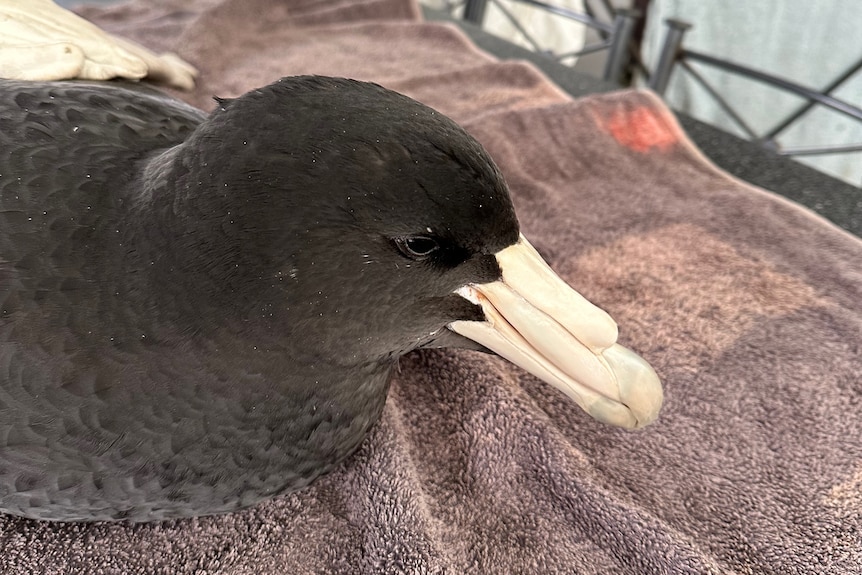
A giant petrel was found sick with bird flu in WA (bird pictured) last month. (Supplied: Lori-Ann Shibish/Esperance Wildlife Hospital and Sanctuary)
The bird was a sub-Antarctic species.
Since that case there have been four confirmed cases in WA and one in South Australia.
H5 strain of avian influenza, known as H5N1 2.3.4.4b, has spread quickly across the world through the movement of wild birds, causing mass mortality in poultry and sea mammals globally.
There is a vaccine available for the H5 bird flu strain, but Dr Coombe said so far, it is only available to “rare and endangered species”.
She said it could affect humans, but remained “very low risk to humans” with “common cold signs” and no human-to-human transmission.
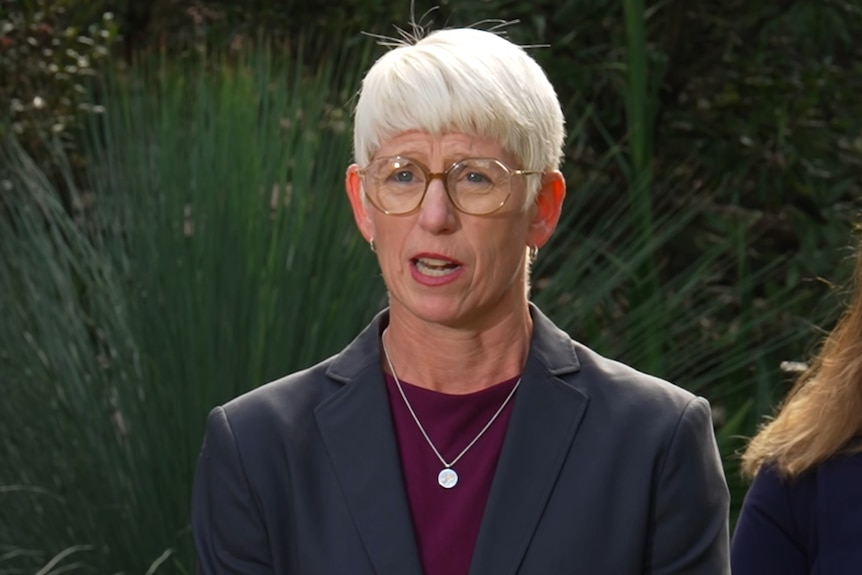
Dr Coombe says the state has been preparing for the potential of an outbreak. (ABC News)
“This is one bird, a wild, migratory bird has been found,” Ms Moriarty said of NSW.
“There are no other birds that have been found to be positive of H5 at the moment [in the state] but we are now increasing our surveillance.”
She said it was a national problem and the state government would keep working with its federal counterparts to stay on top of.
‘No need to panic’
Ms Moriarty said the government had informed the commercial poultry industry, but at this stage, there was no spread there.
“We haven’t had any reports of the poultry industry being impacted,” she said, noting it was “ready for whatever scenario might emerge”.
“So there’s no need to panic, keep buying eggs, keep buying chicken.”
The numbers showing H5’s deadly rise
The state government said the risk to human health remained low.
Dr Coombe said giant petrels did not typically make contact with land “unless of course, they are sick”.
“We have been preparing for this event for several years, in fact since we had our H7 bird flu outbreak two years ago,” she said.
The next level of risk is the spread from vagrant, passing birds into the wild bird population, Dr Coombe said.
“We were very aware this was looming and Australia was the last continent to have not had H5 bird flu, so we’ve trained up many, many members of staff.”
There was no evidence of spread to any wild birds, Dr Coombes said.
“There have been no reports of mass mortality events that we have seen elsewhere in the world.”